Table of Contents
Introduction: A System Under Shock
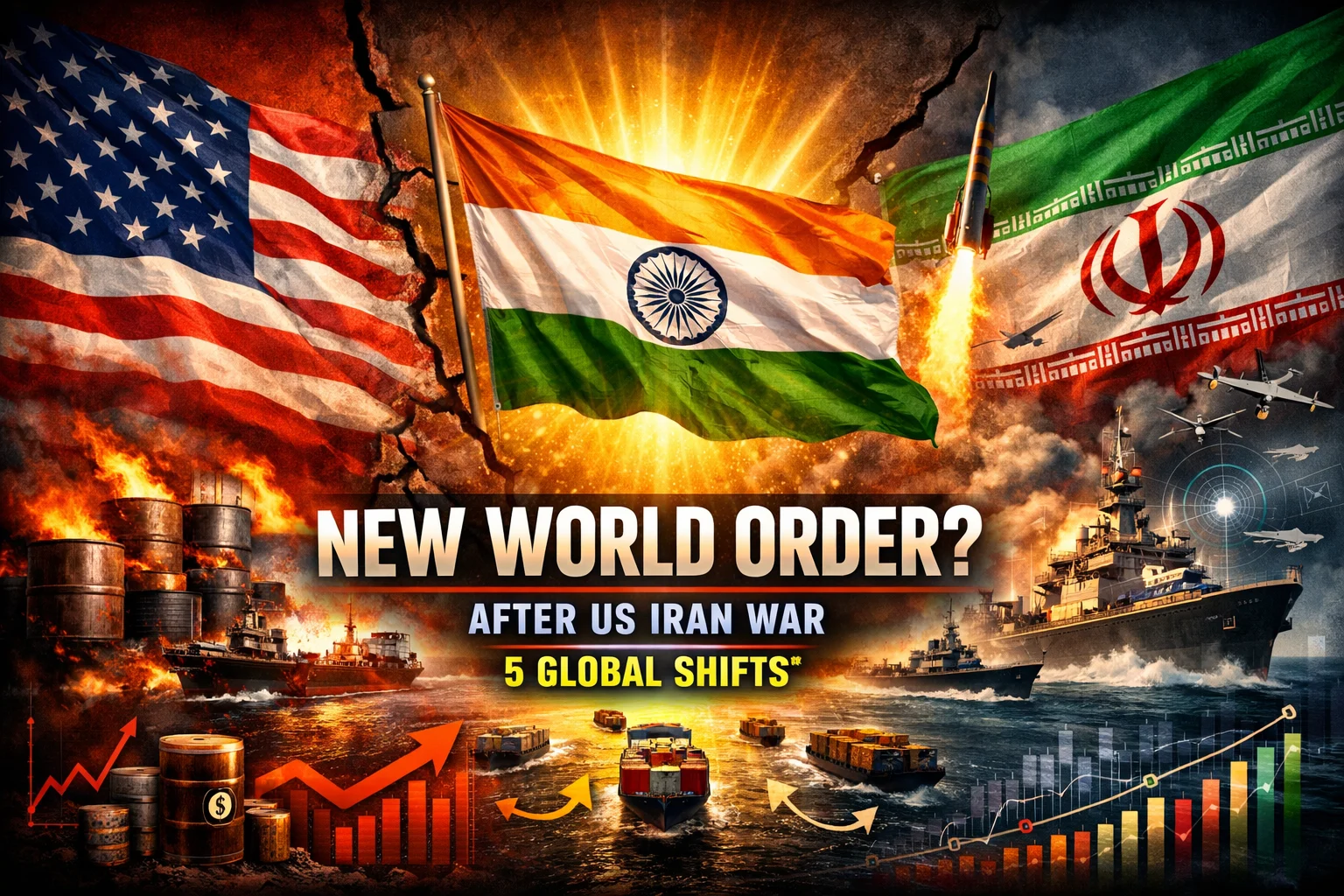
The World Order post US Iran War is not simply a continuation of existing trends—it represents a structural break. Wars in the Middle East have historically redefined global systems, but this moment appears deeper in scope.
Energy flows, trade routes, and geopolitical alignments are all under pressure at once.
This was not accidental.
The region sits at the heart of global oil supply and maritime chokepoints. When disruption occurs here, the consequences ripple outward—into inflation, security policy, and long-term strategic planning.
What emerges is not just instability, but reconfiguration.
Energy Shock and the Restructuring of Global Supply
The most immediate and measurable impact lies in energy markets.
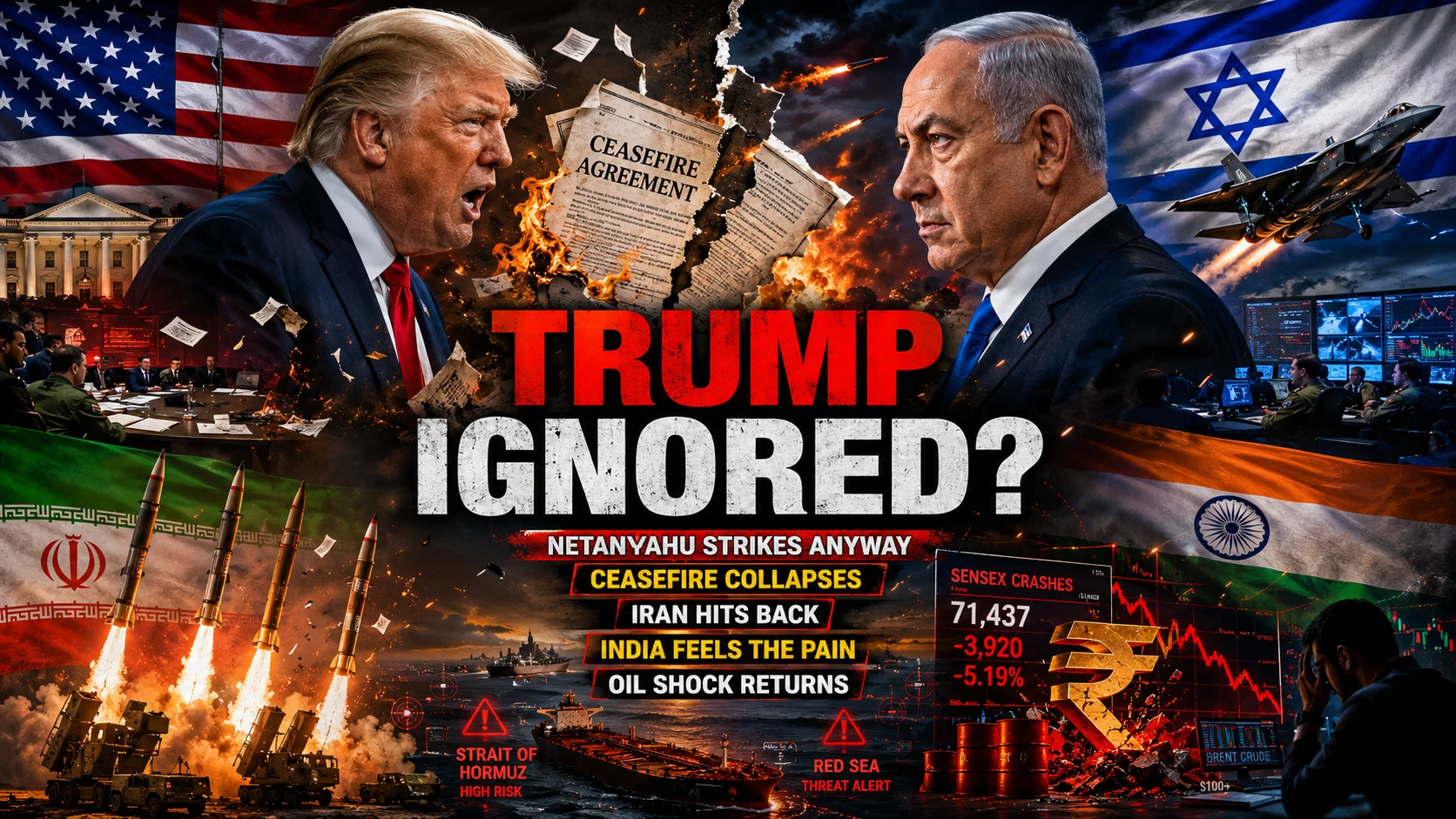
Roughly 20% of global oil supply passes through the Strait of Hormuz—a chokepoint whose disruption triggered what analysts describe as the largest oil supply shock in modern history. Supply losses of nearly 8 million barrels per day—around 8% of global demand—have pushed prices beyond $100 per barrel.
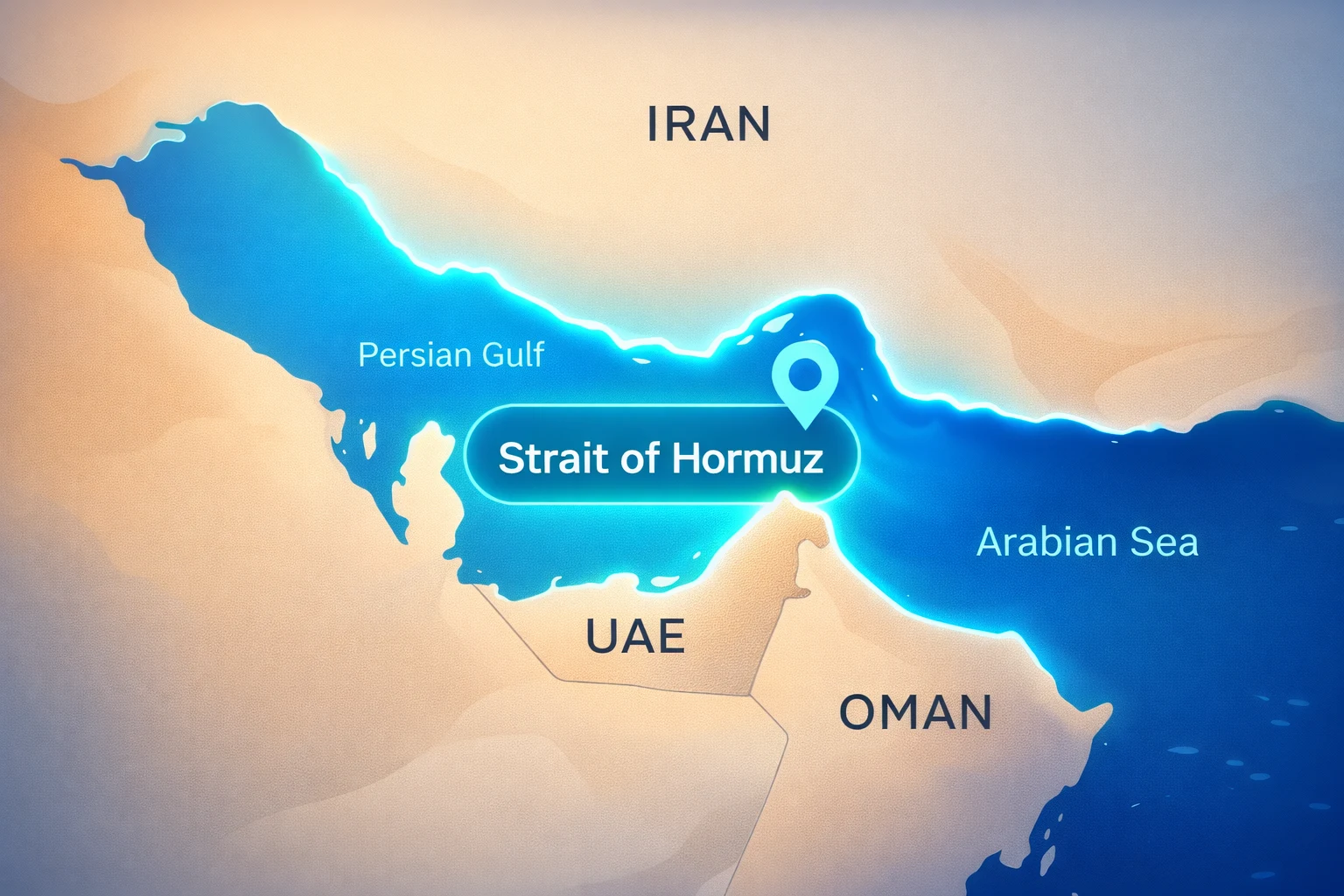
Image credit: AI-generated using ChatGPT by OpenAI
But the deeper shift is not the price spike.
It is the response.
Countries are now accelerating three parallel strategies:
- Reducing dependence on Middle Eastern oil
- Expanding renewable energy adoption
- Building larger strategic reserves
The consequence is structural, not temporary. Energy geopolitics begins to diversify—toward producers like the United States, Brazil, and parts of Africa.
That changes the equation.
Energy security is no longer about access alone—it becomes about insulation from geopolitical shocks.
The Militarization of the Middle East
The conflict has already drawn in multiple external actors, including major global powers.
What follows is not de-escalation—but entrenchment.
The region is likely to see:
- Expanded military bases across the Gulf
- Increased deployment of missile and drone defense systems
- A sustained regional arms buildup
Countries such as Saudi Arabia, the UAE, and Turkey are expected to significantly increase defense spending.
The logic is straightforward: instability is no longer episodic—it is persistent.
This is where the model breaks.
Instead of temporary conflict cycles, the Middle East begins to resemble a permanently militarized zone, where deterrence replaces diplomacy as the primary stabilizing mechanism.
Inflation, Fragility, and Economic Spillovers
Energy shocks rarely stay contained.
Higher oil prices feed directly into transportation, manufacturing, and food costs. The result is a broad-based inflationary wave that affects both advanced and emerging economies.
The transmission mechanism is simple—but powerful:
- Fuel costs increase → logistics costs rise
- Production expenses grow → consumer prices climb
- Central banks tighten → growth slows
The risk is not just inflation.
It is stagflation—or even recession.
Energy-importing regions, particularly in Asia and Europe, face the greatest pressure. Their dependence on external fuel sources amplifies vulnerability.
The consequence is not immediate—but structural.
Economic planning begins to incorporate geopolitical risk as a constant variable, not an exception.
Iran’s Internal Turning Point
Wars reshape not only borders—but political systems.
Inside Iran, the cumulative effects of economic damage, sanctions, and infrastructure loss could trigger a prolonged domestic crisis.
Possible trajectories include:
- Political reform driven by internal pressure
- Leadership shifts under economic strain
- Increased social unrest
History suggests that sustained external conflict often weakens internal cohesion.
But outcomes remain uncertain.
What stands out is the scale of disruption—particularly to oil exports and infrastructure, which form the backbone of Iran’s economy.
The turning point appears when internal pressures begin to exceed external ones.
At that stage, domestic transformation becomes not just possible—but likely.
The Strategic Rise of the Indian Ocean
One of the most significant long-term consequences is geographic.
Global strategic focus is gradually shifting—from the Atlantic toward the Indian Ocean.
This is not a sudden change. But the war accelerates it.
The Indian Ocean connects:
- Middle Eastern energy suppliers
- African resource hubs
- Asian manufacturing centers
As disruptions intensify in traditional routes, alternative corridors gain importance.
Countries like India and China, alongside regional powers, become central to this evolving system.
This is where a new axis begins to form.
Not through formal alliances—but through trade dependency, maritime control, and energy logistics.
India’s Position in the Emerging Order
India occupies a unique position in this transition.
On one hand, it remains highly dependent on imported oil—making it vulnerable to price shocks and supply disruptions. On the other, its geographic location places it at the center of emerging trade routes across the Indian Ocean.
This duality defines India’s strategic outlook.
The risks are immediate:
- Higher import bills
- Inflationary pressure
- Exposure to external shocks
But the opportunities are structural:
- Increased relevance in maritime trade networks
- Greater influence in regional connectivity projects
- Strategic leverage in energy transit corridors
India is not insulated.
But it is positioned.
That distinction matters.
Global Implications: A New Power Axis
Taken together, these shifts point toward a broader transformation.
The global system begins to reorganize around:
- Energy diversification
- Regional militarization
- Economic fragility
- Shifting trade geography
The traditional Atlantic-centric order weakens—not through collapse, but through gradual displacement.
In its place, a more distributed system emerges—centered increasingly on Asia and the Indian Ocean.
This is not a clean transition.
It is uneven. Fragmented. Sometimes contradictory.
But the direction is clear.
A new power axis is forming—less defined by ideology, more by logistics, energy, and geography.
Conclusion
The World Order post US Iran War is not defined by a single outcome—but by a convergence of pressures.
Energy systems are being restructured.
Military postures are hardening.
Economic stability is under strain.
Political systems face internal tests.
Trade routes are being reimagined.
Each shift reinforces the other.
This is what makes the transformation structural.
The world is not simply reacting to a conflict—it is adapting to a new baseline of risk and competition.
The long-term implication is clear: global power will increasingly be shaped not just by who controls resources, but by who controls the routes, systems, and resilience around them.
The shift is already underway.
FAQs
What happens if the Strait of Hormuz is disrupted?
A disruption severely limits global oil supply, as around 20% of oil passes through it. This leads to immediate price spikes, supply shortages, and ripple effects across global industries. Transportation and manufacturing costs rise quickly. The broader impact extends into inflation and economic slowdown.
Will oil prices remain high after the Iran war?
Prices may stabilize over time, but structural changes suggest continued volatility. Countries are diversifying energy sources and building reserves, yet supply risks remain. Geopolitical tensions can still trigger sudden spikes. Long-term stability depends on how quickly alternatives scale.
Which regions are most affected economically?
Energy-importing regions—especially in Asia and Europe—face the greatest impact. Their dependence on external oil makes them vulnerable to price increases. Developing economies may struggle more due to limited fiscal flexibility. The effects are both immediate and long-term.
Why is the Indian Ocean becoming more important?
It connects key energy producers, resource regions, and manufacturing hubs. As traditional routes face disruption, this corridor gains strategic value. Trade flows increasingly depend on its stability. Control and access here translate directly into geopolitical influence.
Could Iran undergo political change after the war?
It is possible, though not guaranteed. Economic damage and internal pressure may drive reform or leadership shifts. Historical patterns suggest prolonged conflict weakens internal stability. The outcome depends on how internal and external pressures evolve.
What Do You Think About the World Order Post US Iran War?
The shifts are unfolding, but their final shape is far from settled.
How do you see this evolving—does this mark the rise of a new global power axis, or just a temporary phase of instability?
Share Your Views in the Comments below.
Explore more about Strategic Depth, Indian Affairs and World Affairs.
Sources : Reuters, The Guardian, U.S. Energy Information Administration, NDTV, The Indian Express, Blooming