The Bangladesh US textile deal gives zero-tariff access to Bangladeshi garments made using American cotton. Here’s why the US gained the most and why India now faces tougher competition.
Table of Contents
Introduction: Why This Deal Triggered Alarm Bells in India
In recent days, Indian media has been flooded with headlines claiming that after India, the United States has also signed a trade deal with Bangladesh. Almost immediately, comparisons began to surface: Who got the better deal? Did Bangladesh secure terms that put India at a disadvantage? And more importantly, has the Bangladesh US textile deal quietly created a new challenge for Indian exporters?
This outcome was not unexpected. It was already being discussed that Bangladesh would attempt to negotiate special tariff treatment for its textile exports to the United States—possibly even better terms than those offered to India.
Now that details are emerging, it is clear why this deal has sparked political criticism and strategic concern in India.
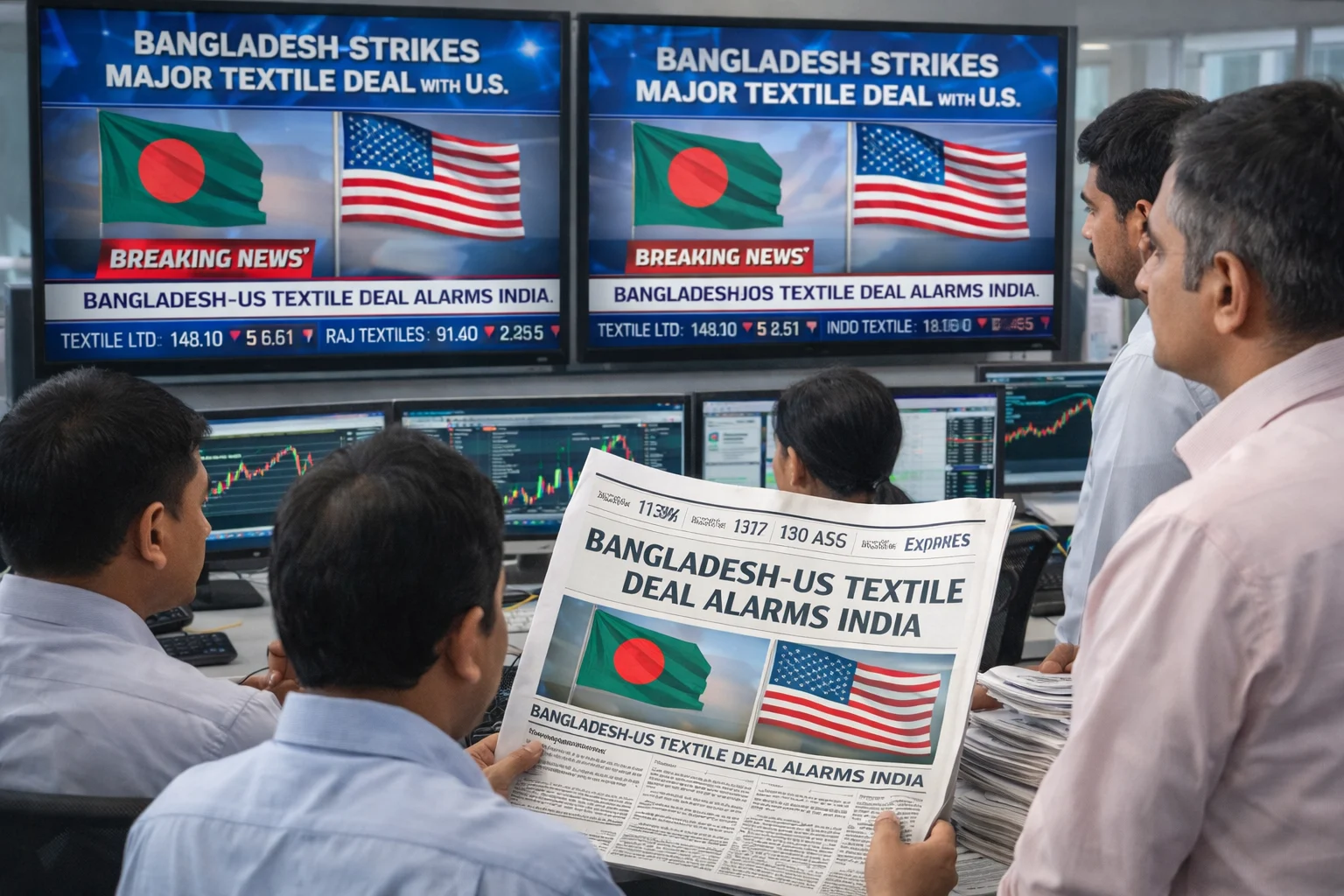
Image credit: AI-generated using ChatGPT by OpenAI
What Exactly Did the Bangladesh US Textile Deal Do?
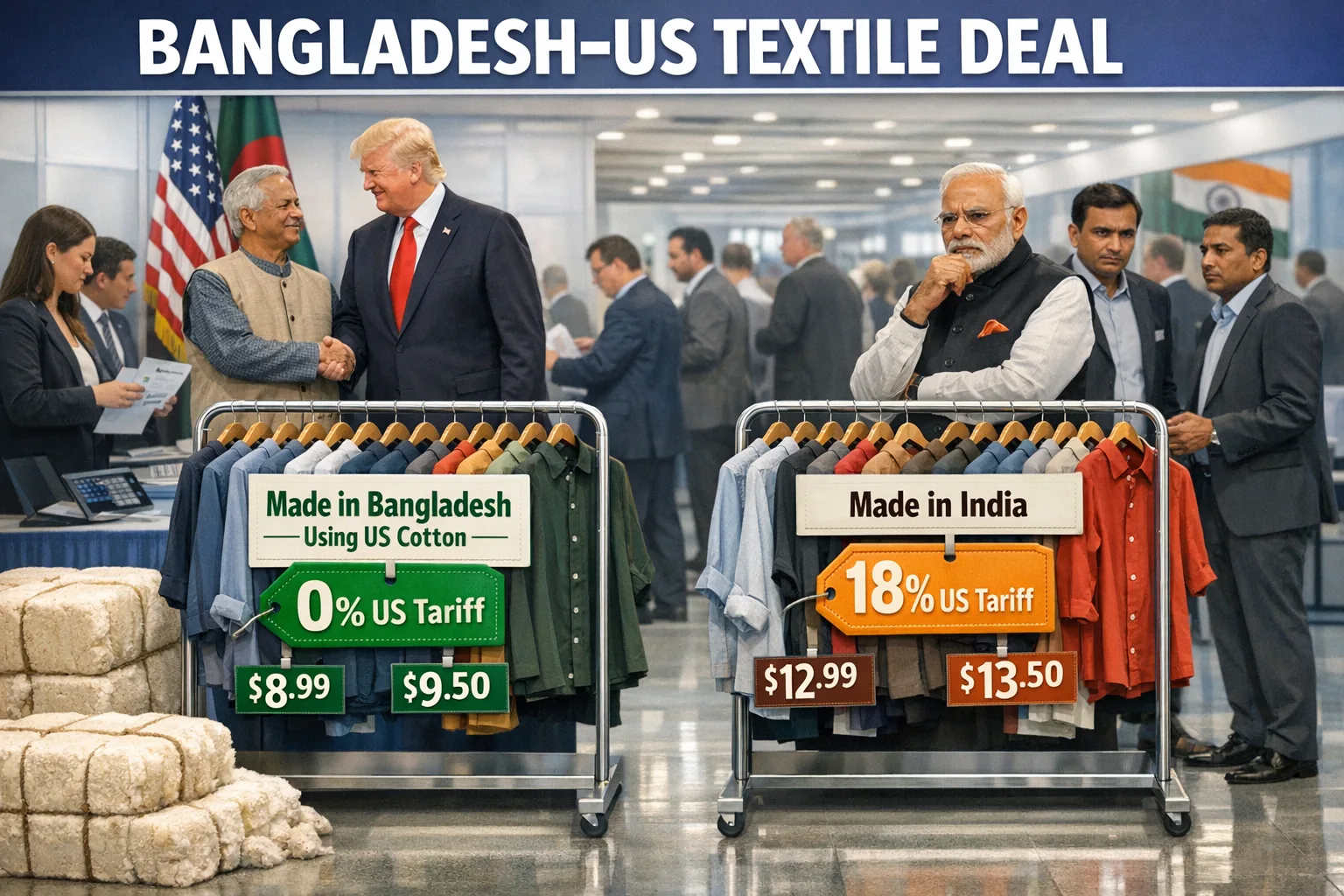
Recent disclosures show that the United States has offered zero-tariff access in select cases for Bangladeshi textile exports. This does not apply universally, but for specific categories of garments exported from Bangladesh to the US market, tariffs can effectively drop to 0%.
This immediately contrasts with India’s position, where Indian textile exports to the US still face an 18% tariff under the interim India–US trade framework.
That gap—0% versus 18%—is not cosmetic. In textiles, even a 2–3% difference can shift sourcing decisions worth billions of dollars. An 18% differential can completely reshape supply chains.
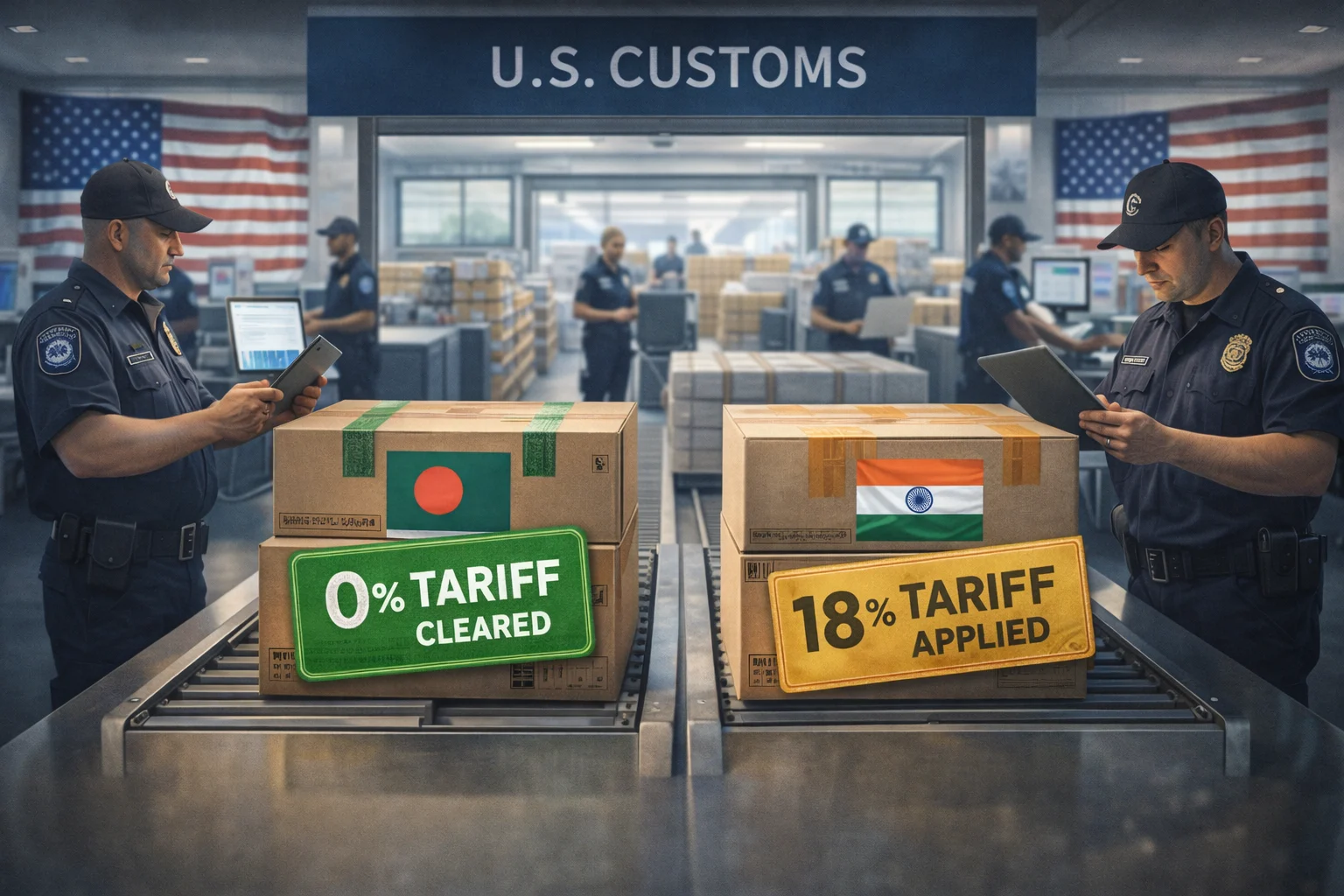
Image credit: AI-generated using ChatGPT by OpenAI
Why Textiles Matter So Much in This Comparison
Textiles are not a niche sector. They are one of the largest employment-generating industries in South Asia.
Textiles include stitched garments like T-shirts, trousers, jackets, and everyday clothing and the two biggest global markets for these products are the European Union and the United States
While India exports a diverse basket of goods globally, textiles remain a critical sector where India has historically underperformed relative to smaller economies.
The uncomfortable reality:
- China remains the world’s largest textile exporter
- Vietnam and Bangladesh outperform India in garment exports
- Bangladesh’s population is barely 10% of India’s—yet its textile exports are often higher
This is not accidental. Bangladesh focused aggressively on trade agreements, tariff advantages, and policy clarity in textiles.
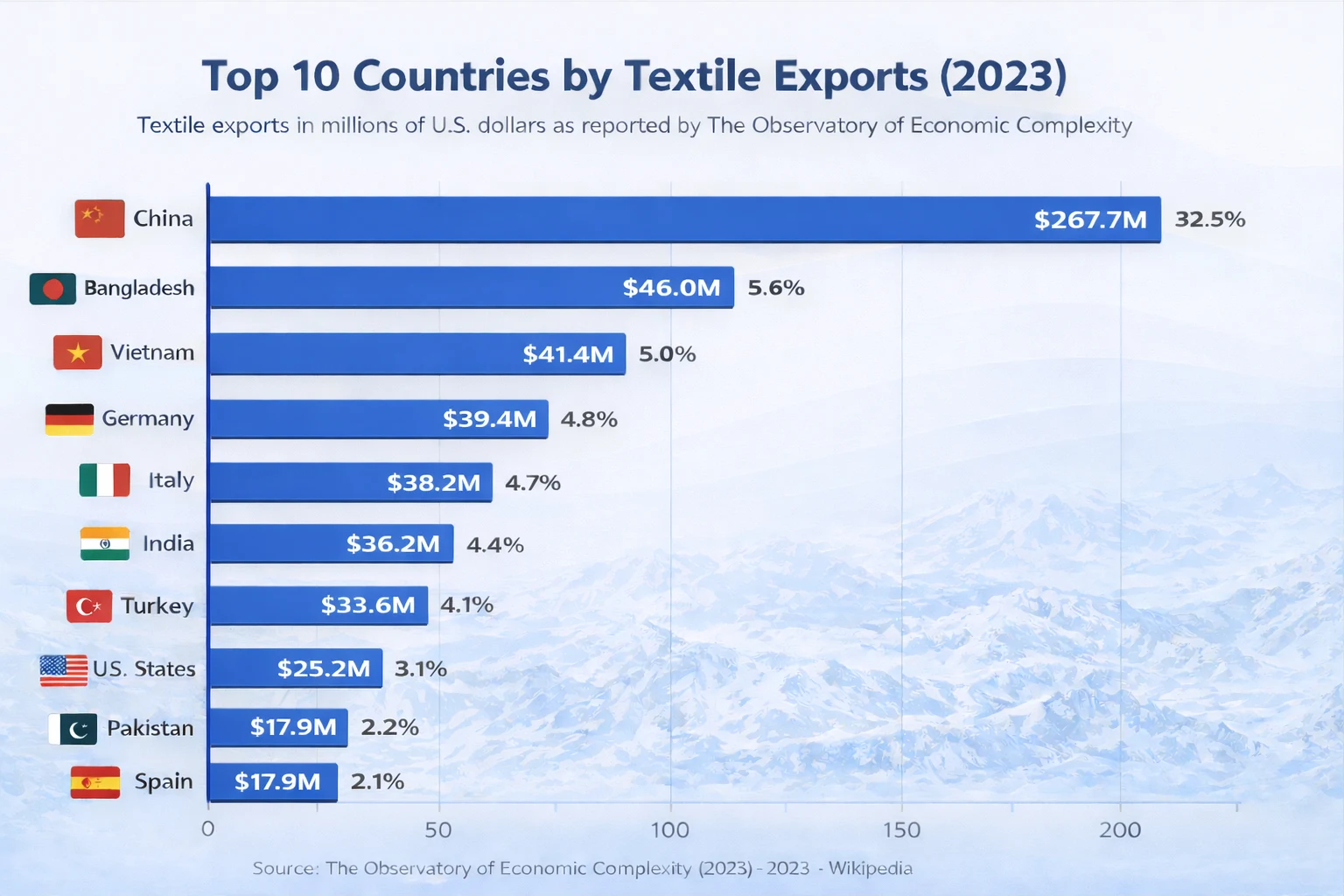
Image credit: AI-generated using ChatGPT by OpenAI
Source: Wikipedia contributors, List of countries by textile exports — licensed under CC BY-SA 4.0.
The US Cotton Clause: The Real Core of the Deal
The most critical (and often under-reported) aspect of the Bangladesh US textile deal is how it is structured.
The United States has not offered charity. It has offered access with conditions.
The key clause:
Bangladesh must purchase US-grown cotton and man-made fiber inputs.
In return:
- Garments made using US cotton can enter the US market at zero tariff
This is a strategically brilliant move for Washington.
- US farmers gain guaranteed overseas demand
- Bangladesh secures tariff-free access for its core industry
- Indian exporters lose price competitiveness in the US market
A Bangladeshi T-shirt made with US cotton can sell in America at the same base price.
An Indian T-shirt, even if cheaper to produce, becomes 18% more expensive at checkout.
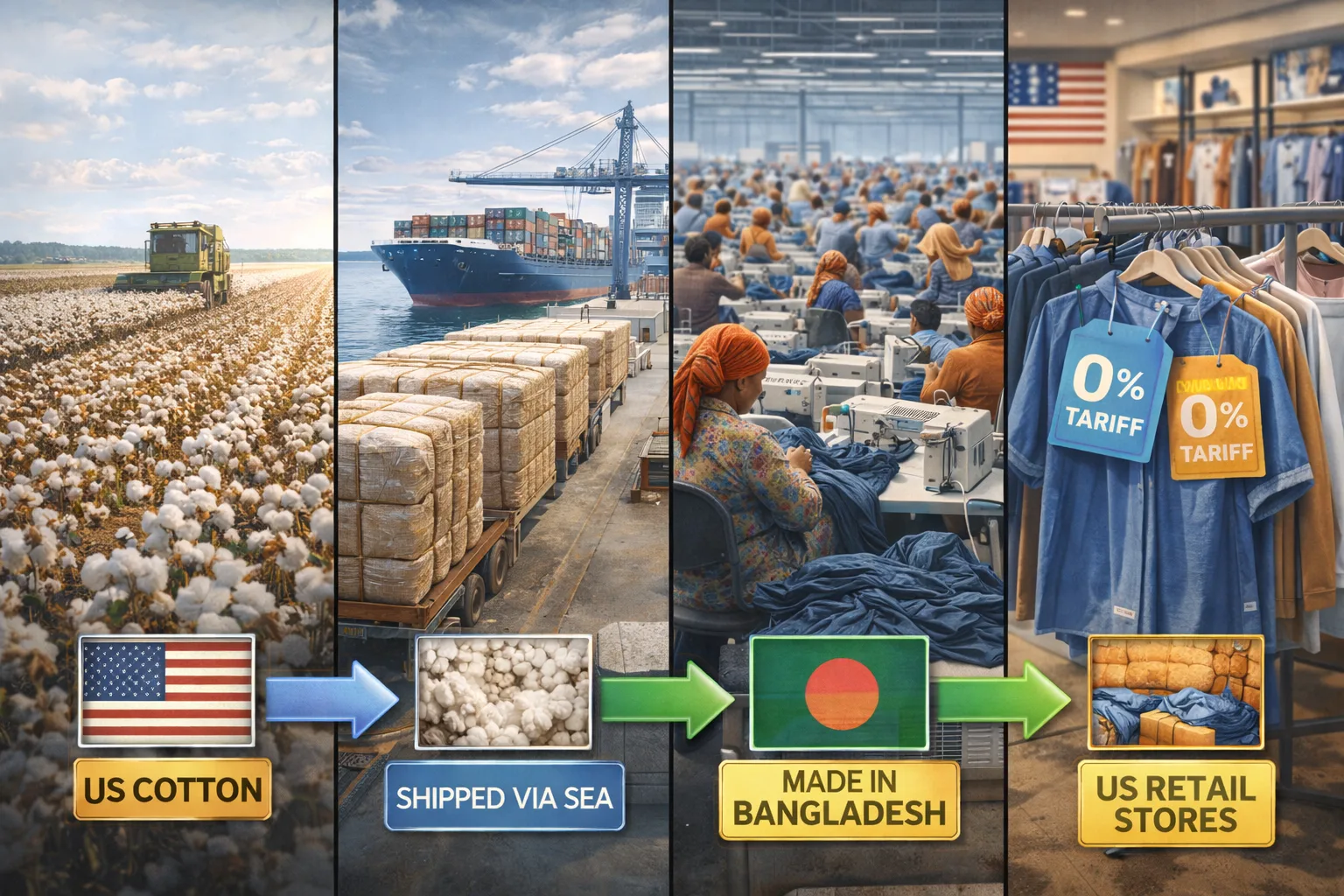
Image credit: AI-generated using ChatGPT by OpenAI
Why US–Bangladesh Relations Suddenly Matter More
Since Muhammad Yunus came to power, Washington has made sustained efforts to stabilize and support his administration.
The reason is now clearer.
Under this deal, Bangladesh has accepted conditions that India has consistently rejected, including:
1. No Data Localization
Bangladesh committed to free cross-border data transfer, allowing US companies unrestricted access to Bangladeshi data.
India has repeatedly refused this, insisting on data sovereignty.
2. Preferential Market Access for US Firms
Bangladesh agreed to ease entry for US businesses across sectors.
3. Large-Scale Agricultural Imports from the US
Bangladesh committed to purchasing:
- US wheat
- US corn
- US soy
- US cotton
Worth billions of dollars, directly reducing Bangladesh’s dependence on regional suppliers.
4. Energy Imports
Bangladesh committed to importing $15 billion worth of US energy products over 15 years.
In effect, the US did not just secure a textile advantage—it opened Bangladesh’s economy across multiple fronts.
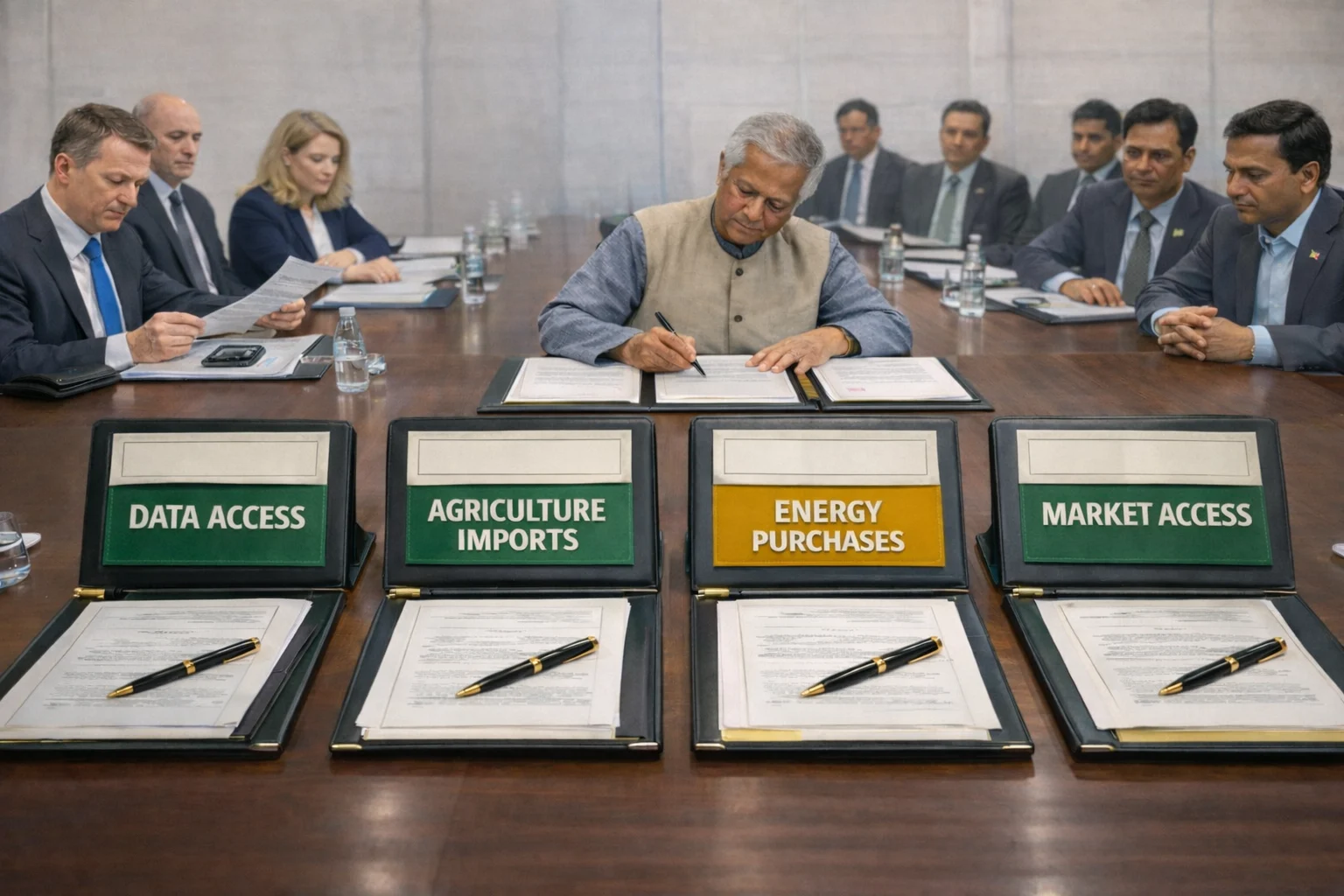
Image credit: AI-generated using ChatGPT by OpenAI
Why India Could Not (and Did Not) Accept These Terms
It is important to clarify a common misconception.
India and the US have not signed a full trade deal yet. What exists is an interim trade framework, not a finalized agreement.
Under this framework:
- India secured tariff-free access for silk exports
- India protected its core agricultural sectors
- India maintained data localization requirements
These were deliberate choices.
However, India did not secure major tariff relief in textiles, which is why Indian textile stocks fell 5–7% after news of the Bangladesh deal emerged.
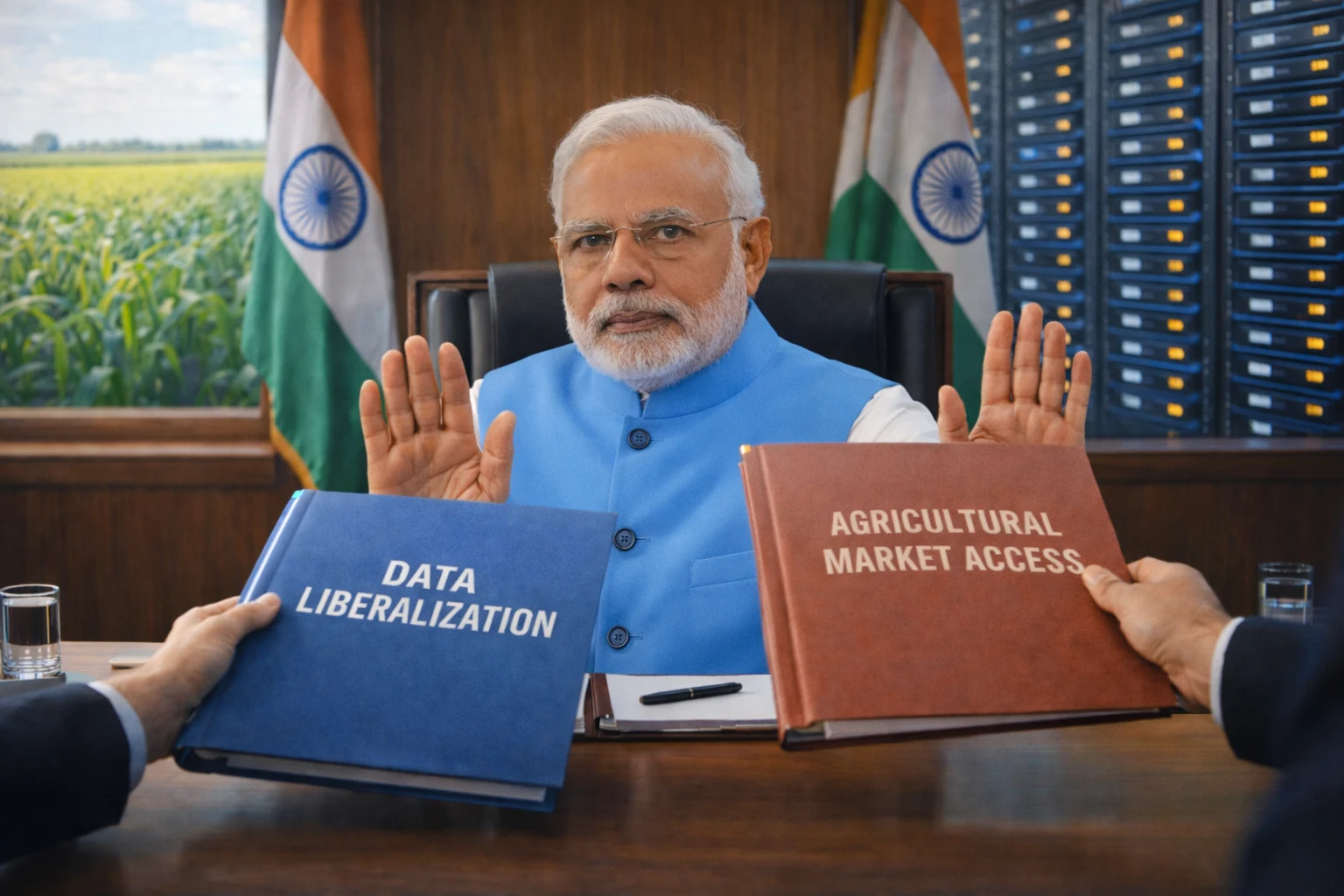
Image credit: AI-generated using ChatGPT by OpenAI
Who Actually Won the Bangladesh US Textile Deal?
If the question is framed as India vs Bangladesh, the answer is incomplete.
The real winner is the United States.
- US farmers secured guaranteed cotton demand
- US corporations gained market access Bangladesh never offered India
- US energy exports locked in long-term buyers
- US influence over Bangladesh’s economic policy deepened
Bangladesh protected its textile sector—but at the cost of strategic autonomy.
India, meanwhile, avoided these concessions—but now faces stronger competition in US apparel markets.
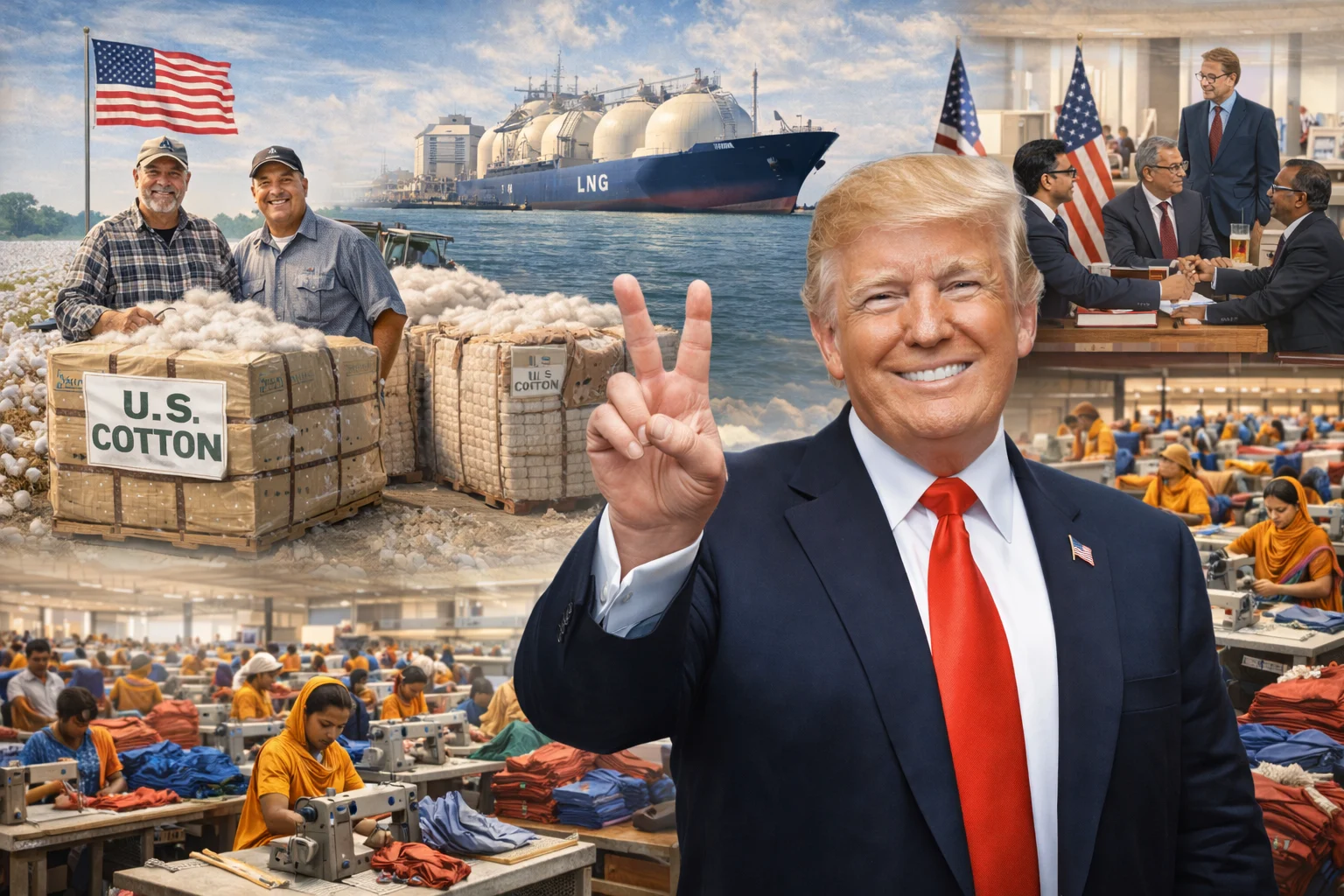
Image credit: AI-generated using ChatGPT by OpenAI
The Strategic Risk for India Going Forward
Over the next 5–10 years, India faces a clear challenge:
- Compete with Bangladesh’s zero-tariff textile access in the US
- Without surrendering data, agriculture, or regulatory sovereignty
This means India must win through:
- Scale
- Automation
- Higher-value textile segments
- Faster trade negotiations with the EU and other markets
Final Verdict: A Deal That Reveals Power, Not Friendship
The Bangladesh US textile deal is not about generosity. It is about leverage.
Bangladesh accepted terms India refused.
The US extracted economic, data, and energy concessions.
India preserved sovereignty—but must now fight harder in textiles.
This was not a loss for India.
It was a reminder that every zero-tariff promise comes with a price.
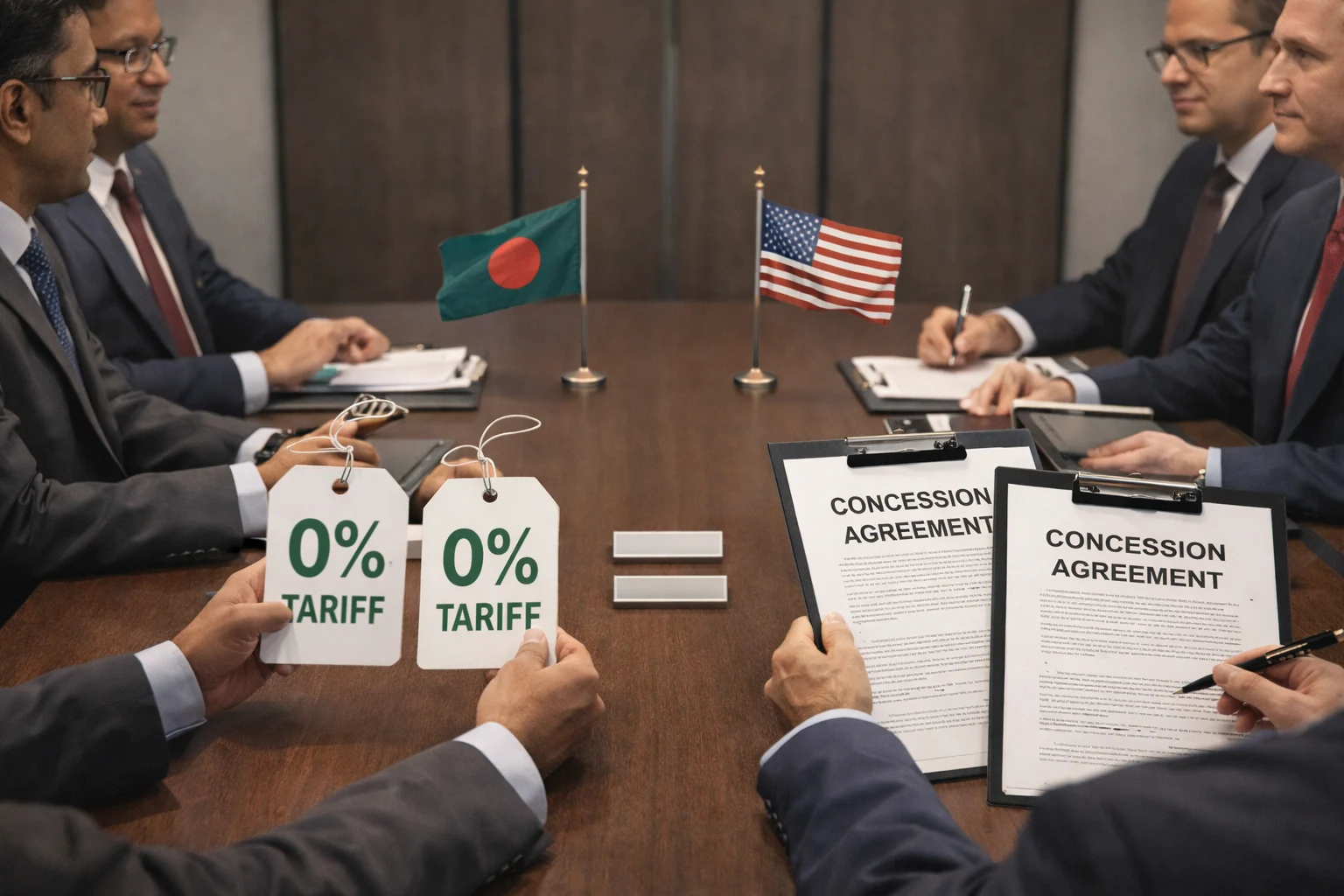
Image credit: AI-generated using ChatGPT by OpenAI
FAQs
Did Bangladesh get a better deal than India from the US?
In textiles, yes. Strategically and economically, the US gained the most.
Why can Bangladesh export textiles at zero tariff?
Because it agreed to use US cotton and open its market across sectors.
Why didn’t India accept similar terms?
India refused data liberalization, agricultural exposure, and excessive market access demands.
Will this hurt Indian textile exports?
In the US market, yes—unless India upgrades competitiveness rapidly.
Share Your Opinions
Do you think India should renegotiate textile tariffs with the US—or focus on Europe instead?
Share your view in the comments and stay tuned for deeper breakdowns as negotiations evolve.
For more deep-dive analysis on global trade, geopolitics, and India’s strategic future, explore our coverage under Economy & Trade, Indian Affairs and World Affairs. Read more about India-US Trade Deal and Bangladesh US Secret Trade Deal.
Sources : Wikipedia contributors, List of countries by textile exports — licensed under CC BY-SA 4.0. , Business Today, The Economic Times, The Indian Express, The White House and PIB.