
Table of Contents
India Canada Uranium Deal 2026: What Was Signed
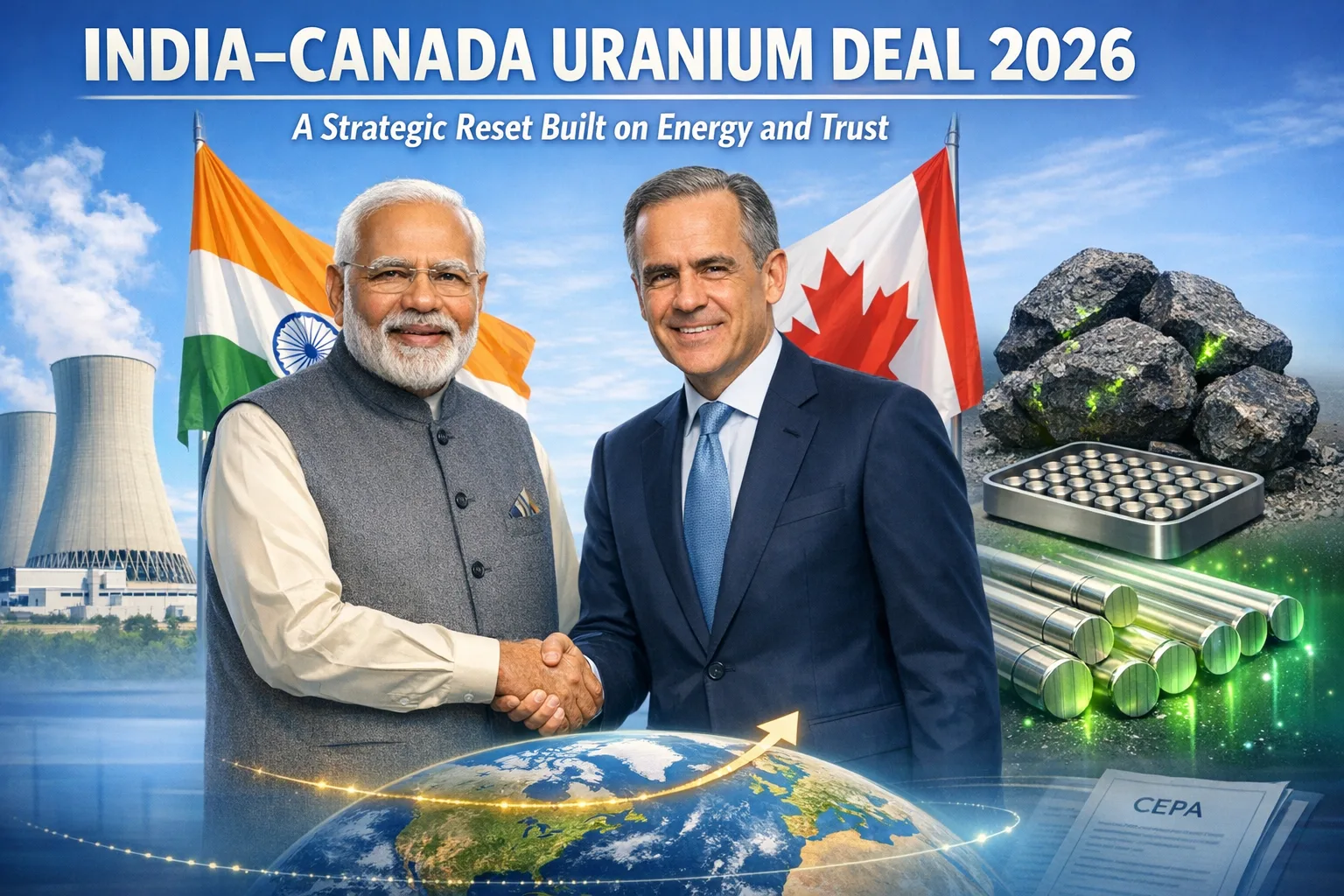
The India Canada uranium deal 2026 marks a significant shift in bilateral relations.
India and Canada have signed a long-term uranium supply agreement reportedly valued at approximately CAD 2.6–2.7 billion (roughly USD 1.9–2 billion) over a 10-year period. The uranium will be supplied for civilian nuclear energy production in India.
International media — including British, American, and Chinese outlets — have closely followed this development. The deal is being described as a landmark reset after a period of diplomatic strain.
While global attention remains focused on Middle East tensions, India has quietly secured a critical long-term energy arrangement.
That contrast is striking.
Sources: China Daily, Reuters, Economic Times
From Diplomatic Tension to Strategic Reset
Relations between India and Canada had faced serious turbulence during the tenure of former Prime Minister Justin Trudeau.
Allegations and diplomatic friction created visible strain between Ottawa and New Delhi. However, under Prime Minister Mark Carney, a different tone has emerged.
During his visit to India, Carney emphasized:
- Renewal of partnership
- Expansion of value-based cooperation
- Confidence in India’s economic trajectory
He highlighted India’s rapid per capita income growth — noting that such growth rates are rarely seen in history.
This isn’t just a renewal of the Canada-India partnership — it’s an expansion with new ambition and focus, between two confident countries charting our own course for the future. pic.twitter.com/5LQVQOzL8l
— Mark Carney (@MarkJCarney) March 3, 2026
The message was clear.
This is not a transactional deal.
It is a reset.
Sources: Global Times, The Hindu Business Line
Why Canada Trusts India with Uranium
Canada holds the world’s third-largest uranium reserves. It exports uranium selectively due to proliferation concerns.
When uranium is exported, there is always a theoretical risk it could be diverted for weapons purposes.
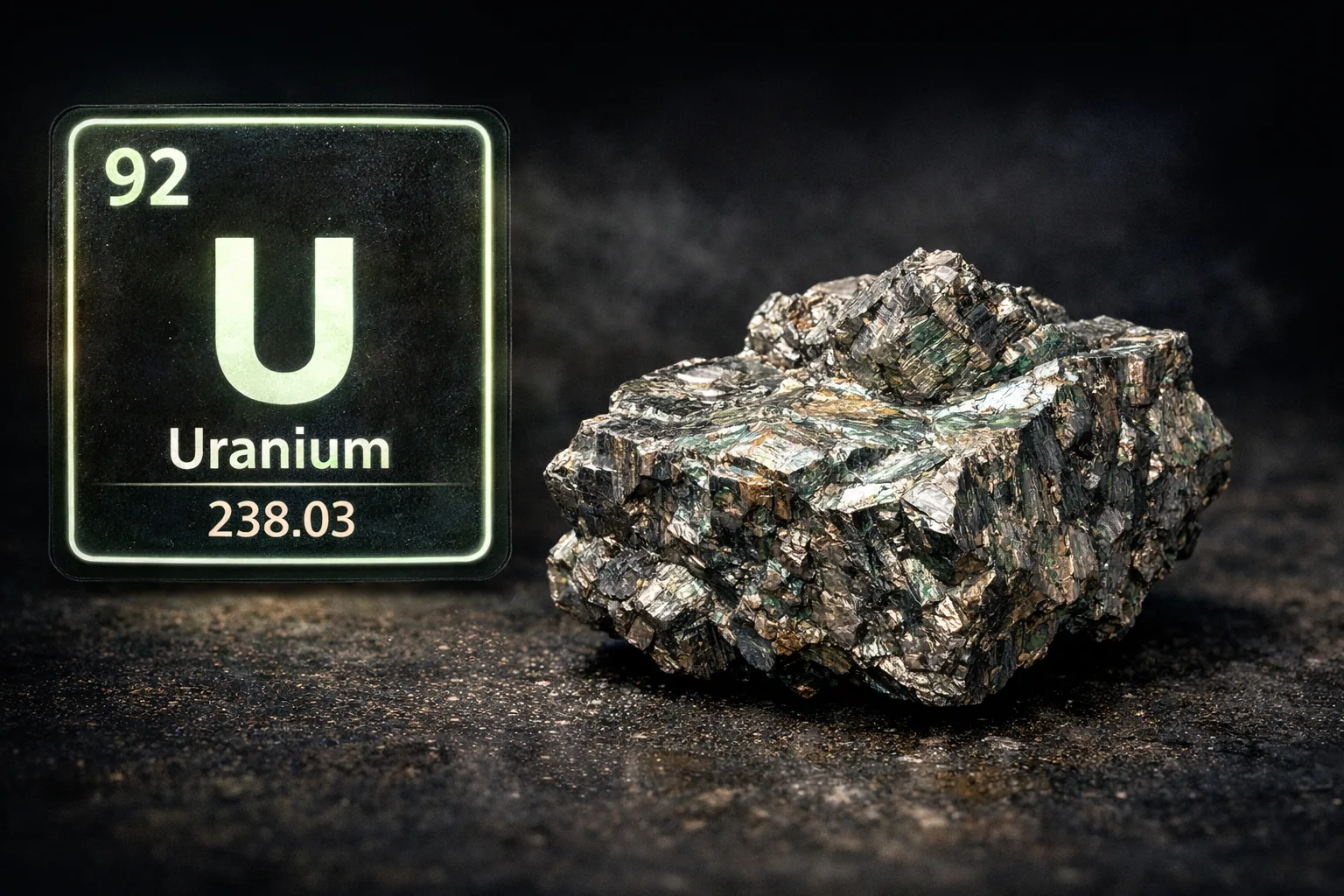
Image credit: AI-generated using ChatGPT by OpenAI
In India’s case, Canada has shown explicit trust that the fuel will be used for peaceful civilian nuclear energy production.
This reflects:
- India’s established nuclear safeguards
- Civilian reactor oversight
- Bilateral confidence
It also carries symbolic weight.
Trust in nuclear trade is strategic capital.
Energy Security and Nuclear Expansion in India
India’s energy demand is rising alongside GDP and per capita income growth. As consumption expands, long-term nuclear fuel security becomes essential.
Nuclear power provides:
- Stable base-load electricity
- Lower carbon emissions relative to fossil fuels
- Reduced dependence on volatile hydrocarbon markets
By securing uranium from Canada, India strengthens diversification within its energy mix.
In a world of oil shocks and shipping disruptions, that stability matters.
Trade Target: From $8 Billion to $50 Billion?
Bilateral trade between India and Canada currently stands below $10 billion annually — roughly around $8 billion.
Both governments are reportedly aiming to increase trade to $50 billion by 2030.
That is ambitious.
But not impossible.
Why?
Because trade expansion is no longer limited to uranium.
It includes:
- LNG exports
- Agricultural products
- Critical minerals
- Technology collaboration
If momentum continues, this target becomes structurally feasible.
Sources: DD News
Canada’s US Diversification Strategy
Global Times and other Chinese outlets have closely monitored this visit.
Their framing suggests that Canada is seeking to reduce overdependence on the United States by expanding ties elsewhere — including India.
Canada remains geographically tied to the US.
But economic diversification is a hedge against:
- Future tariff disputes
- Trade policy unpredictability
- Political shifts in Washington
India does not replace the US.
It complements diversification.
That distinction is important.
Sources: Global Times, China Daily
LNG, Reliance and the Broader Energy Play
Mukesh Ambani was visibly engaged during the visit, signaling private-sector alignment.
Canada is resource-rich beyond uranium:
- Natural gas
- LNG capacity
- Oil reserves
India’s growing energy appetite makes it an attractive long-term buyer.
Major Indian energy players like Reliance Industries operate significantly in LNG and refining markets. Expanding LNG cooperation fits logically into this broader strategic framework.
This is not a single-resource story.
It is an energy corridor story.
Sources: The Tribune, ANI News
CEPA and the Next Phase of Partnership
Negotiations toward a Comprehensive Economic Partnership Agreement (CEPA) are reportedly advancing.
A finalized CEPA would:
- Lower tariffs
- Improve investment flows
- Institutionalize trade expansion
Once formalized, trade growth accelerates structurally rather than episodically.
And on international platforms, closer economic alignment often translates into diplomatic coordination.
Strategic economics reshapes political positioning.
Conclusion: Quiet Momentum Amid Global Noise
While global headlines focus on conflict zones, the India Canada uranium deal 2026 represents long-term strategic positioning.
India secures nuclear fuel.
Canada gains a fast-growing energy market.
Both diversify strategic risk.
This is not a headline-grabbing military event.
It is something more durable.
A partnership built on energy, trust, and economic ambition.
And in geopolitics, durable partnerships often outlast dramatic crises.
FAQs
Does Canada export uranium to India?
Yes. Under the newly signed 10-year agreement, Canada will supply uranium to India for civilian nuclear energy purposes.
Why is uranium important for India?
Uranium fuels nuclear reactors, providing stable electricity generation and supporting India’s long-term energy diversification strategy.
What is the India Canada trade target?
Both sides are reportedly aiming to increase bilateral trade from around $8 billion to $50 billion by 2030.
Is Canada reducing reliance on the US?
Canada remains deeply integrated with the US but is pursuing diversification strategies to reduce vulnerability to future trade disruptions.
What is CEPA between India and Canada?
CEPA refers to a Comprehensive Economic Partnership Agreement designed to expand trade, investment, and economic integration between the two countries.
Strategic Outlook: The Energy Axis Expands
Watch for three developments:
- Finalization of CEPA
- LNG export agreements
- Expanded cooperation in critical minerals
Because when energy partnerships deepen, geopolitical alignments follow.
And this reset appears built for the long term.
Share Your Views in the Comments below.
Explore more about Economy & Trade, Indian Affairs and World Affairs.