Table of Contents
India Russian Oil Waiver Explained
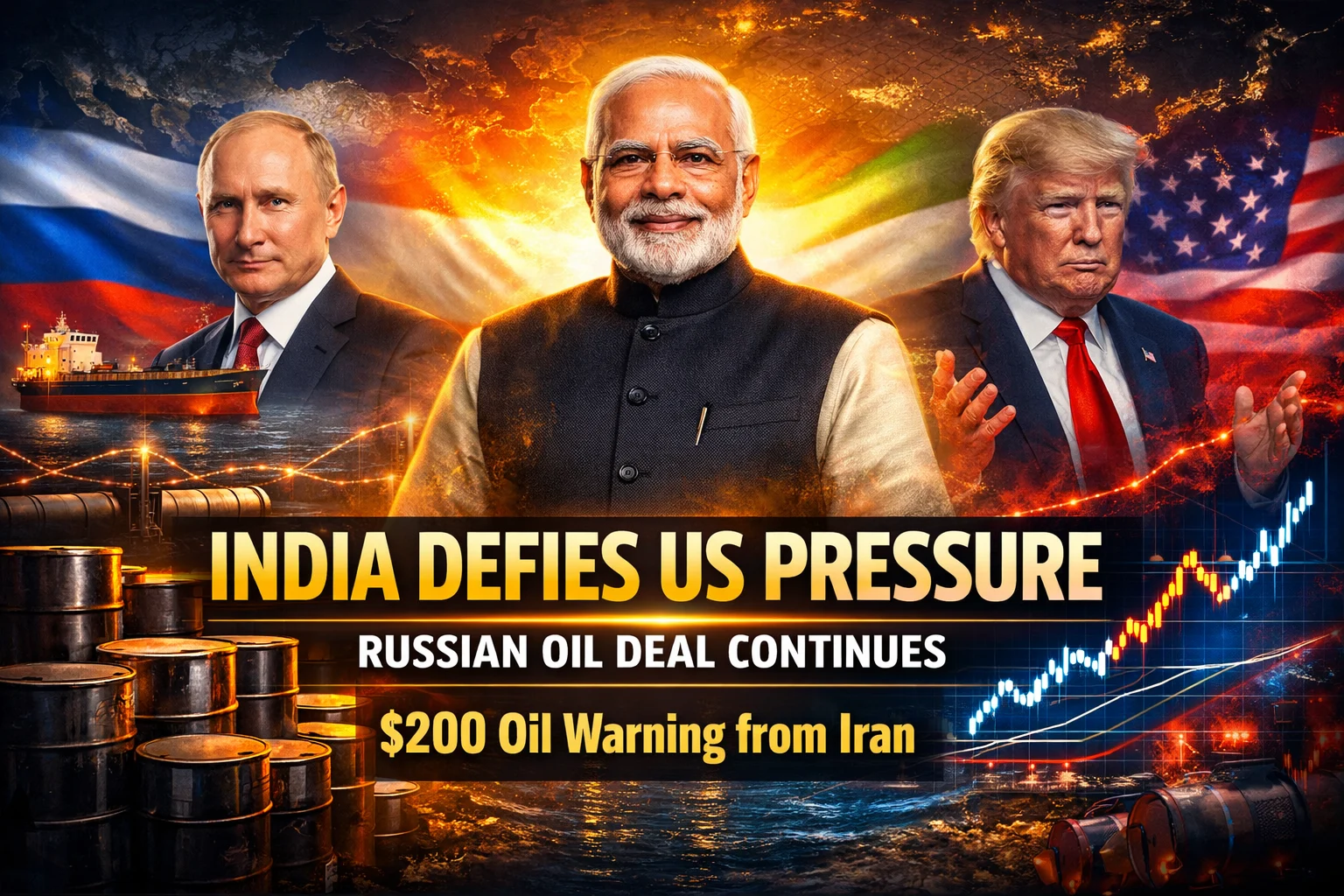
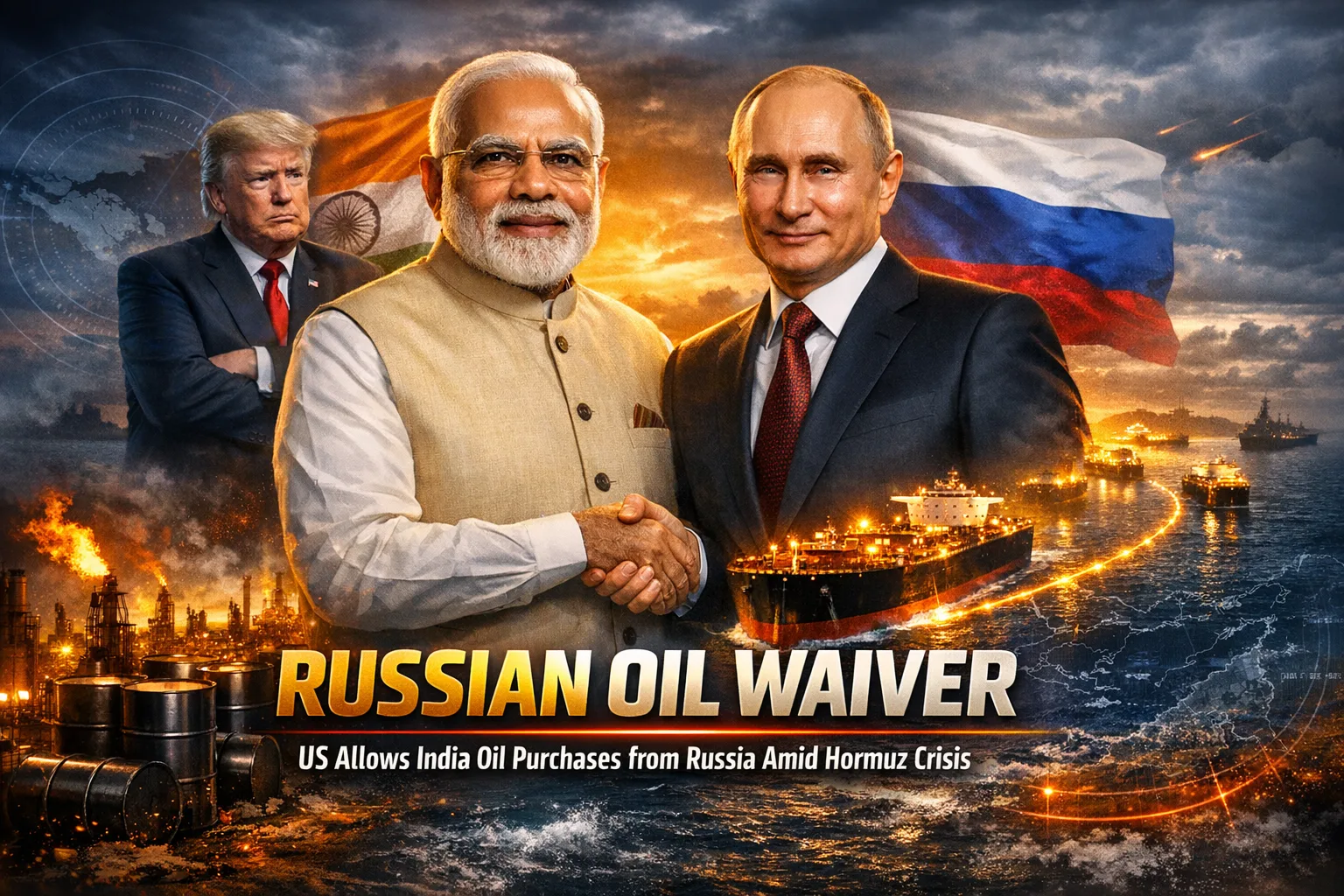
The India Russian oil waiver has suddenly become a major geopolitical talking point as tensions escalate in the Middle East.
Amid the ongoing confrontation between the United States and Iran, disruptions around the Strait of Hormuz have created uncertainty in global energy supply.
In response, Washington announced a temporary 30-day waiver allowing India to continue purchasing Russian oil without facing additional tariffs or sanctions pressure.
The statement came from US Treasury Secretary Scott Bessent, who said the measure was designed to stabilize global energy markets during the crisis.
President Trump’s energy agenda has resulted in oil and gas production reaching the highest levels ever recorded.
— Treasury Secretary Scott Bessent (@SecScottBessent) March 6, 2026
To enable oil to keep flowing into the global market, the Treasury Department is issuing a temporary 30-day waiver to allow Indian refiners to purchase Russian oil.…
But the move raised immediate questions.
Why offer a waiver if India was already purchasing Russian crude?
And why limit it to just 30 days?
Those details matter.
Sources: Times of India, The Hindu
Why the US Suddenly Allowed the Purchase
According to the statement from Washington, the waiver is intended as a temporary stop-gap measure.
The reasoning presented is straightforward:
- Global energy markets are under stress
- Oil shipments are being disrupted by conflict
- Some Russian oil cargoes are already stranded at sea
Allowing Indian refiners to purchase these shipments could help stabilize supply.
But the announcement also included a clear expectation.
The United States indicated that India should eventually increase purchases of American oil instead.
That line reveals the larger strategic context.
Energy trade is rarely just about supply.
It is also about influence.
Strait of Hormuz Crisis and Energy Disruption
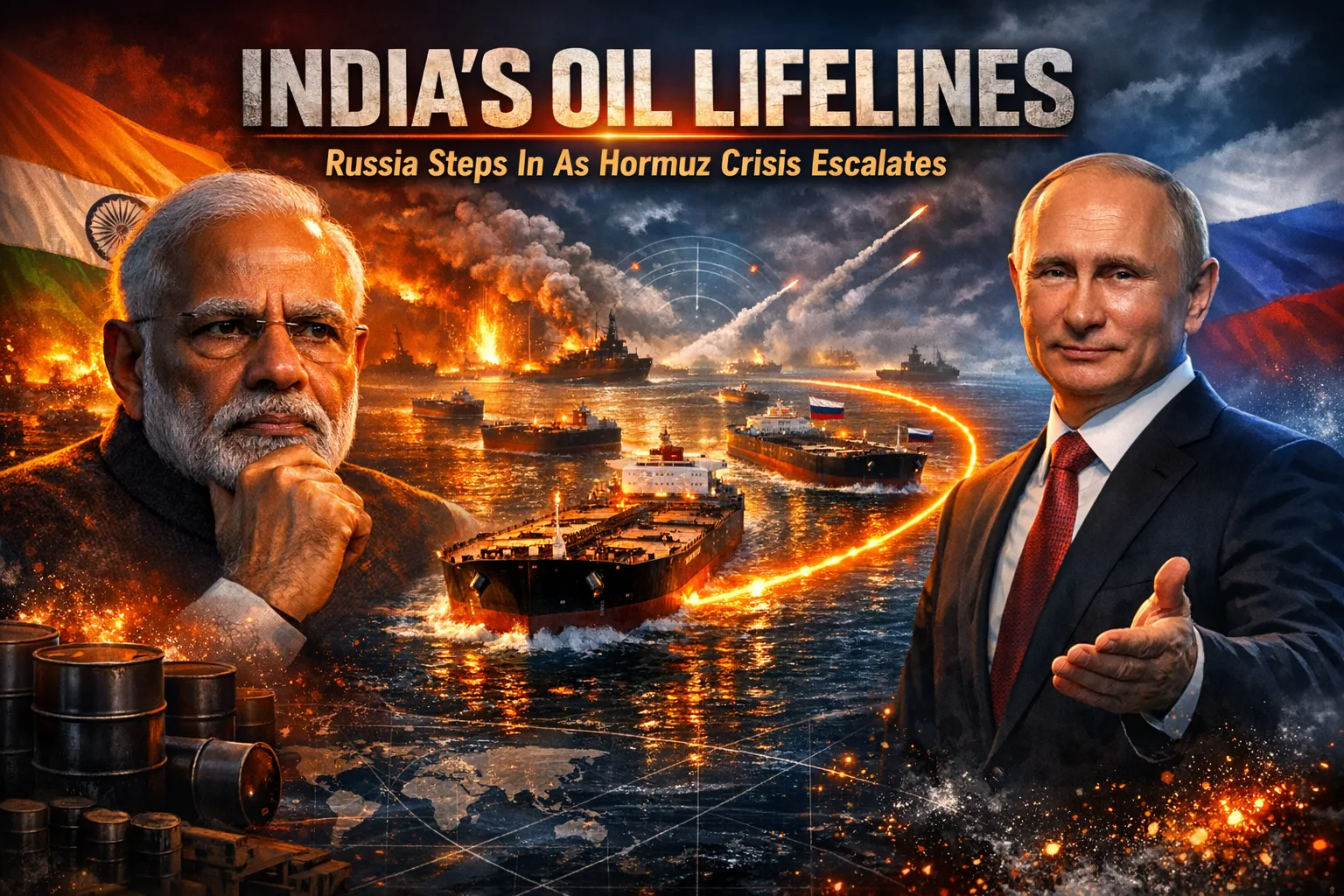
The Strait of Hormuz sits at the center of the current crisis.
Nearly 40% of India’s oil imports pass through this narrow maritime corridor, making it one of the most important routes for the country’s energy security.
But during the ongoing US Iran war:
- Tankers are facing attacks
- Shipping routes are becoming uncertain
- Insurance costs for vessels are rising
This disruption is already pushing global oil prices higher.
Here’s the critical issue.
When energy markets tighten suddenly, countries must find alternatives quickly.
That is where Russian crude becomes important.
India Never Actually Stopped Buying Russian Oil
One widely discussed misconception is that India stopped purchasing Russian oil.
In reality, that never happened.
Government-owned companies in India have continued importing crude from Russia even during periods of Western sanctions pressure.
Some private companies—including major refiners such as Reliance Industries—temporarily reduced their Russian purchases.
But overall imports continued.
Which means the waiver is not really about permission.
It is about narrative.
This was strategic messaging.
Sources: Financial Express, NDTV
The Strategic Role of Indian Refineries
India occupies a unique position in the global energy system.
The country imports large volumes of crude oil but also operates major refining facilities capable of exporting fuel products.
This creates a crucial dynamic.
Russian crude can be imported into India, refined into fuel products such as diesel or petrol, and then exported to other markets—including parts of Europe.
In effect, Indian refineries can act as an energy processing hub during global supply disruptions.
That capability becomes especially important when shipping routes through the Middle East are under pressure.
Iran’s Response and Signals From Tehran
While the energy debate continues, developments inside Iran also carry strategic signals.
Iranian officials have publicly stated that they are prepared for further escalation.
Statements from Iran’s foreign minister Abbas Araghchi suggested that Tehran would not seek a ceasefire and is prepared even for the possibility of a ground invasion.
Meanwhile, international media outlets—including CNN—have reported from Iranian cities showing relatively normal daily life despite the conflict.
CNN's Frederik Pleitgen encounters more checkpoints than usual and armed personnel on the road to Iran's capital, but sees no signs of panic.
— CNN International (@cnni) March 5, 2026
Shops are open and stocked, and gas appears readily available with no long lines.
CNN is operating in Iran only with government… pic.twitter.com/SzXBDHz706
Shops remain open.
Fuel supplies appear available.
Traffic and economic activity continue.
That detail matters.
It suggests that Iran may be preparing for a prolonged confrontation rather than a rapid resolution.
Sources: Middle East Eye, NDTV, Times of India
What This Means for Global Energy Politics
The India Russian oil waiver reflects a broader shift in the geopolitics of energy.
Three dynamics are now unfolding simultaneously:
- Military escalation in the Middle East is disrupting key shipping routes.
- Energy competition between major powers is intensifying.
- Large importers like India are balancing multiple partnerships.
This balance is not accidental.
India’s strategy has consistently focused on securing affordable energy supplies from multiple sources while avoiding deep entanglement in geopolitical conflicts.
That approach is pragmatic.
And during periods of global instability, pragmatism becomes strategic strength.
Conclusion
The debate over the India Russian oil waiver reveals how quickly global energy politics can shift during a crisis.
As tensions around the Strait of Hormuz disrupt supply routes, Washington has temporarily relaxed pressure on India’s Russian oil purchases.
But the deeper reality remains unchanged.
Energy security is driving policy decisions across the world.
For India, the goal is simple: maintain economic growth while navigating a complex geopolitical environment involving the United States, Russia, and the Middle East.
Because when energy routes become unstable, the decisions made by large economies can reshape global markets.
And the consequences extend far beyond a single waiver.
FAQs
Why does India buy oil from Russia?
India imports Russian oil largely because it is often available at discounted prices compared to global benchmarks, helping reduce energy costs.
Did the US allow India to buy Russian oil?
Yes. During the current crisis, the United States issued a temporary 30-day waiver allowing India to purchase Russian oil without facing additional sanctions pressure.
How important is Russian oil for India?
Russian crude has become a significant part of India’s energy imports in recent years, helping diversify supply sources.
What happens if the Strait of Hormuz is blocked?
If the Strait of Hormuz closes, global oil shipments would be severely disrupted, potentially causing sharp price increases and supply shortages.
Can the US sanction India for buying Russian oil?
In theory sanctions are possible, but geopolitical considerations and strategic partnerships often influence how such policies are applied.
What Does the India Russian Oil Waiver Really Signal?
The India Russian oil waiver raises a larger strategic question.
Is this truly a short-term exception, or the beginning of a broader shift in global energy politics?
Consider the possibilities:
- Will India expand Russian oil imports as supply disruptions continue?
- Could the waiver be extended if the Middle East conflict drags on?
- And how will global energy markets respond if oil prices keep rising?
Share Your Perspective in the Comments below.
Because in the world of geopolitics, energy decisions often shape the balance of power.
Explore more about Economy & Trade, Indian Affairs and World Affairs.