Donald Trump slashes tariffs on Indian exports from 50% to 18%. Is this a historic India US trade deal or a dangerous compromise on Russian oil? Full analysis inside.
Table of Contents
Introduction: The Morning Indian Markets Turned Green
Something unusual happened in the Indian stock market.
Stocks weren’t just rising — they were sprinting. Green screens everywhere. Export-heavy companies outperforming. Traders scrambling for answers.

Image credit: AI-generated using ChatGPT by OpenAI
The reason wasn’t earnings.
It wasn’t a policy announcement from Delhi.
It was a single number from Washington.
18%.
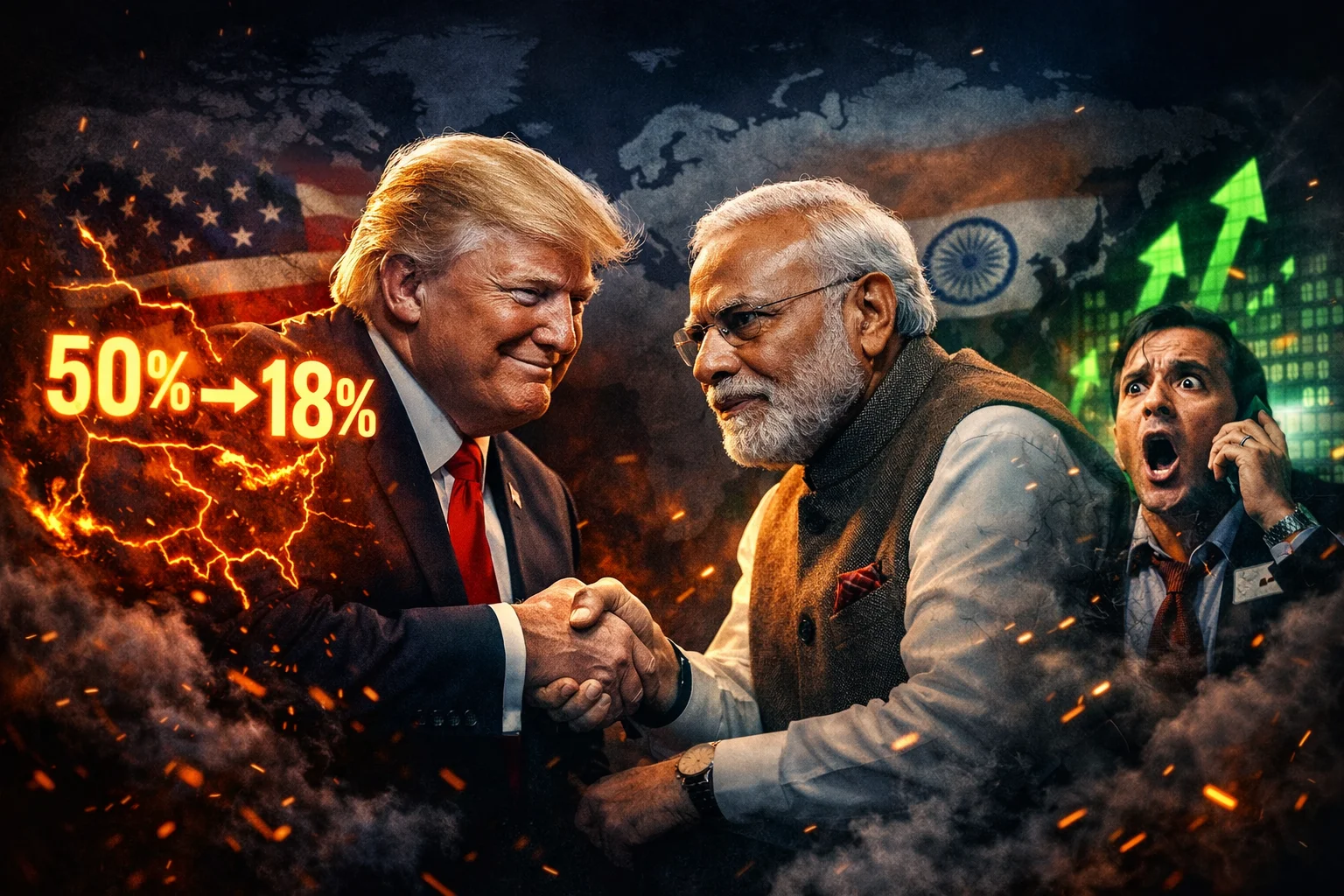
Almost silently, Donald Trump cut tariffs on Indian exports to the United States from a punishing 50% to just 18%. Overnight, India found itself in a stronger trade position than China, Pakistan, and Bangladesh in the world’s biggest consumer market.
But beneath the celebration lies a deeper, more uncomfortable question.
What did India give up to get this deal?
And is this really a victory — or just the opening episode of a far more complex geopolitical thriller?
The Tariff Bombshell Nobody Saw Coming
Until recently, Indian exporters were staring at a wall.
A combined 50% tariff, imposed by the Trump administration, made Indian goods expensive and uncompetitive in the US market. Half of that penalty was linked to reciprocal tariffs, while the other half was a political punishment for India’s continued purchase of Russian oil.
Then came the reversal.
In a dramatic shift, Trump announced that tariffs on “Made in India” products entering the US would now be capped at 18%.
No phased rollout.
No long negotiations in public view.
Just a sharp cut — and instant market euphoria.
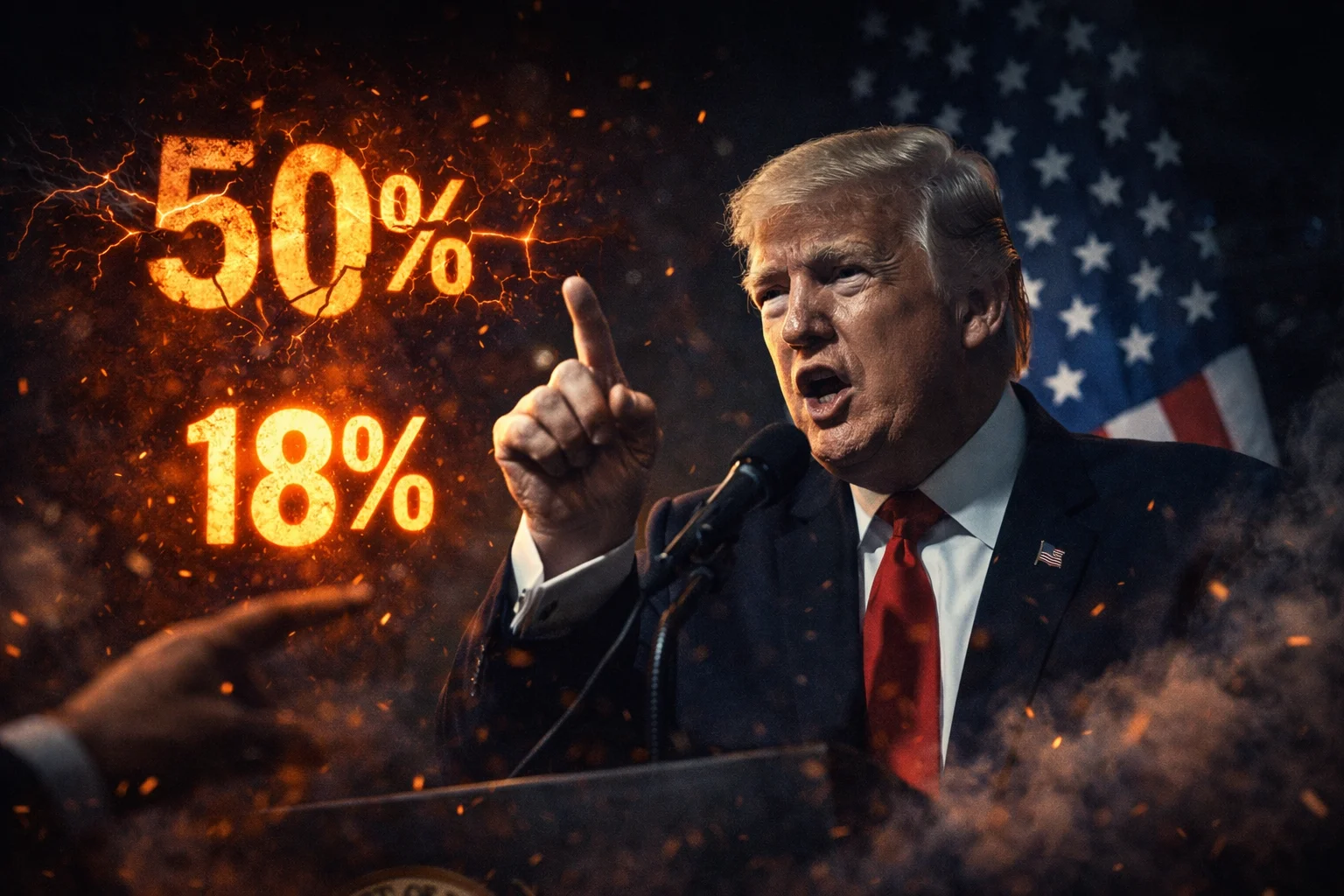
Image credit: AI-generated using ChatGPT by OpenAI
India US Trade Deal : Why 18% Matters More Than It Sounds
On paper, 18% still sounds high.
In reality, it’s a strategic goldmine.
Here’s why:
- Pakistan now faces a 19% tariff
- China remains burdened with even higher trade barriers
- Bangladesh, a key textile rival, is worse off
- Several Asian exporters are no longer price-competitive
For the first time in years, Indian exporters can undercut rivals without lowering quality or margins.
Textiles, pharmaceuticals, engineering goods, electronics — all suddenly become more attractive to American buyers.
This isn’t just a trade advantage.
It’s a structural shift.
India vs China, Pakistan, Bangladesh: The Hidden Trade War
Trade wars aren’t fought with tanks.
They’re fought with percentages.
At 18%, India now enjoys a pricing edge over:
- Chinese mass manufacturers
- Pakistani exporters targeting US retail
- Bangladeshi garment suppliers
Countries like Japan and South Korea do enjoy lower tariffs near 15%, but they don’t compete directly with India in most export categories. Their product baskets are entirely different.
In the real battlefield — apparel, chemicals, generic medicines, industrial components — India just moved ahead.
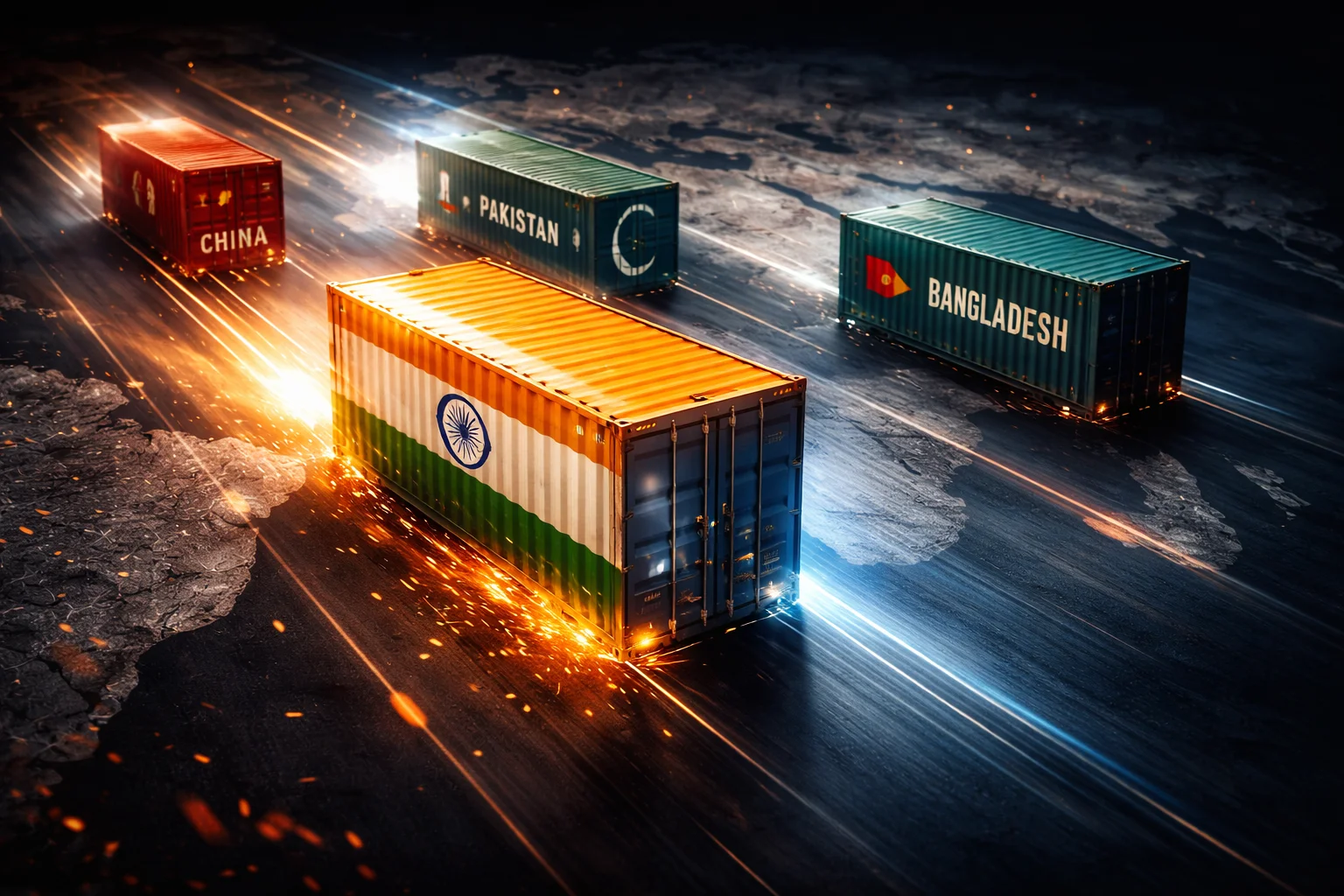
Image credit: AI-generated using ChatGPT by OpenAI
Modi’s “My Dear Friend” Signal: Symbolism or Strategy?
Words matter in diplomacy.
Especially when they suddenly return after years of absence.
Prime Minister Narendra Modi publicly referred to Trump once again as “my dear friend.”
That phrase had quietly disappeared during periods of tension.
Its return wasn’t accidental.
It signaled a reset — a willingness to stabilize relations, reduce friction, and project warmth at a global level. Modi also praised Trump’s leadership for global peace, stability, and prosperity, language carefully chosen for an American political audience.
The message was clear: India wants cooperation, not confrontation.
Image credit: AI-generated using ChatGPT by OpenAI
The US Angle: What Does America Really Want in Return?
Here’s where the story darkens.
According to Trump’s own statements, India allegedly agreed to:
- Stop buying Russian oil
- Increase purchases of US energy
- Open Indian markets by reducing tariffs and non-tariff barriers
- Import up to $500 billion worth of American goods
It sounds impressive.
It also sounds unrealistic.
And that’s where skepticism begins.
Image credit: AI-generated using ChatGPT by OpenAI
The Russian Oil Question That Could Change Everything
This is the real fault line.
India currently sources around 40% of its crude oil imports from Russia. That oil is discounted, reliable, and strategically important.
If India were to suddenly stop buying Russian oil:
- Energy costs could rise
- Relations with Moscow could suffer
- India’s long-standing policy of strategic autonomy would weaken
Trump claims India has already agreed.
Indian officials haven’t confirmed this.
And until Delhi puts it in writing, this remains a claim — not a commitment.

Image credit: AI-generated using ChatGPT by OpenAI
The $500 Billion Claim: Reality or Trumpian Exaggeration?
Let’s talk numbers.
India’s entire annual government expenditure is roughly $550–630 billion. That includes defense, salaries, subsidies, infrastructure, and welfare.
Trump’s claim that India will buy $500 billion worth of US goods — even over multiple years — doesn’t align with fiscal reality.
Current India US trade deal volumes aren’t even close to that figure.
This appears less like a contract and more like political messaging aimed at domestic US audiences.
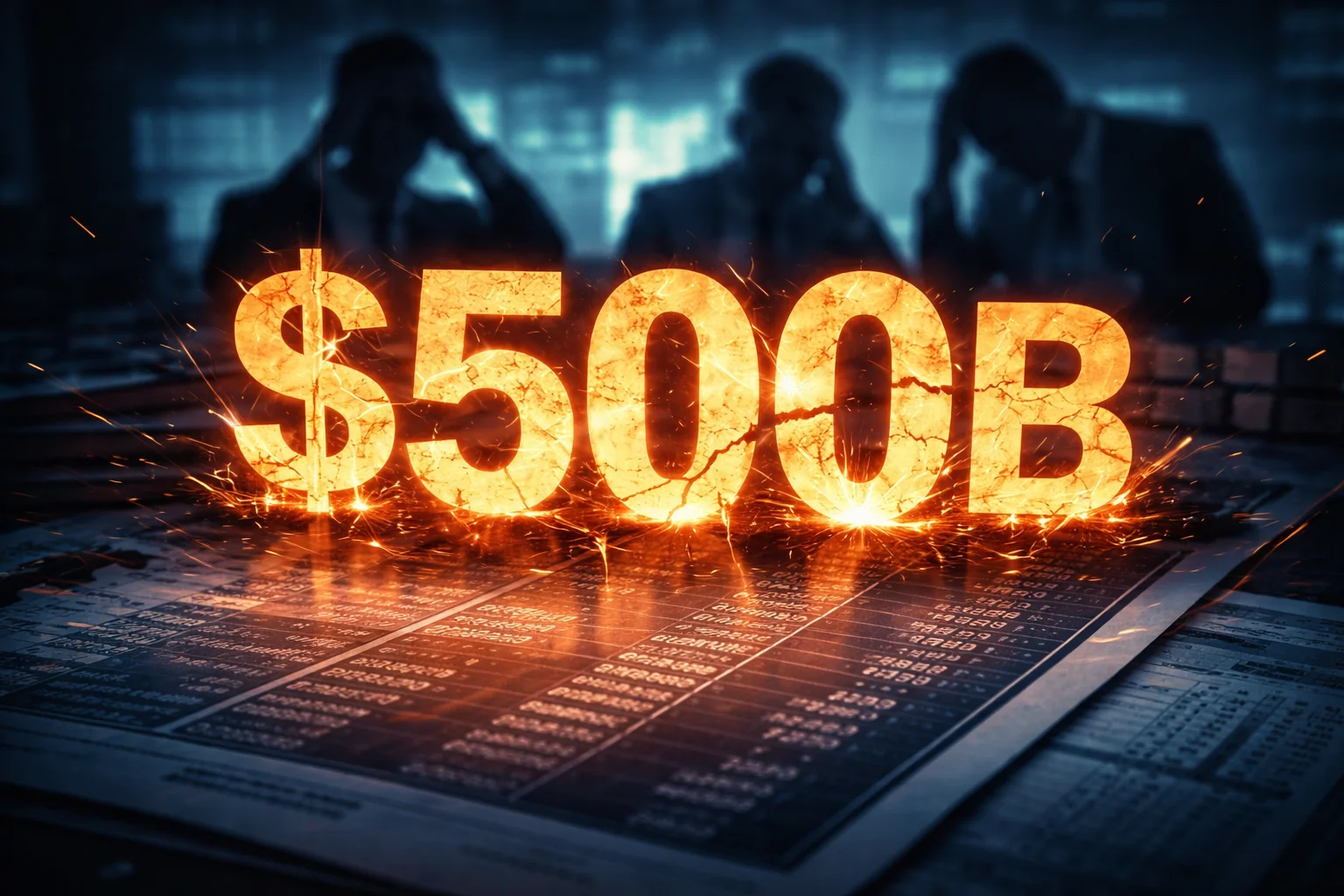
Image credit: AI-generated using ChatGPT by OpenAI
Fine Print Fears: Is 18% Tariff Universal or Selective?
Another unanswered question lurks in the shadows.
Is the 18% tariff applicable across all product categories?
Or only selected sectors?
Trade deals often hide complexity in annexures and exceptions. It’s entirely possible that:
- Some Indian goods enjoy 18%
- Others face higher duties
- Sensitive categories remain protected
Until the official documents are released, celebrations should remain cautious.
Image credit: AI-generated using ChatGPT by OpenAI
Strategic Gains vs Strategic Risks for India
The gains:
- Export competitiveness improves
- Manufacturing gets a boost
- Investor sentiment turns positive
- India strengthens its US market position
The risks:
- Energy security questions
- Diplomatic strain with Russia
- Overdependence on US trade goodwill
- Unclear long-term commitments
This deal isn’t black or white.
It’s a shade of strategic grey.
Image credit: AI-generated using ChatGPT by OpenAI
What Happens Next in India–US Relations?
We are still in Episode One.
The real story begins when:
- Official Indian statements clarify commitments
- Trade documents reveal sector-wise tariffs
- Energy import data confirms or denies Russian oil shifts
Until then, markets will speculate, politicians will posture, and analysts will argue.
But one thing is undeniable.
India has re-entered the global trade spotlight — and the world is watching closely.

Image credit: AI-generated using ChatGPT by OpenAI
FAQs
Q1. What is the new tariff rate on Indian exports to the US?
The announced rate is 18%, down from a previous combined level of up to 50%.
Q2. Why did Trump reduce tariffs on India?
Officially, it’s linked to trade negotiations and strategic cooperation, though details remain unclear.
Q3. Will India stop buying Russian oil?
There is no confirmed official statement from India agreeing to this yet.
Q4. Is the India–US trade deal final?
No. The agreement appears preliminary, with fine print still awaited.
Q5. Who benefits most from this deal?
Indian exporters gain immediately, while long-term geopolitical impacts remain uncertain.
Final Verdict
This isn’t just a trade deal.
It’s a geopolitical chess move — bold, risky, and unfinished.
India has gained an advantage, but the price may only become clear with time.
Stay alert. Stay analytical.
Because in global power games, the real story is never in the headline — it’s in what comes next.
For more deep-dive analysis on global trade, geopolitics, and India’s strategic future, explore our coverage under Economy & Trade, Indian Affairs and World Affairs.