Table of Contents
Renewed Bombing and Rising Anger
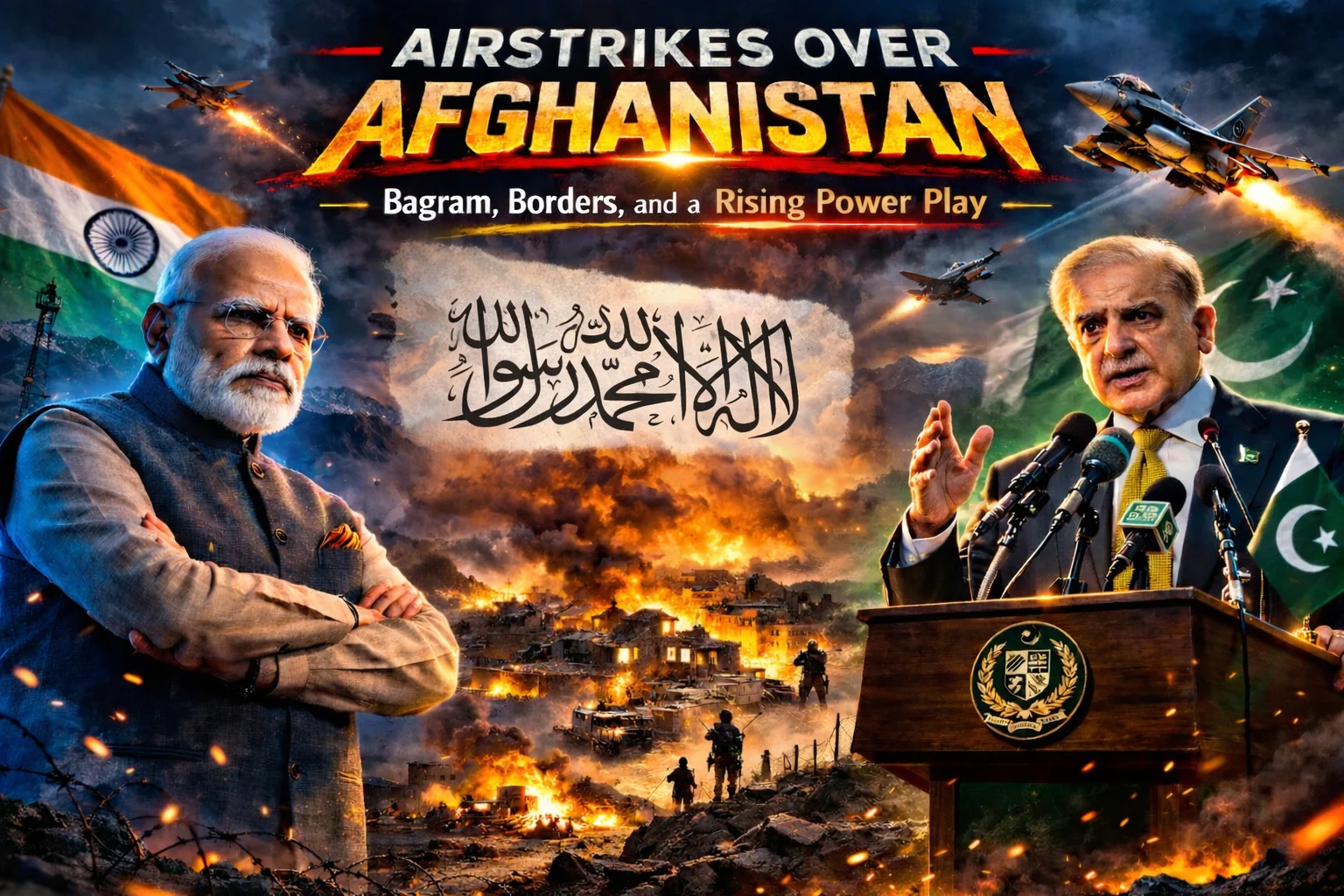
The latest Pakistan airstrikes Afghanistan have reignited tensions along the border.
Pakistan’s Air Force reportedly carried out fresh strikes inside Afghan territory, marking another episode in what has become a recurring pattern over the past two to three years. Earlier incidents had already drawn controversy, particularly after dozens of Afghan civilians were reportedly killed in previous operations in late 2025.
This time, the reported death toll is even higher — with Afghan sources claiming at least 70 fatalities.
The escalation is not happening in isolation.
It comes at a moment of deep political and strategic friction in the region.
Sources: BBC
India Condemns Pakistan Strikes During Ramadan
India issued a strong official condemnation of the strikes.
The Ministry of External Affairs stated that civilian casualties, including women and children, occurred during the holy month of Ramadan. India described the action as an attempt by Pakistan to “externalize its internal failures.”
That wording matters.
India also reiterated support for Afghanistan’s sovereignty, territorial integrity, and independence.
In diplomatic language, that is a clear positioning.
It signals opposition not just to the strikes — but to any broader pressure campaign against Kabul.
Our response to media queries about Pakistan’s airstrikes on Afghanistan ⬇️
— Randhir Jaiswal (@MEAIndia) February 22, 2026
🔗 https://t.co/gUXTbNQjVg pic.twitter.com/A6W4wxXBpV
Sources: Ministry of External Affairs – Government of India
Taliban Messaging: Why the Urdu Song Matters
In November 2025, the Afghan Taliban released a song targeting Pakistan’s military establishment.
What stood out was the language.
It was released in Urdu.
The Taliban drop a song calling the Pakistan Army ungrateful, hypocritical slaves of foreign powers with poor human rights records, making them enemies of Islam. And it’s brilliant.
— Sonam Mahajan (@AsYouNotWish) November 3, 2025
What a cost-effective and clever idea, undoing years of propaganda that the ISPR has peddled,… pic.twitter.com/OwxxJ2Esda
Taliban does not primarily use Urdu domestically. The deliberate choice suggests the messaging was aimed directly at Pakistan’s population and military audience.
The lyrics accused Pakistan’s leadership of acting on American instructions and criticized alleged subservience to Washington.
This is strategic communication.
When militant movements use cultural media to frame geopolitics, it reflects deeper hostility.
And that hostility is growing.
Where Did the Strikes Happen?
The latest airstrikes reportedly targeted:
- Paktika Province (near the Pakistan border)
- Nangarhar Province (eastern Afghanistan)
Both provinces lie along the sensitive Durand Line — the contested Afghanistan–Pakistan border.
Border regions often host militant crossings and smuggling routes. But they are also densely populated by civilian communities.
And that is where the controversy intensifies.
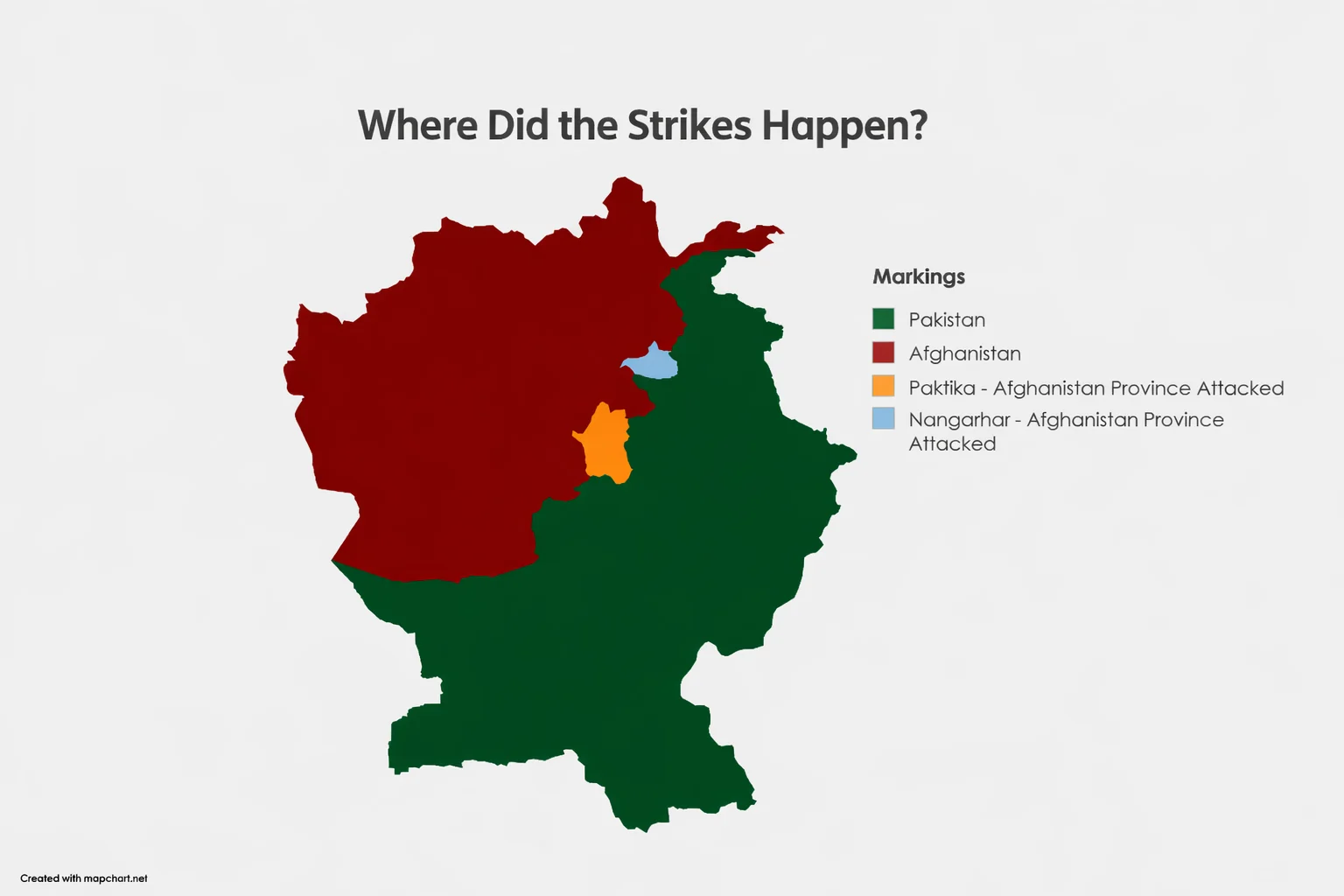
Credit: Map created using MapChart
Civilian Casualty Claims and Ground Reports
Afghan defense authorities stated that civilian areas were struck.
Reports allege that homes were destroyed and that women and children were among the casualties. Some claims suggest even religious institutions may have been damaged.
Local villagers reportedly told Afghan media that those killed were not militants, but ordinary residents.
Nangarhar and Paktika provinces, targeting a religious Madrasa and multiple civilian homes, resulted in the martyrdom and injuries dozens of innocent civilian, including women and children.
— د ملي دفاع وزارت – وزارت دفاع ملی (@MoDAfghanistan2) February 22, 2026
The Ministry of National Defense condemns in the strongest possible terms…
Pakistan, on the other hand, has historically justified such strikes as counterterrorism measures.
This creates a narrative clash.
One side frames the strikes as anti-terror operations.
The other frames them as indiscriminate bombings.
The truth in conflict zones is often contested.
But perception drives politics.
Sources: NDTV
Why Is Pakistan Bombing Afghanistan Again?
At face value, Pakistan argues it is targeting militant safe havens that threaten its internal security.
Pakistan has faced rising militant attacks domestically and often claims cross-border infiltration.
However, critics argue that external strikes do not address Pakistan’s internal security structure.
If militant headquarters operate inside Pakistan, as some analysts suggest, bombing Afghan villages does little to resolve structural extremism.
So what else could be driving this escalation?
This is where the geopolitical layer emerges.
Sources: Islamabad Mosque Blast
The Bagram Airbase Question
Bagram Airbase is one of the most strategically important military facilities in Afghanistan.
Originally developed and expanded by the United States, it served as a major hub during the US presence in the country.
There have been discussions suggesting that Washington retains interest in regaining influence or operational access to the base. In a Truth Social post, U.S. President Donald Trump wrote:
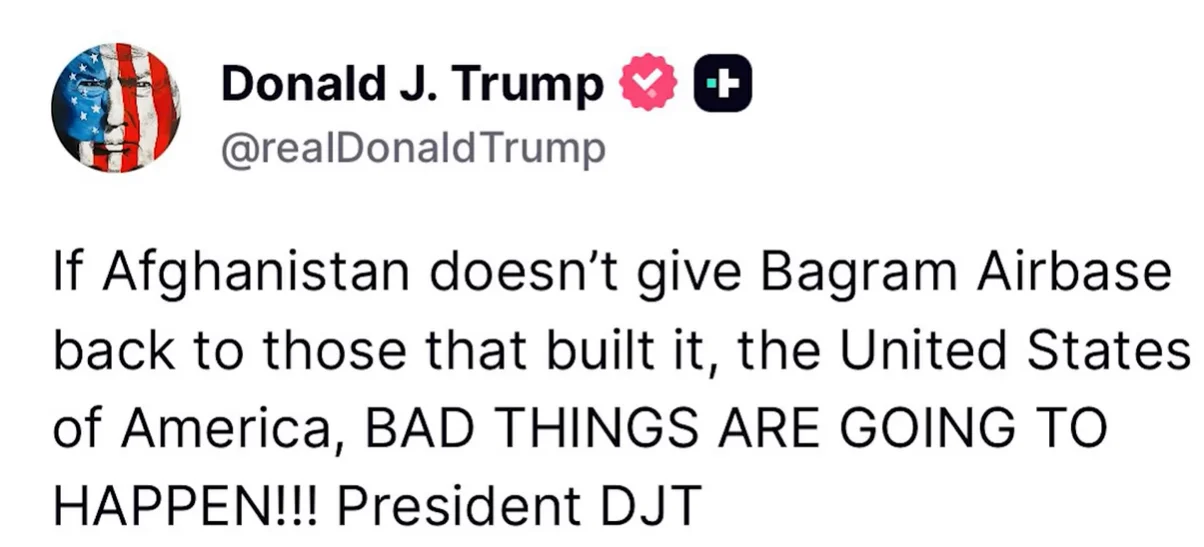
Screenshot of a Truth Social post by Donald Trump – Dated : Sept 21, 2025
Some observers connect the renewed airstrikes to pressure tactics aimed at Kabul regarding strategic concessions — including potential negotiations around Bagram.
This linkage remains analytical rather than officially confirmed.
But the pattern raises questions:
- Why are strike intensities increasing?
- Why is pressure building now?
- Why does escalation coincide with broader US regional calculations?
Geopolitics rarely operates without layered incentives.
Sources: Reuters
Could This Escalate Further?
Taliban authorities have reportedly threatened retaliation.
If retaliatory strikes or border clashes occur, the situation could spiral.
There are three possible paths forward:
- Escalation — More airstrikes, cross-border clashes, rising civilian casualties.
- Negotiation — Back-channel diplomacy tied to sanctions relief or strategic concessions.
- Strategic Pause — Temporary de-escalation due to international pressure.
Another factor complicates the equation:
US midterm political outcomes.
If leadership calculations in Washington shift, so might the urgency around regional strategic assets like Bagram.
South Asia’s security architecture is tightly linked to global politics.
And timing matters.
Sources: Money Control
Conclusion: A Conflict With Layers Beyond the Border
The latest Pakistan airstrikes Afghanistan are not just another border incident.
They intersect with:
- Civilian casualty controversies
- India’s diplomatic positioning
- Taliban strategic messaging
- Potential US strategic interests
- Ramadan sensitivities
- Regional power dynamics
On the surface, this is about counterterror operations.
Beneath the surface, it may be about leverage.
If escalation continues, civilian harm will deepen hostility.
If negotiation emerges, geopolitical trade-offs may reshape alliances.
Either way, Afghanistan is again at the center of a strategic contest.
And what happens next will not remain confined to Kabul or Islamabad.
It will ripple across South Asia.
FAQs
Why did Pakistan airstrikes Afghanistan?
Pakistan claims it is targeting militant safe havens responsible for cross-border attacks. Afghan authorities argue that civilians were struck.
What did India say about Pakistan airstrikes?
India strongly condemned the strikes, particularly civilian casualties during Ramadan, and reiterated support for Afghan sovereignty and independence.
What is the importance of Bagram Airbase?
Bagram is a strategically significant former US military base in Afghanistan, offering logistical and intelligence advantages in the region.
Is the US returning to Afghanistan?
There is no confirmed official return. However, strategic interest in key facilities like Bagram remains part of geopolitical discussions.
Are Pakistan and Taliban at war?
Not formally. However, tensions and cross-border incidents have increased significantly in recent years.
How many civilians were killed?
Reports from Afghan sources claim around 70 fatalities, though figures vary and remain contested.
Could this escalate into regional conflict?
If retaliation occurs and diplomacy fails, escalation risks increase — especially given regional rivalries and external power interests.
Watch the Escalation Curve
This is not a one-day story.
Monitor:
- Retaliatory moves from Kabul
- Diplomatic messaging from Washington
- Casualty reports and verification
- Border troop mobilization patterns
Because when airstrikes begin to rise in frequency and intensity, they rarely stop without either negotiation — or escalation.
South Asia is entering another sensitive phase.
Stay alert.
Share Your Views in the Comments below.
Explore deeper analyses in our World Affairs, Strategic Depth and Defense & Security sections.