Table of Contents
A Statement That Shocked the Region
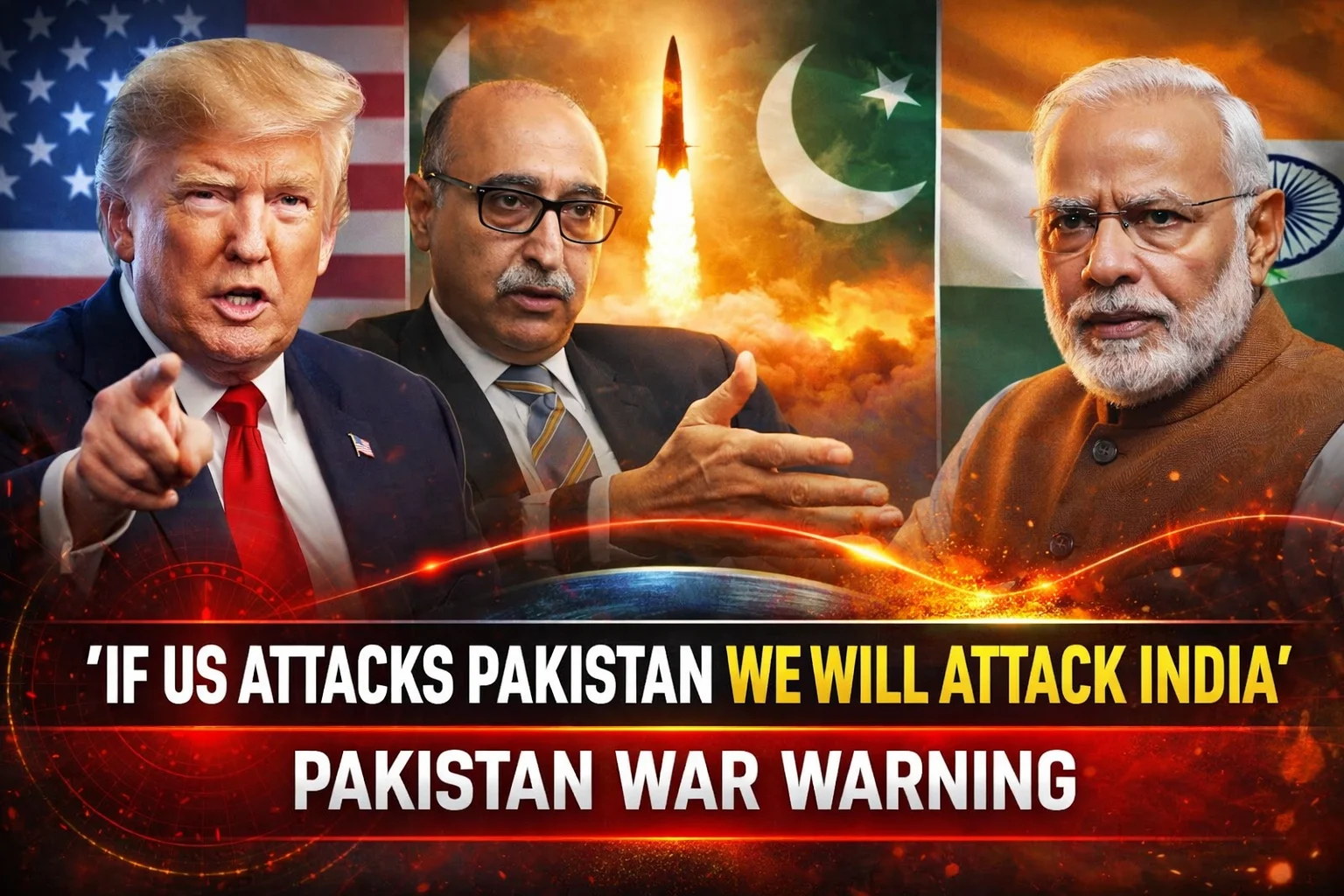
Pakistan attack India if US attacks Pakistan — this phrase may sound extreme, but it reflects a growing strategic concern in South Asia.
A recent statement by Former High Commissioner of Pakistan to India, Abdul Basit has triggered widespread debate.
He suggested that if the United States were to attack Pakistan, Islamabad could respond by targeting cities like Delhi and Mumbai.
That is not a routine comment.
It is a signal.
Sources: Times of India, The Week
What Did Abdul Basit Actually Say?
During an interview, Abdul Basit described a hypothetical scenario.
If Pakistan were attacked by the United States or Israel, and could not directly retaliate due to range limitations, it could strike India instead.
Specifically, he mentioned:
- New Delhi
- Mumbai
Former Pakistan High Commissioner to India #AbdulBasit during a discussion centred on a hypothetical conflict, said, “If #America attacks Pakistan we have to attack India, #Mumbai, New Delhi, without a second thought. We won’t leave it we’ll see what happens later. If someone… pic.twitter.com/Mklq0IwqJJ
— Upendrra Rai (@UpendrraRai) March 22, 2026
The logic was not emotional.
It was strategic.
And that is what makes it serious.
Sources: Hindustan Times
Why Target India Instead of the US?
At first glance, this seems irrational.
Why would Pakistan respond to a US attack by targeting India?
But look deeper.
Pakistan currently lacks the capability to directly strike the US mainland at scale.
So the alternative becomes:
- Hit a closer, high-value target.
India fits that role.
Because:
- It is geographically accessible
- It has deep economic ties with the US
- It represents a major strategic partner for Washington
This is where things shift.
The target is not just India.
The message is aimed at the US.
Sources: Ministry of External Affairs, Government of India
The Strategy Behind This Thinking
This approach reflects a concept known as cost-imposing strategy.
Instead of confronting a stronger power directly, a country increases the cost of war by targeting its allies or interests.
This is not new.
But its application here is significant.
Because it introduces a triangular escalation model:
US → Pakistan → India
That chain reaction is dangerous.
Very dangerous.
Learning from Iran: A New Warfare Model
Pakistan is closely observing how Iran is responding to pressure.
Iran has demonstrated that even without directly striking the US mainland, it can:
- Target regional allies
- Disrupt energy routes
- Increase operational costs
This is called distributed pressure.
Another layer is mosaic defense strategy—where local commanders act autonomously instead of relying entirely on central command.
This reduces vulnerability.
And increases resilience.
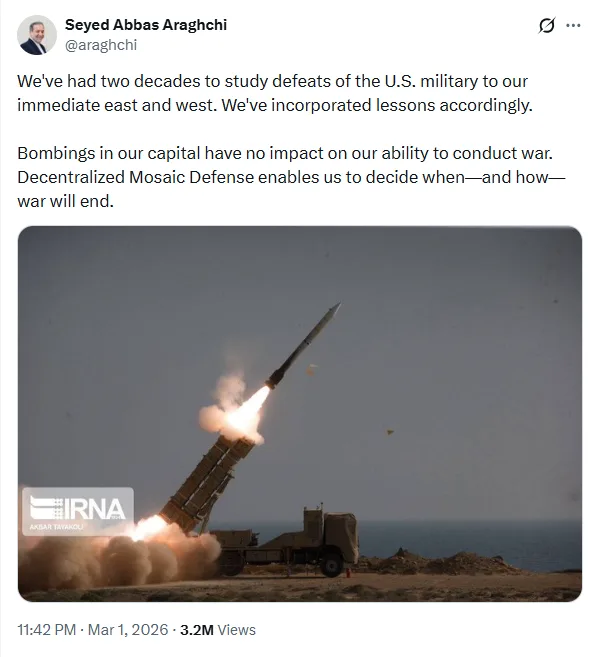
Screenshot of X Post by Iran Foreign Minister Seyed Abbas Araghchi
If Pakistan adopts similar models, the battlefield becomes less predictable.
Pakistan’s Missile Threat — Reality vs Perception
There is often debate about Pakistan’s actual capabilities.
But one thing is clear:
Pakistan is actively developing missile systems.
The concern is not just range.
It is volume.
The idea is simple:
Launch multiple missiles simultaneously.
Even if many are intercepted, some may get through.
That creates pressure.
Not just militarily—but psychologically.
India’s Response: Preparing for the Worst
India is not ignoring these signals.
Efforts are underway to strengthen air defense systems, including initiatives like Sudarshan Chakra, aimed at countering large-scale missile threats.
🔴 PM Modi announced to launch Mission Sudarshan Chakra for India. 🔴
— Defence Core (@Defencecore) August 15, 2025
These systems will safeguard critical civilian infrastructure such as hospitals, religious sites, and other key public facilities from potential attacks in future.
The decision follows Pakistan’s attempted… pic.twitter.com/C3IPH3cZ58
There are comparisons with systems like:
- Iron Dome
But the challenge is different.
India is far larger than Israel.
Which means:
- More cities
- More targets
- More complexity
Defense at this scale is not easy.
The Bigger Geopolitical Risk
This is not just about one statement.
It reflects a broader shift.
Consider the sequence:
- Rising US concern over Pakistan’s missile program
- Growing instability in the Middle East
- Increasing alignment between global powers
Now add this:
A scenario where Pakistan feels existentially threatened.
In such a case, escalation may not follow conventional logic.
It may follow survival logic.
And that changes everything.
Sources: The Economic Times
Conclusion
The idea that Pakistan attack India if US attacks Pakistan may sound like a hypothetical.
But it is rooted in strategic thinking.
Not impulse.
That is what makes it concerning.
Because it introduces a new dimension to conflict:
Indirect retaliation.
And once conflicts begin following indirect pathways, controlling escalation becomes far more difficult.
This is not just about capability.
It is about intent.
And perception.
And in geopolitics, those often matter more than reality.
FAQs
Why would Pakistan attack India if the US attacks it?
Because India is geographically accessible and strategically important to the US, making it a pressure point in a cost-imposing strategy.
What did Abdul Basit say exactly?
He suggested that if Pakistan cannot directly retaliate against the US or Israel, it could target Indian cities like Delhi and Mumbai.
Does Pakistan have the capability to do this?
Pakistan has missile capabilities, but the effectiveness depends on multiple factors including defense systems and scale of attack.
How is India preparing for such threats?
India is developing advanced air defense systems like Sudarshan Chakra to counter large-scale missile attacks.
What Happens If This Scenario Becomes Reality?
If indirect retaliation becomes the new norm, conflicts may no longer stay between two countries.
- Would India become a pressure point in larger wars?
- Can missile defense systems keep up with evolving strategies?
- And how should nations prepare for indirect escalation models?
Share Your Perspective in the Comments below.
Because in modern warfare, the real target is not always the real enemy.
Explore more about Defense & Security, World Affairs and Indian Affairs.