Table of Contents
The Strait of Hormuz Crisis Returns to the Global Spotlight
The Strait of Hormuz crisis has again become a major geopolitical issue after comments from Donald Trump calling for international cooperation to secure shipping through the critical maritime corridor.
According to Trump, the United States cannot be the only nation responsible for maintaining security in the Strait of Hormuz.
Instead, he urged other countries to send naval forces and warships to help protect global shipping routes.
The appeal has attracted significant international attention.
Major outlets such as BBC and Time Magazine have reported on the growing tensions.
And the reason is clear.
Nearly one-fifth of the world’s oil supply passes through this narrow waterway.
Any disruption here could shake the global economy.
Why Trump Wants Other Countries to Secure the Strait of Hormuz
Trump’s argument is based on a simple premise.
Countries that benefit from the oil transported through the Strait of Hormuz should also help protect it.
In his statement, Trump suggested that nations receiving energy shipments through the corridor should deploy their naval forces to help secure the passage.
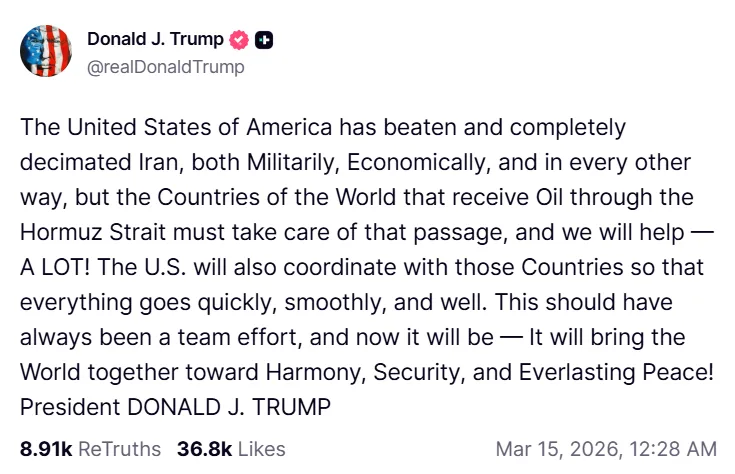
Screenshot of a Truth Social post by Donald Trump
The US, he said, would coordinate with these partners but expects other countries to share the responsibility.
This approach signals a shift.
Instead of acting alone, Washington appears to be pushing for a multinational maritime security effort.
Potential participants could include traditional allies such as:
- United Kingdom
- France
- Japan
And possibly regional stakeholders like India.
But this proposal has also triggered strong reactions.
Sources: BBC
Iran’s Response: Mocking the US Strategy
Iran’s response to the proposal has been openly critical.
Officials in Iran mocked the United States for asking other nations to help secure the strait.
The country’s foreign minister argued that the US security umbrella—often portrayed as a global defense guarantee—has shown weaknesses.
According to Iran’s Foreign Minister Seyed Abbas Araghchi, Washington is now asking other countries, including China, to help stabilize the same region where the US maintains a large military presence.
Touted US security umbrella has proven to be full of holes and inviting rather than deterring trouble. US is now begging others, even China, to help it make Hormuz safe.
— Seyed Abbas Araghchi (@araghchi) March 14, 2026
Iran calls on brotherly neighbors to expel foreign aggressors, especially as their only concern is Israel.
Iran also urged neighboring countries to resist foreign military involvement in the region.
However, such calls are unlikely to significantly change the strategic calculations of Gulf states.
Countries like:
- Saudi Arabia
- United Arab Emirates
- Qatar
depend heavily on the security of maritime trade routes.
Iran’s Missile Demonstrations and Military Signaling
While diplomatic tensions escalate, Iran has also demonstrated its military capabilities.
Iranian forces recently showcased advanced ballistic missile systems, including the Sejjil‑2 Missile.
This two-stage solid-fuel missile reportedly has a range of around 2,000 kilometers, capable of reaching regional targets across the Middle East.
Videos released by Iranian authorities show large missile launches intended to signal military readiness.
Iran using the Sejjil for the first time tells you everything.
— Open Source Intel (@Osint613) March 15, 2026
Liquid-fueled missiles take hours to set up… With Israeli and U.S. eyes on every launcher, those are death traps. Solid fuel launches in minutes.
But Iran has far fewer of them. The escalation is a sign of… pic.twitter.com/dFNFX8BqKo
Such demonstrations are designed to send a message:
Iran still possesses significant deterrence capabilities.
This matters because some US officials have suggested that Iran has already been weakened militarily and economically.
But the visuals released by Tehran suggest that the country still retains substantial missile capabilities.
Sources: Firstpost, Money Control
Why the Strait of Hormuz Is a Critical Global Energy Route
The strategic importance of the Strait of Hormuz crisis lies in geography.
The narrow waterway connects the Persian Gulf to global shipping routes through the Arabian Sea.
Several major oil exporters rely on this corridor, including:
- Iraq
- Kuwait
- Saudi Arabia
- United Arab Emirates
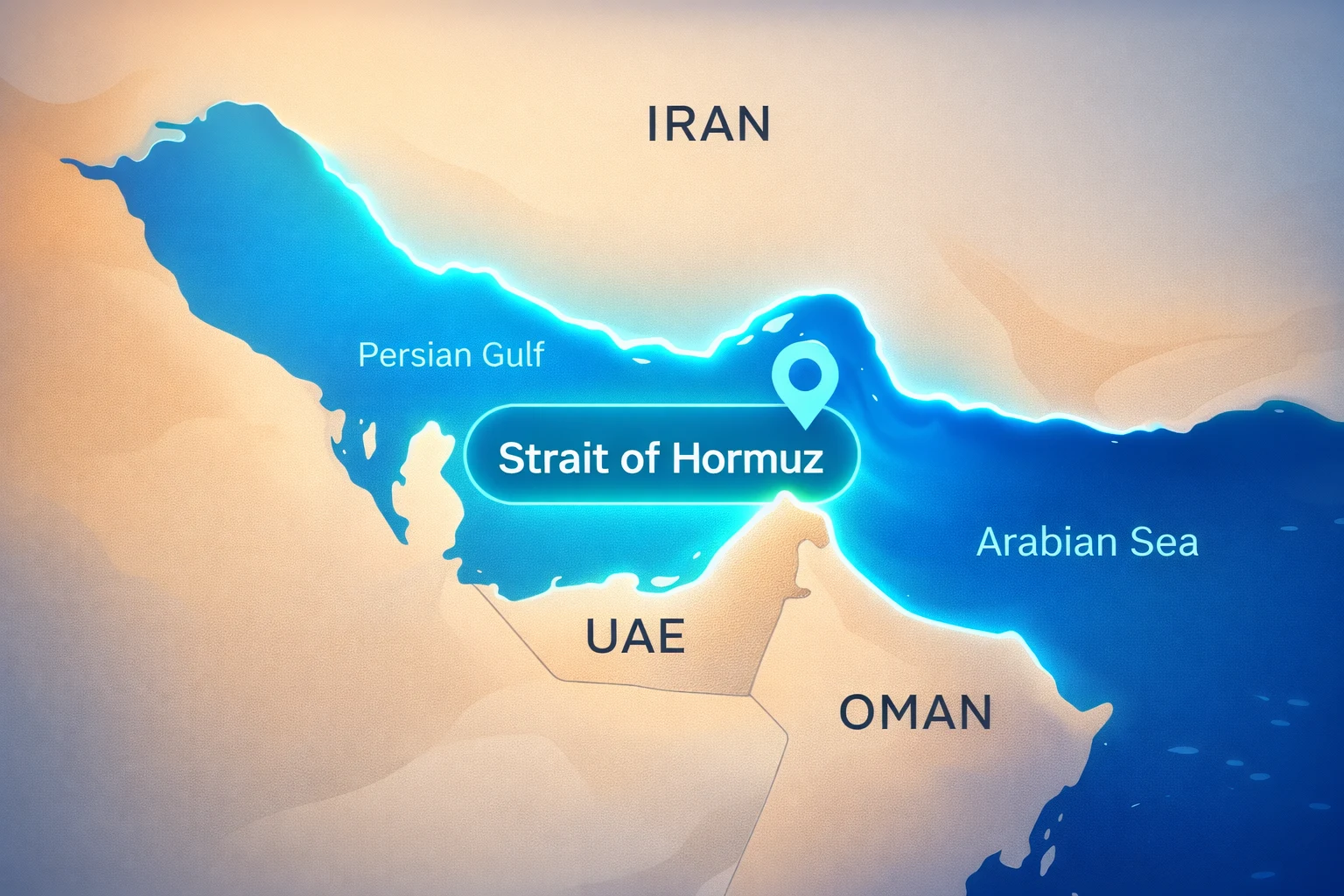
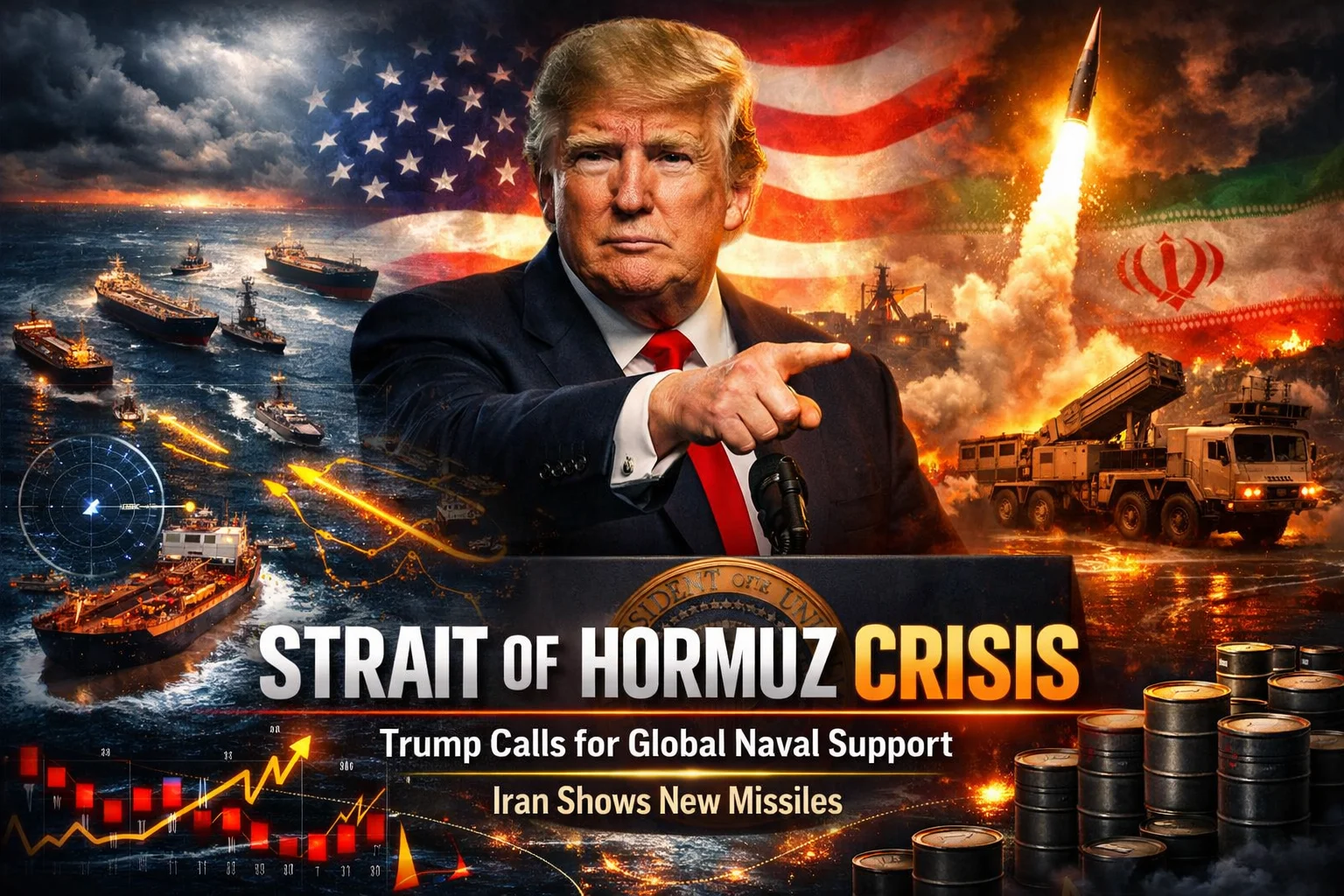
Image credit: AI-generated using ChatGPT by OpenAI
Because of this, any disruption in the strait immediately affects global oil markets.
Even temporary threats can cause oil prices to spike dramatically.
This is why many analysts consider the Strait of Hormuz the most important energy chokepoint in the world.
Could the Crisis Expand Into a Wider Regional Conflict?
The current tensions raise broader strategic questions.
If more countries deploy naval forces to the region, the conflict could expand beyond the original US-Iran confrontation.
Some analysts warn that additional players could potentially become involved.
For example:
- Russia
- China
- North Korea
Even limited involvement from these countries could transform a regional conflict into a far larger geopolitical confrontation.
Military analysts at the Defense Priorities have warned that the long-term consequences of sustained conflict could be significant.
Another analyst from the American Enterprise Institute also noted that the military campaign appears strong operationally but lacks a clearly defined political end goal.
And that uncertainty creates risks.
Because wars without clear objectives often last longer than expected.
Sources: News18
Conclusion
The Strait of Hormuz crisis highlights the fragile balance between energy security and geopolitical rivalry.
Donald Trump’s call for international naval support reflects growing concern about protecting one of the world’s most critical shipping routes.
At the same time, Iran’s military demonstrations show that the confrontation remains far from resolved.
The stakes are enormous.
If shipping through the Strait of Hormuz is disrupted, global oil markets could face severe shocks.
Inflation could rise.
Trade could slow.
And geopolitical tensions could spread far beyond the Middle East.
For now, the next few weeks will be crucial.
They may determine whether the crisis stabilizes—or becomes the opening phase of a much larger regional conflict.
FAQs
Why is the Strait of Hormuz important?
The Strait of Hormuz is one of the most critical global energy chokepoints. Around 20% of the world’s oil supply passes through this narrow waterway each day.
Why did Trump ask other countries to secure the Strait of Hormuz?
Trump argued that countries benefiting from oil shipments through the strait should also contribute naval forces to help secure the shipping route.
Can Iran block the Strait of Hormuz?
Iran has previously threatened to disrupt shipping in the strait during conflicts. While a full blockade would be difficult, even limited disruption could significantly impact global oil markets.
What missile did Iran demonstrate recently?
Iran showcased the Sejjil-2 ballistic missile, a medium-range system capable of reaching targets up to approximately 2,000 kilometers away.
Could the Strait of Hormuz crisis lead to a wider war?
If additional countries become involved militarily, the conflict could escalate into a larger regional confrontation affecting global energy markets.
What Happens Next in the Strait of Hormuz Crisis?
The situation in the Strait of Hormuz crisis remains fluid, and the coming weeks could reshape global geopolitics.
Key questions now dominate the debate:
- Will other nations actually send naval forces to secure the strait?
- Could Iran escalate its missile demonstrations further?
- And if tensions continue rising, could this conflict expand beyond the Middle East?
Share Your Perspective in the Comments below.
Because in geopolitics, control of strategic waterways often determines the balance of global power.
Explore more about Economy & Trade, Indian Affairs and World Affairs.