Table of Contents
Introduction: The Day a Map Sparked Celebration
It lasted only a few hours.
An official US communication displayed India’s full territorial map — including Aksai Chin and Pakistan-occupied Jammu & Kashmir — as part of India. In a region where borders are not just lines but political statements, that visual carried weight.
Celebration followed. Then, silence.
The post disappeared. No explanation. No clarification.
And just like that, what began as optimism transformed into suspicion.
Was this pressure from China and Pakistan? Or was this connected to something far more complex — the growing US India trade deal controversy?
Because around the same time the map vanished, something else quietly changed.
Words were edited. Claims were softened. Entire references disappeared from an official White House fact sheet.
Coincidence? Or coordination?
That is where the real story of the US India trade deal controversy begins.
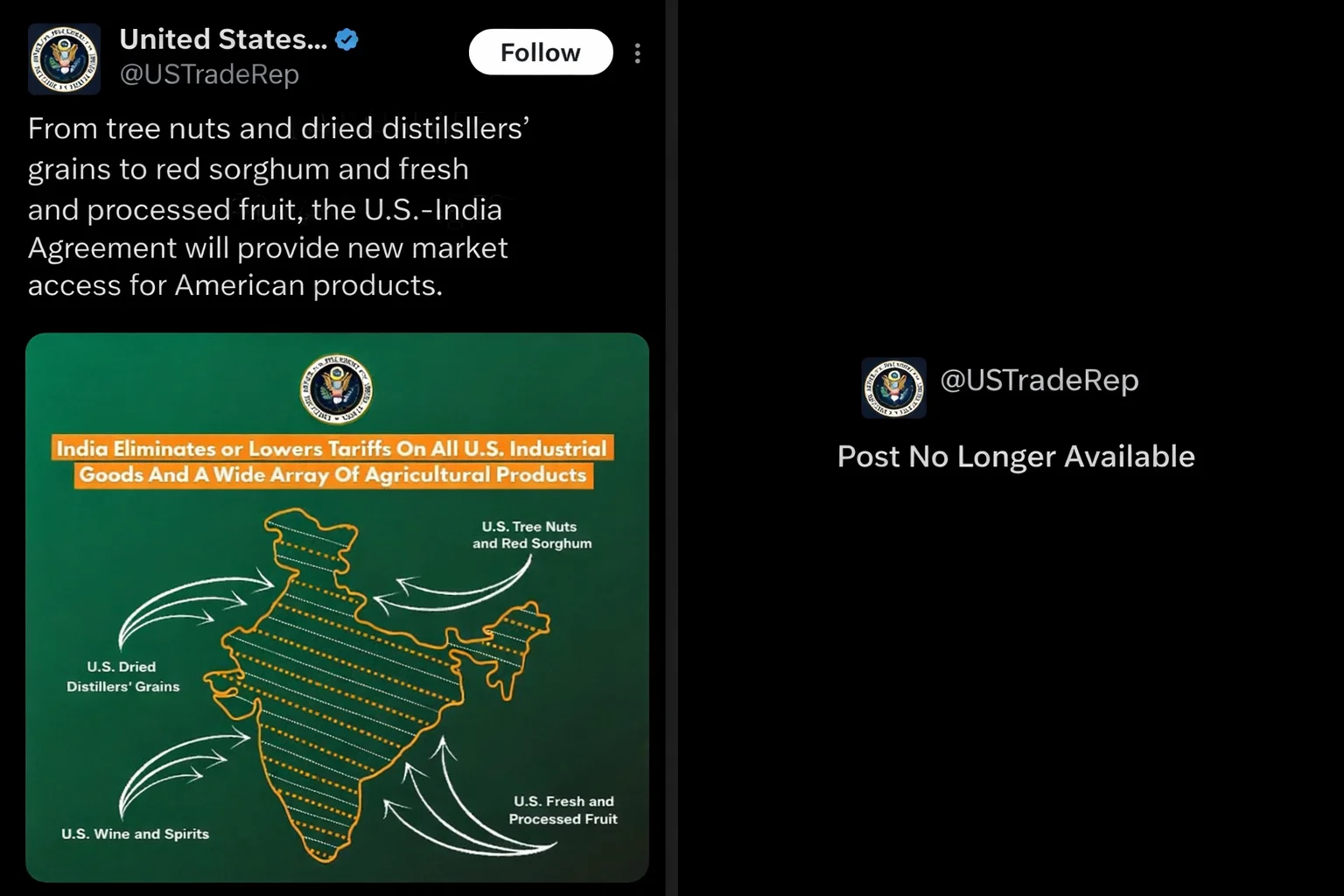
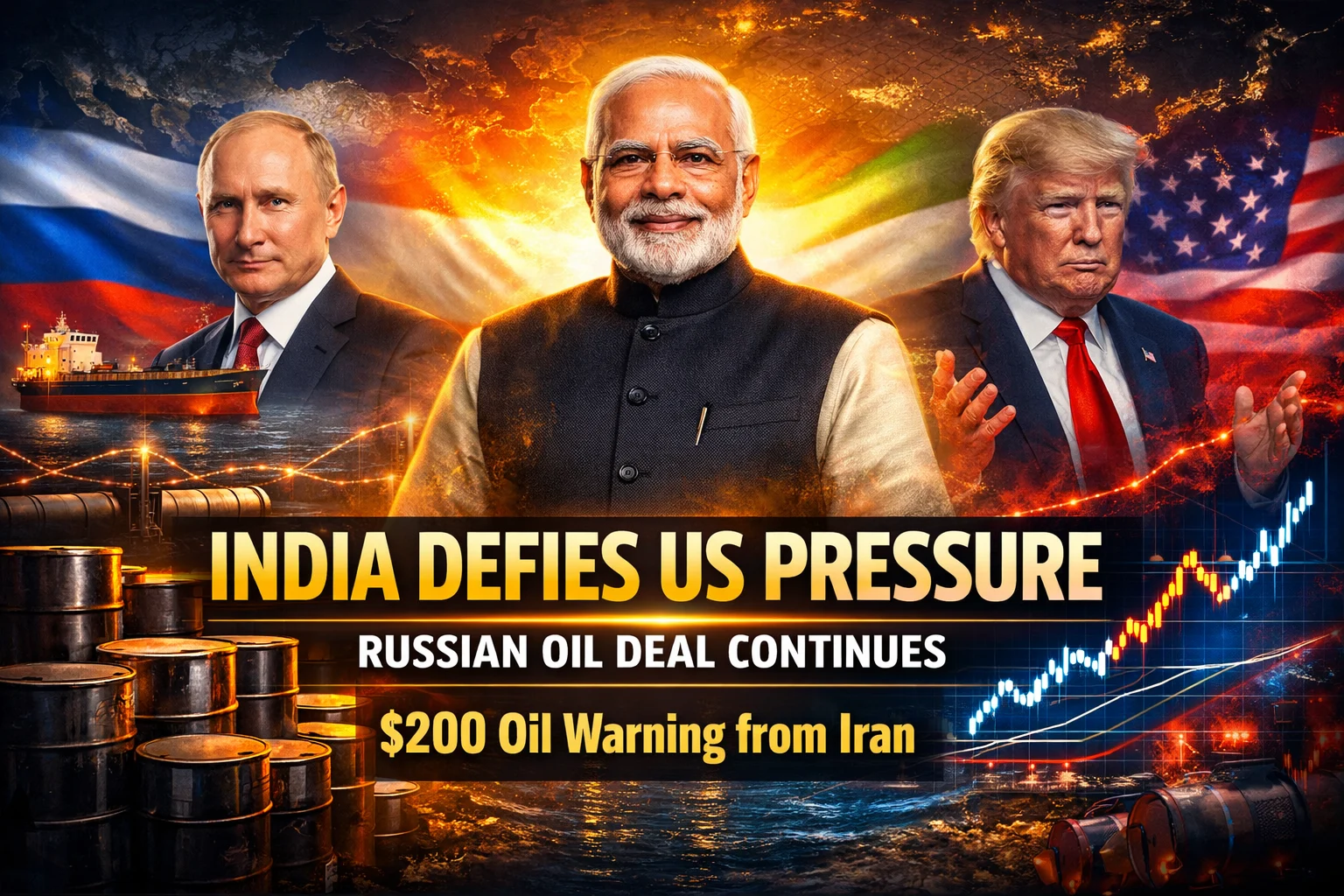
Image credit: AI-generated using ChatGPT by OpenAI
Image Source: @IndiaStrikes_ on X (Twitter)
The US India Trade Deal Controversy Begins
The White House released a fact sheet announcing what it called a “historic trade deal” between the United States and India.
On the surface, it looked like a diplomatic breakthrough. But buried inside the document were two powerful claims:
- India had made a $500 billion commitment.
- India would open market access to certain US agricultural pulses.
Both statements were explosive. Both statements were later revised.
And that’s when the US India trade deal controversy moved from quiet diplomacy into strategic scrutiny.
Because in international trade negotiations, every word is negotiated. Nothing appears casually.
So how did such significant phrases make it into the official document in the first place?
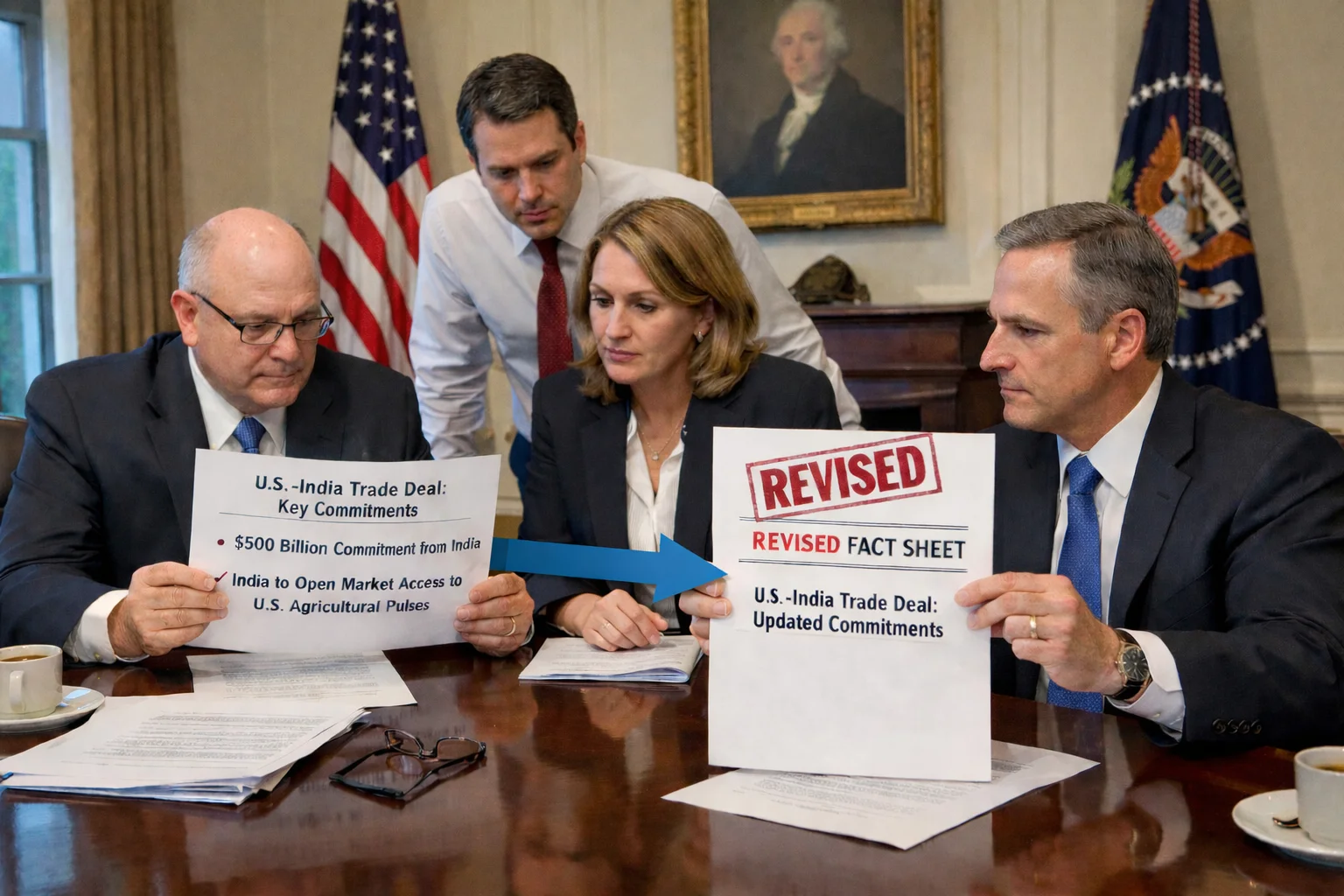
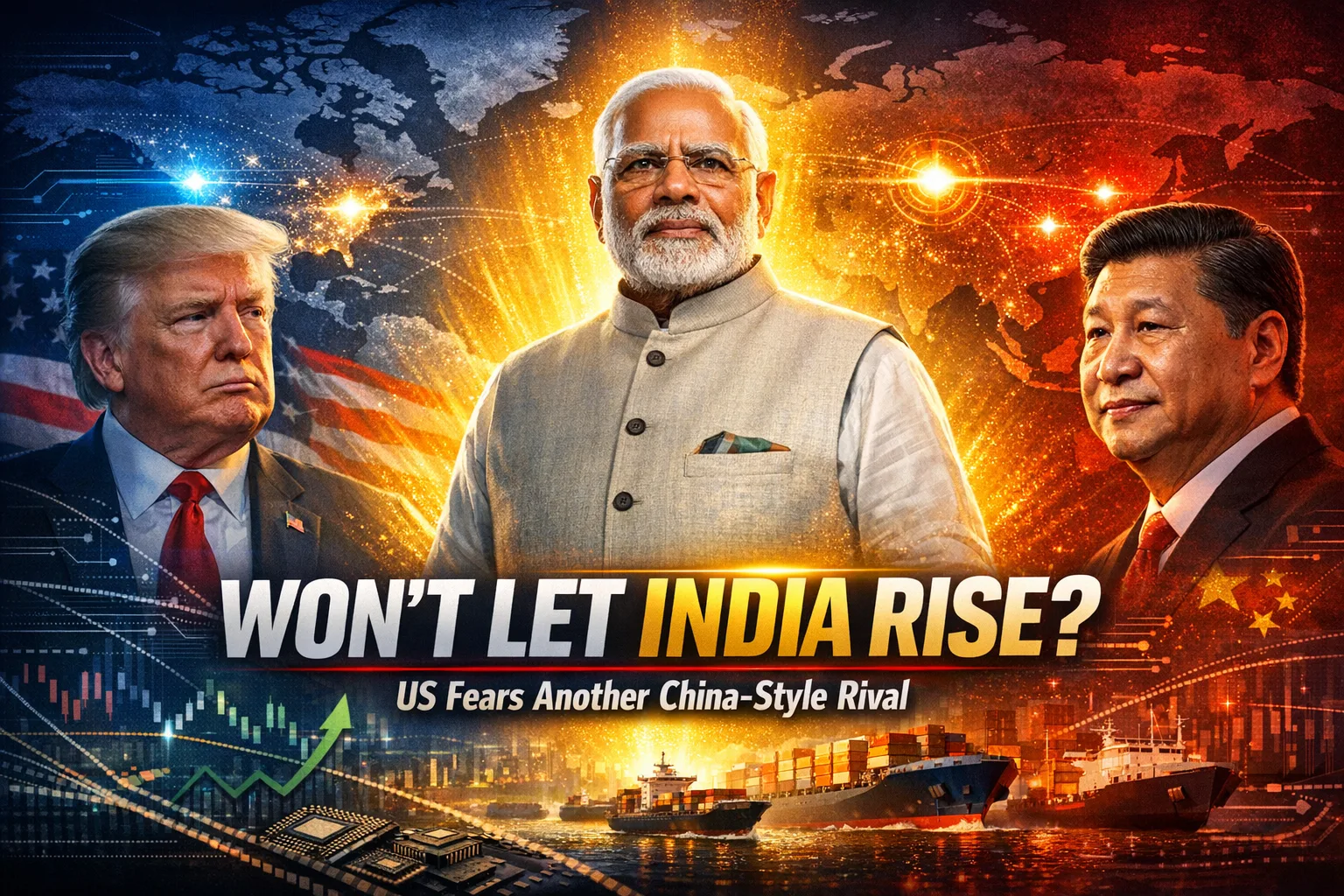
Image credit: AI-generated using ChatGPT by OpenAI
Why Was the India Map Deleted?
The deletion of the India map came soon after the fact sheet revisions.
While no official explanation was issued, the timing raised eyebrows. Analysts began connecting the dots.
India had reportedly objected to how certain claims were presented in the fact sheet. Soon after, those claims were altered. And then, the map disappeared.
It appeared less like a technical correction and more like a diplomatic recalibration.
The US India trade deal controversy was no longer just about trade numbers. It had become about signaling.
Was the deletion meant to avoid escalating regional sensitivities? Or was it a subtle message in response to India’s insistence on factual corrections?
The silence made the moment louder.
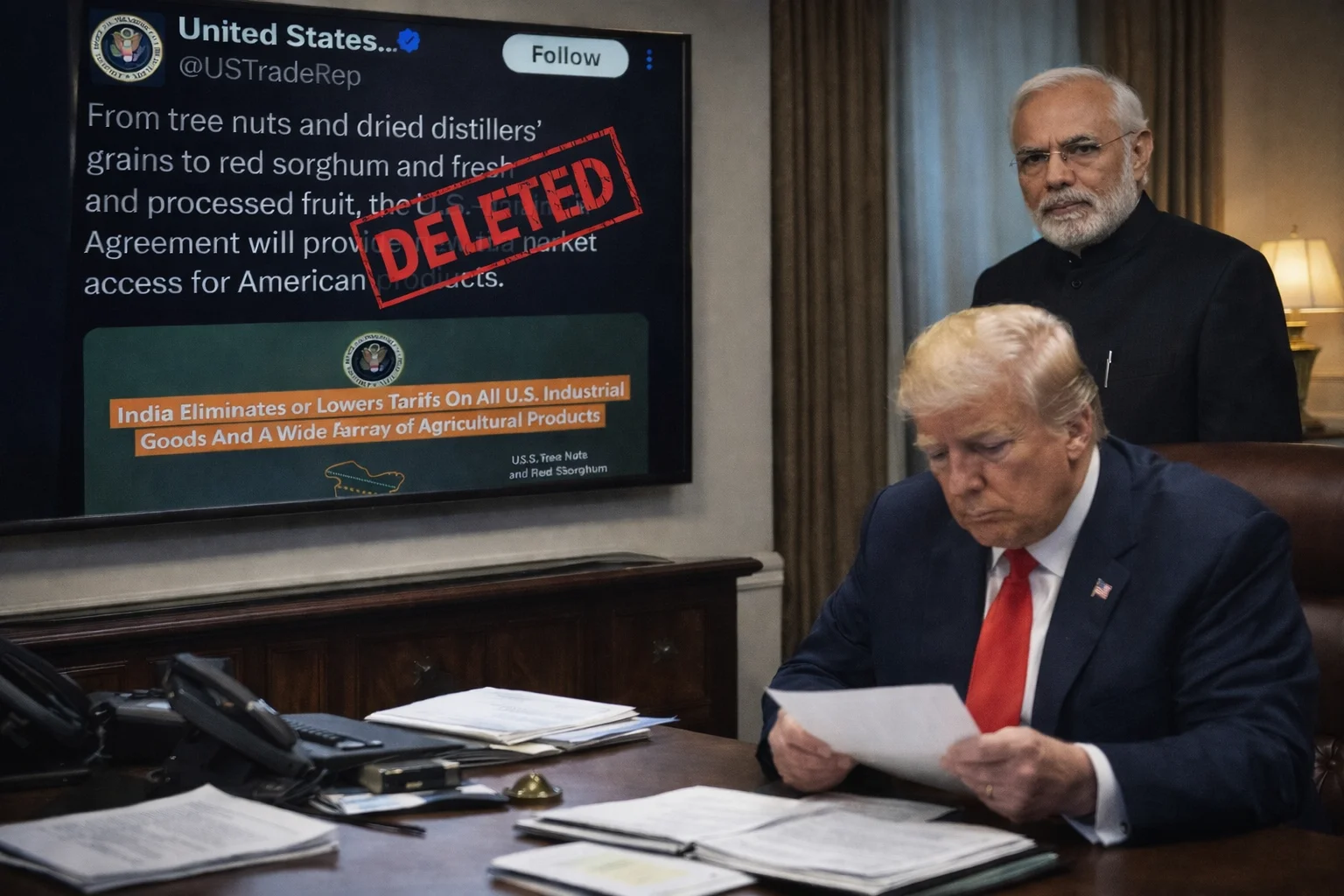
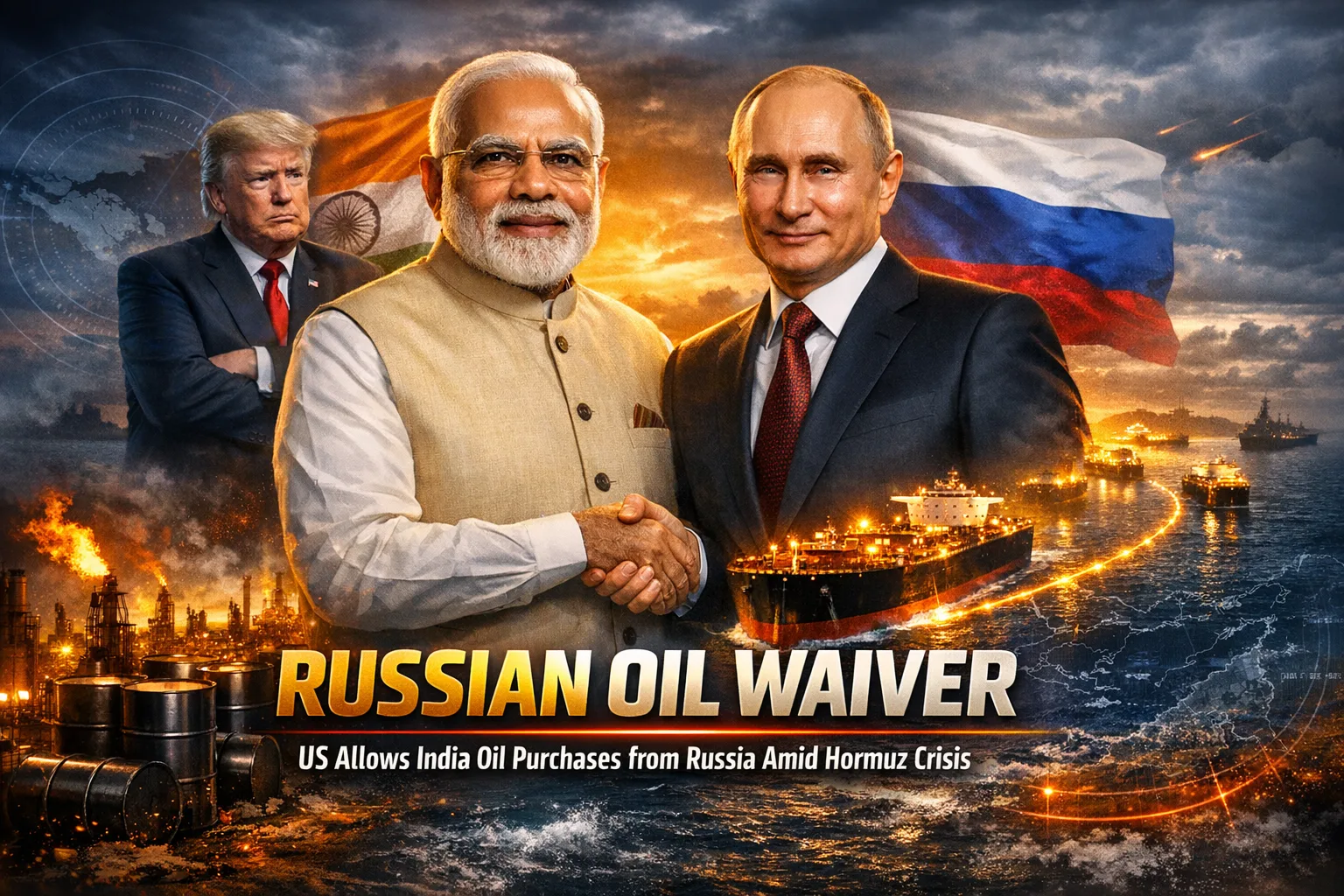
Image credit: AI-generated using ChatGPT by OpenAI
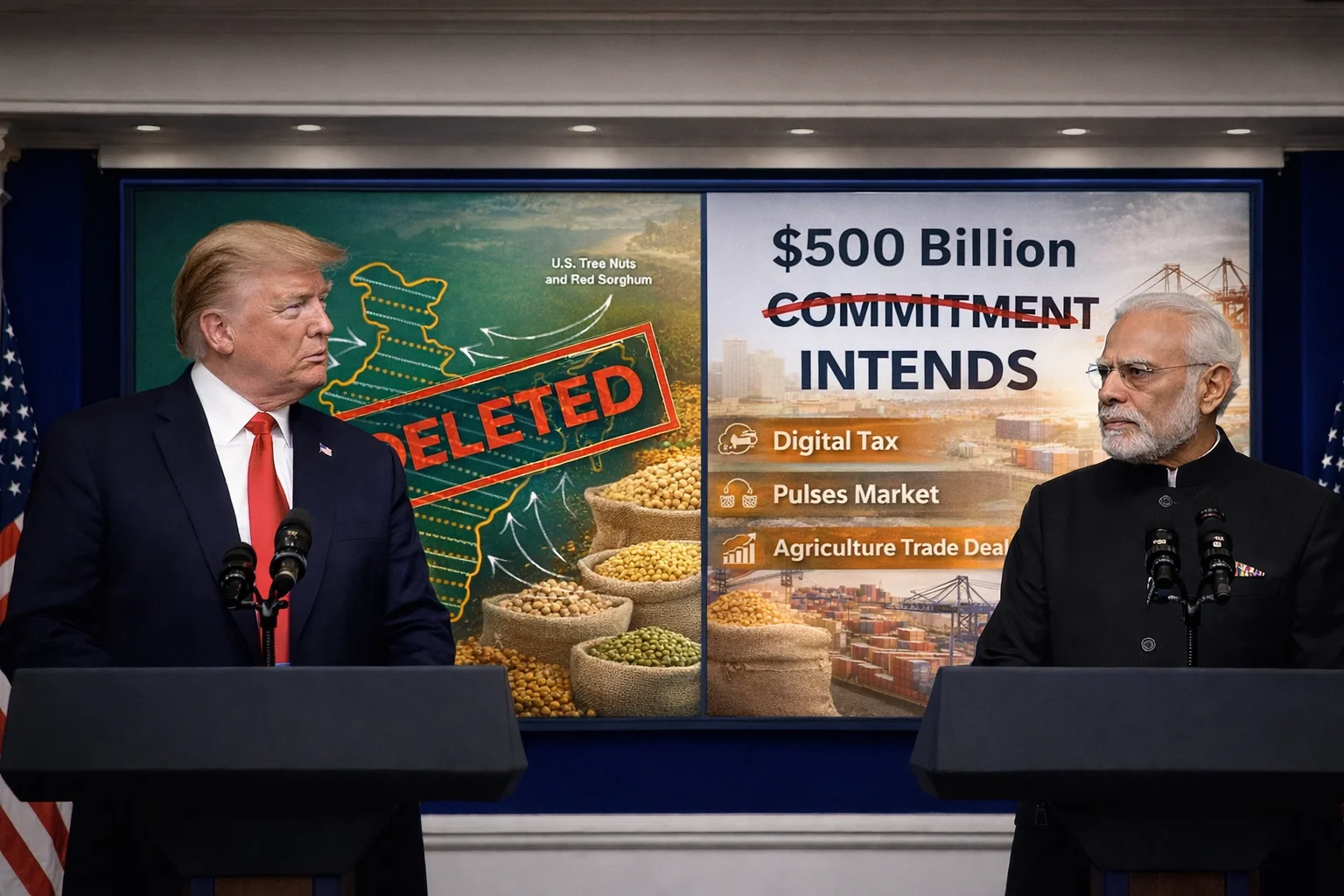
$500 Billion Commitment or Just Intention?
This is where language becomes power.
The original fact sheet stated that India had “committed” to $500 billion in purchases and investments in US energy and technology sectors.
But the revised version replaced “commitment” with “intends.”
That single edit changed everything.
A commitment implies obligation.
An intention implies aspiration.
There is no binding clause. No penalty structure. No enforcement mechanism.
So why use “commitment” initially?
Political analysts suggest that presenting a massive $500 billion figure as a firm commitment strengthens domestic political optics. It signals victory. It signals leverage.
But once India pushed back, the language softened.
And the US India trade deal controversy deepened.
Because if a document describing a “historic trade deal” requires silent revisions, questions naturally follow.

Image credit: AI-generated using ChatGPT by OpenAI
The Pulses Clause That Quietly Disappeared
Another intriguing element in the US India trade deal controversy was the sudden disappearance of the pulses clause.
The initial fact sheet suggested India would open its agricultural market to certain US-grown pulses.
However, India had not formally announced such a tariff concession.
Soon after scrutiny began, the mention of pulses vanished from the document.
No press release. No explanation. Just removal.
In global trade diplomacy, agricultural access is highly sensitive. India’s domestic farming sector is politically significant. Any concession carries weight.
Which raises the question:
Was the clause inserted prematurely?
Or was it part of a broader narrative projection?
The deletion suggests that India did not accept the framing.

Image credit: AI-generated using ChatGPT by OpenAI
Digital Tax Credit War: Who Wanted the Applause?
The US India trade deal controversy didn’t stop at trade figures and agriculture.
Another edit involved digital taxation.
India had already scrapped:
- 2% equalisation levy on e-commerce supply (August 2024)
- 6% levy on online advertising (April 2025)
These decisions predated the trade announcement.
Yet the original US fact sheet appeared to suggest that these tax removals resulted from negotiations with Washington.
That claim, too, was later removed.
This episode highlights something subtle but powerful: narrative ownership.
Who gets the credit?
In international politics, credit can be more valuable than concessions.
But when documentation doesn’t match reality, corrections become necessary.
And each correction added fuel to the US India trade deal controversy.
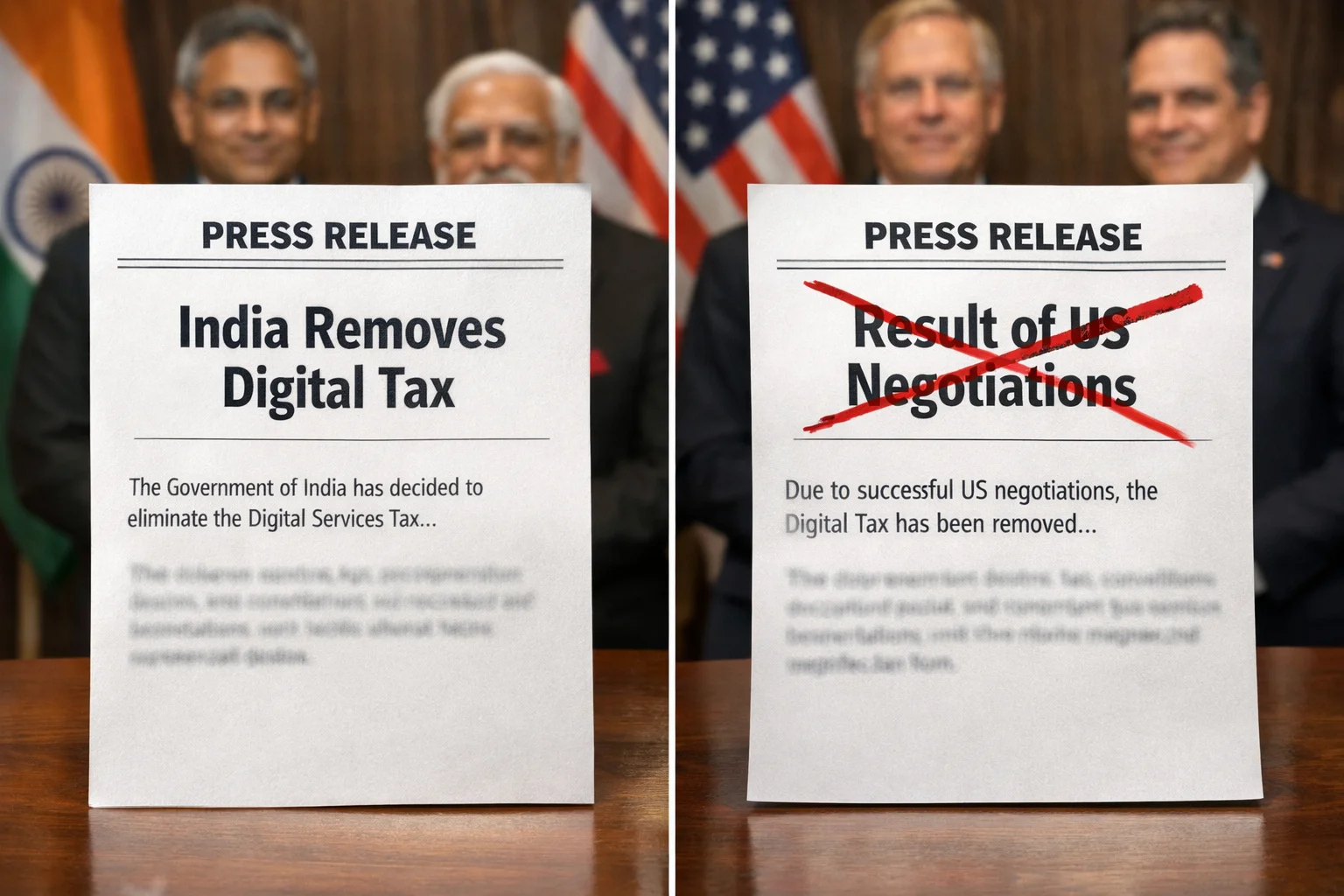
Image credit: AI-generated using ChatGPT by OpenAI
Political Optics in Washington: A Bigger Pattern?
Foreign policy victories are powerful tools in domestic politics.
Big numbers. Big headlines. Big wins.
- A $500 billion “commitment” sounds transformational.
- Market access in agriculture sounds strategic.
- Digital tax reversals sound influential.
But when such claims are revised quietly, they reveal the tension between political presentation and diplomatic precision.
The US India trade deal controversy reflects this tension.
And in geopolitics, perception often moves faster than facts.
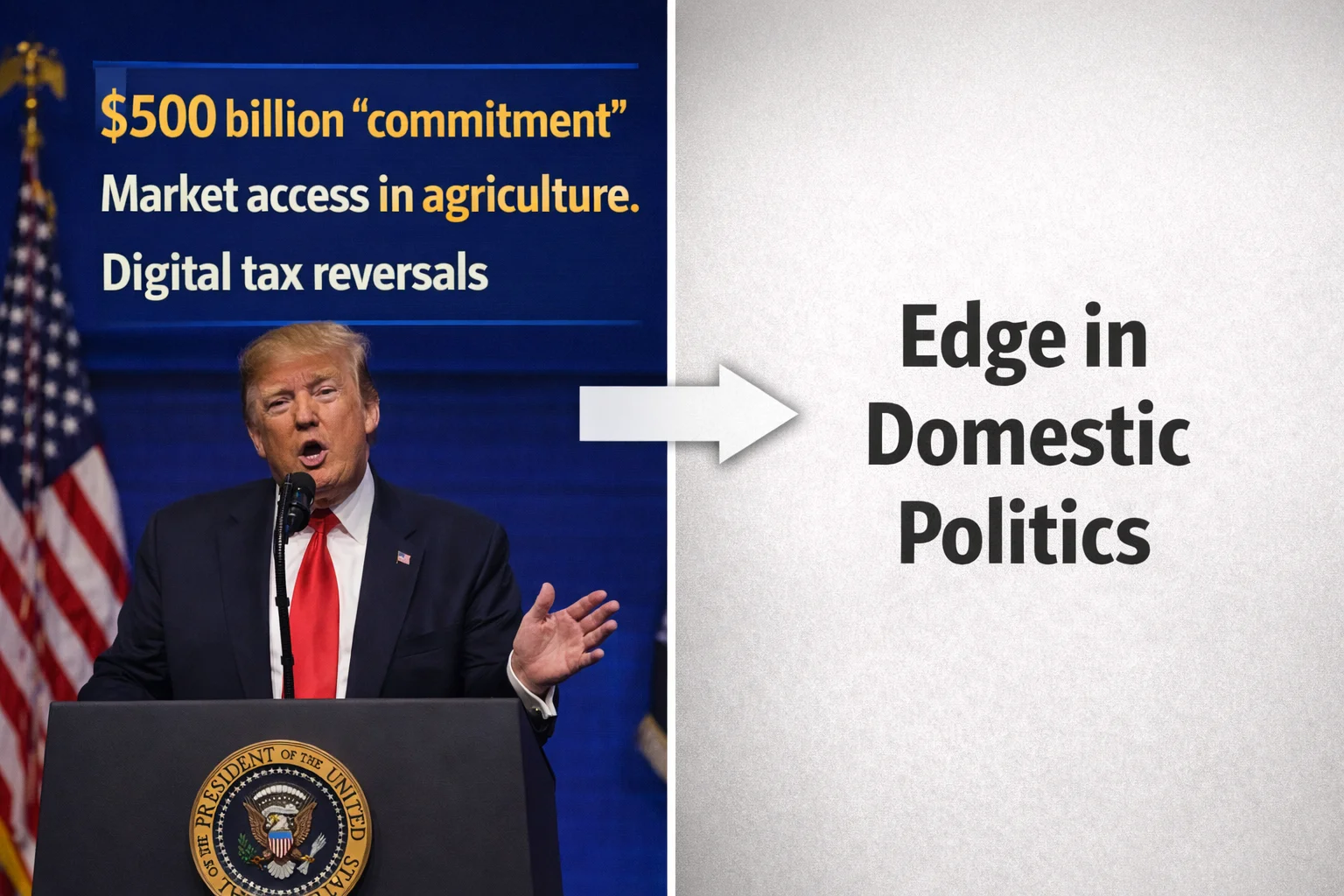
Image credit: AI-generated using ChatGPT by OpenAI
What the US India Trade Deal Controversy Means for India
Amid the edits and deletions, one thing stands clear.
India did not escalate publicly. It sought corrections — and received them.
That signals negotiation confidence.
Allowing the word “commitment” to stand could have shaped future expectations. Allowing the digital tax narrative to remain could have misrepresented policy decisions.
By insisting on factual clarity, India preserved strategic flexibility.
This is not confrontation. This is calibrated diplomacy.
And in the larger landscape of #world-affairs and #economy-and-trade, that distinction matters.
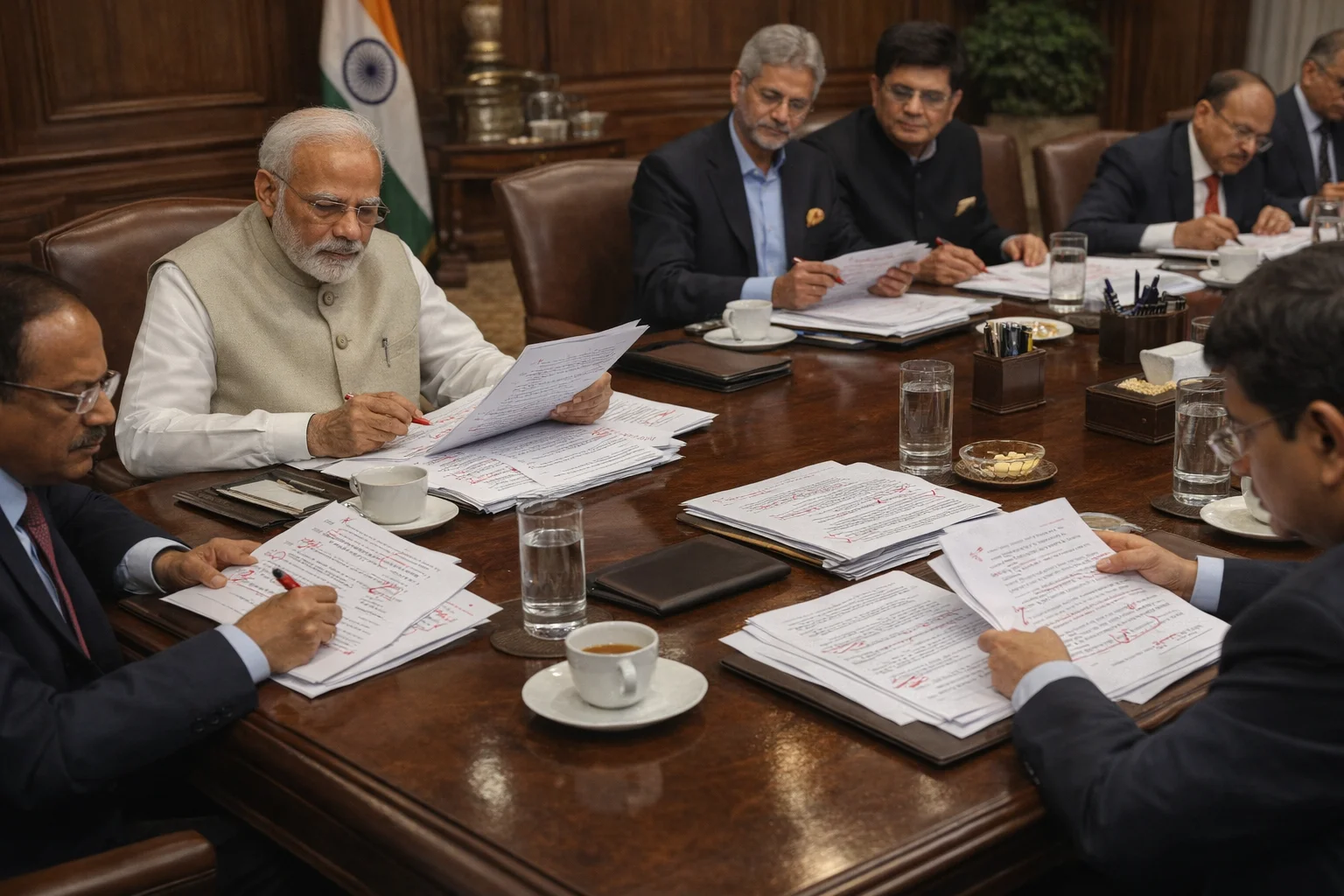
Image credit: AI-generated using ChatGPT by OpenAI
Geopolitics, Reputation, and Strategic Signaling
The US India trade deal controversy may appear technical, but its implications are larger.
- Maps are symbols.
- Words are commitments.
- Fact sheets are instruments of narrative.
When a map is removed and wording is softened, it suggests adjustment.
Adjustment often means pressure. Or negotiation. Or both.
India today operates in a complex geopolitical space — balancing economic partnerships, territorial sensitivities, and strategic autonomy.
In that environment, clarity is power.
And sometimes, the most important battles are not fought in headlines — but in footnotes.
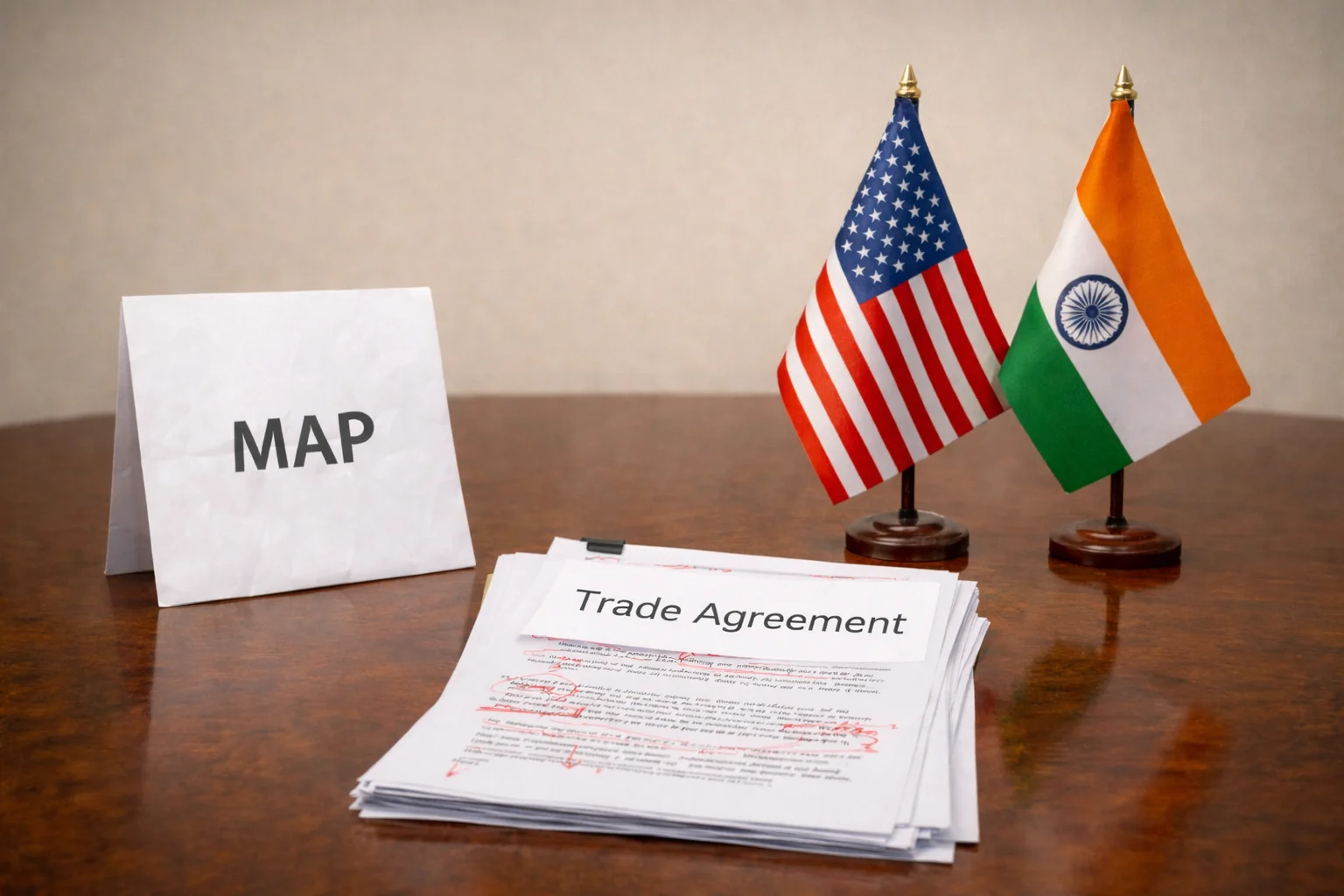
Image credit: AI-generated using ChatGPT by OpenAI
Conclusion: In Diplomacy, Edits Are Never Small
A map vanished.
A word changed.
A clause disappeared.
And suddenly, a “historic deal” required quiet correction.
The US India trade deal controversy is not just about trade numbers. It is about narrative framing, political optics, and strategic signaling.
In global diplomacy, silence often speaks louder than speeches.
Because sometimes, the real story isn’t what gets announced.
It’s what gets edited.
FAQs
What is the US India trade deal controversy?
The US India trade deal controversy refers to revisions made to an official US fact sheet that initially claimed India committed $500 billion in purchases, agreed to pulses market access, and removed digital taxes due to negotiations — claims that were later edited.
Did India commit $500 billion to the US?
No binding commitment exists. The revised language states India “intends” to expand trade, not that it made a legal commitment.
Why was the India map deleted?
There is no official explanation. The deletion occurred amid fact sheet revisions, leading analysts to connect the events.
Was digital tax removal linked to US pressure?
India had already removed certain digital levies before the trade announcement. Later revisions removed the suggestion that it was due to negotiations.
Share Your Opinions
Do you believe the US Fact Sheet revision on US India trade deal was a routine diplomatic correction — or a sign of deeper strategic friction between Washington and New Delhi? Share Your Opinions
If you want more deep geopolitical breakdowns, explore Economy & Trade, World Affairs and Indian-Affairs — where every document tells a bigger story than it appears to.
Read from where it all started : India–US Trade Deal and India US 18 Percent Tariff Agreement.
Sources – Money control , NDTV world, Times of India , Fact-sheet-US-India Historic Trade Deal , Business Standard