Table of Contents
US Iran War and the Controversial Armageddon Narrative
The US Iran war religious narrative has suddenly become a topic of global debate.
Recent reports claim that during military briefings, some US commanders referenced religious prophecy concepts—specifically Armageddon—while addressing troops involved in the conflict with Iran. According to these reports, soldiers were told that the war could be part of a larger historical or prophetic struggle.
That framing has triggered controversy.
Because wars are normally justified using security, strategy, or national interests—not religious prophecy.
And when religious language enters military messaging, questions naturally follow.
What is really happening inside the US war planning process?
Sources: Times of India
Why “Armageddon” Is Suddenly Being Mentioned
Within Christian theology, Armageddon refers to a final battle before the return of Jesus Christ.
The concept is deeply symbolic and usually associated with religious teachings about the end times.
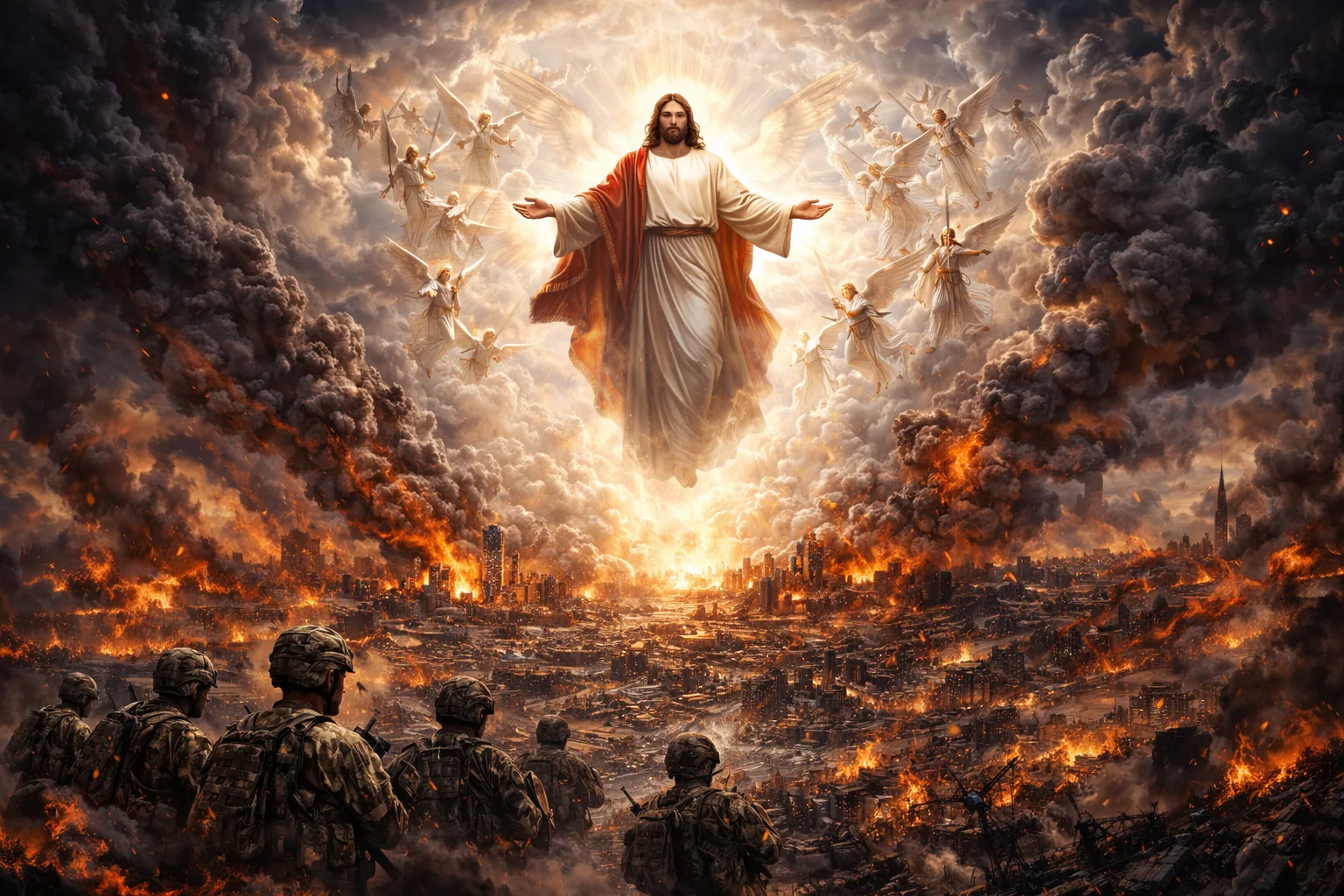
Image credit: AI-generated using ChatGPT by OpenAI
Image used for Illustrative purpose only.
But reports suggesting that the term appeared in briefings related to the Iran conflict immediately sparked debate.
Why would US military leadership introduce such a narrative?
One explanation circulating among analysts is simple:
Morale.
Some soldiers are reportedly questioning why the United States has become involved in another Middle East conflict after withdrawing from United States withdrawal from Afghanistan.
That context matters.
After two decades in Afghanistan, American public opinion remains extremely cautious about entering another long war.
Sources: Independent, Anadolu Agency
What US Senators Were Told in Classified Briefings
Behind the public narrative, US lawmakers have received confidential briefings from military leadership about the situation on the ground.
According to several senators who attended these briefings, the conflict may be more complex and dangerous than publicly described.
Here’s what US Senator Elizabeth Warren said after a classified Iran war briefing, warning the situation is “far worse than you thought” :
VIDEO | "I just left a classified briefing on Iran and here's what I can say: It is so much worse than you thought. You are right to be worried."
— The Cradle (@TheCradleMedia) March 4, 2026
After attending a classified briefing with the Trump administration on the US-Israeli war on Iran, US Senator Elizabeth Warren said… pic.twitter.com/2wYntTB6tB
After a closed-door Senate briefing on the Iran conflict, US Senator Ed Markey said: “Trump is lying about Iran’s nuclear capacity and dragging the United States into another endless war.”
JUST IN 🇺🇸🇮🇷: U.S. Senator Speaks Out on the Closed Door Meeting on Iran War
— Ryan Rozbiani (@RyanRozbiani) March 4, 2026
Trump Has No Clue what he is doing and No Clue how to end it
Ed Markey: “Trump is lying about Iran's nuclear capacity. He's lying about Iran's missile capabilities, and he's dragging the United States… https://t.co/8MJepfO6aC pic.twitter.com/BFYmg5eI80
They cannot release detailed operational data due to classification rules. However, some lawmakers have hinted at key concerns:
- Iranian resistance may be stronger than expected
- The conflict could last longer than initially assumed
- American casualties could rise if escalation continues
Several members of the United States Senate reportedly expressed serious concern about the long-term trajectory of the war.
This is where the political debate begins.
The Fear of Another Endless War
One of the biggest concerns among American policymakers is the possibility of repeating past mistakes.
The United States has previously spent years fighting prolonged conflicts in the Middle East, particularly in Afghanistan and Iraq.
Those wars lasted decades and cost trillions of dollars.
Now the question is unavoidable.
Could the confrontation with Iran become another prolonged conflict?
Some senators fear that the United States might slowly slide into a deeper military commitment without a clear exit strategy.
And history suggests that such wars rarely end quickly.
The Economic Cost of the Iran Conflict
Another factor fueling the debate is cost.
War is expensive.
Even in its early stages, analysts estimate that the United States has already spent billions on military operations connected to the Iran conflict.
Some online platforms have even launched real-time “war cost trackers” attempting to estimate how much money the operation is consuming every minute.
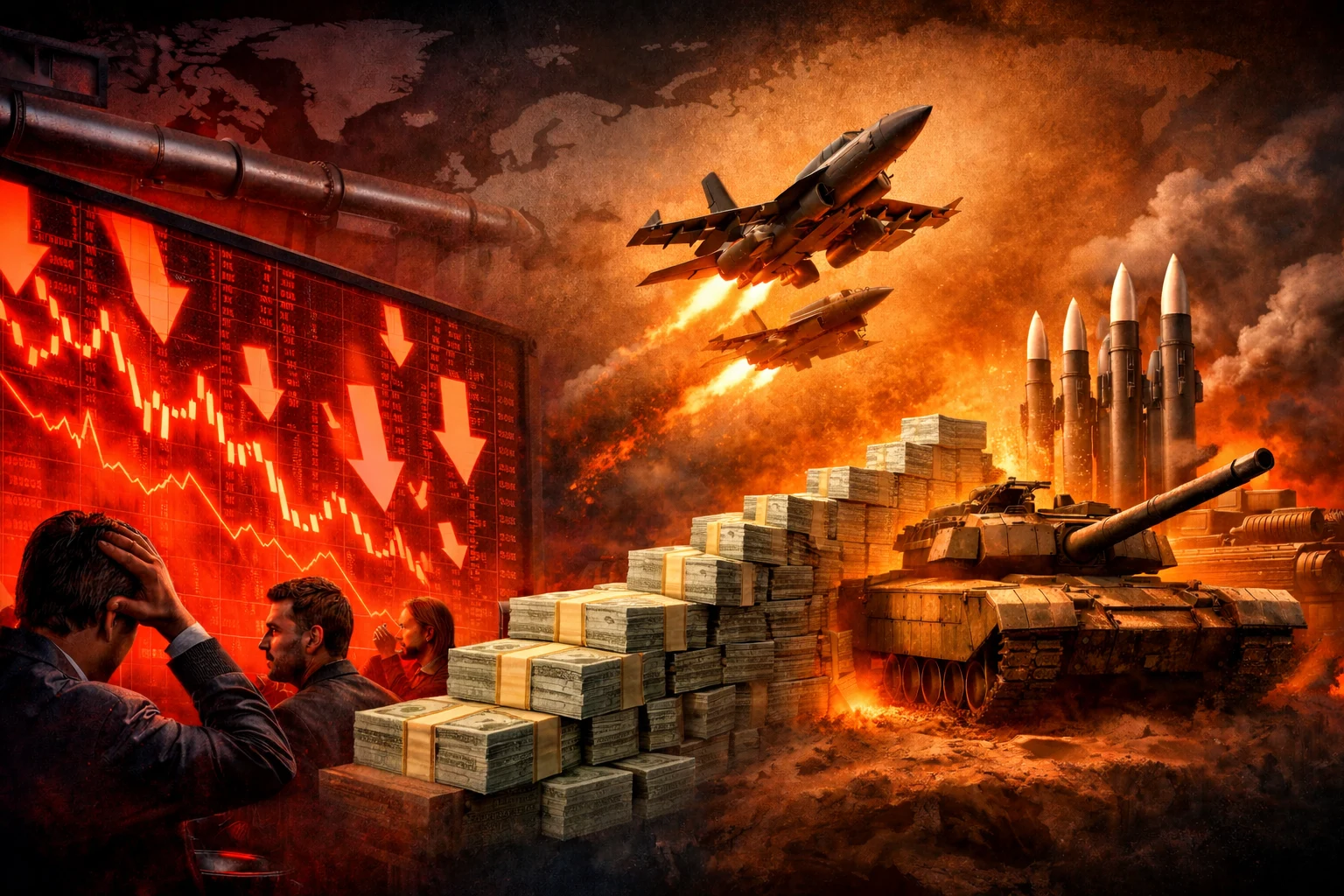
Image credit: AI-generated using ChatGPT by OpenAI
Image used for Illustrative purpose only.
Whether these trackers are fully accurate or not, the broader economic concern is real.
Because prolonged military campaigns place enormous pressure on government budgets.
And eventually taxpayers feel that burden.
Sources: Independent, Vox
Narrative Warfare and Information Battles
Modern conflicts are fought on two fronts.
The battlefield.
And the information space.
Iran and its supporters have reportedly launched online narrative campaigns aimed at highlighting the financial and human costs of the conflict.
At the same time, Western media outlets continue to debate the strategic justification for the war.
Information warfare has become a central element of modern geopolitics.
Who controls the narrative often shapes global perception.
And perception influences political support.
Why Domestic Debate in America Matters Globally
Debates inside the United States rarely stay domestic.
Because the United States remains the most influential military power in the world.
If American political leaders become divided over the war with Iran, the effects could ripple across the entire Middle East.
Regional allies—including Israel and several Gulf states—closely watch American political signals before making major strategic decisions.
A divided Washington can create uncertainty across the region.
Which is why the internal debate in the US Congress is so important.
Conclusion
The controversy surrounding the US Iran war religious narrative reveals a deeper strategic problem.
When a conflict begins without clear objectives, governments struggle to maintain public support.
Religious symbolism, morale messaging, and narrative framing can sometimes fill that gap.
But those tools do not replace strategy.
Ultimately, the outcome of the Iran conflict will depend on military realities, political decisions, and economic endurance.
And if the war becomes prolonged, the domestic debate inside the United States could become just as decisive as the battles happening overseas.
FAQs
What is Armageddon in Christianity?
Armageddon refers to a prophetic final battle described in Christian theology, believed to occur before the return of Jesus Christ.
Why is the United States involved in conflict with Iran?
US involvement is linked to regional security concerns, alliances with Middle Eastern partners, and strategic tensions with Iran.
Are US politicians divided over the Iran war?
Yes. Some lawmakers support military action, while others warn that the conflict could become another prolonged and costly war.
How much does a war cost the United States?
Military conflicts can cost billions or even trillions of dollars depending on duration, troop deployment, and operational scale.
What risks could a US–Iran war create globally?
Potential risks include regional escalation, oil supply disruptions, economic instability, and broader geopolitical conflict.
What Do You Think About the US Iran War Debate?
The discussion around the US Iran war religious narrative raises deeper strategic questions.
Is the conflict driven by clear geopolitical objectives, or is the justification becoming increasingly unclear as the war expands?
Consider these questions:
- Could the war with Iran become another prolonged Middle East conflict?
- How much economic pressure can the United States sustain if the war continues?
- And how should global powers respond if the conflict escalates further?
Share Your Perspective in the Comments below.
Because in modern geopolitics, public debate often shapes the direction of wars as much as battlefield outcomes.
Explore more about Defense & Security and World Affairs.