Table of Contents
A Deal That Never Had a Chance
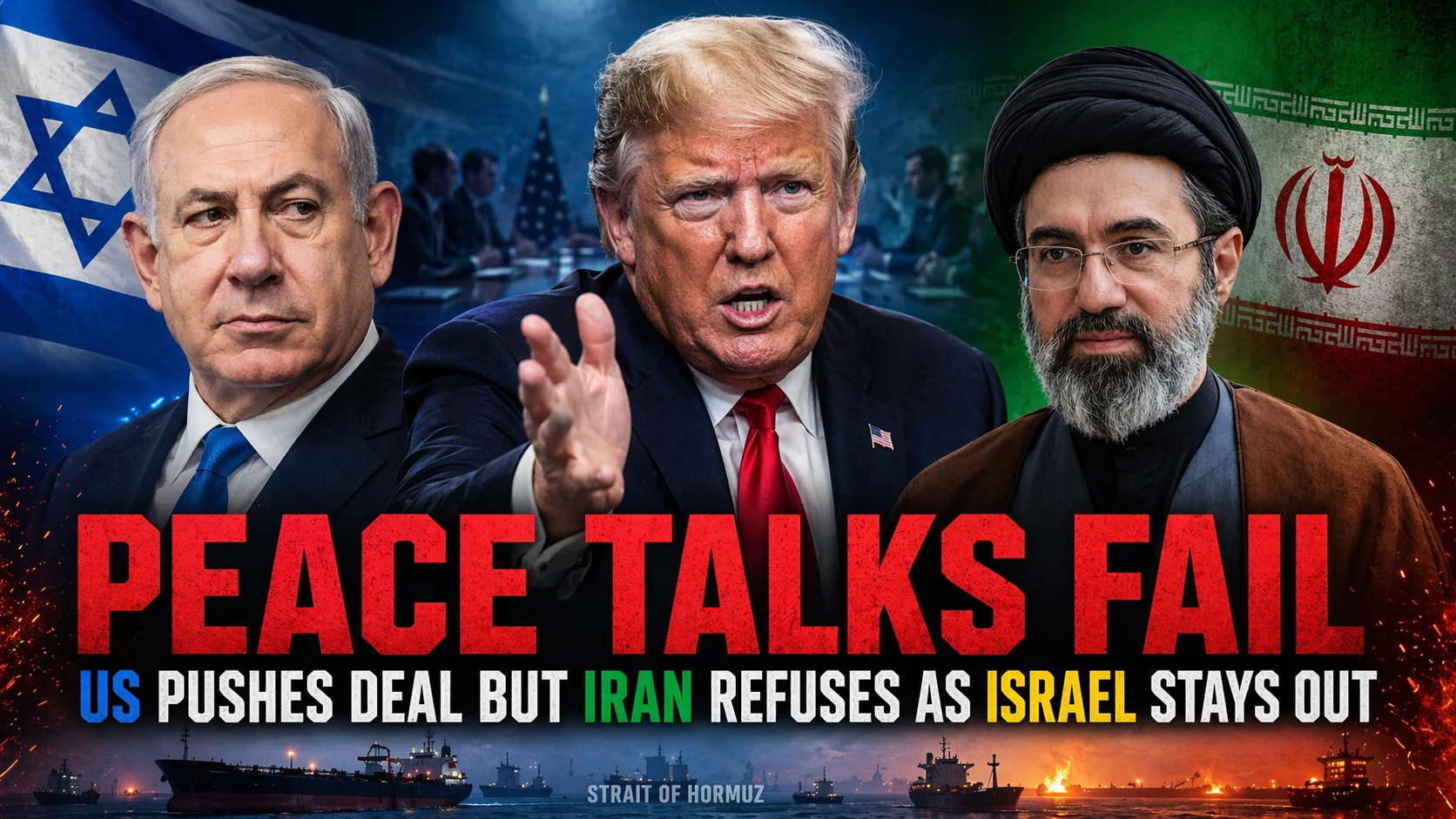
The US Iran peace talks failure was not sudden—it was predictable.
From the very beginning, one key reality stood out:
Without Israel at the table, no lasting agreement was possible.
Yet the talks went ahead in Pakistan.
And the result?
Exactly what many expected—no deal.
This was structural.
Sources: News on AIR, The Guardian
What Happened in Pakistan Talks
JD Vance traveled to Pakistan representing the United States in negotiations with Iran.
After hours of discussions, the conclusion was blunt:
No agreement.
#BREAKING: US Vice President JD Vance says no agreement has been reached between the US and Iran and that "they have chosen not to accept our terms" in what Vance said is bad news for the Iranians. pic.twitter.com/AKqoeWfCzm
— Aditya Raj Kaul (@AdityaRajKaul) April 12, 2026
Vance publicly confirmed:
- Talks took place
- Discussions were “productive”
- But no deal was reached
Iran’s response was equally clear.
Tehran claimed:
- US demands were unreasonable
- Conditions were unacceptable
This wasn’t a breakdown at the end.
It was a mismatch from the start.
Sources: NDTV
Why the Deal Collapsed So Quickly
Several fault lines emerged during negotiations.
First, conflicting commitments.
Pakistan reportedly created confusion on a critical issue:
- It indicated to Iran that Lebanon would be part of the ceasefire or peace framework
- While communicating to the United States that Lebanon would NOT be included
This mismatch was not minor—it was central to the talks.
Second, unrealistic expectations.
The US presented red lines:
- Restrictions on nuclear capability
- Strategic concessions
Iran refused.
Third, trust deficit.
There was no shared framework.
And without trust, negotiations collapse fast.
This was inevitable.
The Missing Player: Israel’s Decisive Role
Here’s the turning point.
The country that matters most in this conflict—Israel—was not even present.
צפו בהצהרה שלי הערב >> pic.twitter.com/oJowkYDUtw
— Benjamin Netanyahu – בנימין נתניהו (@netanyahu) April 11, 2026
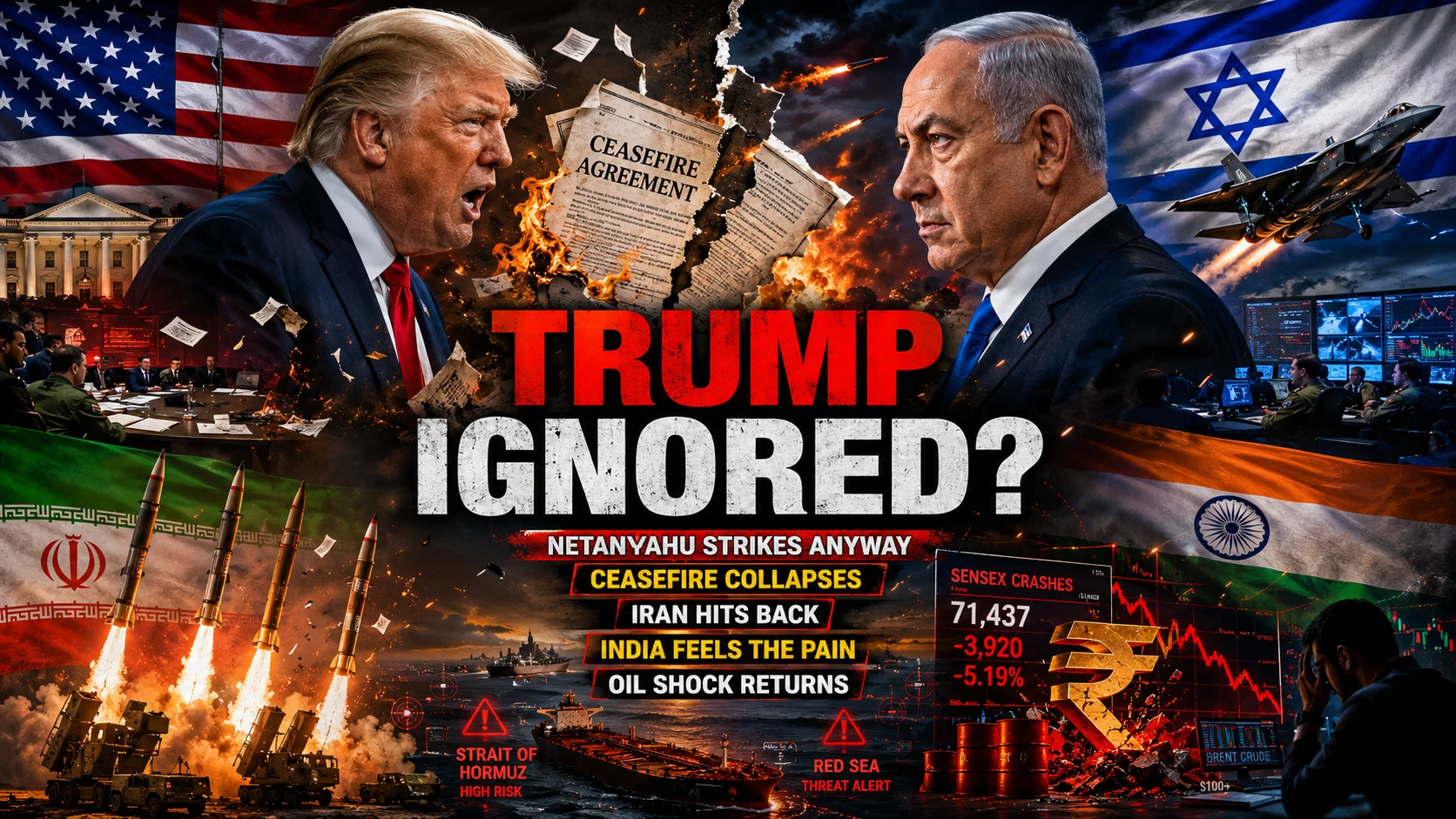
At the same time, Benjamin Netanyahu made Israel’s position clear:
- War is not over
- Iran remains a central threat
- Military operations will continue
He outlined a broader regional strategy:
- Targets in Lebanon (Hezbollah)
- Gaza (Hamas)
- Syria, Iraq, Yemen
- And Iran as a whole
One statement stood out:
There is still a long way to go.
Prime Minister Benjamin Netanyahu, this evening:
— Prime Minister of Israel (@IsraeliPM) April 11, 2026
"Dear citizens of Israel, my brothers and sisters, the campaign is not yet over, but even now it can be clearly stated – we have achieved historic accomplishments.
Full remarks >>https://t.co/0zrbb3NuwG pic.twitter.com/7djWB8Fx0P
That changes everything.
Because it means:
Even if the US and Iran agree—
Israel may not stop.
Why This War Is Far From Over
The conflict is no longer just US vs Iran.
It is multi-layered:
- Israel vs regional threats
- Iran vs US pressure
- Proxy groups across multiple countries
Israel claims major progress:
- Nuclear scientists eliminated (around 20)
- Facilities like Arak reactor targeted
- Enrichment capabilities disrupted
According to Israeli claims, Iran currently cannot actively enrich uranium.
That is a major shift.
But not the end.
Because strategy matters more than destruction.
And Israel’s strategy is ongoing pressure—not immediate peace.
Sources: Deutsche Welle
Strait of Hormuz and Expanding Risks
Meanwhile, the crisis is spreading beyond land.
The Strait of Hormuz remains unstable.
Key issues:
- Sea mines still a threat
- Shipping routes disrupted
- Oil prices under pressure
Even with partial ceasefire attempts, risks remain high.
And as long as conflict continues, this corridor stays vulnerable.
This is where global impact becomes unavoidable.
US Domestic Pressure and Trump’s Declining Support
Back in the US, political pressure is building.
Donald Trump is facing declining approval ratings.
Data trends suggest:
- Initial support around 52%
- Drop toward 40%
- Temporary dips even near 39%
Why?
Because:
- War is dragging on
- No clear victory
- No clear exit
There are also emerging concerns about:
- Potential military drafts
- Escalation risks
And here’s the contradiction:
Public messaging suggests progress.
Reality suggests stalemate.
That gap matters.
Sources: The New York Times
Final Analysis
The US Iran peace talks failure is not just about one failed meeting.
It reveals a deeper truth:
Peace cannot be negotiated without all key players.
Pakistan’s role exposed coordination gaps.
US demands exposed strategic rigidity.
Iran’s response exposed resistance.
And Israel’s position exposed the real driver of escalation.
This is not a diplomacy failure alone.
It is a structural deadlock.
Until Israel’s objectives align with negotiations, peace will remain temporary at best.
And as long as that gap exists, the conflict will continue—shaping regional stability, global trade, and geopolitical power balances.
FAQs
Why did US Iran peace talks fail?
US Iran peace talks failure was due to conflicting demands, lack of trust, and the absence of Israel—a key player in the conflict. Without alignment among all major stakeholders, no agreement could be reached.
What role did Pakistan play in the talks?
Pakistan hosted the negotiations but reportedly created confusion by presenting different positions to the US and Iran, weakening trust in the process.
Why is Israel important in Iran peace talks?
Israel is directly involved in military operations against Iran and its allies. Without Israel agreeing to stop or change strategy, any peace deal remains incomplete.
Is the Iran war likely to continue?
Yes, current signals suggest continued conflict, especially given Israel’s stance that operations are far from over and Iran’s refusal to accept US conditions.
How does this affect global economy?
The conflict impacts oil supply routes like the Strait of Hormuz, increases shipping risks, and creates uncertainty in global markets.
What Happens Next — And Why You Should Keep Watching
This isn’t the end of diplomacy.
It’s the beginning of a longer phase of uncertainty.
Watch for:
- Israel’s next military moves
- US escalation or withdrawal signals
- Iran’s strategic response
- Oil market reactions
Because the real question now is not whether talks failed.
It’s this:
How long can the world sustain a conflict where no side is ready to stop?
Read more about Strait of Hormuz Sea Mine Crisis. Explore more about Defense & Security and World Affairs.