Table of Contents
Introduction: A Shockwave from Islamabad
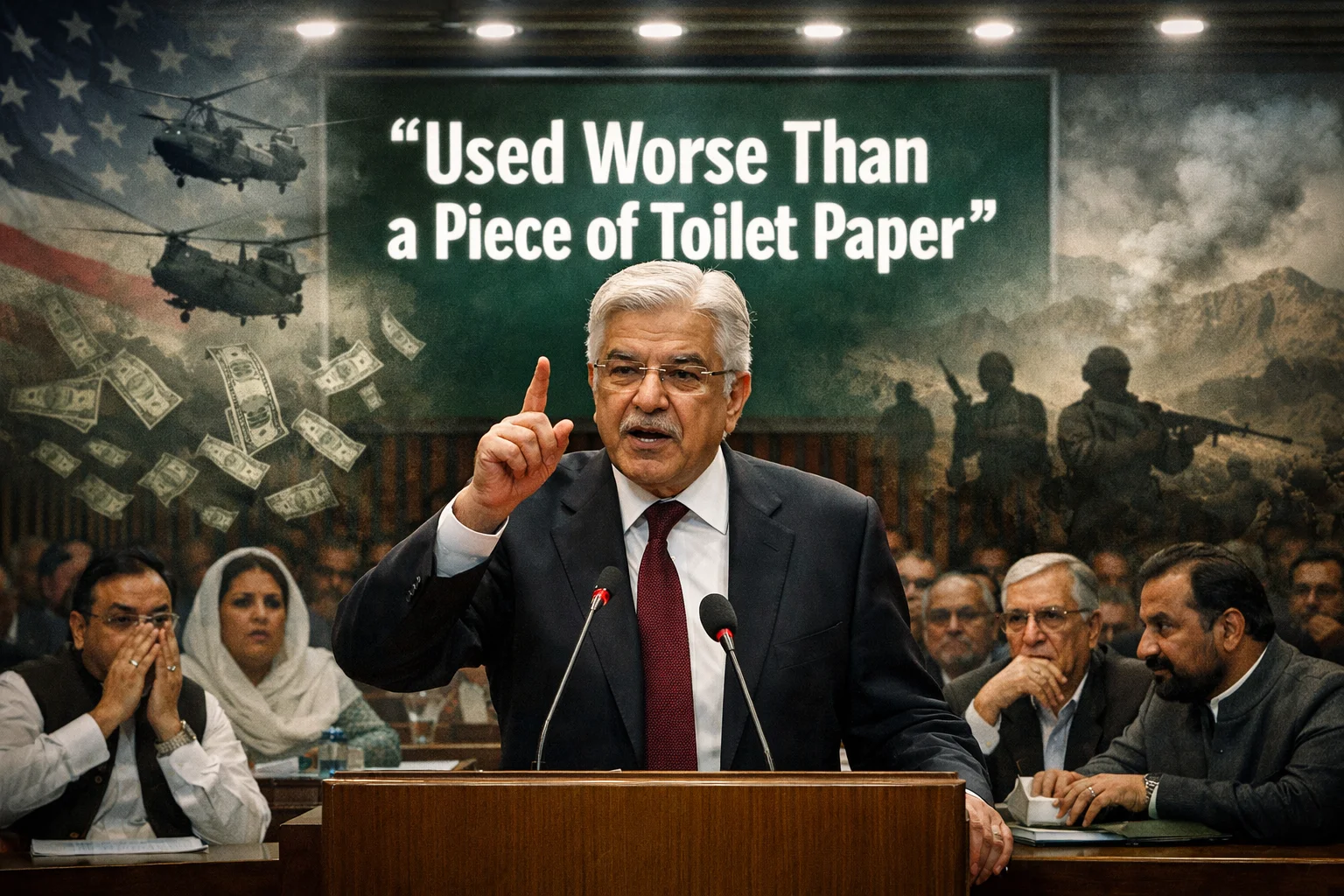
While India is busy evaluating the benefits of the India–US trade deal, something dramatic has unfolded across the border. In Pakistan’s Parliament, Defence Minister Khawaja Asif delivered an explosive speech — one that has now gone viral across South Asia.
He openly stated that the United States “used Pakistan worse than a piece of toilet paper.”
Yes — those were his words.
This Khawaja Asif toilet paper statement is not a media exaggeration. It is a direct parliamentary admission that Pakistan “rented itself out” to the United States for two decades and was discarded afterward.
But why say this now? And what does it mean for India, the US, and Afghanistan?
Let’s break it down carefully.
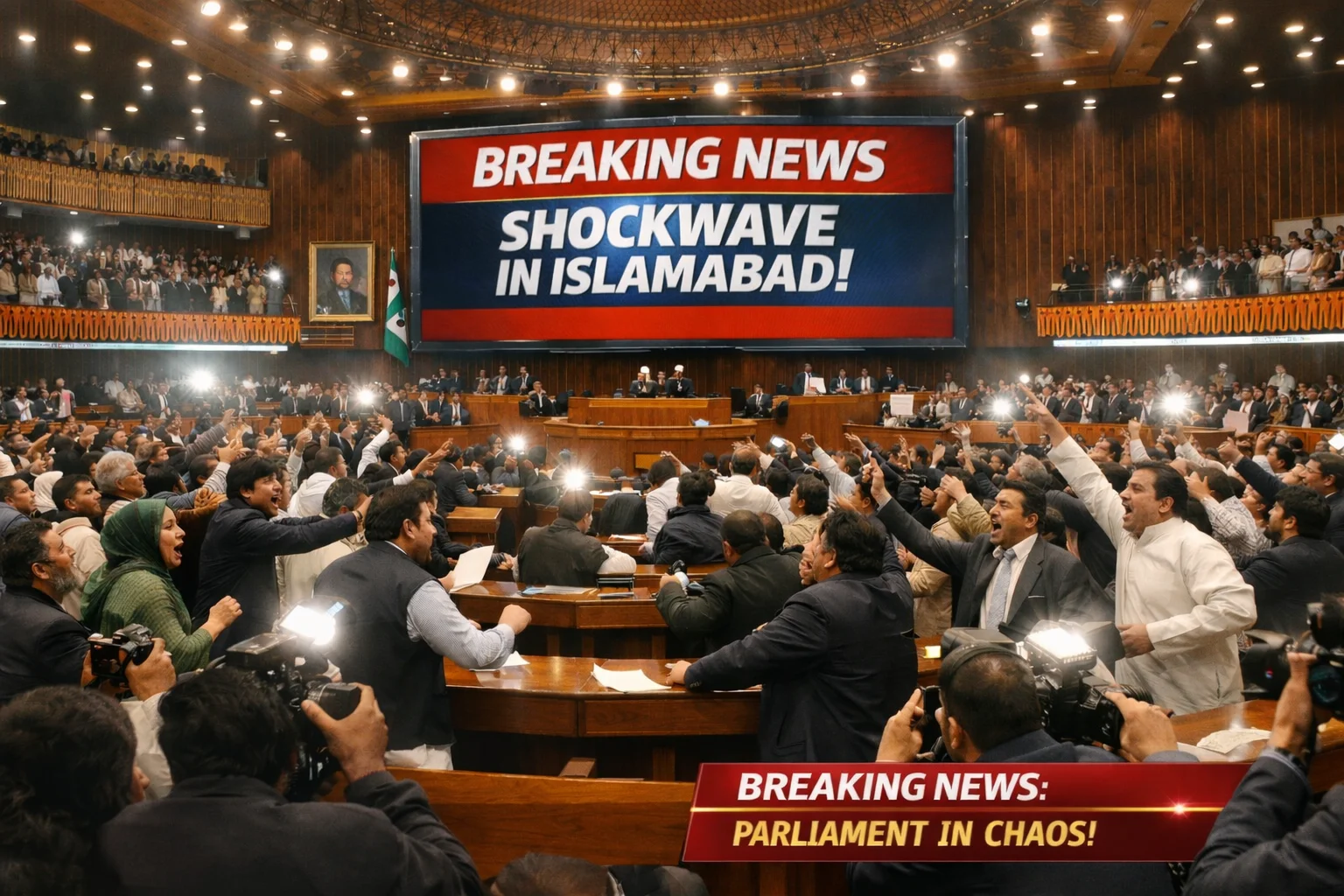
Image credit: AI-generated using ChatGPT by OpenAI
What Exactly Did Khawaja Asif Say?
Standing inside Pakistan’s Parliament, Khawaja Asif declared:
“Pakistan was treated worse than a piece of toilet paper and was used for a purpose, then thrown away.”
He further admitted:
“Pakistan rented itself out to the United States for 20 years.”
He described Pakistan’s role as that of a “mercenary” — a country fighting wars for money.
This Khawaja Asif toilet paper statement is arguably one of the most blunt admissions ever made by a senior Pakistani official about US–Pakistan relations.
Even critics of Pakistan in India rarely used such language publicly. Yet here it was — spoken officially inside Parliament.
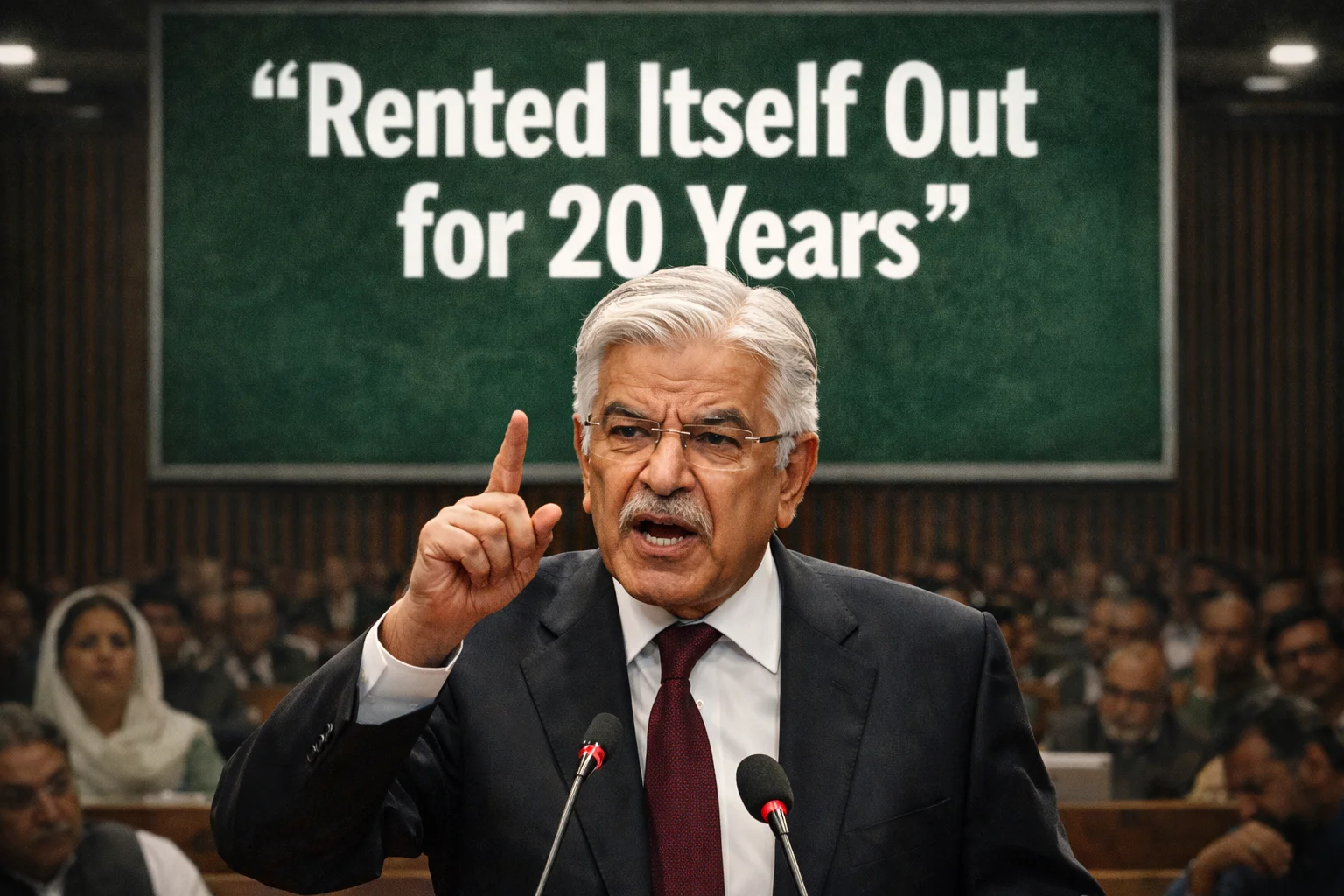
Image credit: AI-generated using ChatGPT by OpenAI
Why Is This Statement Being Made Now?
There are multiple layers behind this outburst.
1️⃣ India–US Trade Deal Shock
Pakistan is currently facing criticism domestically after India secured better tariff terms in its trade arrangement with the US. Pakistani media outlets are questioning whether Islamabad failed diplomatically.
The comparison is uncomfortable:
India negotiates strategic trade gains.
Pakistan debates whether it was “used.”
This context amplifies the timing of the Khawaja Asif toilet paper statement.
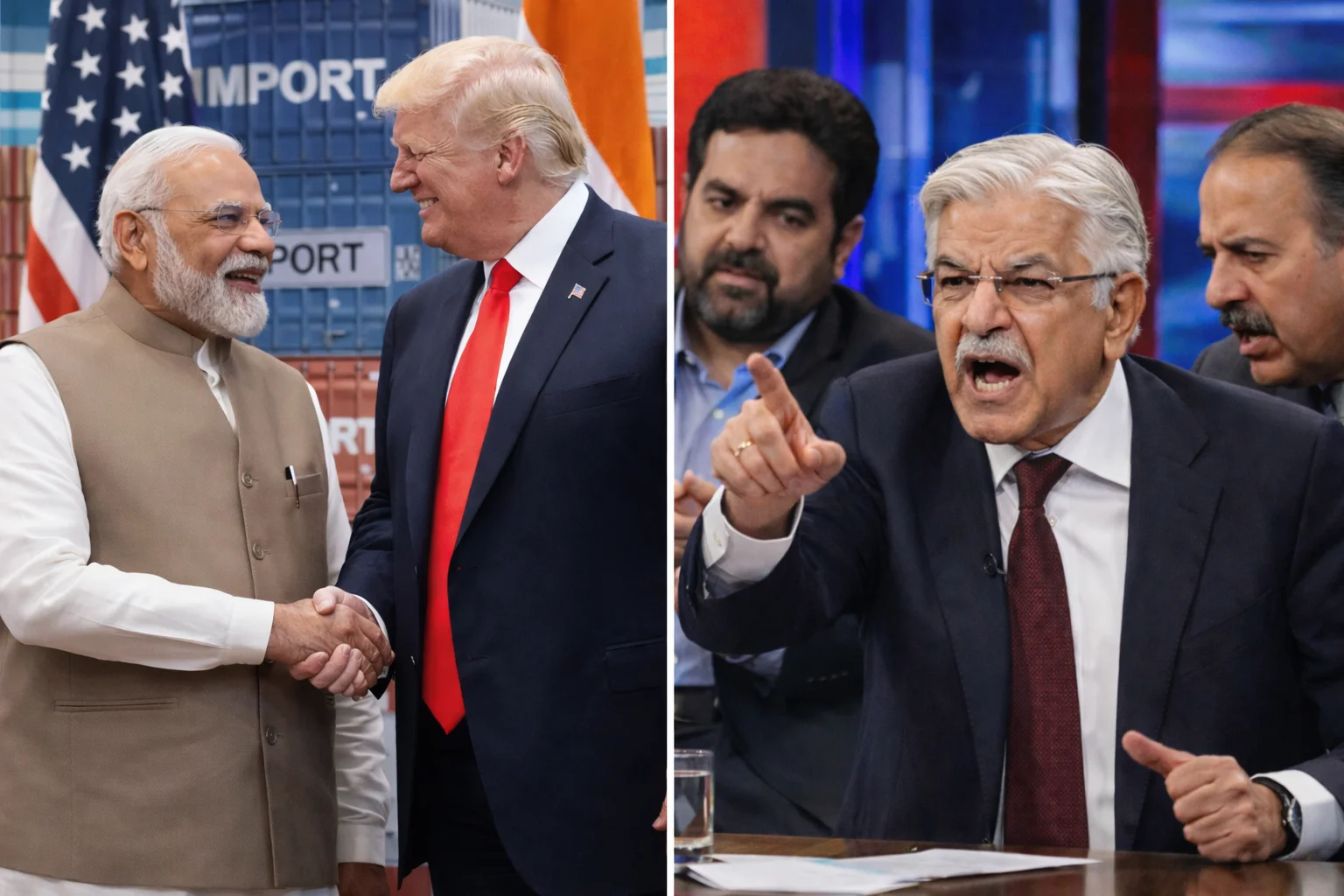
Image credit: AI-generated using ChatGPT by OpenAI
2️⃣ Pressure on the Current Regime
Pakistan’s current leadership is often accused internally of being overly pro-US.
By criticizing Washington openly, Khawaja Asif may be trying to reassure domestic audiences that Pakistan is not blindly aligned with the United States anymore.
It is political balancing.
Publicly cooperate.
Domestically criticize.
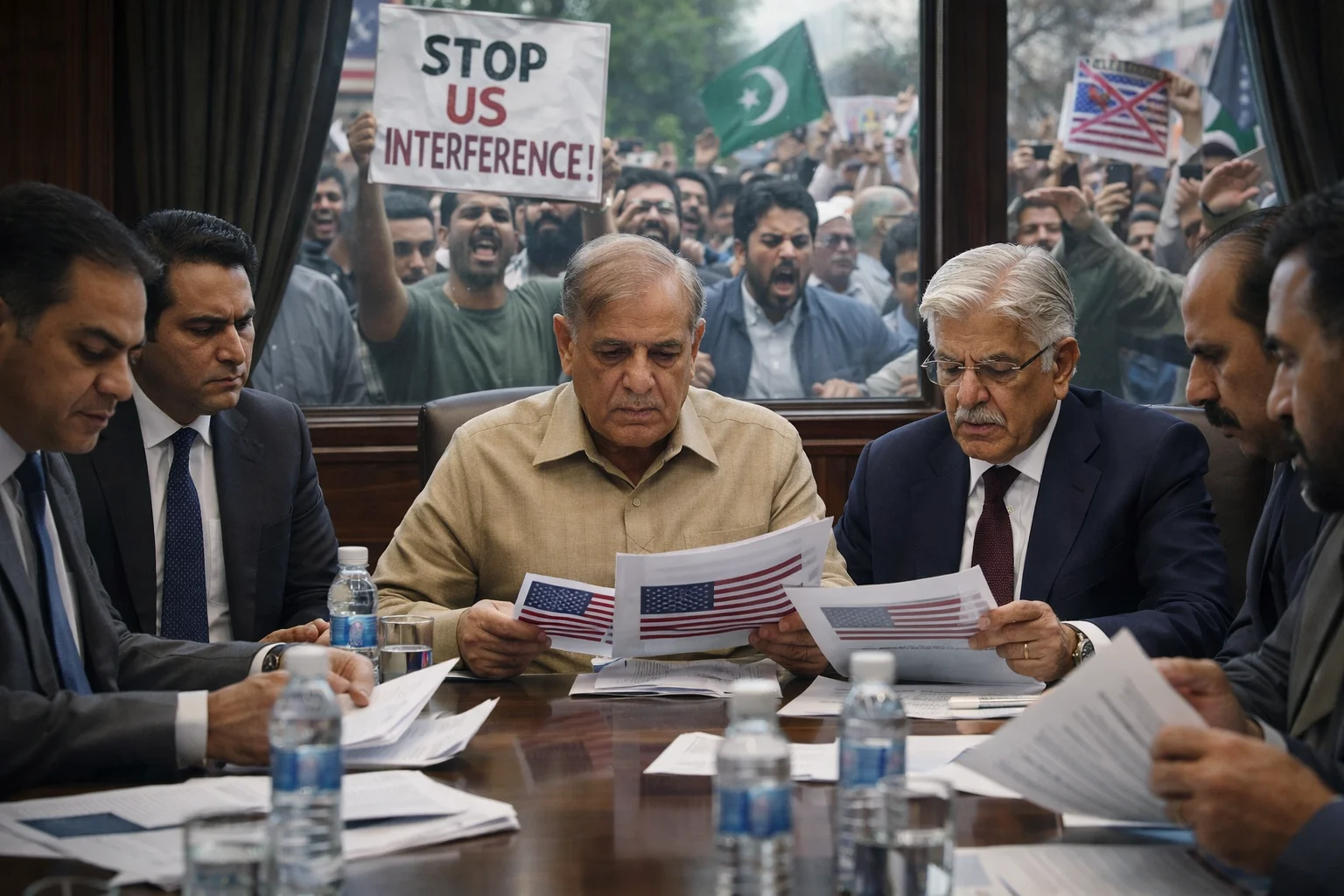
Image credit: AI-generated using ChatGPT by OpenAI
A Historic Admission About Afghanistan
Khawaja Asif did not stop there.
He also admitted that Pakistan participated in two wars fought on Afghan soil — first against the Soviet Union and later alongside the US after 9/11.
He said:
“When the Soviet Union came to Afghanistan, it came at the invitation of the Kabul government. There was no invasion — that was an American theory.”
This is a massive geopolitical statement.
He also acknowledged that:
- Pakistan changed school textbooks after 1999.
- The concept of “jihad” was manipulated.
- The education system was reshaped to support war narratives.
This is not minor rhetoric. This is historical repositioning.
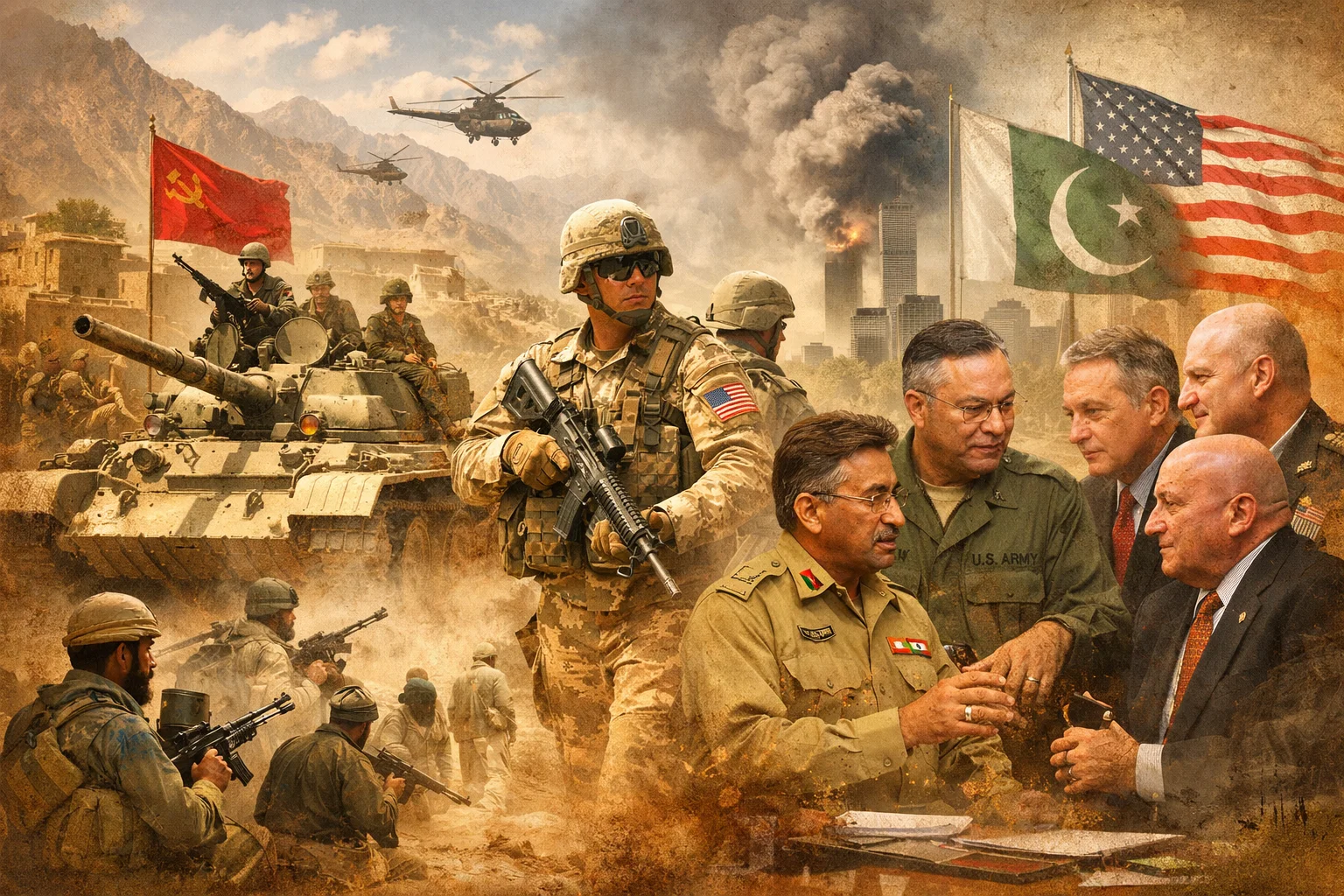
Image credit: AI-generated using ChatGPT by OpenAI
Was It Only America’s Fault?
Here is where nuance matters.
While the Khawaja Asif toilet paper statement blames the United States, responsibility is not one-sided.
No country can be “used” without participation.
Pakistan chose:
- To align against the Soviet Union.
- To join the US war in Afghanistan.
- To accept military and financial support.
- To reshape domestic policy around geopolitical funding.
Those were sovereign decisions.
Pakistan sought US dollars.
Pakistan sought strategic leverage against India.
Pakistan believed external sponsorship would strengthen its position.
This was not forced submission. It was strategic calculation.
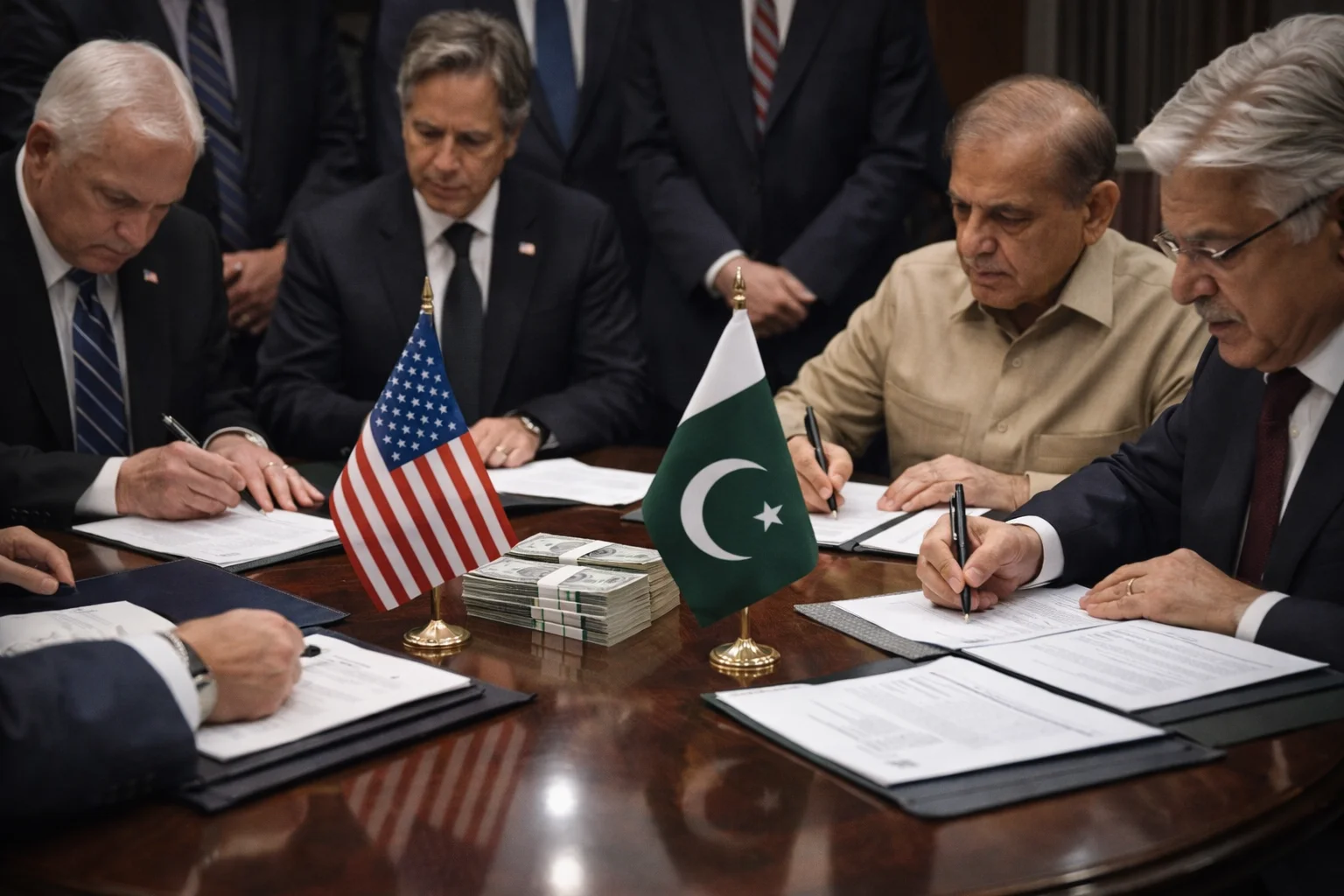
Image credit: AI-generated using ChatGPT by OpenAI
The Gaddafi Reference and Anti-US Tone
Khawaja Asif also claimed that American presidents were responsible for killing “10–12 crore Muslims” over decades and referenced the killing of Muammar Gaddafi’s son.
It is important to understand that in Pakistan, Muammar Gaddafi has historically enjoyed symbolic admiration — even Lahore’s major stadium was named after him.
So invoking Gaddafi is politically calculated — it taps into anti-Western emotional memory.
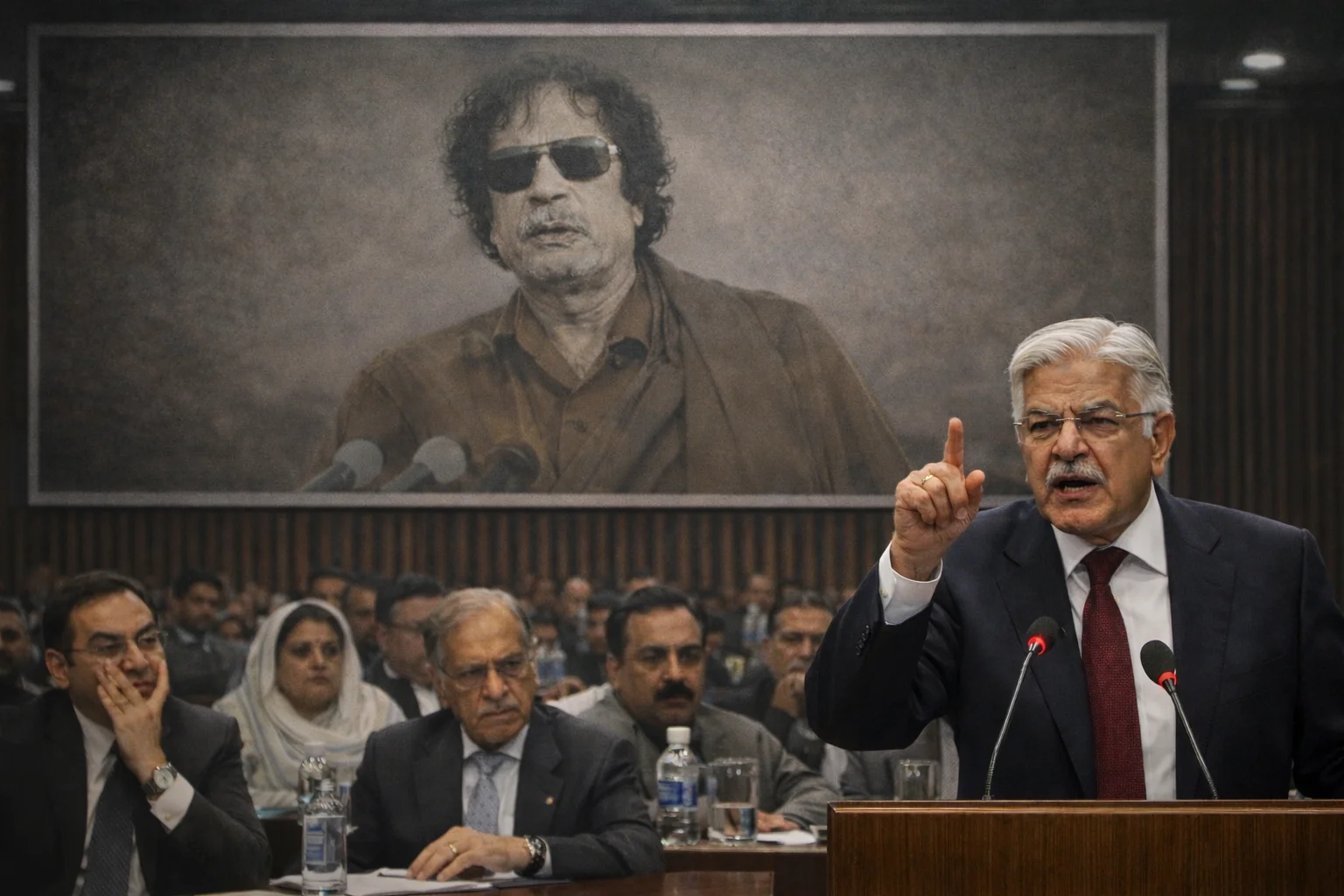
Image credit: AI-generated using ChatGPT by OpenAI
Domestic Justification: Speaking Truth at Home
Why criticize the US so openly while still accepting IMF loans and World Bank assistance?
Because legitimacy matters.
Pakistan receives:
- IMF financial assistance
- World Bank loans
- US-linked investments (including in projects like Reko Diq)
Yet Parliament needs to show it is not submissive.
The Khawaja Asif toilet paper statement serves as a domestic safety valve — a way of saying:
“Yes, we worked with the US. But we were also exploited.”
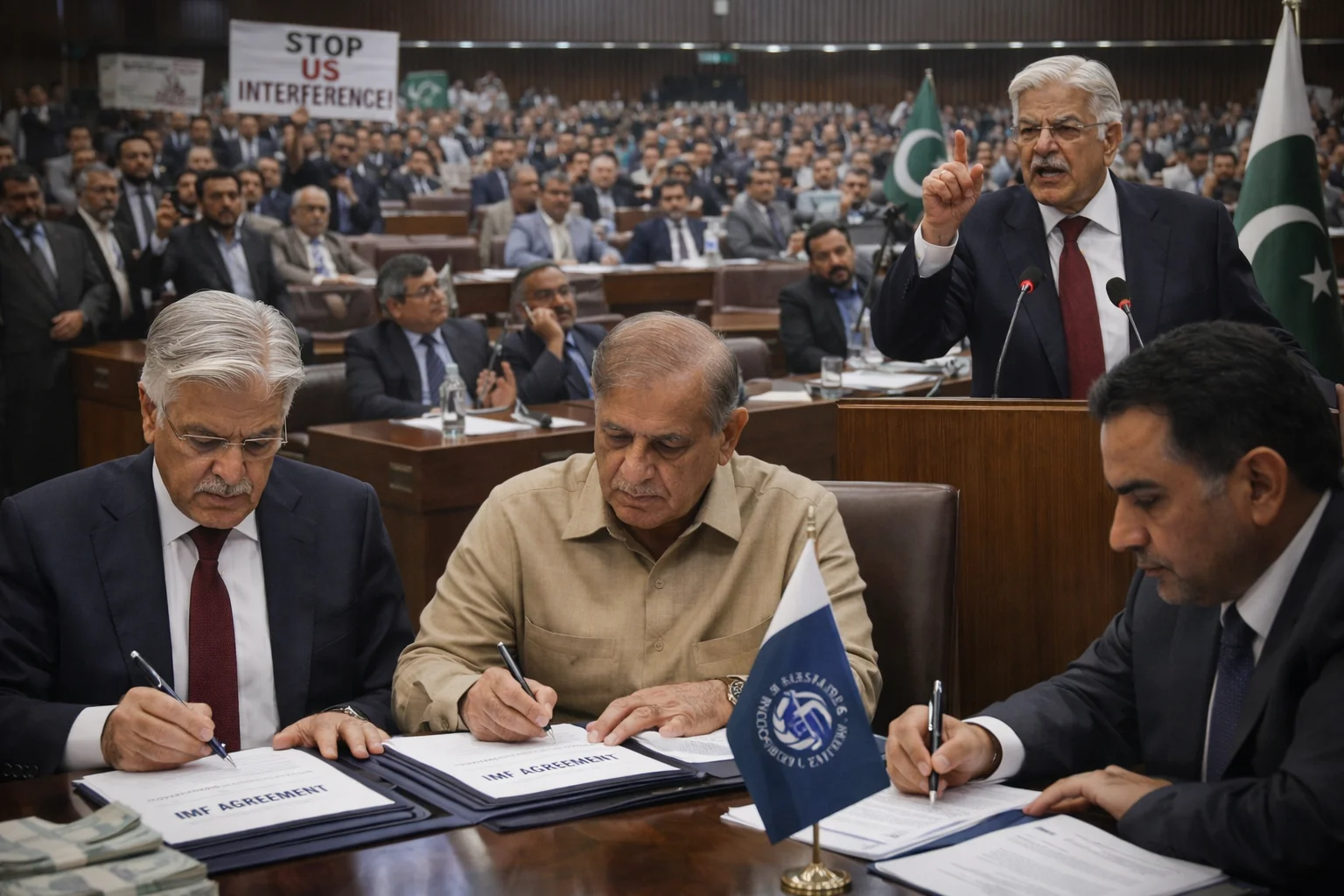
Image credit: AI-generated using ChatGPT by OpenAI
The Afghanistan Fallout
Afghan political voices have already reacted to these comments.
They argue that Pakistan:
- Enabled instability in Afghanistan.
- Acted on behalf of US strategic goals.
- Helped create long-term regional turbulence.
Khawaja Asif’s remarks indirectly validate part of that criticism.
The India Angle
India has attempted multiple diplomatic openings over the decades:
Former Prime Minister Atal Bihari Vajpayee famously took a bus to Lahore in an attempt to reset relations.
Later, Dr. Manmohan Singh described Pakistan’s leadership as capable of peace.
Repeated diplomatic efforts were made.
But after continued cross-border tensions and attacks, India recalibrated its approach.
Today, the message from New Delhi is clear: terrorism will meet direct response.
Now, India pursues a clearer doctrine — responding directly to cross-border terrorism and strengthening economic leverage through trade partnerships.
India’s evolving security posture contrasts sharply with Pakistan’s admitted reliance on external sponsorship.
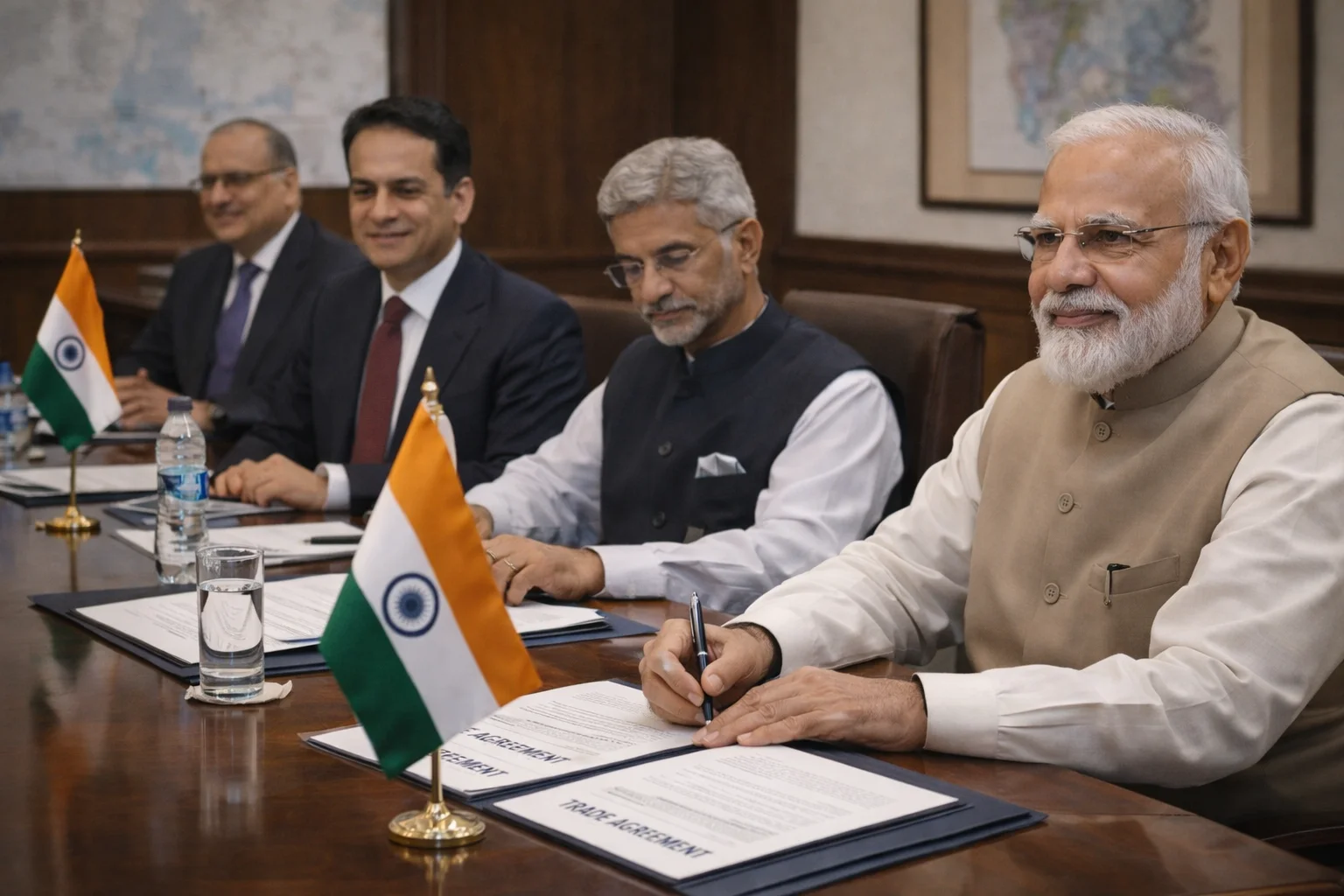
Image credit: AI-generated using ChatGPT by OpenAI
Is Pakistan Changing Course?
The key question now:
Will Pakistan continue balancing between Washington, Beijing, and Moscow?
Or is this simply political theatre for domestic consumption?
The Khawaja Asif toilet paper statement may signal frustration — but frustration is not policy change.
The real test will be:
- Long-term foreign policy shifts
- Reduced dependency on external sponsors
- Internal structural reform
Until then, rhetoric remains rhetoric.
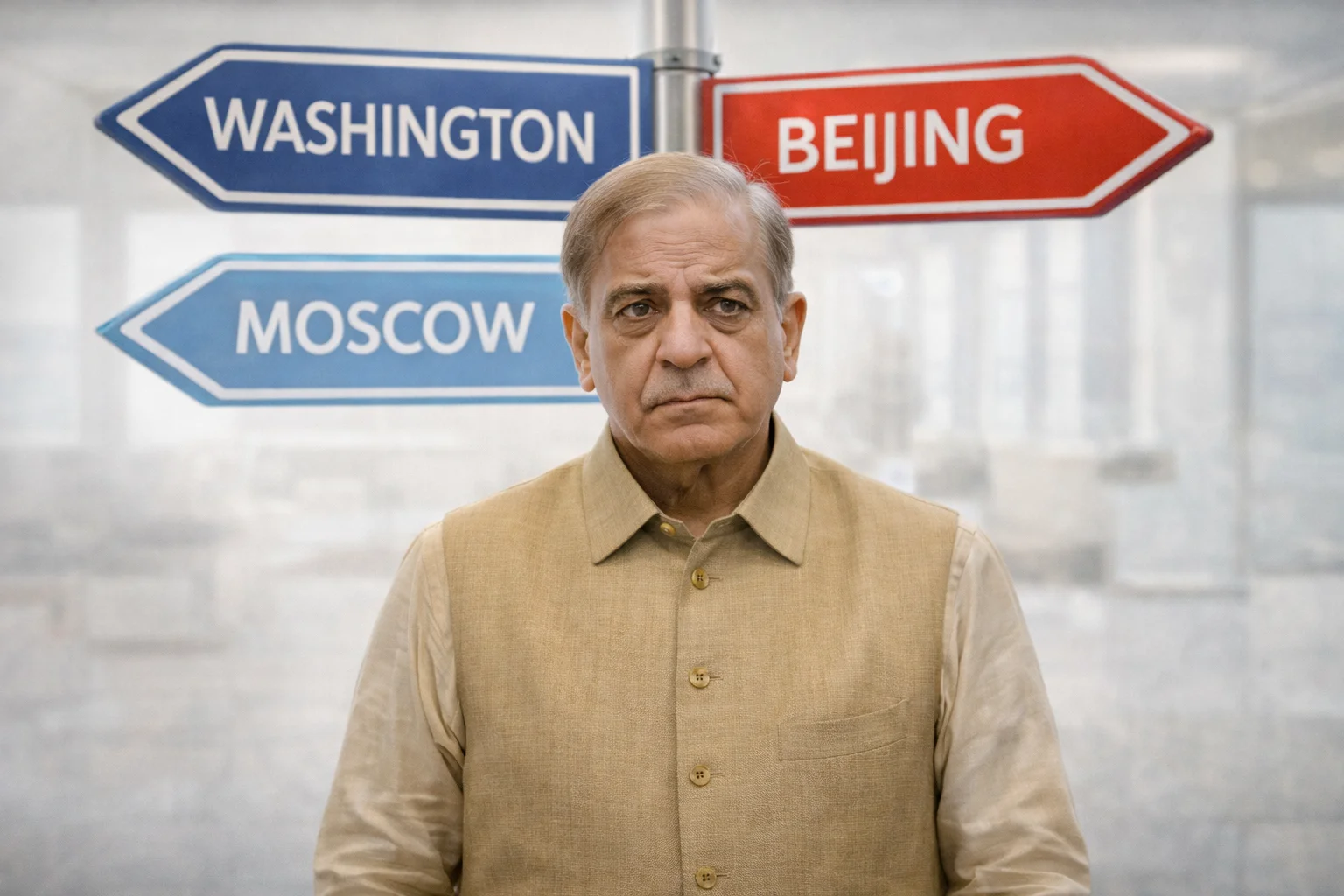
Image credit: AI-generated using ChatGPT by OpenAI
Final Thoughts
This was not just a speech.
It was a confession of strategic history.
Khawaja Asif admitted:
- Pakistan acted as a geopolitical contractor.
- Ideological narratives were altered.
- Wars were fought on foreign soil for external interests.
Whether this marks genuine introspection or political positioning remains to be seen.
But one thing is certain:
The Khawaja Asif toilet paper statement will be remembered as one of the most blunt acknowledgments in Pakistan’s parliamentary history.
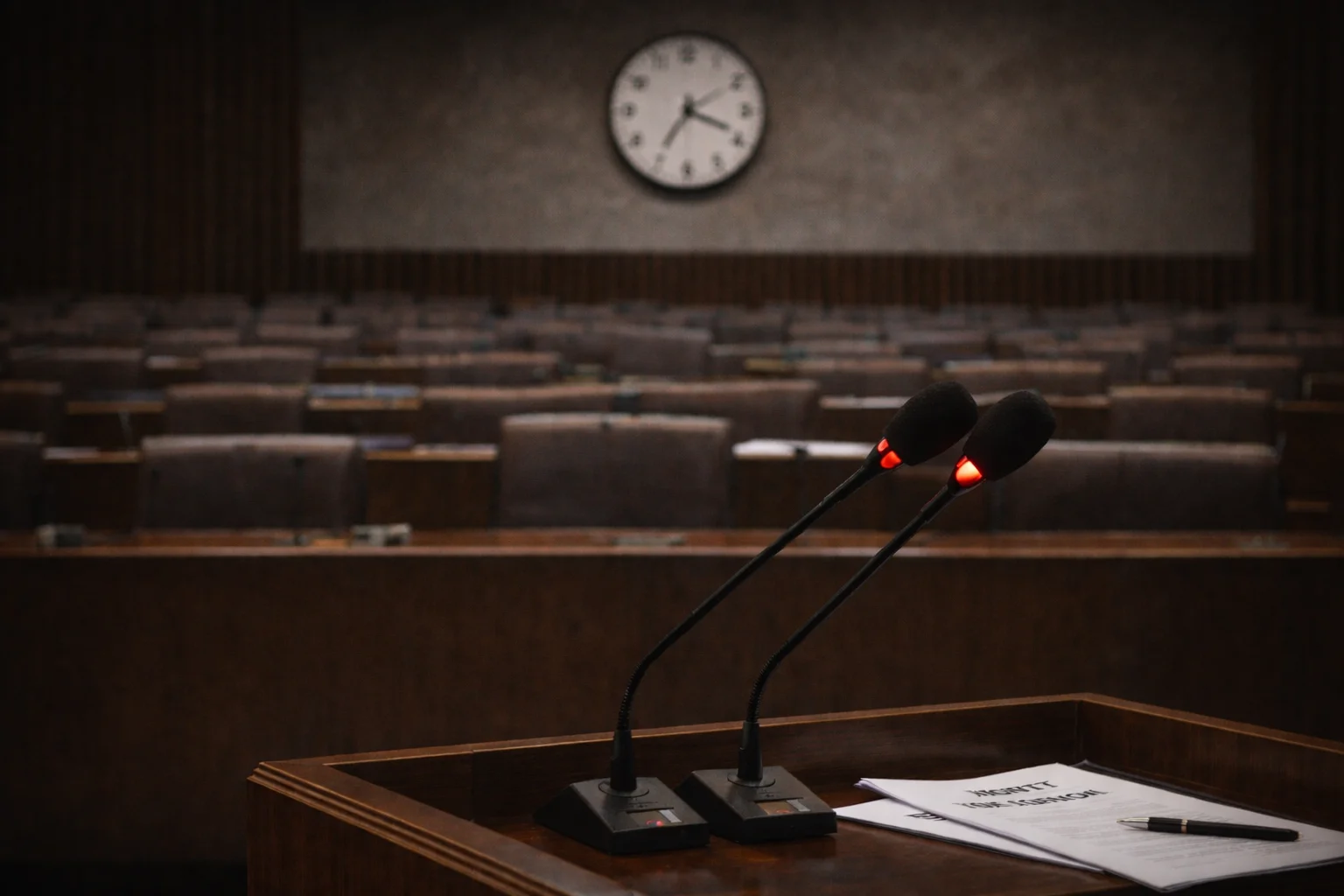
Image credit: AI-generated using ChatGPT by OpenAI
FAQs
What is the Khawaja Asif toilet paper statement?
The Khawaja Asif toilet paper statement refers to remarks made by Pakistan’s Defense Minister in Parliament where he said Pakistan was “treated worse than a piece of toilet paper” by the United States and “used for a purpose, then thrown away.” He also admitted that Pakistan “rented itself out” to the US for two decades.
Why did Khawaja Asif criticize the United States now?
The statement comes at a time of political pressure inside Pakistan, especially after comparisons with the India–US trade deal. Many analysts believe the remarks were aimed at domestic audiences to counter accusations that the current regime is overly pro-US.
Did Pakistan really support US wars in Afghanistan?
Yes. Pakistan played a key role during:
The Soviet–Afghan war in the 1980s
The US-led war in Afghanistan after 9/11
Khawaja Asif acknowledged this cooperation and admitted that Pakistan reshaped policies and narratives during those decades.
Is this statement a shift in Pakistan’s foreign policy?
The Khawaja Asif toilet paper statement signals frustration, but it does not automatically mean a policy shift. Pakistan continues to engage with US-linked institutions like the IMF and World Bank. Whether rhetoric turns into realignment remains to be seen.
How does this affect India?
India and Pakistan operate under different strategic frameworks. While India strengthens economic partnerships and trade leverage, Pakistan is reassessing its past foreign alignments. The long-term impact depends on whether Pakistan reforms its strategic priorities.
Share Your Views
Do you believe the Khawaja Asif toilet paper statement marks genuine introspection — or is it political damage control?
Share your view, join the discussion, and stay tuned for the next deep-dive into South Asia’s unfolding power play.
If you want more deep geopolitical breakdowns, explore World Affairs and Indian-Affairs — where every thing tells a bigger story than it appears to.
Read about India US 18 Percent Tariff Agreement.
Sources – NDTV World, Business Today, News18 , Money Control and more.