Table of Contents
Why Turkey Suddenly Felt the Need to Explain Pakistan
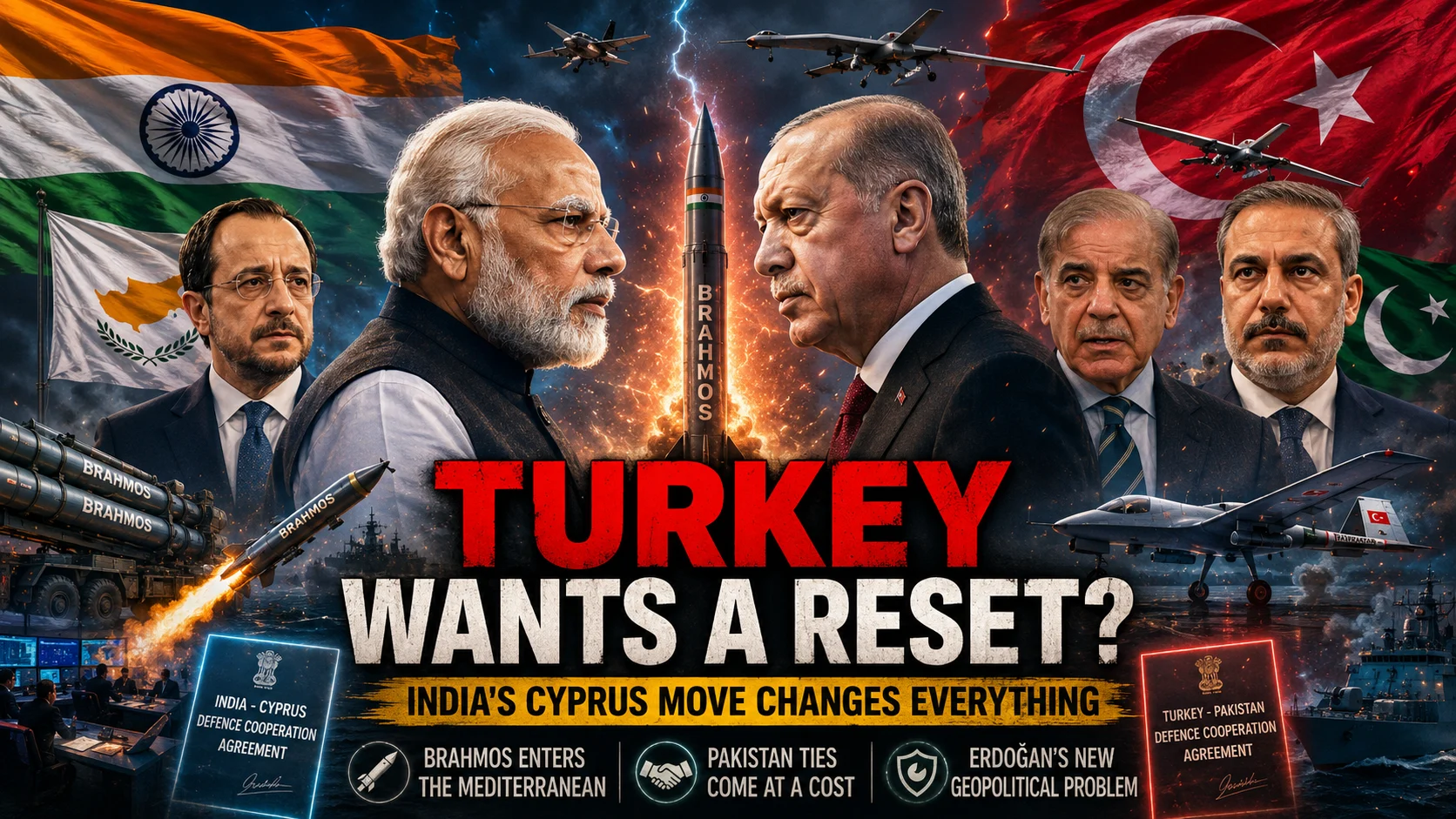
The most revealing part of Turkish Foreign Minister Hakan Fidan’s June 2026 Singapore lecture was not what he said about India, but what the Turkey Foreign Minister Statement on India Ties revealed about Ankara’s broader strategic calculations—and why he felt compelled to make it at all.
Speaking at the International Institute for Strategic Studies (IISS) Raffles Lectures, Fidan described Turkey’s relationship with Pakistan as a “brotherly” friendship and urged India not to interpret that relationship as hostility. He argued that Turkey’s support for Islamabad should not overshadow cooperation with New Delhi and insisted Turkey had “no problem on bilateral level with India.”
Turkish Foreign Minister Hakan Fidan on India-Türkiye relations:
— Clash Report (@clashreport) June 3, 2026
If India is going to be resentful about any country having good relations with Pakistan, there are many such countries.
We have no problem on a bilateral level with India and we urge India not to read the issue… pic.twitter.com/Z11G9GFwNO
Former Indian Foreign Secretary Kanwal Sibal responded that India does not object to friendly Pakistan ties unless they contain overt anti-India content. At the center of his criticism was President Recep Tayyip Erdogan’s repeated references to Kashmir at the United Nations General Assembly. Meanwhile, Erdogan’s September 2025 UNGA speech again called for a Kashmir solution based on UN resolutions and praised the India-Pakistan ceasefire.
The Turkish Foreign Minister is not being honest.
— Kanwal Sibal (@KanwalSibal) June 3, 2026
Turkey has engaged in provocations against India for many years which India has tried to ignore so as not to damage ties beyond repair.
India considers Turkey an important country and would prefer friendly ties with it.
Bit… https://t.co/ZZusXk3Qu3
The timing was impossible to ignore. Fidan’s remarks came immediately after a major India-Cyprus diplomatic breakthrough. But what exactly changed in the Mediterranean?
Sources: Hindustan Times, Business Today, The Hindu
The Real Story Behind India’s Cyprus–BrahMos Missile Roadmap
The India’s Cyprus–BrahMos Missile initiative is not simply an arms sale discussion—it is a geopolitical signal.
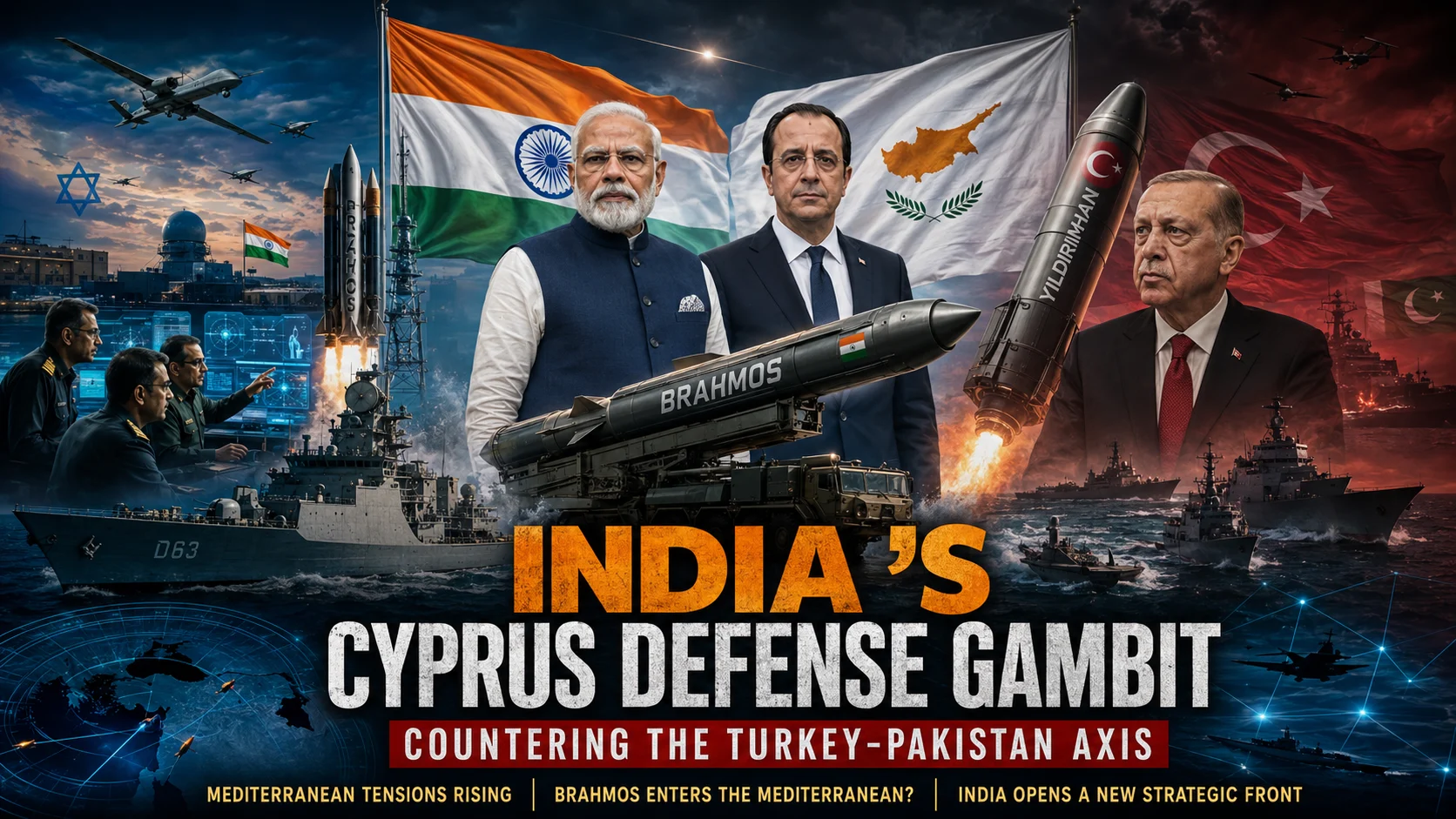
During Cypriot President Nikos Christodoulides’ state visit to New Delhi from May 20–23, 2026, India and Cyprus elevated their relationship to a formal Strategic Partnership. The two countries signed a five-year defense cooperation roadmap covering 2026–2031 and began discussions on Cyprus acquiring BrahMos supersonic cruise missiles, kamikaze drones, and other advanced defense systems.
More importantly, Cyprus is exploring these acquisitions through a €1.2 billion defense package allocated under the European Union’s SAFE program. That means the potential procurement is not a theoretical discussion; a financial mechanism already exists to support it.
This was the trigger.
The sharpest insight from recent developments is that Hakan Fidan’s defensive outreach in Singapore followed directly after India positioned BrahMos missiles inside Turkey’s strategic neighborhood through the Cyprus roadmap and an EU-funded defense framework.
Turkey spent years supporting Pakistan diplomatically on Kashmir while remaining geographically insulated from Indian leverage. The Cyprus roadmap changes that equation. By combining European funding, Mediterranean partnerships, and defense exports, India has created a pressure point near Turkish strategic interests without matching Ankara’s rhetoric. The unanswered question is whether this becomes a one-off deal—or the foundation of a larger Mediterranean security architecture.
Sources: Türkiye Today, IOI – India Cyprus Defense Roadmap 2026
Why India’s Mediterranean Move Matters More Than Most Indians Realize
India’s biggest achievement here is not the potential missile sale. It is the creation of symmetric deterrence.
For years, Turkey has supported Pakistan politically on Kashmir while deepening defense cooperation with Islamabad. During Operation Sindoor in 2025, Deputy Chief of Army Staff Lt Gen Rahul R. Singh stated that Turkey supplied Bayraktar drones and other drone systems to Pakistan. He also stated that India faced “one border and two adversaries, actually three,” with China providing extensive backing and intelligence support. No country other than China and Turkey was publicly identified as having provided active military or intelligence assistance to Pakistan.
Instead of escalating through public confrontation, India appears to have chosen geography as its response. The same strategy is visible elsewhere. Indian systems including the Akash Air Defence System, Pinaka rockets, ATAGS artillery guns, Swathi radar, and ALS-50 loitering munitions appeared in Armenia’s military parade—a country that has long balanced against the Turkey-Azerbaijan partnership.
For India, this is the critical shift: New Delhi is increasingly answering diplomatic pressure with defense exports and security partnerships rather than statements. The Mediterranean is becoming an extension of India’s strategic map. But Turkey’s own regional ambitions suggest this competition may not stop with Cyprus.
Sources: The New Indian Express
The Emerging Turkey-Pakistan Islamic NATO Axis
The Turkey-Pakistan relationship is no longer limited to bilateral cooperation.
Pakistan Defence Minister Khawaja Asif announced that Turkey and Qatar are expected to join Pakistan’s existing defense arrangement with Saudi Arabia. Separately, Pakistan’s Minister for Defence Production, Raza Hayat Harraj, helped formulate a draft trilateral defense framework designed around a NATO-like Islamic military structure after months of deliberation.
🇵🇰🤝🇸🇦 New partners may sign onto current Pakistani-Saudi defense pact
— Sputnik (@SputnikInt) May 12, 2026
Pakistan’s Defense Minister, Khawaja Muhammad Asif, has stated that Qatar and Turkiye may soon join the existing defense pact between Pakistan and Saudi Arabia.
🗣️“This arrangement has been partially… pic.twitter.com/kmwN7ngHjO
The significance lies in the existing Strategic Mutual Defence Agreement (SMDA) signed between Pakistan and Saudi Arabia in 2025. The agreement reportedly includes a collective defense clause treating aggression against one signatory as aggression against both and obligating military assistance upon request.
The concept of an “Islamic NATO” has also gained wider regional attention. Iranian official Mohammad-Hassan Nami publicly advocated a broader alliance of Muslim nations leveraging strategic locations such as the Strait of Hormuz and Bab al-Mandab.
Viewed separately, these developments appear fragmented. Viewed together, they suggest an emerging effort to institutionalize defense cooperation across multiple regional theaters. That raises a different question: what military capabilities are beginning to underpin these political alignments?
Sources: NDTV
BrahMos vs Yildirimhan: The Hardware Behind the Diplomacy
The strategic conversation is increasingly being shaped by missile systems rather than speeches.
The BrahMos is a supersonic cruise missile that has become one of India’s most successful defense exports. Indian Defence Secretary Rajesh Kumar Singh recently confirmed that a BrahMos deal has been signed with Vietnam and another is in its final stages with Indonesia. Cyprus would represent another major expansion of that export strategy.
Turkey, meanwhile, unveiled the Yildirimhan intercontinental ballistic missile at the SAHA 2026 International Defence and Aerospace Exhibition in Istanbul. The missile reportedly has a range exceeding 6,000 kilometers, allowing coverage of Europe, the Middle East, Africa, India, and parts of China from Turkish territory.
Günün Bombası MSB ARGE’den Geldi!
— Turkish Defence Agency (@tdefenceagency) May 5, 2026
MSB ARGE, yeni geliştirdiği 6000 km menzilli YILDIRIMHAN kıtalararası balistik füzesini tanıttı! pic.twitter.com/UdE9bq3IEl
The Yildirimhan is designed around a first-stage cluster of four liquid-propellant engines using unsymmetrical dimethylhydrazine (UDMH) fuel and dinitrogen tetroxide oxidizer. Turkish researchers state that nearly a decade of propulsion work enabled serial fuel production capability. The missile is reported to reach speeds between Mach 9 and Mach 25.
Interestingly, Germany is reportedly exploring Turkish missile systems to address long-range strike capability gaps, indicating that Ankara’s defense ambitions are attracting attention far beyond South Asia. Yet military technology alone does not explain the broader geopolitical shift underway.
Sources: TVP World, Defense News, IOI – BrahMos Missile Export Strategy
The Strategic Message Hidden Behind the Headlines
Most coverage treats these events as isolated stories. They are not.
Operation Sindoor triggered diplomatic fallout that extended beyond the battlefield. India revoked security clearance for Turkish aviation company Celebi at nine major airports, while Indian tourist arrivals to Turkey reportedly fell 37% in June 2025. The conflict itself imposed an estimated economic cost of $407.75 million on India and roughly $1.5 billion on Pakistan.
At the same time, Turkey continued defending Pakistan diplomatically, Azerbaijan expressed solidarity with Islamabad, and discussions around broader Islamic defense cooperation accelerated. India’s response was noticeably different. Rather than attempting to outshout Ankara, it expanded defense partnerships with countries that have longstanding tensions with Turkey, including Greece, Cyprus, and Armenia.
That is why the India’s Cyprus–BrahMos Missile roadmap matters beyond a potential procurement contract. It signals that India’s foreign policy is evolving from reactive diplomacy toward strategic positioning through military-industrial partnerships.
The deeper story is not about a missile sale. It is about whether India can convert defense exports into enduring geopolitical influence. If the Cyprus roadmap succeeds, New Delhi may have demonstrated that strategic leverage is often built not where a dispute begins, but where an adversary least expects pressure to emerge.
Sources: Observer Research Foundation (ORF)
FAQs
Is Cyprus purchasing BrahMos missiles from India?
Cyprus has not publicly finalized a purchase, but it is actively exploring the acquisition of BrahMos supersonic cruise missiles under the India-Cyprus defense cooperation roadmap for 2026–2031. Discussions are linked to a €1.2 billion defense package allocated to Cyprus through the EU SAFE program. The financial framework makes the proposal significantly more credible than a preliminary expression of interest.
What is Turkey’s Yildirimhan ICBM range?
Turkey’s Yildirimhan intercontinental ballistic missile reportedly has an operational range exceeding 6,000 kilometers. That range allows coverage of Europe, Africa, the Middle East, India, and parts of China from Turkish territory. The system was unveiled at the SAHA 2026 defense exhibition in Istanbul.
What is the Islamic NATO alliance?
The term refers to emerging proposals for deeper military cooperation among Muslim-majority countries. Current discussions center on expanding Pakistan’s defense arrangements with Saudi Arabia by potentially including Turkey and Qatar. The existing Saudi-Pakistan Strategic Mutual Defence Agreement already contains collective-defense provisions.
How did Turkey assist Pakistan during Operation Sindoor?
According to Lt Gen Rahul R. Singh, Turkey supplied Bayraktar drones and other drone systems to Pakistan during the 2025 conflict. He also stated that China provided extensive intelligence and military support. These remarks made Turkey one of the few countries publicly identified as providing direct military assistance to Islamabad.
Why did India strengthen defense relations with Cyprus?
The India-Cyprus Strategic Partnership combines defense, maritime security, and broader geopolitical cooperation. For India, Cyprus provides a foothold in the Eastern Mediterranean. For Cyprus, Indian defense systems offer new procurement options supported by EU defense funding mechanisms.
Closing Question
If India successfully deploys its defense-export strategy across Cyprus, Greece, and Armenia, will the next phase of India-Turkey competition be fought through diplomacy—or through competing security networks stretching from the Mediterranean to South Asia?
Share Your Views in the Comments below.
Explore more about Indian Affairs.


Marco Rubio India Visit ‘Stupid People’ Comment Decoded