Table of Contents
Why One Taj Mahal Photo Triggered a Diplomatic Fight
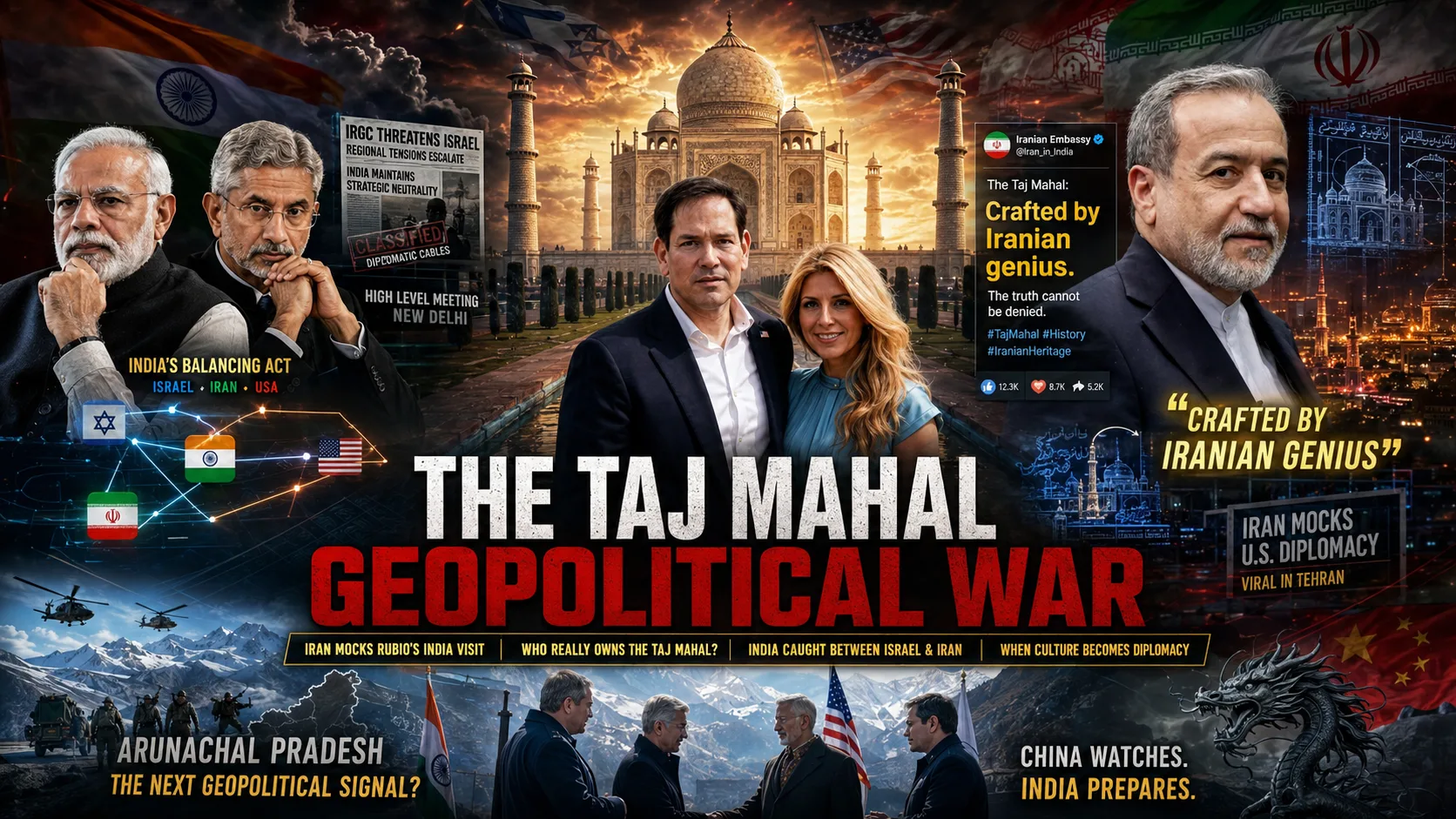
The Iran swipe at Marco Rubio became much bigger than a social media exchange because it exposed how quickly cultural history can turn into geopolitical confrontation. US Secretary of State Marco Rubio spent several days in India trying to repair the damage Donald Trump had caused to India-US relations, and during that visit he traveled across multiple locations, interacted with media, experienced Indian culture, and eventually posed for photographs at the Taj Mahal with his wife, Jeanette Rubio.
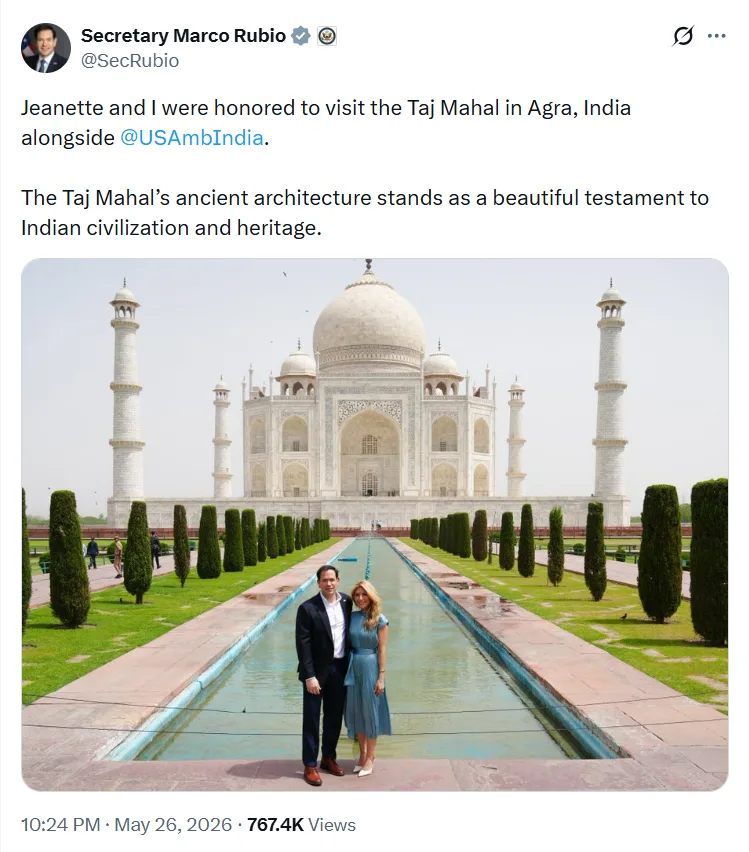
Screenshot of X Post by Marco Rubio(@SecRubio)
Soon after Rubio posted the image, the Iranian Embassy in Hyderabad, India publicly mocked the visit. Iran’s official response argued that the Taj Mahal was built for Shah Jahan’s Iranian wife, Mumtaz Mahal, and crafted by Iranian architects.
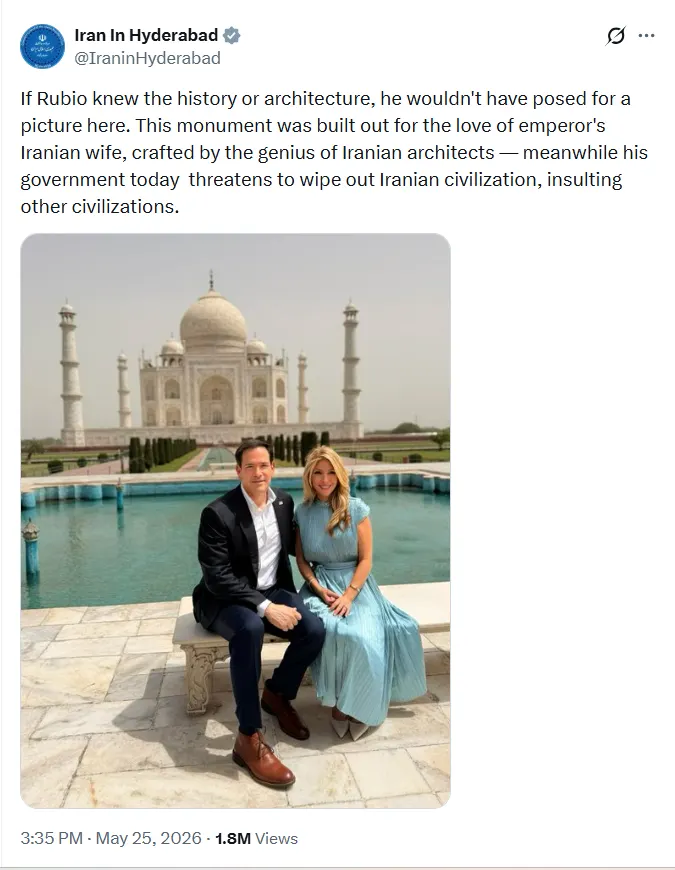
Screenshot of X Post by Consulate General of Iran in Hyderabad(@IraninHyderabad)
The statement then escalated sharply by accusing the Trump administration of threatening to “wipe out Iranian civilization.” That accusation directly referenced Trump’s earlier rhetoric about destroying an entire civilization if tensions with Iran continued. It was the kind of statement many people felt no country’s president had publicly tweeted before.
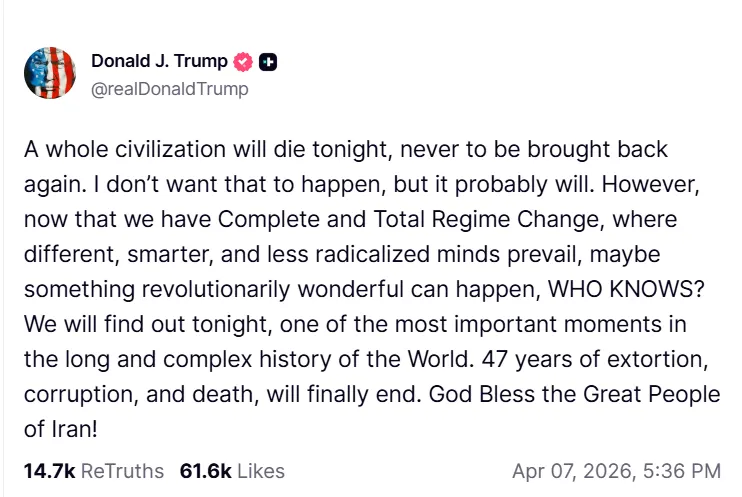
Screenshot of Truth Social Post by Donald Trump(@realDonaldTrump)
This was no longer just a photograph from Agra. It had suddenly become part of the larger US-Iran rivalry.
Why Iran Suddenly Claimed the Taj Mahal
Iran’s intervention mattered because it challenged the idea that the Taj Mahal represents only Indian identity. The Iranian side publicly emphasized the Persian heritage of Mumtaz Mahal and the role of Persian architects in constructing the monument. That argument immediately triggered another reaction online, where Turkish commentators claimed that the Mughal rulers themselves were ethnically Turkic and therefore the Taj Mahal should not be linked exclusively to Iran either.
The debate quickly became a contest over ownership of history. It was similar to arguing that Google belongs to Indian history simply because Sundar Pichai is its CEO. Persian connections to the Taj Mahal do not erase the fact that the monument was ultimately built in India.
While one side highlighted Persian lineage and another highlighted Turkic origins, many Indians pointed out what they saw as the bottom line: the Taj Mahal was built in India. The monument was financed through India’s economy at a time when India controlled roughly 25% of the world economy during the Mughal period. India’s wealth financed the monument regardless of whether Persian architects or Turkic rulers were involved.
UNESCO itself describes the Taj Mahal as “the jewel of Muslim art in India,” but the controversy raised another uncomfortable question for New Delhi.
Sources: UNESCO – Taj Mahal
Why India’s Bigger Problem Is Not the Taj Mahal at All
The sharpest geopolitical issue in this entire episode is not Iran’s social media comment but Israel’s demand that India declare Iran’s Revolutionary Guard a terrorist organization. That demand places New Delhi in an extremely uncomfortable position because Israel itself never declared Pakistan’s military or Pakistani military-linked groups as terrorist organizations during India’s wars with Pakistan.
Israel does not even maintain relations with Pakistan, yet still never declared Pakistan’s military or Pakistani military-linked groups as terrorist organizations during India’s wars with Pakistan.
Senior Israeli officials have reportedly urged India to impose sanctions on the Islamic Revolutionary Guard Corps (IRGC) and formally classify it as a terrorist organization. At the same time, India continues maintaining relations with Tehran, and Iranian Foreign Minister Abbas Araghchi recently emphasized the strength of India-Iran ties during his India visit.
For India, this situation is extremely tricky.
And this is where the Taj Mahal controversy suddenly became much bigger than a diplomatic argument over architecture.
Sources: India Today
Why India Keeps Sending Every World Leader to Agra
A larger question now being openly asked is whether India has overused the Taj Mahal in diplomacy. Almost every major visiting foreign leader eventually gets taken to Agra, turning one monument into India’s default diplomatic backdrop.
There is no dispute that the Taj Mahal is globally admired. It remains a UNESCO World Heritage Site and one of the world’s most recognizable structures. But India may now be using the same location too frequently. These high-profile visits also involve enormous national-level security arrangements around the event.
China offers an interesting contrast. Beijing does not repeatedly take every foreign leader to the same monument or symbolic location again and again.
India possesses enormous civilizational depth through locations like the Ellora Caves, Ajanta Caves, Khajuraho, and many other globally significant sites. The argument increasingly being made is that India should consider using more of these places through tourism diplomacy instead of repeatedly returning to the same imagery from Agra.
The next question is what stronger geopolitical messaging through location selection could actually look like.
Sources: Firstpost
The Arunachal Pradesh Argument Nobody in Delhi Wants to Test
One of the most striking ideas raised during this debate was the suggestion that India should host major diplomatic meetings in Arunachal Pradesh instead of repeatedly using Agra. Imagine Dr. S.Jaishankar meeting Marco Rubio in Arunachal Pradesh instead of Agra while China continues claiming the region as part of Tibet.
The argument was simple: such a meeting would project to the world that Northeast India is unquestionably part of India while simultaneously countering China’s narrative regarding Arunachal Pradesh.
China had already opposed the recent Quad’s Foreign Ministers meeting held in India, which strengthened the argument that diplomatic locations themselves can become geopolitical messaging tools.
Bloomberg: The U.S., Japan, India and Australia have launched a maritime surveillance initiative for the Indo-Pacific region. Does foreign ministry have any comment?
— Yu Jing (@ChinaSpox_India) May 27, 2026
Spokesperson of MFA: Cooperation between countries should be conducive to regional peace, stability and… pic.twitter.com/R6aJSuER7H
BREAKING: China opposes Quad meeting held in Delhi
— Shashank Mattoo (@MattooShashank) May 26, 2026
"Cooperation between countries should be conducive to regional peace, stability and prosperity, and not target any third party. We oppose forming exclusive groupings or engaging in bloc confrontation." pic.twitter.com/79CHHmdwAb
This was deliberate.
The larger point was that the places chosen for diplomacy are no longer viewed as neutral or random choices. And that is exactly why the Taj Mahal became part of a much larger geopolitical confrontation between Iran and the United States.
Sources: The Indian Express
Why the Israel-Iran Pressure Campaign Changes Everything
The Taj Mahal dispute may eventually fade from headlines, but the strategic pressure on India will remain. Iran used the Taj Mahal controversy to publicly attack American rhetoric, while Israel simultaneously pushed India toward a much harder position against Tehran through its demand regarding the IRGC.
Those two developments happening together are what made this episode unusually important.
India now faces pressure from multiple sides at the same time. The United States wants stronger alignment against Iran. Israel wants sanctions and terrorist designation measures against the IRGC. Iran, meanwhile, continues signaling that its historical and diplomatic ties with India remain strong.
The danger for India is not simply about choosing one side or another. The bigger challenge is maintaining balance while multiple rival powers attempt to pull New Delhi in different directions at the same time.
That is why the debate over the Taj Mahal stopped being only about architecture or tourism. It became part of a much wider geopolitical struggle unfolding publicly inside India itself.
Conclusion
The Iran swipe at Marco Rubio exposed something much larger than a viral diplomatic insult. It revealed how historical memory, diplomatic symbolism, and strategic pressure are increasingly colliding in public view.
Iran used the Taj Mahal to attack American rhetoric. Turkish voices responded by asserting Mughal Turkic identity. India was left watching foreign powers compete over the symbolism of one of its most famous monuments. At the same time, Israel’s demand regarding the IRGC forced New Delhi into a far more serious strategic calculation involving precedent, alliances, and diplomatic balance.
The controversy also exposed a deeper Indian debate about whether the country relies too heavily on the Taj Mahal in diplomacy while underusing other locations capable of sending stronger geopolitical messages. The suggestion of holding major meetings in Arunachal Pradesh instead of Agra reflected that frustration directly.
India’s challenge now is not defending ownership of the Taj Mahal. It is deciding how to navigate growing geopolitical rivalries while preserving room to maintain relations across competing power blocs.
FAQs
Why did the Iranian consulate swipe at Marco Rubio?
The Iranian side reacted after Marco Rubio posted photographs from the Taj Mahal during his India visit. Iran’s official response argued that the monument was tied to Persian heritage because Mumtaz Mahal was of Persian origin and Persian architects helped construct the structure. The statement also accused the Trump administration of threatening Iranian civilization.
What is the Persian connection to the Taj Mahal?
Mumtaz Mahal, for whom the Taj Mahal was built, came from a Persian family background. The Iranian response also highlighted the role of Persian architects during the monument’s construction. That Persian connection became central to the diplomatic controversy.
Why is Israel asking India to ban the IRGC?
Israel wants India to classify the Islamic Revolutionary Guard Corps as a terrorist organization and impose sanctions against it. The issue became controversial because Israel never imposed similar measures on Pakistan’s military during India’s conflicts with Pakistan.
Why are Indian commentators criticizing Taj Mahal diplomacy?
The criticism is not directed at the Taj Mahal itself. The argument is that India repeatedly uses the same monument during high-profile diplomatic visits while ignoring many other historically and strategically important locations across the country.
Why was Arunachal Pradesh mentioned in the debate?
The idea behind hosting major diplomatic meetings in Arunachal Pradesh was to send a powerful international signal because China continues claiming the region as part of Tibet. It was presented as an alternative form of strategic diplomacy.
Closing Question
If India starts using places like Arunachal Pradesh instead of the Taj Mahal for high-profile diplomacy, will that strengthen India’s geopolitical messaging—or pull New Delhi deeper into confrontation with China?
Share Your Views in the Comments below.
Explore more about World Affairs and Indian Affairs.