Table of Contents
Why Turkey’s New Missile Suddenly Changes India’s Security Calculus
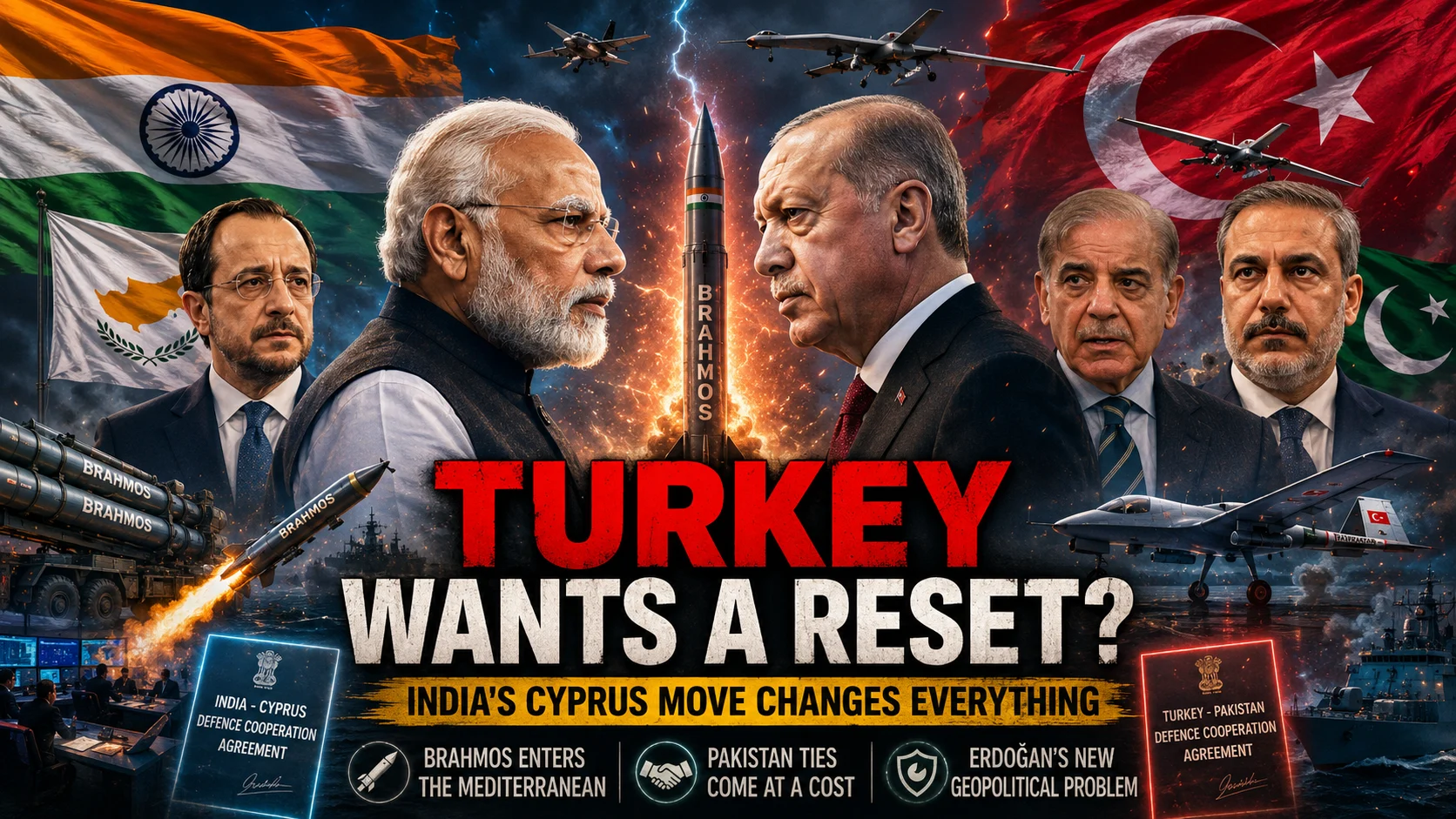
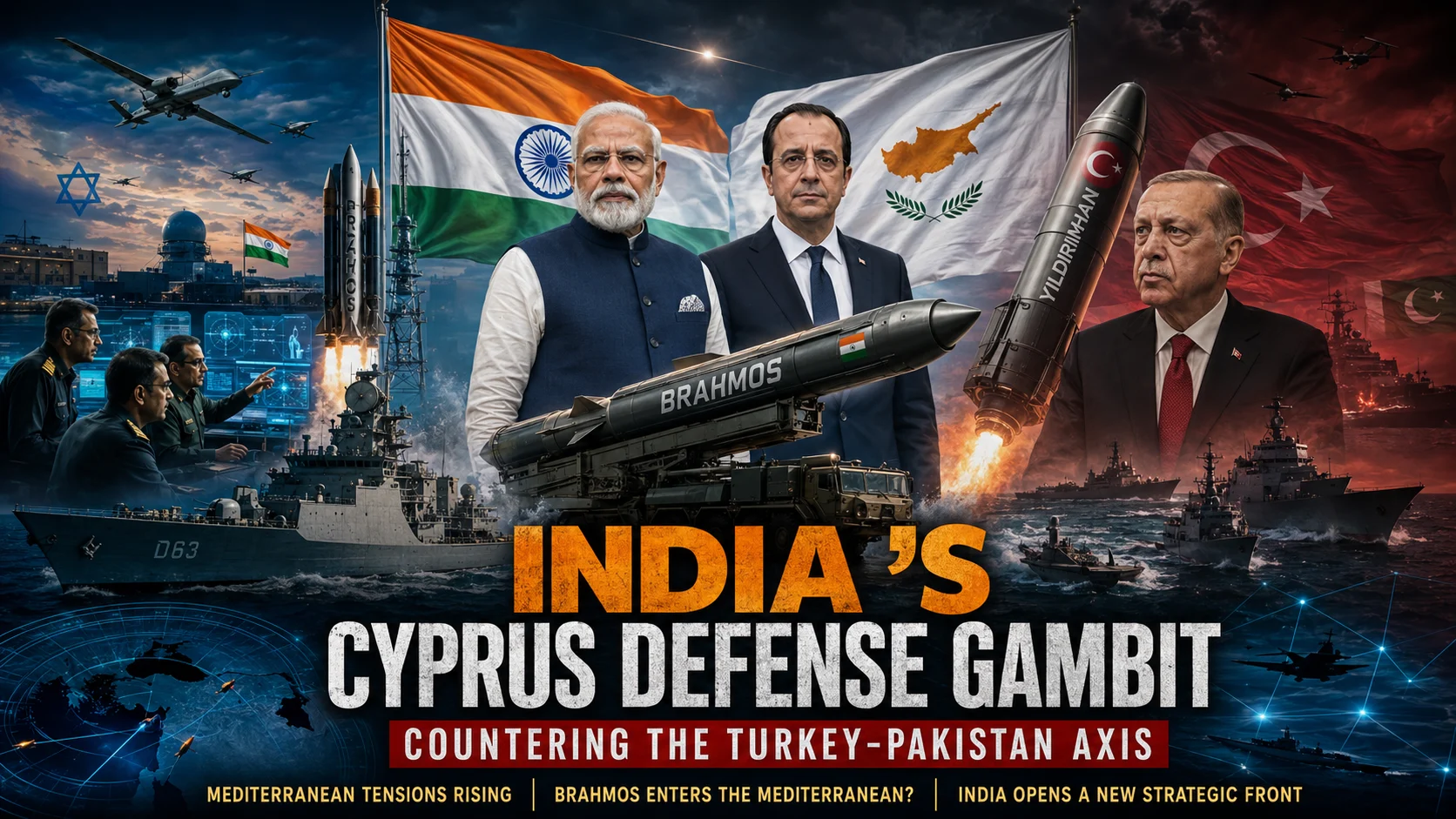
The India Cyprus defense roadmap 2026 starts with one uncomfortable reality: Turkey is now openly talking about missiles that can reach India. Turkey recently showcased its Yıldırımhan (Lightning) missile project and claimed that its range is capable of striking parts of northern India. That changes the geopolitical conversation immediately because very few countries publicly frame India as a missile target.
Günün Bombası MSB ARGE’den Geldi!
— Turkish Defence Agency (@tdefenceagency) May 5, 2026
MSB ARGE, yeni geliştirdiği 6000 km menzilli YILDIRIMHAN kıtalararası balistik füzesini tanıttı! pic.twitter.com/UdE9bq3IEl
India’s traditional security concerns have largely centered around Pakistan, with China viewed as a longer-term challenge. But Turkey has increasingly inserted itself into India’s core disputes, especially by repeatedly raising Kashmir at the United Nations despite India insisting that Kashmir is a bilateral issue.
India initially responded cautiously. But President of Turkey, Mr. Recep Tayyip Erdoğan “did not understand the point,” forcing India to rethink how it responds to Turkish interference.
The concern is no longer just diplomatic rhetoric. Turkey is steadily moving from regional influence toward broader military projection, and India now sees that shift as something that cannot simply be ignored. But instead of responding directly against Turkey, India chose to move toward the country Ankara considers its most sensitive geopolitical fault line.
Sources: American Enterprise Institute- AEI, Al Jazeera
Why Cyprus Became Turkey’s Biggest Geopolitical Weakness
Cyprus has become central to India’s emerging strategy because Cyprus is Turkey’s biggest geopolitical weakness. That explains why Prime Minister Narendra Modi’s earlier Cyprus visit mattered far more than it appeared at the time.
Thank you Cyprus! This visit will always be remembered for the positive outcomes for India-Cyprus friendship.
— Narendra Modi (@narendramodi) June 16, 2025
Here are some highlights. pic.twitter.com/dy7qJjbDRq
The relationship accelerated further when Cyprus President Nikos Christodoulides visited India and both countries upgraded ties, expanded counter-terror cooperation, and pushed forward a Joint Action Plan running from 2025 to 2029. Turkey remains the only country in the world that does not recognize Cyprus as a legitimate state. That makes India’s public support for Cypriot sovereignty deeply sensitive for Ankara.
The ties between Cyprus and India are rooted in shared historical experiences. Forged through common struggles and strengthened by our joint commitment to democracy, and respect for international law.
— NikosChristodoulides (@Christodulides) May 23, 2026
This State Visit, which transpires less than a year since Prime Minister… pic.twitter.com/dje9LEGiBI
Turkey still occupies northern Cyprus, and that occupation remains the central reason Cyprus is strategically explosive. While Turkey consolidated control in the north partly through religious and cultural alignment, it failed to capture the rest of the island despite repeated efforts.
The sharpest possibility now being discussed is that India could eventually begin supplying Cyprus with systems like BrahMos missiles and other military hardware. Turkey will be watching that very carefully.
But India’s calculations are not only about Cyprus itself. They are also about timing.
Sources: The Times of India, Government of India- Press Information Bureau
Why India Thinks the Timing Has Never Been Better
Timing is everything in geopolitics, and for India, this moment may never have looked more favorable. Turkey is simultaneously facing worsening relations with Israel, growing regional suspicion, and increasing questions around NATO’s future.
NATO is increasingly being seen as a “paper tiger,” especially after claims that the alliance failed to meaningfully support the United States during tensions involving Iran. Donald Trump’s earlier criticism of NATO also reinforced the perception that even within the United States, the alliance no longer carries the same unquestioned strategic importance it once did.
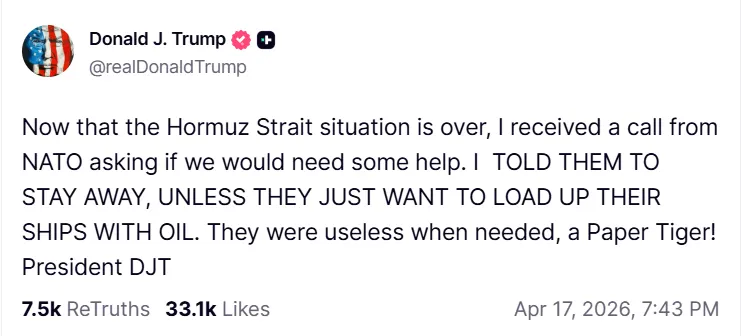
Screenshot of Truth Social Post by Donald Trump (Dated: 17 Apr, 2026)
The situation could go even further. NATO may become severely weakened or even begin disintegrating within the next decade if internal divisions continue deepening around Turkey, Israel, and future regional conflicts.
At the same time, Israel and Turkey have seen relations deteriorate sharply since 2023. A future military confrontation between Turkey and Israel is no longer unthinkable. If that happens, Cyprus immediately becomes far more strategically important for every country involved.
That is why India’s current moves are not random diplomacy. They are actions being taken at a uniquely favorable geopolitical moment. But the real turning point came after Turkey’s growing alignment with Pakistan.
Sources: The Times of India, The New Indian Express, The Times of India
What Turkey’s Pakistan Strategy Forced India to Realize
India’s strategy is becoming very direct: if Turkey can support Pakistan militarily, provide drones, and create pressure on India, then India can also build military partnerships that create pressure on Turkey through Cyprus.
Operation Sindoor became the psychological turning point. Following the April 2025 Pahalgam terror attack, Pakistan reportedly deployed Turkish-origin drones during military operations targeting multiple Indian sectors. Indian air defenses neutralized more than 600 hostile drones without allowing damage to military installations.
That experience fundamentally changed how Turkey was viewed in India’s geopolitical calculations. Turkey was no longer simply making statements at the UN. It was increasingly being seen as part of a broader anti-India alignment developing alongside Pakistan.
India’s Cyprus outreach is built around a blunt geopolitical principle repeated several times: “there can be no love without fear.” The idea is that countries interfering in India’s core interests must understand that India also has the ability to create geopolitical pressure elsewhere.
This was deliberate.
India’s possible future support for Cyprus mirrors the way Turkey allegedly supported Pakistan during Operation Sindoor. The argument is not presented as a call for war, but as a warning that deterrence only works when consequences become visible.
And the Mediterranean may become the place where those consequences eventually play out.
Sources: Deccan Herald
Why the Mediterranean Could Soon Shock the World
The Mediterranean could become one of the world’s most dangerous geopolitical theaters over the next five years. Warships could end up fighting in waters currently associated with cruise tourism, luxury travel, and commercial shipping.
Many people still view the Mediterranean as a peaceful tourism zone while military tensions beneath the surface continue intensifying. Cyprus sits directly at the center of those tensions because any future Turkish escalation could quickly pull in Greece, Israel, and other regional powers.
If Turkey ever attempts to move further into Cyprus, Greece would almost certainly intervene. Israel’s deteriorating relationship with Turkey adds another dangerous layer to that equation. A future regional confrontation could eventually involve Turkey, Cyprus, Greece, and Israel simultaneously.
That possibility is exactly why India’s Cyprus relationship matters beyond symbolic diplomacy. India can use its growing cooperation with Israel to provide Cyprus with military systems, drones, and strategic assistance if tensions rise further in the future.
The best-case scenario is that no conflict happens at all. But once countries openly support forces hostile to India and develop missiles capable of targeting India, ignoring the problem is no longer an option.
What India Is Really Signaling Through Cyprus
India’s Cyprus strategy is ultimately about demonstrating that geopolitical pressure can work both ways. If Turkey raises Kashmir internationally, strengthens military ties with Pakistan, and develops missiles capable of reaching India, then India also has options capable of creating pressure on Turkey.
That is why the India-Cyprus relationship is being expanded simultaneously across defense, counter-terror cooperation, science, and long-term strategic planning under the 2025–2029 framework. This is not symbolic diplomacy. It is the beginning of a larger geopolitical balancing effort.
The argument is intentionally blunt. India does not want conflict with Turkey. It does not want missiles used. It does not want the Mediterranean to become another war zone. But deterrence only works when adversaries believe there will be consequences for hostile actions.
“There can be no love without fear” becomes the central geopolitical logic because it reflects the unspoken rule driving modern power politics.
And if Turkey continues tying its military posture to Pakistan while India deepens its strategic role around Cyprus, the Mediterranean may eventually become far more important to Indian security than most people currently realize.
FAQs
What is the India Cyprus defense roadmap 2026?
The India Cyprus defense roadmap 2026 is a strategic framework expanding defense and counter-terror cooperation between India and Cyprus. It is increasingly being viewed as part of India’s broader response to Turkey’s growing alignment with Pakistan and repeated interventions on Kashmir.
Why is Turkey’s Yıldırımhan missile concerning for India?
Turkey publicly claimed that the Yıldırımhan (Lightning) missile’s range can reach parts of India. This matters because Turkey has increasingly taken hostile diplomatic positions toward India while simultaneously deepening military cooperation with Pakistan.
Why does India see Cyprus as strategically important?
Cyprus is increasingly viewed as Turkey’s “biggest geopolitical weakness.” India’s growing relationship with Cyprus allows New Delhi to create geopolitical pressure on Ankara in response to Turkey’s involvement in Kashmir-related issues and Pakistan cooperation.
What role did Operation Sindoor play in this shift?
Operation Sindoor became the turning point because Pakistan reportedly deployed Turkish-origin drones during the conflict. That convinced many in India that Turkey’s role had moved beyond rhetoric into active military alignment hostile to Indian interests.
Why does the article repeatedly discuss NATO and Israel?
NATO’s internal divisions and Turkey’s deteriorating relationship with Israel are creating a rare geopolitical moment where India can deepen ties with Cyprus without facing the same international constraints that might have existed earlier.
Closing Question
If Turkey continues strengthening its military partnership with Pakistan while India deepens defense cooperation with Cyprus, could the Mediterranean eventually become a direct extension of India’s national security battlefield?
Share Your Views in the Comments below.
Explore more about Defense & Security and Indian Affairs.