Table of Contents
Why Trump’s China Gamble Suddenly Made India Critical
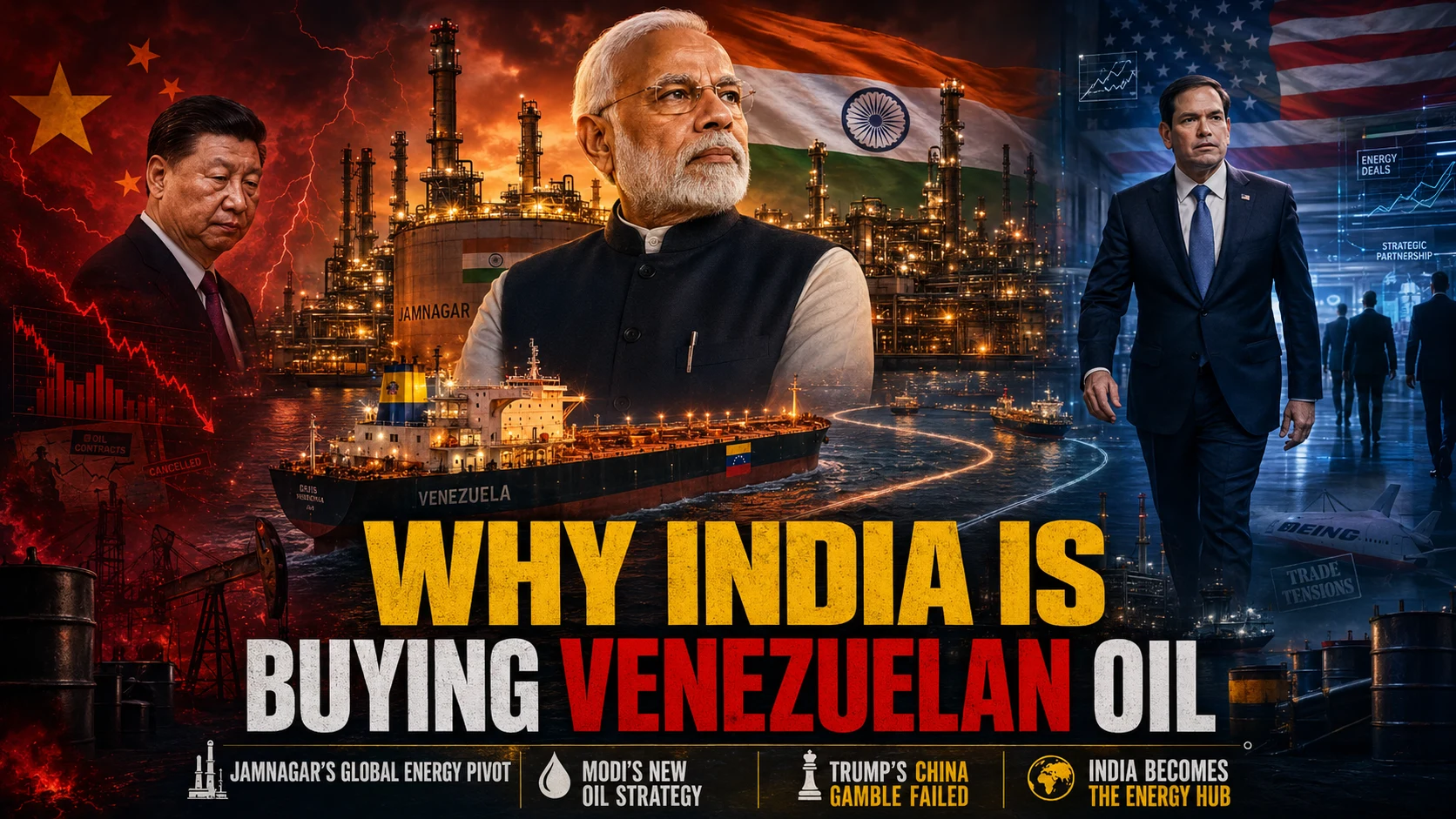
Why is India buying Venezuelan oil becoming such an important geopolitical question right now? Because Donald Trump’s China strategy failed, and that failure suddenly pushed India back to the center of American calculations.
Trump’s summit with Xi Jinping was expected to produce something major. There was anticipation around large Boeing aircraft deals, deeper economic coordination, and the possibility of some form of G2-style understanding between Washington and Beijing. Instead, very little came out of the visit. China reportedly agreed to buy far fewer aircraft than expected, and on Taiwan, Trump adopted what many observers viewed as a defensive posture.
The bigger shock came from the political messaging itself. Xi Jinping openly told Trump that the United States was a declining power, and Trump effectively admitted it. That moment created panic not just in India, but even more strongly in Japan and Australia, where policymakers immediately began strengthening defense coordination with each other.
The fear was simple: under Trump, America no longer looked strategically predictable. And that anxiety only deepened after what he did next.
Sources: CBS News, BBC, The Indian Express, NDTV, The Hindu
Why Marco Rubio’s India Visit Looked Like Damage Control
📍 Landed in India. Looking forward to a great visit! pic.twitter.com/xIH7G9t6C2
— Secretary Marco Rubio (@SecRubio) May 23, 2026
Marco Rubio’s India visit was presented as diplomacy, but the timing made it look more like strategic cleanup after Washington’s failed China outreach.
For Indian policymakers, the repeated delay of Quad summits had already become a warning sign. The concern was not simply scheduling. The concern was whether Washington still viewed its Asian partnerships with seriousness and consistency. Then came Trump’s China visit, where he skipped the traditional reassurance tour entirely. Usually, American presidents visiting Beijing also stop in Japan or South Korea to calm allies and demonstrate regional commitment. This time, Trump went directly home.
That only reinforced the perception that US foreign policy under Trump had become directionless. The criticism was blunt: there was effectively no foreign policy at all. Trump would wake up, make statements, post something publicly, travel somewhere unexpectedly, and return without achieving meaningful agreements.
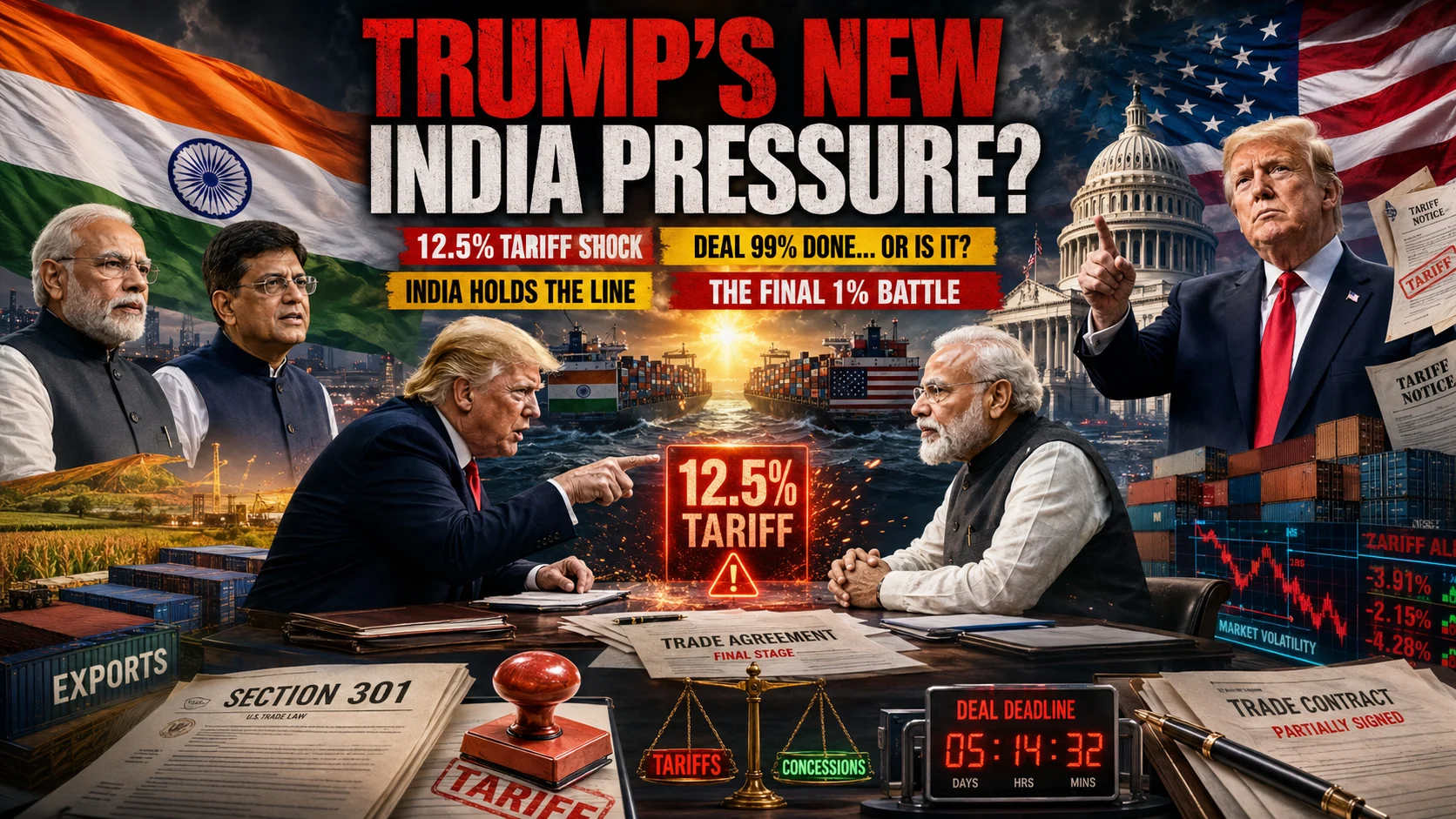
The resentment toward Washington was also obvious. India was suddenly expected to forget the 50% tariffs imposed in 2025, the economic pressure, and the repeated uncertainty created by Trump’s statements. Those tariffs only disappeared after intervention from the US Supreme Court, not because Trump withdrew them voluntarily. The frustration also surfaced in references to Trump’s earlier rhetoric toward India, including reminders of how he once described the Pakistan’s Field Marshal Asim Munir as his “favorite field marshal” before relations deteriorated again.
🚨⚡Trump:
— MOSCOW NEWS 🇷🇺 (@MOSCOW_EN) October 13, 2025
I would like to thank Shahbaz Sharif of Pakistan, my favorite field marshal from Pakistan.
I send my regards. pic.twitter.com/IOeNzFRQer
And that is why Rubio’s arrival mattered. Energy had quietly become the real center of the conversation, and his visit increasingly looked like an effort to sell American-linked energy access to India.
Sources: The New York Times, Fortune India, India Today, BBC, DW (Deutsche Welle)
Why India’s Venezuela Oil Pivot Matters More Than Any Summit
India’s sudden shift toward Venezuelan crude may ultimately matter more than the diplomatic headlines surrounding Rubio’s trip.
Venezuela has now emerged as India’s third-largest crude supplier, overtaking both Saudi Arabia and the United States. The core reason is economic. Venezuelan crude is available at prices significantly lower than current international benchmarks at a time when fears of oil reaching $100–$120 per barrel are growing. For Indian refiners, that discount is too attractive to ignore.
But the geopolitical layer underneath this shift is what makes it so important. The United States itself effectively enabled this arrangement after moving aggressively inside Venezuela. Trump had repeatedly joked that Venezuela should now be considered part of the United States because of how deeply American influence had entered the country’s oil structure. Nicolás Maduro was effectively sitting in America’s jail, while US companies appeared increasingly comfortable managing Venezuelan oil operations.
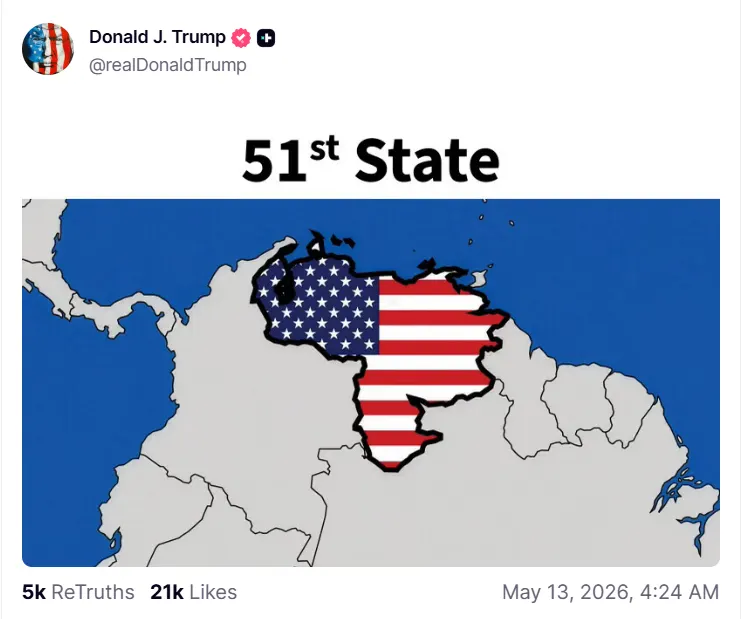
Screenshot of Truth Social Post by Donald Trump
This was deliberate.
The American strategy was straightforward: India buys Venezuelan oil instead of Russian or Iranian supplies, US-linked companies benefit from those exports, and Washington rebuilds leverage with New Delhi after the China setback.
And at the center of this entire equation sits one refinery complex in Gujarat.
Sources: India Today, Fox News
How Jamnagar Became the Engine Behind India’s Oil Shift
Reliance’s Jamnagar refinery has become one of the most strategically important energy assets in this story because very few refineries can efficiently process Venezuelan heavy crude.
Venezuelan oil is thick, difficult, and considered low quality compared to lighter crude grades. Extracting usable gasoline and diesel from it requires highly sophisticated refining infrastructure. Most refineries struggle with that process. Jamnagar does not. Reliance built a highly complex refining system capable of handling exactly this type of crude at scale.
That capability suddenly became extremely valuable once Venezuelan crude started selling at deep discounts. Reliance was already a major buyer of Venezuelan oil because Jamnagar could process crude others preferred to avoid. At a time when Russian crude became more expensive and broader energy markets looked unstable, Venezuela emerged as a practical alternative for India.
The argument went even further. Venezuela could eventually become India’s single largest oil supplier. If that happens, India’s importance to Washington would rise dramatically because the entire arrangement would remain tied to a US-enabled energy structure.
But if India is gaining from this shift, somebody else is clearly losing.
Sources: The Indian Express
Why China Suddenly Looks Like the Biggest Loser
China invested billions into Venezuela expecting long-term strategic influence, but India now appears to be benefiting more directly from the current oil arrangement.
Beijing had extended massive loans to Caracas over the years, hoping to secure stable energy access in return. Now China increasingly appears uncomfortable with the growing role of American-linked companies inside Venezuela’s oil sector. Venezuelan authorities reportedly even had to reassure China that crude would continue being supplied at earlier pricing understandings.
China’s deeper concern was not simply market share. The suspicion was that American companies could eventually influence the prices at which Venezuelan crude gets sold internationally, fundamentally changing the balance China expected after investing billions into Venezuela.
At the same time, China is also accelerating domestic technological competition with the United States. Chinese firms are rapidly developing their own GPU ecosystem that could eventually compete with Nvidia. Combined with the failure of Trump’s China outreach, that broader shift only reinforced the perception that Washington’s original expectations from Beijing had collapsed.
And once those expectations collapsed, America’s need for India suddenly became far more urgent.
What Rubio’s Visit Really Signals About America’s Next Move
Marco Rubio’s trip suggested that Washington no longer sees India as optional after the failure of Trump’s China outreach.
The United States now appears eager to stabilize relations with New Delhi through energy cooperation, strategic coordination, and economic engagement after months of uncertainty. But the complication remains Trump himself. Trump often says things completely opposite to official American foreign policy, making long-term predictability extremely difficult even when broader strategic interests align.
Still, the larger direction now looks increasingly clear. India’s importance to the United States has risen sharply because of energy flows, refining capacity, and geopolitical positioning tied to Venezuela’s oil network. Rubio’s visit appeared to be laying the groundwork for something larger.
The logic was blunt: Trump returned from China without achieving anything major, so Washington would now hope that a future India visit could finally produce the breakthrough Beijing failed to deliver.
And beneath all the diplomatic language, one reality stands out clearly — a refinery complex in Jamnagar may now matter more to global geopolitics than the summit rooms where Trump and Xi Jinping met.
FAQs
Why is India buying Venezuelan oil?
India is buying Venezuelan oil primarily because it is significantly cheaper than prevailing international crude prices. Venezuelan crude became especially attractive as fears grew that oil prices could rise toward $100–$120 per barrel. Indian refiners, especially Reliance’s Jamnagar complex, can process the heavy crude efficiently, giving India an economic advantage.
Why did Marco Rubio visit India in May 2026?
Marco Rubio’s visit came immediately after concerns emerged over the Trump-Xi summit and growing uncertainty inside the Quad. The visit was widely viewed as an attempt to stabilize relations with India after tariff disputes, delayed regional diplomacy, and anxiety about America’s strategic reliability in Asia.
Why is Jamnagar important in this oil story?
The Jamnagar refinery can process ultra-heavy Venezuelan crude that many other refineries struggle to handle. That capability transformed Reliance into a major buyer once Venezuelan crude began trading at steep discounts compared to other global oil benchmarks.
Why is China uncomfortable with India buying Venezuelan oil?
China had invested billions into Venezuela through loans and long-term energy arrangements. Beijing now worries that American-linked influence over Venezuelan oil operations could eventually affect pricing and supply decisions, weakening China’s earlier strategic advantage.
Is India buying Venezuelan oil to please the United States?
The primary driver is economics because Venezuelan crude is cheaper and technically suitable for Indian refineries. At the same time, the arrangement also benefits Washington because it reduces India’s dependence on Russian and Iranian energy supplies.
Closing Question
If Venezuela eventually becomes India’s largest oil supplier through a system enabled by Washington, will New Delhi gain greater strategic flexibility — or become more deeply tied to America’s geopolitical energy game?
Share Your Views in the Comments below.
Explore more about Indian Affairs and World Affairs.