Table of Contents
War Clouds Over the Middle East
Across the Middle East and the Indian subcontinent, tensions are rising.
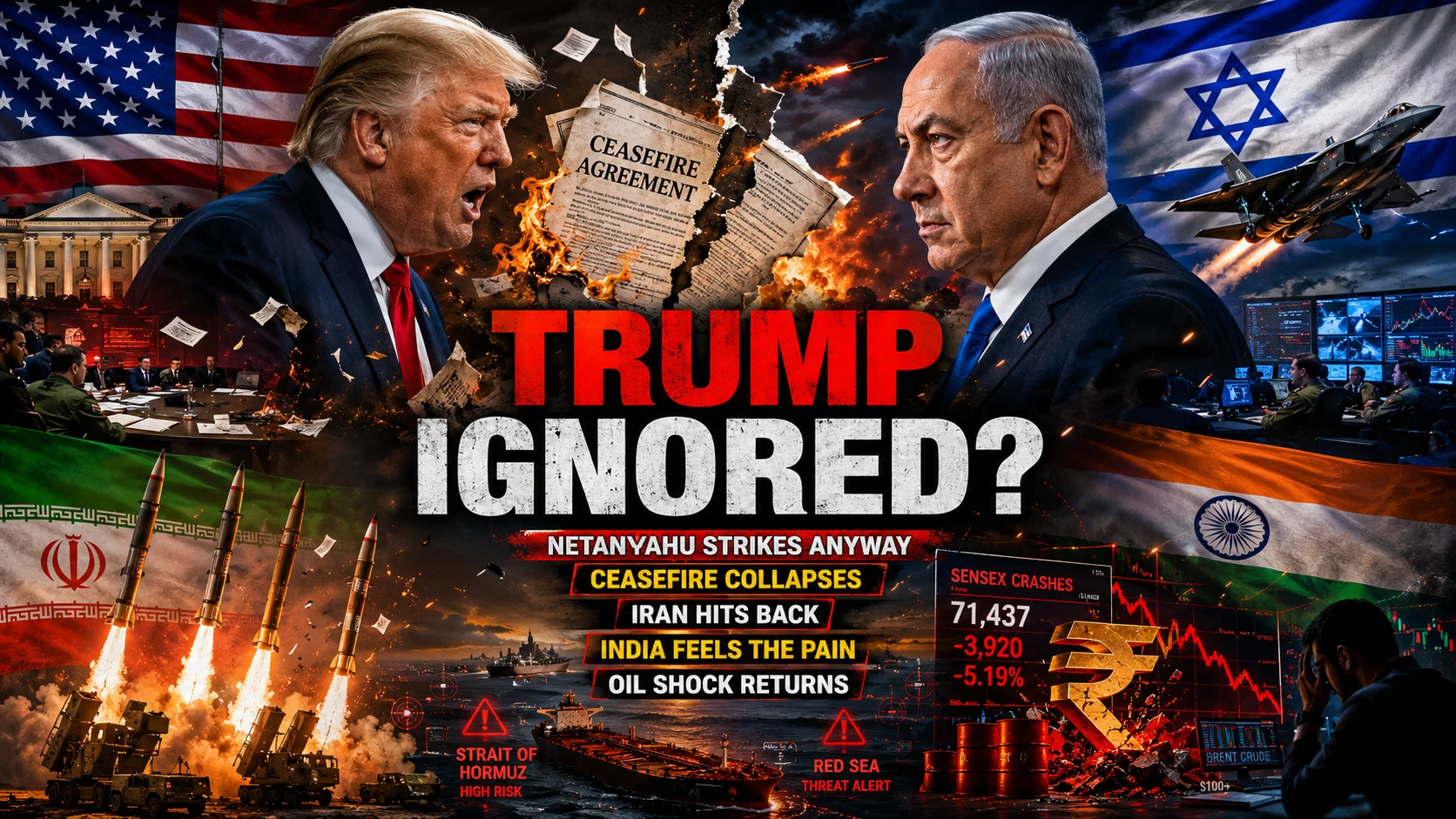
Diplomatic efforts between the United States and Iran appear to be entering a decisive phase. Military observers in Washington suggest that the probability of a US strike on Iran has significantly increased in recent days.
Aircraft carriers are being positioned.
Regional assets are on alert.
Strategic messaging has intensified.
If a strike happens, its ripple effects will not remain confined to West Asia.
They will reach South Asia.
Sources: The Week
Is the US Preparing to Strike Iran?
Military analysts in the United States are openly discussing the possibility of a targeted strike inside Iran. While diplomacy has not completely collapsed, the window appears narrow.
Iran borders Afghanistan.
Afghanistan borders Pakistan.
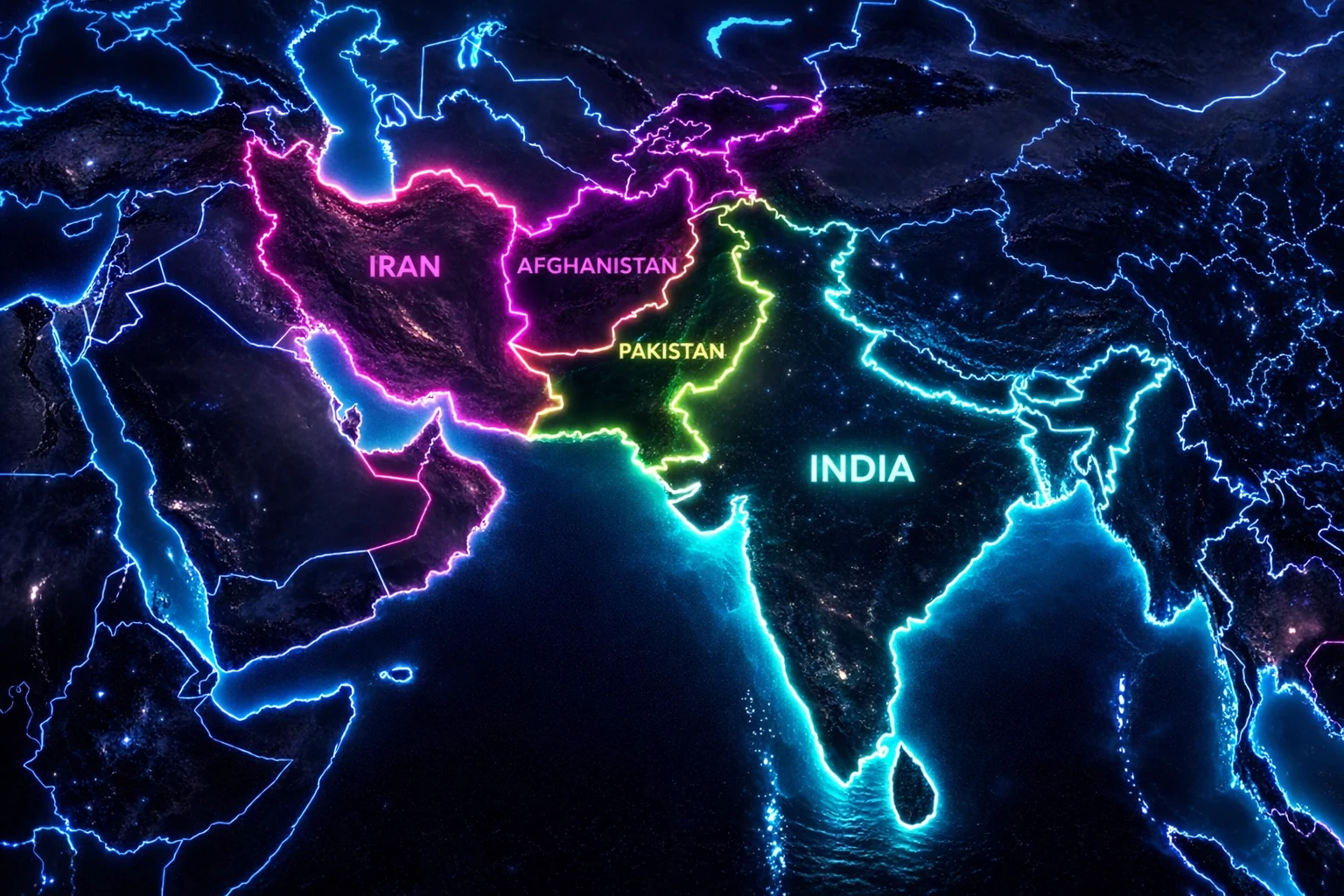
Image credit: AI-generated using ChatGPT by OpenAI
Geography matters.
If conflict expands, instability could spill into neighboring regions, especially where militant networks already operate.
This is why developments in Washington are being watched closely in New Delhi.
Pakistan’s War Rhetoric Against India and Afghanistan
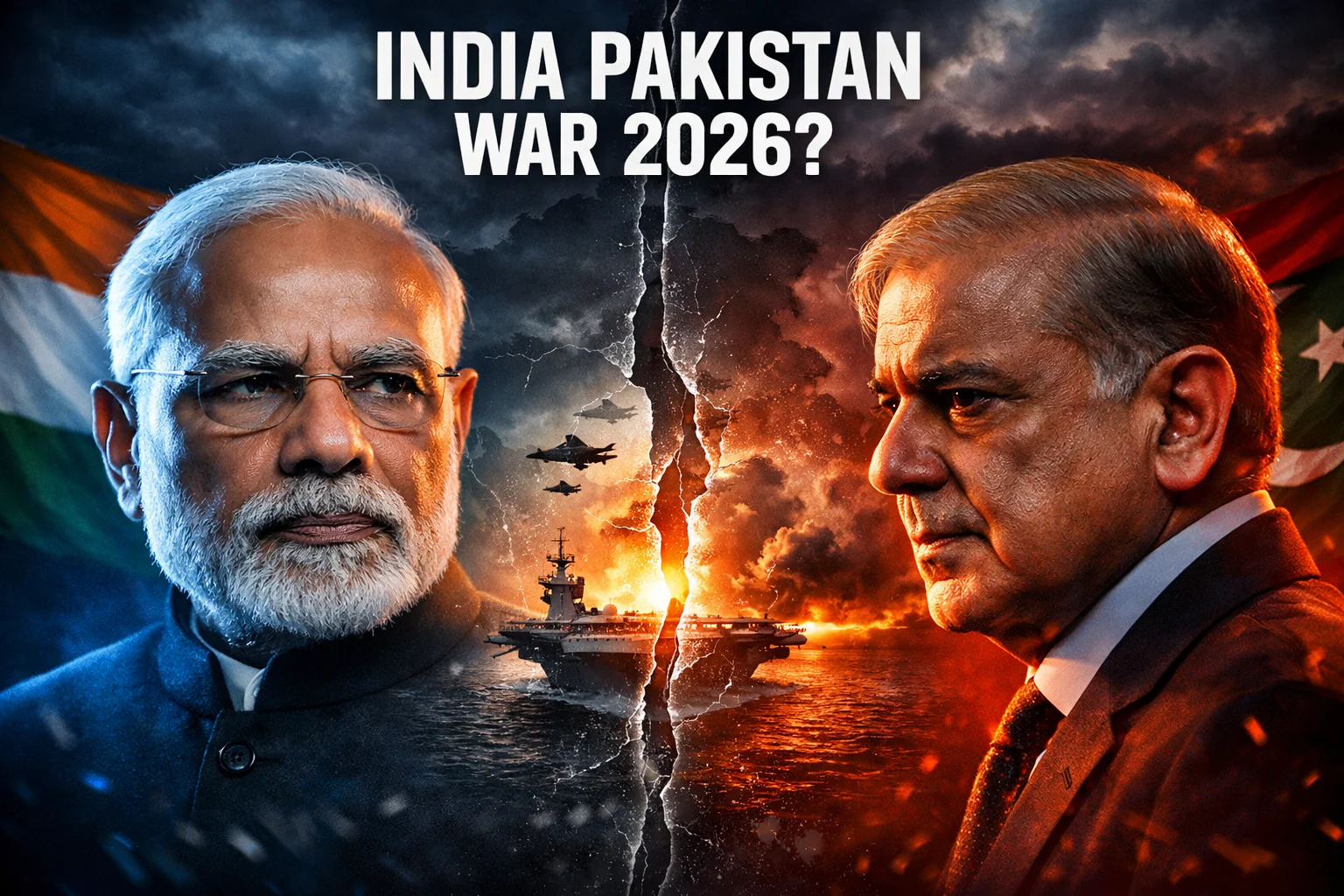
Pakistan’s Defense Minister Khawaja Asif recently made provocative statements suggesting that India and Afghanistan are strategically aligned and that war with India is “possible.”
He also warned of potential airstrikes inside Afghanistan and claimed Pakistan could face a dual-front scenario involving New Delhi and Kabul.
🚨 BIG! Pakistan’s Defence Minister Khawaja Asif says India is waging a “PROXY WAR” against Pakistan, claiming New Delhi & Kabul are “on the same page”
— Megh Updates 🚨™ (@MeghUpdates) February 19, 2026
He claims that the possibility of WAR between the two NUCLEAR-ARMED neighbors “remains on the table.”pic.twitter.com/BOPUX7Ad1M
This is not the first such statement.
In recent weeks, similar rhetoric has surfaced repeatedly.
But rhetoric does not equal war.
Often, such messaging precedes major diplomatic engagements.
And timing, here, is critical.
Sources: Times of India, France24
Shehbaz Sharif’s Washington Visit: Why Timing Matters
Shehbaz Sharif is expected to visit Washington soon for talks with Donald Trump.
This visit comes amid reports that Pakistan may face pressure regarding troop deployment discussions linked to Gaza stabilization efforts. International media coverage suggests Pakistan is seeking clarity on expectations.
At the same time, speculation surrounds Pakistan’s broader strategic position.
Is Islamabad seeking assurances that India will not escalate?
Is it attempting to rebuild trust with Washington?
Or is it signaling strength before negotiations?
Pakistan has historically used sharp rhetoric before high-level visits to shape narrative leverage.
This may be another such case.
Sources: Arab News
US–India–Pakistan Strategic Calculations
In US policy circles, discussions are reportedly underway about deepening strategic trust with India.
One question being debated:
What could Washington offer New Delhi to build irreversible trust?
Some voices even floated the idea of distancing from Pakistan to strengthen alignment with India.
"If a new US govt wanted to make India its top priority, what is one big thing we could offer India that would build trust? Would it be breaking relationships with Pakistan?" asks Commissioner Jonathan Stivers to a panel of top India-US experts pic.twitter.com/RfZo8pW6cR
— Shashank Mattoo (@MattooShashank) February 18, 2026
However, a formal US–India military alliance remains unlikely. India has consistently maintained strategic autonomy and avoided binding alliance structures.
Geopolitics is transactional.
No country acts purely out of sentiment.
If Washington recalibrates its Pakistan policy, it will be based on strategic calculus—not emotion.
Could the US Distance Itself from Pakistan?
Historically, US–Pakistan relations have fluctuated between cooperation and friction.
Pakistan has invested heavily in lobbying efforts in Washington in recent years. Yet tangible strategic benefits have remained limited.
Meanwhile, US–India trade and defense cooperation have steadily expanded.
But will the US completely abandon Pakistan?
Highly unlikely.
Pakistan’s geographic location, nuclear status, and proximity to Afghanistan ensure it remains relevant in US calculations.
What may change is priority—not presence.
Sources: News18
Are India Pakistan War Chances 2026 Really High?
Despite heated rhetoric, the India Pakistan war chances 2026 remain relatively low.
Why?
- Both countries are nuclear powers.
- Direct escalation carries catastrophic risk.
- Global powers would intervene diplomatically.
- Economic pressures discourage prolonged conflict.
Statements from Islamabad appear more strategic than operational.
They may be designed to influence Washington before high-level talks.
War probability between India and Pakistan, at present, remains significantly lower than US–Iran escalation risk.
That distinction is crucial.
The Strategic Reality for India
For India, the key variable is not Pakistan’s rhetoric.
It is Washington’s recalibration.
If US–Pakistan ties weaken, India’s strategic space expands.
If they stabilize, the regional equation remains complex.
India must observe carefully—without overreacting.
Strategic patience has historically served New Delhi well.
The next few weeks will reveal whether rhetoric translates into action—or remains negotiation theater.
Conclusion
Tensions across West Asia and South Asia are interconnected.
A potential US strike on Iran could shift regional dynamics. Pakistan’s rhetoric appears timed around diplomatic maneuvering. And Washington is quietly evaluating its South Asia priorities.
But high-decibel statements do not automatically translate into war.
Do you believe India Pakistan war chances 2026 are rising—or is this primarily geopolitical positioning ahead of major diplomatic moves?
Share your perspective in the Comments below.
FAQs
Is India Pakistan war likely in 2026?
Current indicators suggest low probability. Despite rhetoric, nuclear deterrence and international pressure make full-scale war unlikely.
Is the US preparing to strike Iran?
Military positioning and diplomatic tensions indicate elevated risk, though no official confirmation of imminent action exists.
Why did Pakistan mention war with India?
The timing suggests strategic signaling ahead of high-level diplomatic engagement with Washington.
What is Shehbaz Sharif’s US visit about?
Discussions may involve regional security, troop deployment expectations, and bilateral relations with the United States.
Could the US side fully with India?
While US–India ties are strengthening, a formal alliance is unlikely due to India’s strategic autonomy doctrine.
How would a US–Iran war affect South Asia?
It could destabilize regional security environments, impact energy markets, and influence Pakistan’s internal security posture.
Is Pakistan sending troops to Gaza?
Reports suggest discussions are ongoing, but official confirmation and deployment specifics remain subject to negotiation.
Beyond the Noise
Geopolitics often sounds louder than it moves.
The real test is not rhetoric.
It is action.
Explore more about Defense & Security, World Affairs, Indian Affairs and Strategic Depth.