Table of Contents
An Unprecedented Military Concentration
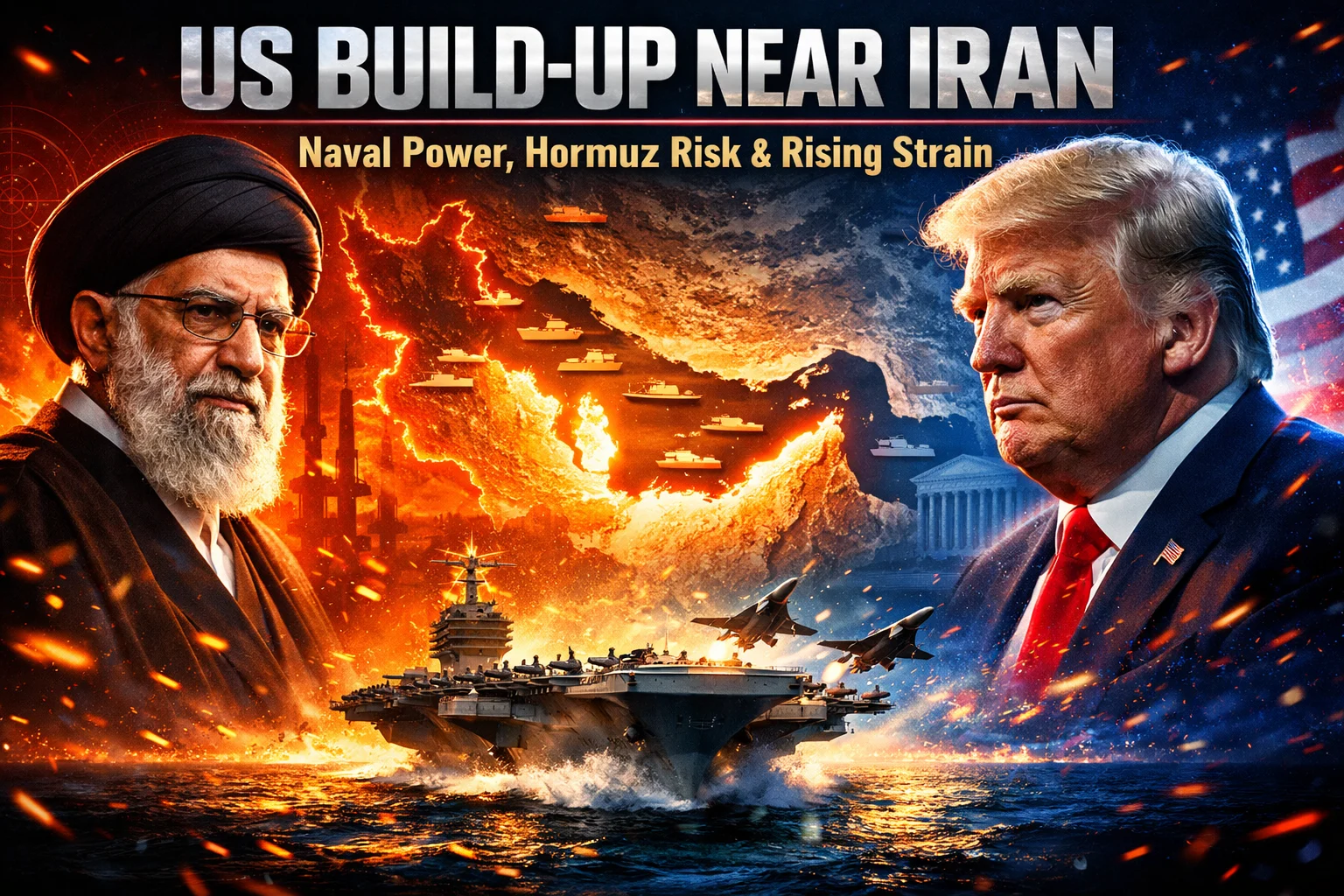
The current US military build up near Iran is being described by analysts as the most significant concentration of American forces in the region since 2003.
That comparison matters.
The last time the United States assembled a force of this scale in the Middle East was during the invasion of Iraq to remove Saddam Hussein.
Today, aircraft carriers, destroyers, missile platforms, and logistics networks are positioned across the Gulf and the Indian Ocean. The scale suggests more than symbolic signaling.
It suggests preparation.
Sources: Gulf News
How Iran Is Being Encircled
Major deployments include:
- US destroyers positioned near the Strait of Hormuz
- Combat ships near Bahrain
- Long-range missile destroyers capable of striking Iranian targets
- Carrier strike groups operating from the Arabian Sea
- Support structures in Jordan, Saudi Arabia, Qatar, and Oman
- Strategic backing from Diego Garcia in the Indian Ocean
According to reports, two destroyers are positioned to respond immediately if Iran attempts to block the Strait of Hormuz.
This is not defensive placement alone.
It is layered encirclement.
”Where the U.S. Is Building Up Military Force Near Iran”https://t.co/1zGzfuLN6R
— Magnus Ranstorp (@MagnusRanstorp) February 19, 2026
Source: New York Times pic.twitter.com/IwaKdsyKa1
Strait of Hormuz: The Flashpoint
Strait of Hormuz is one of the most critical maritime chokepoints in the world.
Roughly one-fifth of global oil supply passes through it.
If Iran attempts to block it — even temporarily — energy markets could spike instantly.
The US naval presence near Hormuz is designed to deter that scenario.
But deterrence can quickly become confrontation.
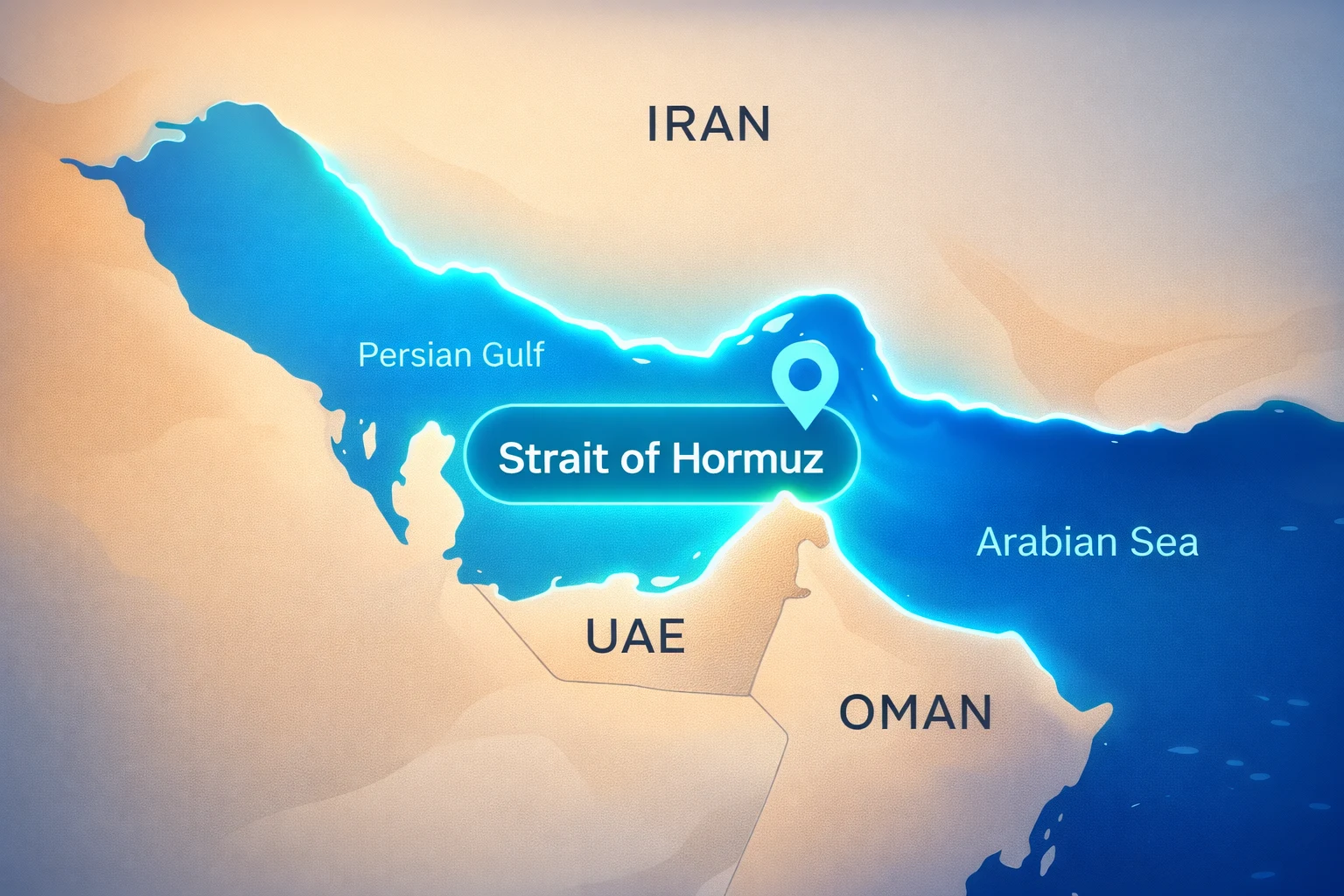
Image credit: AI-generated using ChatGPT by OpenAI
USS Gerald R. Ford and the Operational Strain
At the center of this deployment is the $13 billion supercarrier:
USS Gerald R. Ford
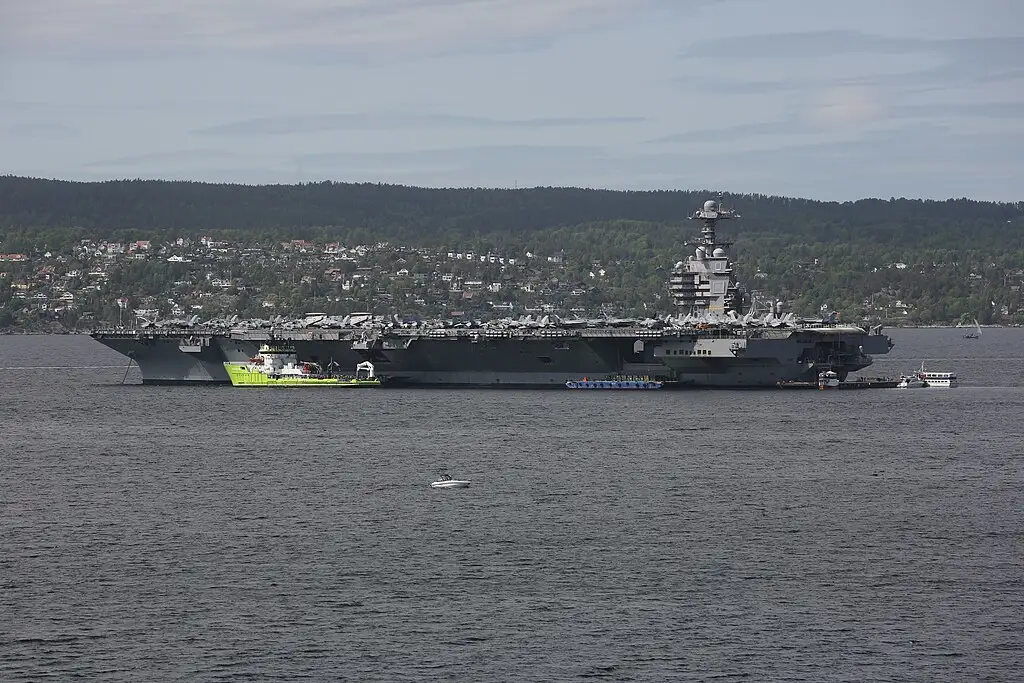
Image Credit: Hans A. Rosbach, CC BY-SA 4.0 via Wikimedia Commons
Reports indicate that the carrier has been on extended continuous deployment, making this one of the longest stretches in recent US naval history.
However, media outlets have also highlighted unexpected operational strain — including sanitation system failures affecting hundreds of toilets aboard the vessel.
With approximately 5,000 personnel onboard, even logistical issues like sanitation can significantly impact morale.
This is not trivial.
In high-stress environments, crew fatigue compounds operational risk.
Sources: India Today, NDTV
Why Sanitation Problems Matter in Wartime
Military readiness is not just about missiles and jets.
It is about endurance.
Extended deployments mean:
- Limited rest cycles
- Reduced communication with families
- Psychological strain
- Mechanical system wear
Reports suggest that the crew has had minimal rotation opportunities for months. Funeral absences, family emergencies, and continuous “ghost mode” deployments add to the stress.
When basic infrastructure falters, morale follows.
And morale affects readiness.
Sources: Wall Street Journal
Is the US Preparing for a Long War?
Statements from the White House spokesperson suggest Iran is being framed as a clear threat.
Public rhetoric references chants of “Death to America” within Iranian political institutions.
The language has hardened.
NEW — 🇺🇸🇮🇷 White House Spokesperson: Iran chants "Death to America," so you tell me if that's a threat or not. pic.twitter.com/jVaFk9S0zs
— UK Report (@UK_REPT) February 24, 2026
Simultaneously, force positioning resembles long-term preparation rather than short-term signaling.
The last comparable military posture was in 2003.
That historical memory looms large.
Iran’s Position and China’s Role
Iran is not isolated.
Reports indicate that China continues to supply military equipment to Tehran.
While details remain opaque, analysts suggest both sides are preparing for extended confrontation scenarios.
Iran’s internal political environment also remains tense, with periodic anti-government protests resurfacing.
Some voices within Iran have publicly urged decisive action rather than prolonged negotiation.
But whether this escalates depends on Washington.
Sources: Middle East Eye
Trump’s Strategic Dilemma
Donald Trump faces multiple pressures:
- Israeli strategic expectations
- Domestic political calculations
- Military readiness realities
- Legal and constitutional constraints
- Election-year optics
There are reports speculating about bold moves — including high-value leadership targeting strategies.
But Trump has also shown a pattern of last-minute reversals on major decisions.
This makes the situation volatile.
Will there be decisive action?
Or another strategic pause?
That remains uncertain.
Sources: Money Control
Global Implications — Including India
Though not directly involved, countries like India would feel immediate consequences of escalation.
Potential impacts include:
- Oil price spikes
- Disruption of Gulf shipping lanes
- Indian diaspora exposure in Gulf states
- Indian Ocean militarization
Energy security is deeply tied to Gulf stability.
If conflict expands, ripple effects would reach Asia within days.
Conclusion: A Make-or-Break Moment
The US military build up near Iran signals seriousness.
The deployment scale suggests preparation beyond symbolism.
Yet logistical strain aboard USS Gerald R. Ford highlights the hidden side of power projection: sustainability.
Military strength is not only about hardware.
It is about duration.
If escalation occurs, the consequences will be regional at first — and global soon after.
If restraint prevails, this episode may become another tense standoff in a long history of US–Iran friction.
But the coming weeks will be decisive.
Because once missiles fly, there is no tactical pause button.
FAQs
Is the US planning to attack Iran?
There is no official declaration of war. However, the scale of deployment suggests contingency planning for potential large-scale action.
What is USS Gerald R. Ford?
USS Gerald R. Ford is the US Navy’s newest and most advanced aircraft carrier, serving as the lead ship of its class.
Why is the Strait of Hormuz important?
It is a critical oil transit chokepoint. Disruption there can impact global energy prices instantly.
How many US carriers are near Iran?
Exact numbers vary, but reports confirm at least one major carrier strike group positioned within operational range.
Could this become a long-term war?
The scale of deployment and regional alignment suggest that prolonged confrontation cannot be ruled out.
How would a US–Iran war affect oil prices?
Prices would likely spike sharply due to supply disruption fears, affecting global markets.
Share Your Strategic Assessment
Do you believe this US military build up near Iran is genuine preparation for war — or calibrated pressure for negotiation?
- Should Washington strike quickly if it intends to act?
- Or would escalation repeat the long-term instability seen after 2003?
- How should countries like India prepare for oil shocks and regional instability?
Drop your analysis in the comments below.
Serious geopolitical moments demand serious thinking — and your perspective adds depth to the discussion.
Explore more about Defense & Security, World Affairs and Indian Affairs.