Table of Contents
An Unusual Airport Reception
When Benjamin Netanyahu personally receives a world leader at the airport with a red carpet welcome, it sends a message.
During Prime Minister Narendra Modi’s visit, Netanyahu broke from routine protocol. This level of reception is rare. Not every global leader receives this treatment.
Symbolism in diplomacy matters.
And this welcome signaled something deeper than ceremony.
Deeply touched by the warm welcome extended by my friend, PM Netanyahu. May the India-Israel friendship continue to soar higher! 🇮🇳 🇮🇱@netanyahu pic.twitter.com/zl6Flj9wpz
— Narendra Modi (@narendramodi) February 25, 2026
What Is the Israel Hexagon Alliance?
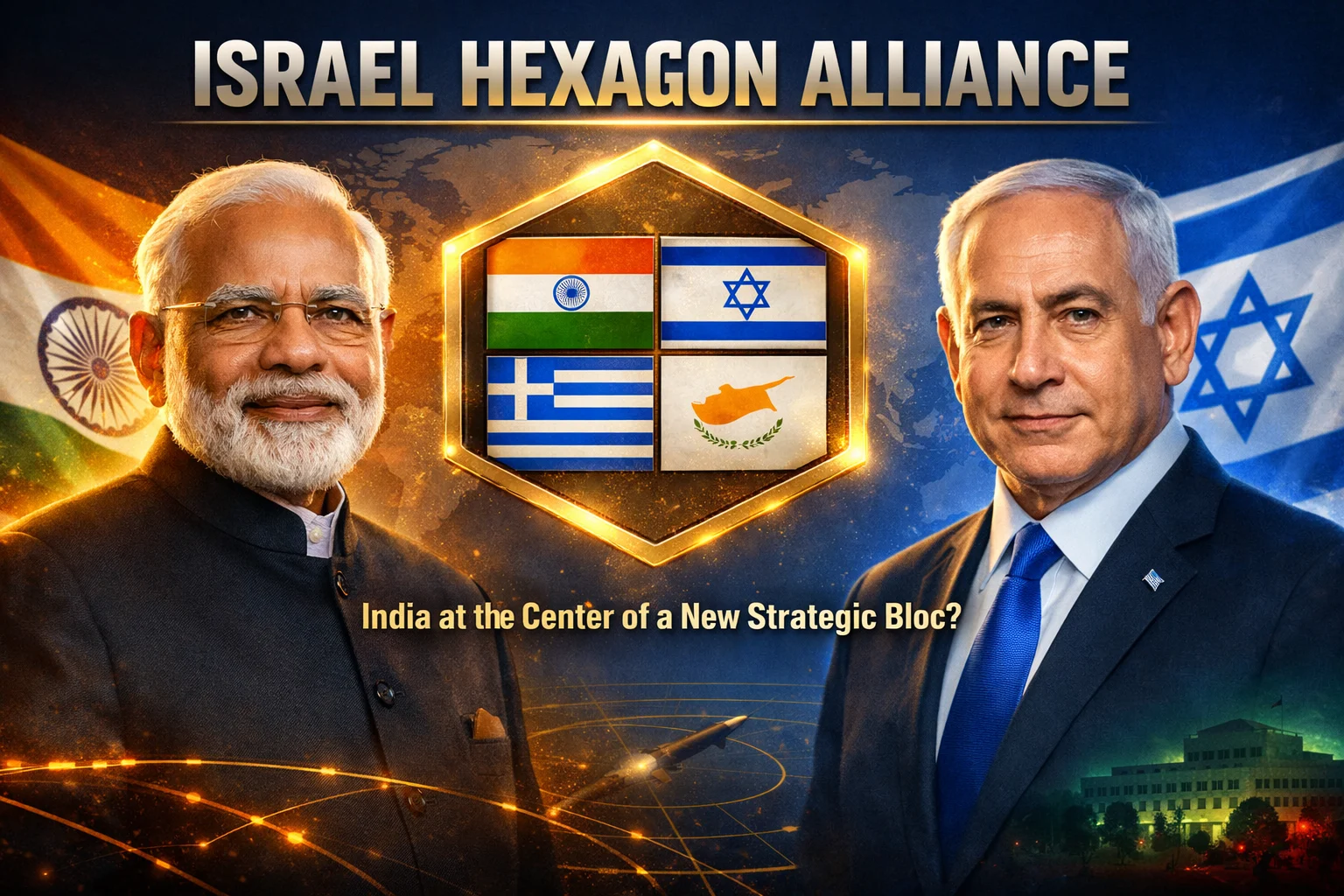
The Israel Hexagon Alliance is a proposed strategic bloc envisioned by Israeli leadership. It is not yet a formally established military alliance, but the concept has gained traction in geopolitical discussions.
The idea is simple in structure but ambitious in scope:
A six-nation alignment (hence “hexagon”) built around shared strategic interests in the Eastern Mediterranean and West Asia.
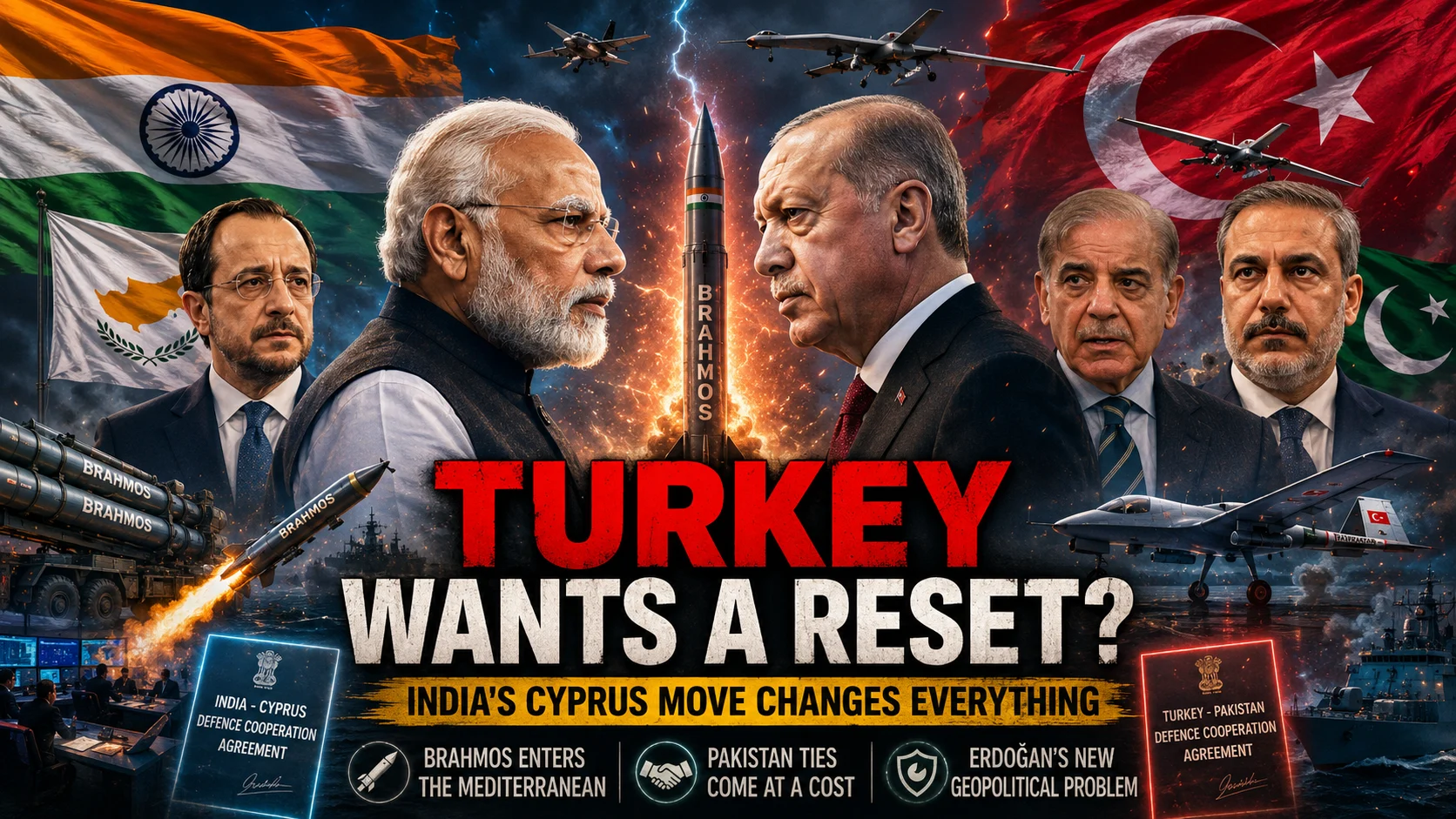
At its core, it seeks to counter emerging regional threats — particularly those linked to Turkey’s expanding influence and Pakistan’s alignment patterns.
This is still a proposal.
But reactions suggest it is being taken seriously.
Sources: NDTV
Core Members: India, Israel, Greece, Cyprus
The proposed core members reportedly include:
- India
- Israel
- Greece
- Cyprus
Greece and Cyprus both have longstanding tensions with Turkey, particularly over maritime boundaries and regional influence.
India’s recent diplomatic engagement with Cyprus adds context to this alignment.
If structured formally, this bloc would connect:
- South Asia
- The Eastern Mediterranean
- West Asia
That is a significant geographic arc.
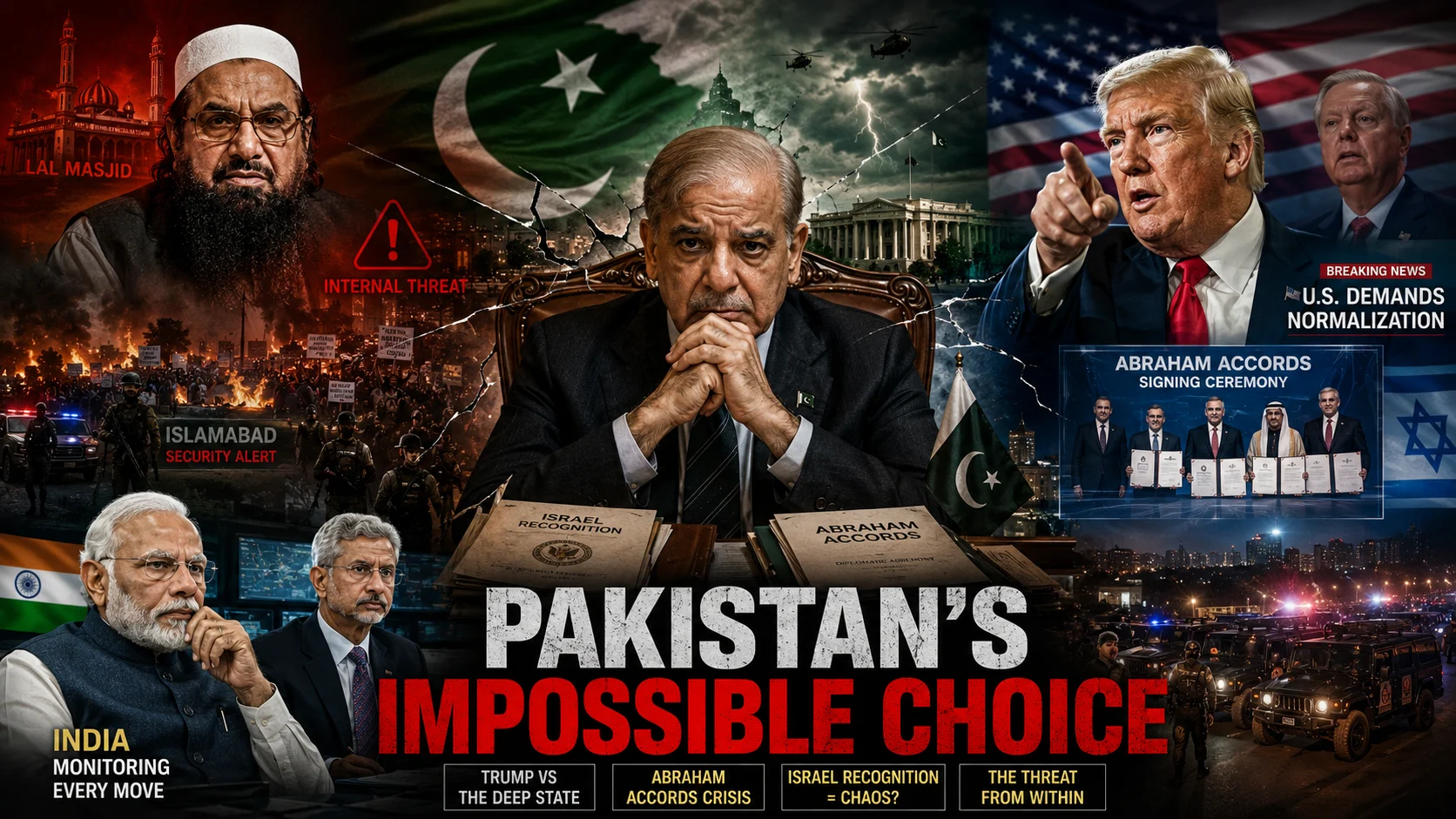
Pakistan’s Senate Meltdown
Pakistan has reacted sharply.
Its Senate passed a resolution condemning the proposed bloc, labeling it “anti-Muslim Ummah” and framing it as a security threat.
Pakistani media outlets have published multiple analyses arguing that India–Israel cooperation directly affects Pakistan’s strategic posture.
This is not a mild reaction.
It reflects genuine concern in Islamabad that the Israel Hexagon Alliance could alter regional military balance.
Sources: India Today, The Express Tribune, Al Jazeera
The Golden Horizon Missile Factor
One major reason for Pakistan’s anxiety is defense cooperation.
Reports suggest Israel has offered India advanced systems, including the so-called “Golden Horizon” air-launched ballistic missile (ALBM), with a reported range of up to 2,000 km.
If integrated into Indian platforms, such systems could enhance India’s deep-strike capability, including bunker-targeting capacity.
For Pakistan, this shifts deterrence calculations.
Military technology changes political psychology.
Sources: News18
Turkey’s Position and the Emerging Axis
Former Israeli Prime Minister Naftali Bennett has warned publicly about a “new Turkish threat, saying Turkey is the new Iran” suggesting that Ankara’s regional influence is expanding.
Former Israeli Prime Minister Naftali Bennett:
— Clash Report (@clashreport) February 18, 2026
Türkiye is trying to flip Saudi Arabia against us and establish a hostile Sunni axis that includes nuclear-armed Pakistan. pic.twitter.com/oXnn4qPiGq
Turkey’s involvement in Syria, its ties with Qatar, and its diplomatic alignment patterns are viewed in Tel Aviv as increasingly assertive.
The concern is not just ideological.
It is strategic.
If Turkey aligns closely with Pakistan, and potentially coordinates regionally, Israel perceives that as a long-term challenge.
Where Does Qatar Fit In?
Qatar presents a more complicated picture.
Israel has had direct tensions with Qatar, yet Qatar maintains strong ties with the United States.
Given Washington’s influence in the region, Qatar’s positioning remains fluid rather than openly confrontational within this framework.
This is why Pakistan and Turkey appear more visibly opposed to the Israel Hexagon Alliance concept.
Why India Is the Pivotal Player
The most important fact: the alliance has limited weight without India.
India provides:
- Demographic scale
- Economic power
- Military capability
- Strategic geography
Without India, this is a Mediterranean grouping.
With India, it becomes a trans-regional bloc.
That changes the equation entirely.
India’s affirmative decision — or refusal — will determine whether the concept materializes.
Should India Join the Israel Hexagon Alliance?
This is the strategic dilemma.
On one side:
- Enhanced defense access
- Deeper Mediterranean footprint
- Stronger counter-terror alignment
- Strategic balancing against Pakistan
On the other:
- Risk of entanglement in Turkey disputes
- Increased geopolitical friction
- Additional West Asian complexity
- Strategic autonomy concerns
India already faces a major China challenge.
Does it need another alignment front?
Or does shaping such a bloc actually increase leverage?
There is no simple answer.
Conclusion: A Bloc That Could Reshape West Asia
The Israel Hexagon Alliance remains a proposal.
But reactions — especially from Pakistan — indicate it is being treated as a serious development.
If formalized, it could:
- Redefine Eastern Mediterranean security
- Intensify Turkey–Israel rivalry
- Alter South Asian deterrence balances
- Expand India’s West Asia footprint
India now stands at a strategic crossroads.
Join and shape the bloc?
Or maintain calibrated distance?
The decision, if it comes, will have long-term consequences.
FAQs
What is the Israel Hexagon Alliance?
It is a proposed strategic bloc reportedly centered on Israel, India, Greece, and Cyprus, aimed at aligning geopolitical interests.
Is the alliance officially formed?
No. It remains a conceptual or proposed grouping, not a formal treaty alliance.
Why is Pakistan opposing it?
Pakistan views deeper India–Israel ties as a security threat, particularly regarding advanced missile cooperation.
How does Turkey fit into this?
Turkey’s regional influence and tensions with Greece and Cyprus position it indirectly opposite this proposed bloc.
What missile is Israel offering India?
Reports mention an advanced air-launched ballistic missile referred to as “Golden Horizon,” though official confirmations remain limited.
Share Your Strategic View
Should India join the Israel Hexagon Alliance?
Yes — to strengthen strategic positioning?
Or No — to avoid unnecessary entanglement?
Your geopolitical assessment matters. Share Your Views in the Comments below.
Read more about Golden Horizon Missile. Explore more about Defense & Security, World Affairs and Indian Affairs.