Table of Contents
What Is Operation Ghazab Lil Haq?
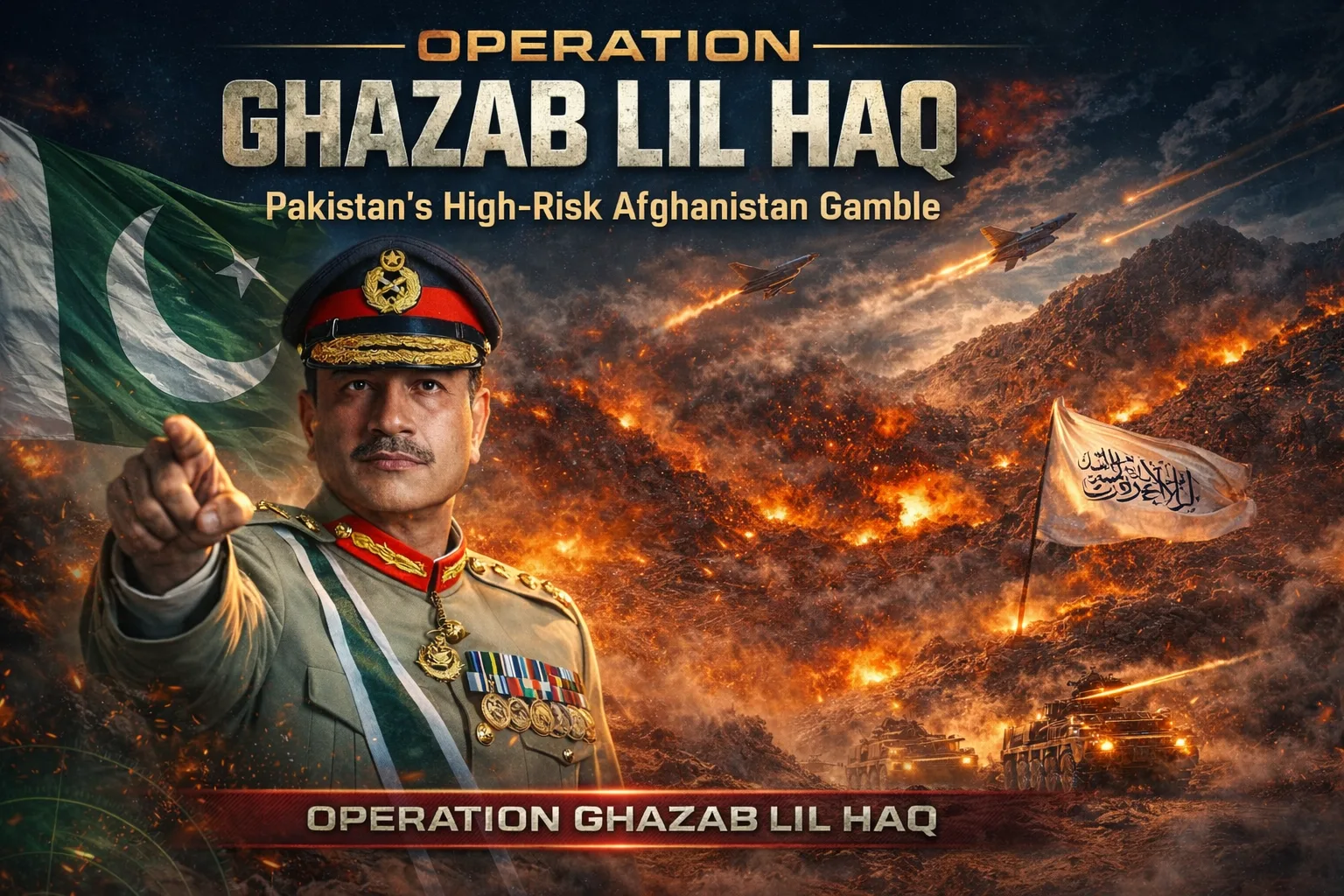
Operation Ghazab Lil Haq is the name Pakistan has given to its latest large-scale military action against Afghanistan along the border.
The Pakistani military claims the operation was launched after retaliatory strikes by Afghan Taliban forces. Islamabad asserts that hundreds of Taliban fighters have been killed and multiple border posts destroyed.
Pakistani M-198 155mm howitzers fire on Taliban positions. pic.twitter.com/rJBkVl6A3C
— Clash Report (@clashreport) February 27, 2026
The messaging from Pakistan has been aggressive — not only militarily but rhetorically.
This is no longer framed as limited border friction.
It is presented as decisive action.
Sources: The Indian Express
Casualty Claims and Battlefield Reality
Pakistan’s DG ISPR Lt Gen Ahmed Sharif Chaudhry claims:
- 270+ Taliban fighters killed
- 70+ Afghan posts destroyed
- 18 posts captured
- 12 Pakistani soldiers killed
- 27 injured
- 1 reported missing
Pakistan has officially acknowledged 12 military fatalities.
DG ISPR CONFIRMS:
— Makhdoom Shahab-ud-Din (@ShahabSpeaks) February 27, 2026
Pakistan launched Operation Ghazab Lil Haq yesterday, in which Afghan Taliban:
▪️ 274 TTA were killed
▪️ 40 TTA were injured
▪️ 80 TTA posts were destroyed
▪️ 20+ TTA posts were captured
▪️ 115 tanks were destroyed
🔴 12 brave hearts sacrificed their lives… pic.twitter.com/rrL2YlbOyc
Historically, casualty numbers in active conflict are often disputed. Taliban sources claim Pakistani losses are far higher.
The fog of war is thick.
What is clear is this: both sides are absorbing losses early in the operation.
That matters.
Sources: The Tribune, Dunya News, Hum News
Taliban Counterclaims and Escalation
The Afghan Taliban have responded with strong rhetoric of their own.
Statements from Taliban officials suggest:
- Pakistani installations have been targeted
- Drone strikes have occurred
- Pakistan’s military has suffered significant damage
There are also hyperbolic claims — including statements from The Afghan Taliban commander Hamid Khorasani suggesting the Taliban could overwhelm Pakistan within 24 hours.
The Afghan Taliban commander Hamid Khorasani says on Afghan state TV that while Pakistan may have nuclear weapons and ballistic missiles, the Taliban have battalions of suicide bombers.
— Visegrád 24 (@visegrad24) February 27, 2026
He says Afghanistan could capture all of Pakistan within 24 hours pic.twitter.com/lAsLu6WfGq
Such language reflects escalation psychology.
Both sides are signaling strength.
Neither side is signaling restraint.
The Bagram Airbase Endgame Theory
At the center of strategic speculation is Bagram Airbase.
Some geopolitical analysts argue that Operation Ghazab Lil Haq may be part of a broader strategy:
- Push Taliban forces back
- Create a security corridor
- Establish leverage over Bagram
Why Bagram?
Because US President Donald Trump repeatedly expressed interest in regaining control over the base.
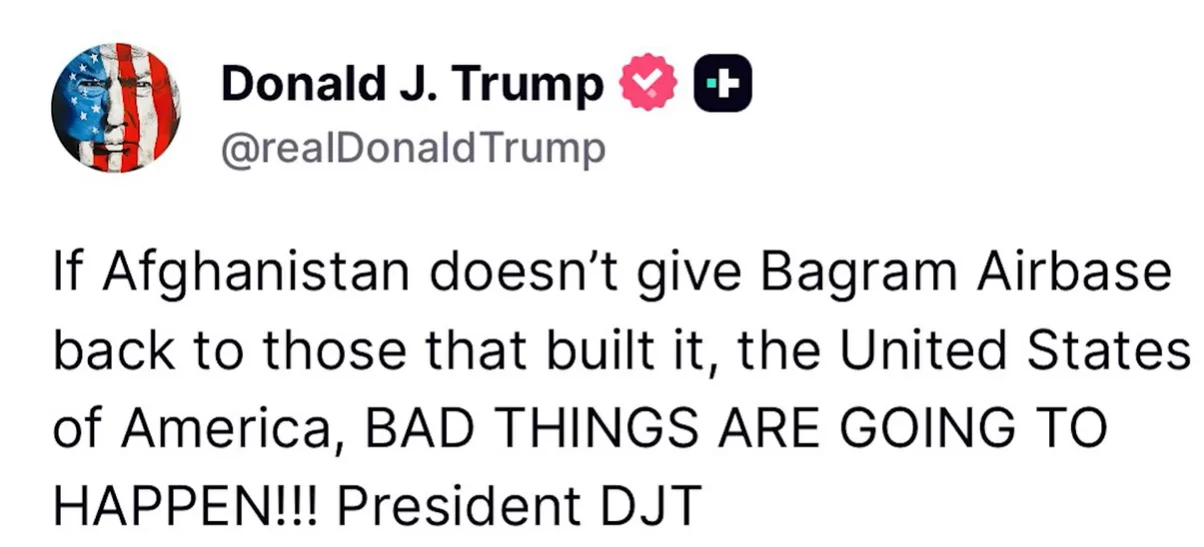
Screenshot of a Truth Social post by Donald Trump – Dated : Sept 21, 2025
Speculation has grown that Pakistan’s military leadership — particularly Asim Munir — could be playing the “Bagram card” to align strategically with Washington.
This remains unconfirmed.
But the theory is now openly discussed in regional media.
That shift is significant.
Sources: Money Control, NDTV
Russia, Iran, China Step In
Interestingly, three major regional powers have called for restraint:
- Russia
- Iran
- China
These states have urged dialogue and reportedly offered mediation.
All three are sensitive to expanding US influence in Central Asia.
If Pakistan’s escalation ultimately facilitates renewed US positioning in Afghanistan, it directly affects their regional calculus.
That explains their urgency.
Sources: The Hindu
“Graveyard of Empires” — Can Pakistan Succeed?
Afghanistan has long been described as the “graveyard of empires.”
The Soviet Union failed there.
The United States withdrew after two decades.
Pakistan argues it is different:
- It understands the terrain.
- It shares a border.
- It has historical engagement with Afghan factions.
But insurgent warfare favors defenders.
Taliban strategy historically avoids head-on confrontation. Instead, it allows entry, stretches supply lines, and targets vulnerabilities over time.
If Pakistan pushes deeper, attrition becomes a serious risk.
Could a Dual Front Open Against India?
There is speculation that Pakistan could simultaneously increase pressure along the Indian border while engaged in Afghanistan.
That would be a high-risk strategy.
Opening dual fronts strains logistics, manpower, and airpower.
Yet the possibility cannot be ignored.
South Asia’s security architecture is interconnected.
What happens on the Afghan frontier does not stay there.
Exercise Agni Varsha and India’s Readiness
India has recently conducted Exercise Agni Varsha, focused on desert warfare readiness.
The exercise was held in Rajasthan — preparing forces for high-intensity desert conflict scenarios.
This is not accidental timing.
When instability rises west of India’s borders, preparedness becomes visible policy.
India has already condemned prior cross-border strikes by Pakistan.
The escalation directly impacts Indian strategic calculations.
Sources: Economic Times
Conclusion: A Gamble With Regional Consequences
Operation Ghazab Lil Haq is more than a border skirmish.
It combines:
- Heavy battlefield claims
- High-casualty rhetoric
- Bagram speculation
- Regional diplomatic intervention
- Potential India implications
Pakistan appears to be taking a calculated but high-risk gamble.
If objectives are limited, escalation may stabilize.
If ambitions expand — particularly toward Bagram — the conflict could widen dramatically.
Afghanistan has absorbed superpowers before.
Whether Pakistan can achieve what others failed to do remains uncertain.
But one thing is clear:
South Asia has entered a volatile phase.
FAQs
What is Operation Ghazab Lil Haq?
Operation Ghazab Lil Haq is Pakistan’s declared military operation against Afghan Taliban forces along the border.
Has Pakistan admitted military losses?
Yes. Pakistan has acknowledged at least 12 soldiers killed and several injured.
Is Pakistan trying to capture Bagram Airbase?
There is no official confirmation, but speculation suggests Bagram may be a strategic objective.
Are Russia, Iran, and China involved?
They have called for restraint and reportedly offered mediation.
Could this conflict affect India?
Yes. Border instability, dual-front risks, and broader regional shifts directly impact India’s security calculus.
Strategic Watchpoint
Monitor three developments closely:
- Verified casualty confirmations
- Ground corridor expansion toward Bagram
- Diplomatic mediation progress
Because once corridor-building begins, rollback becomes far more difficult.
This escalation is still fluid.
But the stakes are already regional.
Share your Views in the Comments below.
It all started with Islamabad Mosque Blast ➡️ Pakistan Airstrikes Afghanistan➡️Pakistan declares war on Afghanistan. Explore more about Defense & Security, World Affairs and Indian Affairs.