Table of Contents
A Hidden Crisis in the Strait of Hormuz
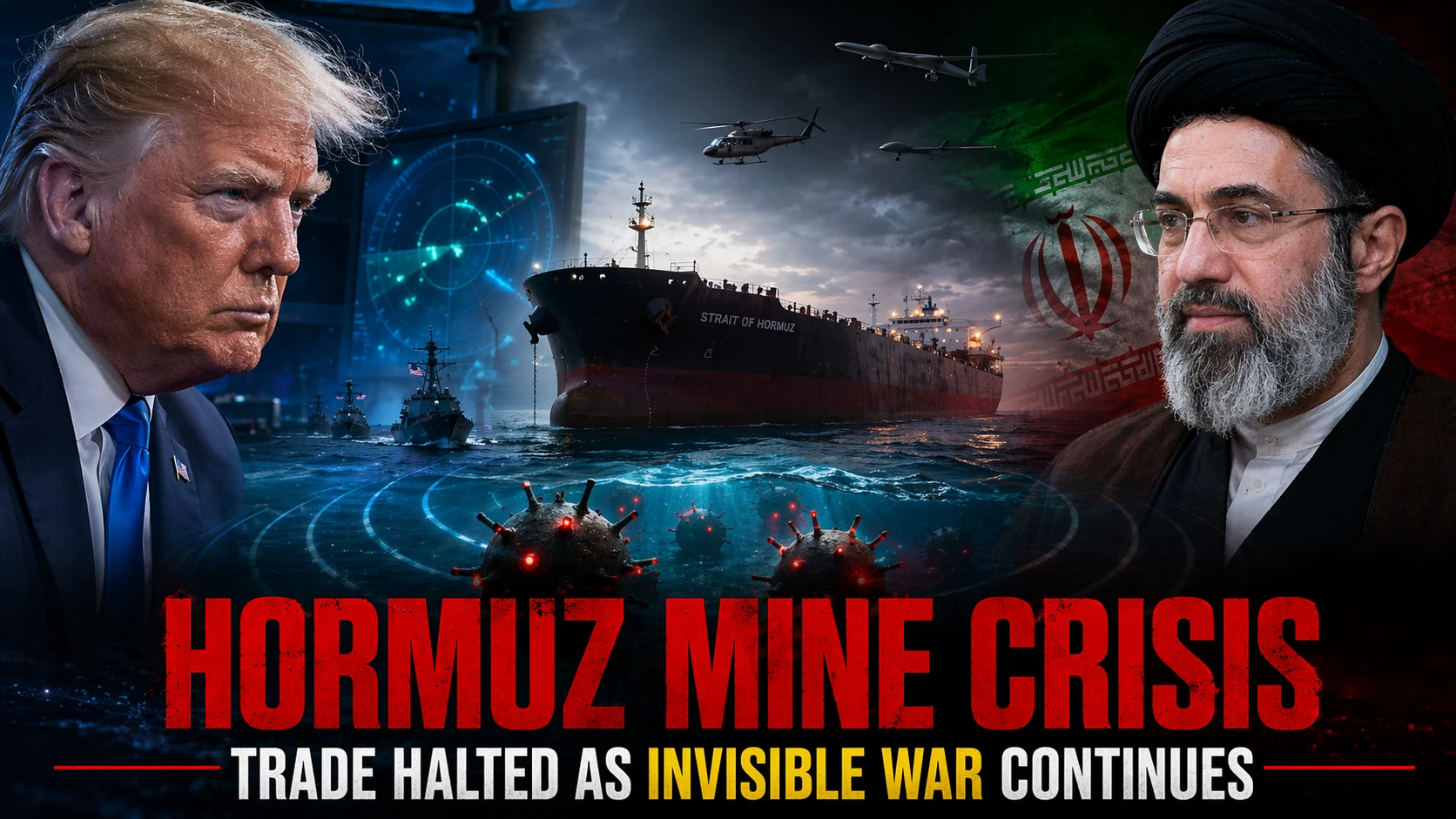
The Strait of Hormuz sea mines crisis has introduced one of the most unusual and dangerous twists in modern geopolitics.
At the center of it is a shocking claim: The New York Times reported that Iran may not know the exact locations of the sea mines it deployed.
That detail changes everything.
Because this is no longer just a warzone problem.
It is now a global trade risk.
Here’s what that means.
Sources: The New York Times, The Guardian
What Happened in the Strait of Hormuz
During intense conflict pressure from United States and Israel, Iran deployed large numbers of underwater sea mines across the Strait of Hormuz.
The intention was clear:
- Block enemy naval movement
- Deter attacks
- Control one of the world’s most critical oil routes
Ships were warned.
The message was simple:
Enter at your own risk.
As a result, many commercial vessels avoided the region entirely—not just due to missiles and drones, but because of invisible underwater threats.
This was deliberate.
But now, it has become a problem for everyone.
Sources: The Times of Israel
What Are Sea Mines & Why They Are So Dangerous
Sea mines are among the most effective and unpredictable naval weapons.
Unlike land mines, they operate silently beneath the surface.
There are two key types:
- Contact mines: explode when touched
- Influence mines: detect sound, pressure, or magnetic signals
Modern mines are far more advanced.
They can:
- Detect ships from meters away
- Trigger explosions without contact
- Destroy vessels from below (the most vulnerable point)
And once triggered?
There is no recovery.
The ship sinks.
This is why even rumors of mines are enough to halt global shipping.
Why Iran Cannot Locate Its Own Mines
This is where the crisis becomes strategic.
The issue is not just deployment—it is control.
Iran reportedly relied on a decentralized war strategy known as a “mosaic defense doctrine.”
This means:
- Local commanders were given autonomous authority
- Decisions were made regionally, not centrally
- No single command tracked all deployments
Why?
Because leadership survival was uncertain under sustained attacks.
If central command collapsed, local units could still fight.
That was the logic.
But now, the consequence is clear:
There may be no complete record of where mines were placed.
That detail matters.
Because without exact locations, clearing operations become extremely difficult—and dangerous.
Sources: Modern Diplomacy
Global Shipping and Oil Trade Under Threat
The Strait of Hormuz handles a massive portion of global oil trade.
Countries like:
- India
- China
- Japan
depend heavily on this route.
Now consider the impact:
- Ships avoiding the area
- Insurance costs rising sharply
- Oil prices under pressure
- Supply chains slowing down
Even if a ceasefire holds, the risk remains.
Because the mines remain.
This is not just a military issue anymore.
It is an economic one.
Can These Mines Ever Be Fully Removed?
History offers a clear answer.
No.
Even after the Gulf War, sea mines continued to damage ships long after active combat ended.
Reports showed:
- US vessels heavily damaged
- Mines remained active even post-war
And that was with known deployment zones.
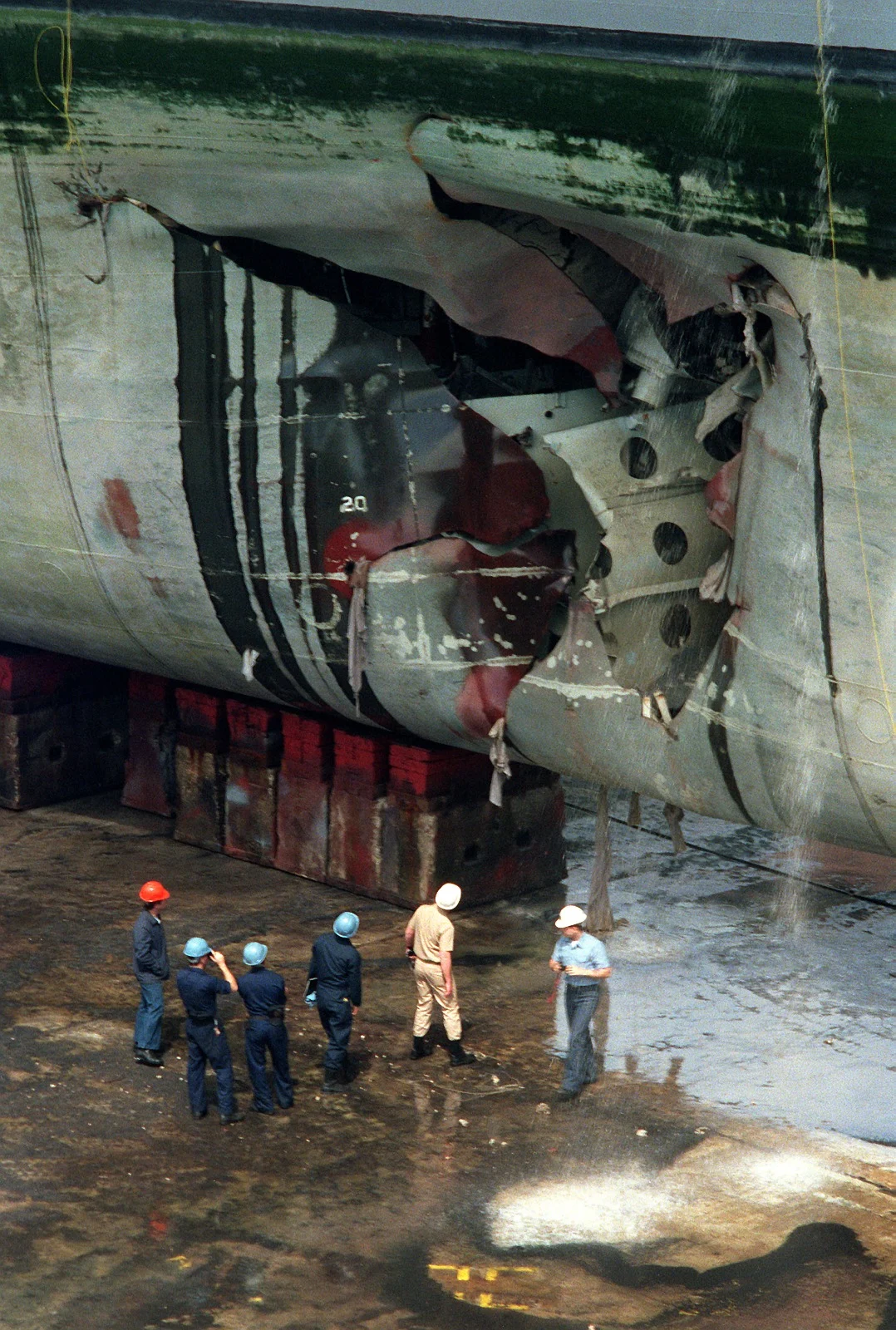
Image Credit: JO1 Gawlowicz, Public domain, via Wikimedia Commons
Here, the challenge is worse.
Without precise mapping:
- Only 60–70% removal may be possible
- Remaining mines become long-term hazards
Even decades later, unexploded mines from World War II are still discovered in Europe.
So what happens here?
A permanent risk zone.
Sources: The New York Times
Role of the US and Global Navies
The United States has already begun mine-clearing operations.
But clearing sea mines is:
- Slow
- Expensive
- Dangerous
Specialized naval units must:
- Detect mines using sonar
- Neutralize them remotely
- Avoid triggering explosions
Even then, 100% clearance is unlikely.
Other global navies may assist—but coordination takes time.
And time is exactly what global trade does not have.
A Long-Term Danger Zone for the World
This is the uncomfortable reality:
Even if the war slows down…
Even if diplomacy resumes…
The Strait of Hormuz sea mines problem will not disappear.
Ships will return—but cautiously.
Incidents will happen.
Rescue teams will need to remain on standby.
And every explosion will remind the world:
This crisis is not over.
It has just changed form.
Final Analysis
The Strait of Hormuz sea mines crisis reveals something deeper than military escalation.
It exposes the limits of decentralized warfare.
What began as a defensive tactic has created a long-term strategic hazard—not just for Iran, but for the entire global economy.
This was unintended.
But it is real.
The mines are not just weapons anymore.
They are obstacles to recovery.
And until they are dealt with—fully or partially—the world’s most important energy corridor will remain uncertain.
That uncertainty will shape geopolitics for months, possibly years.
FAQs
What are Strait of Hormuz sea mines?
Strait of Hormuz sea mines are underwater explosives deployed in the region to block or deter ships. They can detonate on contact or through proximity detection, making them highly dangerous for naval and commercial vessels.
Why are ships avoiding the Strait of Hormuz?
Ships are avoiding the area due to the risk of hitting underwater mines, along with missile and drone threats. Even a single mine can destroy a large vessel, making the route extremely risky.
Can sea mines be completely removed?
No, complete removal is almost impossible. Even advanced operations typically clear only 60–70% of mines, leaving long-term risks in affected waters.
Why can’t Iran locate its own mines?
Due to a decentralized military strategy, local commanders deployed mines independently. This may have resulted in incomplete or missing records of exact mine locations.
How does this crisis affect global oil prices?
Since a large portion of global oil passes through the Strait of Hormuz, disruptions increase shipping risks, raise insurance costs, and push oil prices higher worldwide.
What Happens Next — And Why You Should Keep Watching
The Strait of Hormuz sea mines crisis is not a short-term headline—it is a developing global risk.
Every day this situation continues:
- Shipping routes remain uncertain
- Oil markets stay volatile
- Military tensions quietly persist beneath the surface
And the biggest question still remains:
Will the world stabilize this corridor—or learn to live with permanent danger?
Stay informed.
Because in geopolitics, the biggest shifts often happen quietly—until suddenly, they don’t.
Explore more about Defense & Security and World Affairs.