Table of Contents
Introduction: A Blockade That Could Shake the World
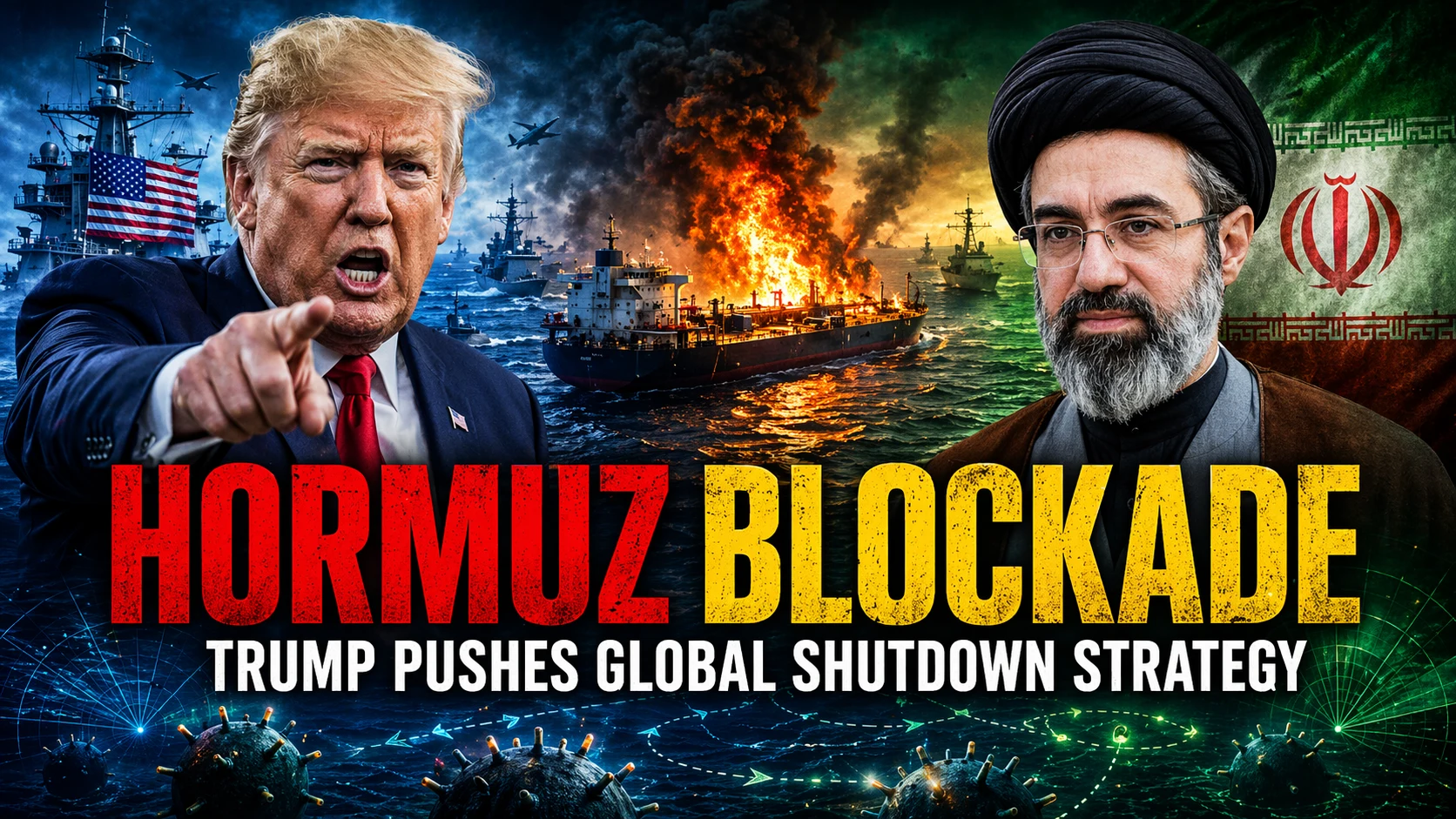
The Strait of Hormuz blockade is no longer a hypothetical risk—it is rapidly becoming a central geopolitical flashpoint.
After failed negotiations between United States and Iran, tensions are rising sharply.
Now, Donald Trump has announced a dramatic move: a potential naval strategy to control or effectively block the Strait of Hormuz.
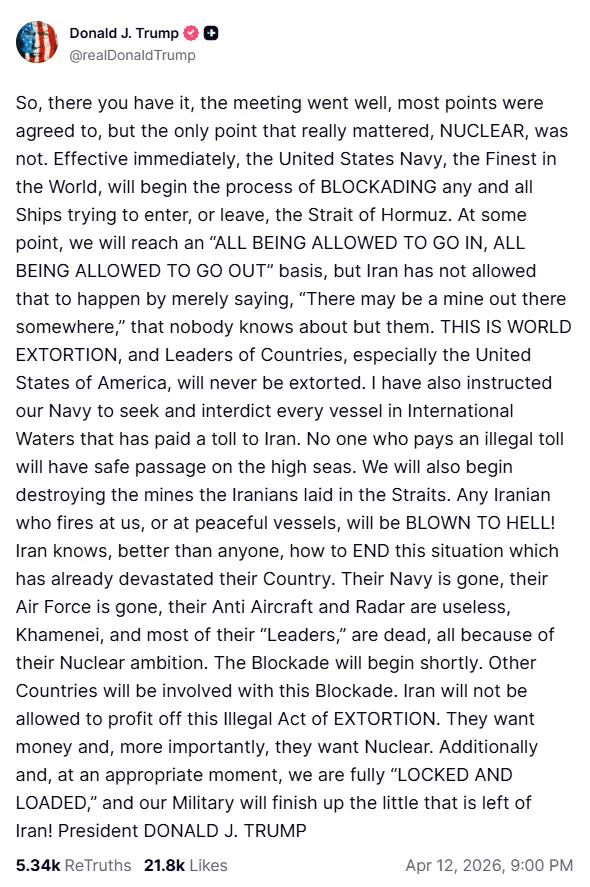
Screenshot of a Truth Social Post by Donald Trump (@realDonaldTrump)
Here’s what that means.
This is not just about war.
This is about global energy, trade, and economic stability.
US–Iran Tensions After Failed Talks
The recent peace efforts collapsed.
According to JD Vance, no agreement was reached in talks held in Islamabad.
The core issue?
- The US demands: No enriched uranium for Iran
- Iran’s position: Non-negotiable refusal
This was expected.
But look at what followed.
Instead of de-escalation, the situation escalated further—with new military and economic pressure strategies emerging.
This was the turning point.
What Is the Strait of Hormuz & Why It Matters
The Strait of Hormuz is one of the most critical trade routes in the world.
- A significant portion of global oil passes through it
- It connects the Persian Gulf to international markets
- Countries like India, China, and Japan depend heavily on it
So what happens if it’s blocked?
Energy prices surge.
Supply chains break.
Global inflation rises.
That’s why this matters.
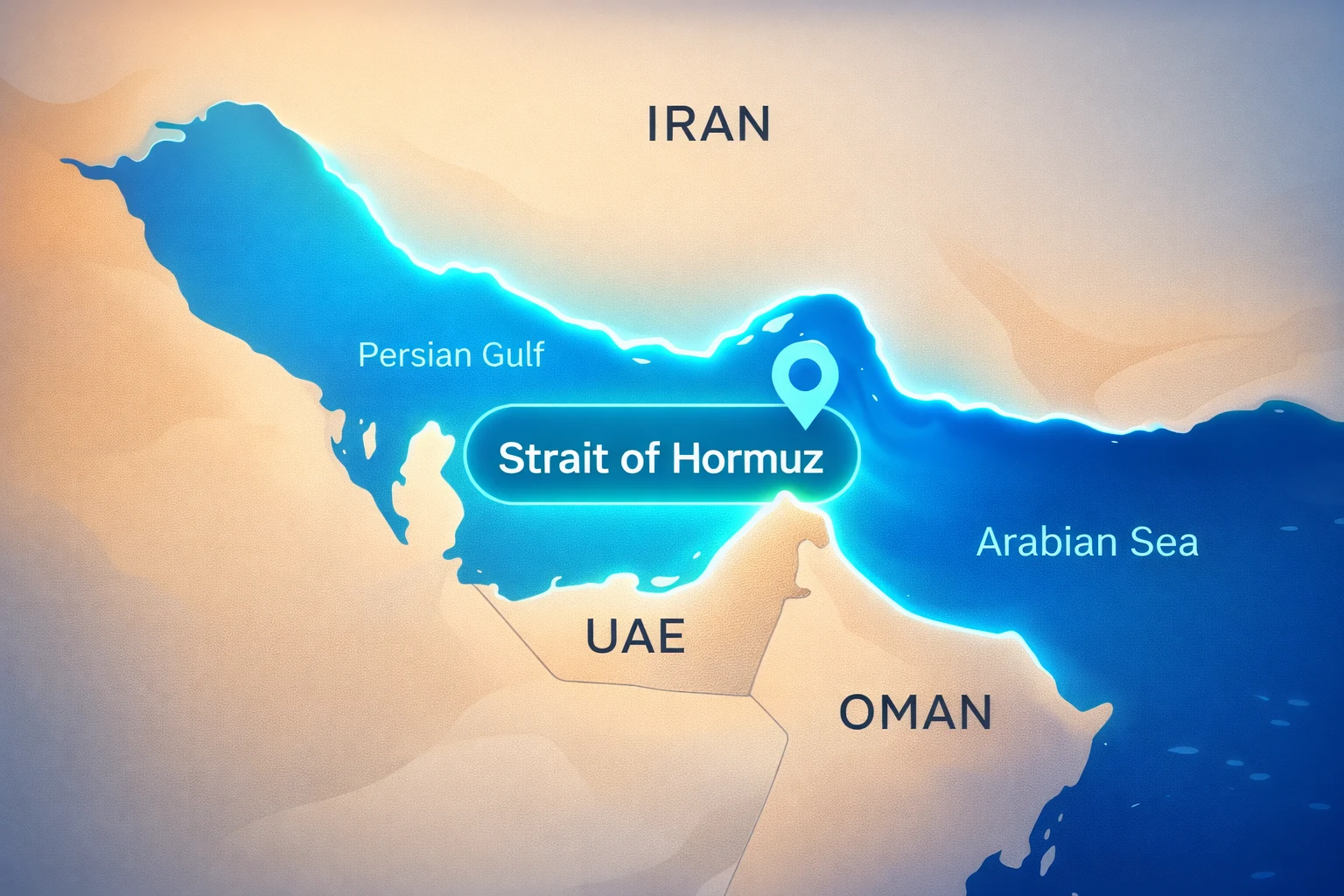
Image credit: AI-generated using ChatGPT by OpenAI
Trump’s Blockade Strategy Explained
Here’s where things get more complex.
Previously, Iran allowed selective access:
- Some ships (India, China, Russia-linked) could pass
- Others faced restrictions due to mines and security risks
Now, Trump’s approach flips that model.
His message is clear:
- No selective access
- No exceptions
- If blocked → blocked for everyone
He also warned:
- No country should pay Iran for passage
- Any “illegal toll system” will not be tolerated
This is strategic pressure.
But also risky.
Because instead of reducing damage—it spreads it globally.
This was deliberate.
Sources: The Wall Street Journal
Pressure on China, Russia, and Global Powers
The strategy doesn’t stop at Iran.
🚨President Trump sends a warning to CHINA, they will face MASSIVE tariffs if they supply Iran with weapons:
— Morse Report (@MorseReport) April 12, 2026
"If we find that China, I hear news reports… about China giving anti-aircraft missile. I DOUBT they would do that"pic.twitter.com/S3GRpI2Iuw https://t.co/Jll78X66sJ
Trump has signaled:
- Possible 50% tariffs on countries aiding Iran militarily
- Direct warnings to China
- Implicit pressure on Russia
Why?
Because both countries are believed to have supported Iran with:
- Military equipment
- Strategic resources
The logic is simple:
If more countries feel the pain →
More countries will push to reopen Hormuz.
But this raises a critical question:
Will pressure unite the world—or divide it further?
Sources: Hindustan Times,
Global Economic Impact: Oil, Inflation, Trade
A full or partial blockade leads to:
- Oil price spikes
- Shipping disruptions
- Insurance costs skyrocketing
- Supply chain instability
Even uncertainty alone can:
- Trigger market panic
- Slow manufacturing
- Increase global inflation
This is not theoretical.
This is already beginning.
India’s Strategic and Economic Risk
For India, the risks are immediate:
- Heavy dependence on Middle Eastern oil
- LPG and energy imports at risk
- Inflation pressure on economy
If the Strait remains unstable:
- Fuel prices could rise
- Industrial output could slow
- Economic growth may be impacted
India cannot afford prolonged disruption.
That’s the reality.
Market Reactions and Political Signals
Another layer emerges here.
There are growing concerns that:
- Market movements are happening before major announcements
- Large trades are placed ahead of policy shifts
- Information leaks may exist within decision-making systems
At the same time:
- Public messaging remains inconsistent
- Policy signals appear unpredictable
This creates uncertainty.
And markets dislike uncertainty.
Sources: New York Post, Times of India, The Wall Street Journal
Final Analysis
The Strait of Hormuz blockade is no longer just a regional issue.
It is a global pressure point.
- US strategy → increase pressure on all players
- Iran strategy → selective control and leverage
- Global reaction → uncertainty and risk
But the deeper issue is this:
There is no clear exit strategy yet.
As long as:
- Core disagreements remain unresolved
- Key players like Iran and the US stay rigid
- Strategic competition continues
The risk will remain.
And the longer it continues, the more permanent the damage becomes.
This is not just a crisis.
It is a structural shift in global geopolitics.
FAQs
Why is the Strait of Hormuz so important?
It is a key global oil chokepoint where a large percentage of the world’s oil supply passes daily, making it critical for global energy security.
What happens if the Strait of Hormuz is blocked?
Oil prices rise sharply, global trade slows down, and supply chains face major disruptions, leading to inflation and economic instability.
Why did US–Iran talks fail?
The main disagreement was over Iran’s nuclear program, with the US demanding zero enrichment and Iran refusing to accept such conditions.
How does this affect India?
India depends heavily on oil imports through this route, so any disruption increases fuel costs and impacts economic growth.
Can the blockade be permanent?
Not likely permanent, but prolonged disruption is possible if tensions remain unresolved and no diplomatic breakthrough occurs.
What’s Your Take on the Hormuz Crisis?
Do you think the Strait of Hormuz blockade strategy will force a resolution—or push the world into deeper conflict?
- Should global powers intervene collectively?
- Or will this escalate into a larger economic crisis?
Share your perspective thoughtfully—because this is one crisis where every country has something at stake.
Read more about Strait of Hormuz Sea Mine Crisis. and US Iran Peace Talks Failure. Explore more about Economy & Trade, Indian Affairs and World Affairs.