Table of Contents
A Turning Point in Global Power Strategy
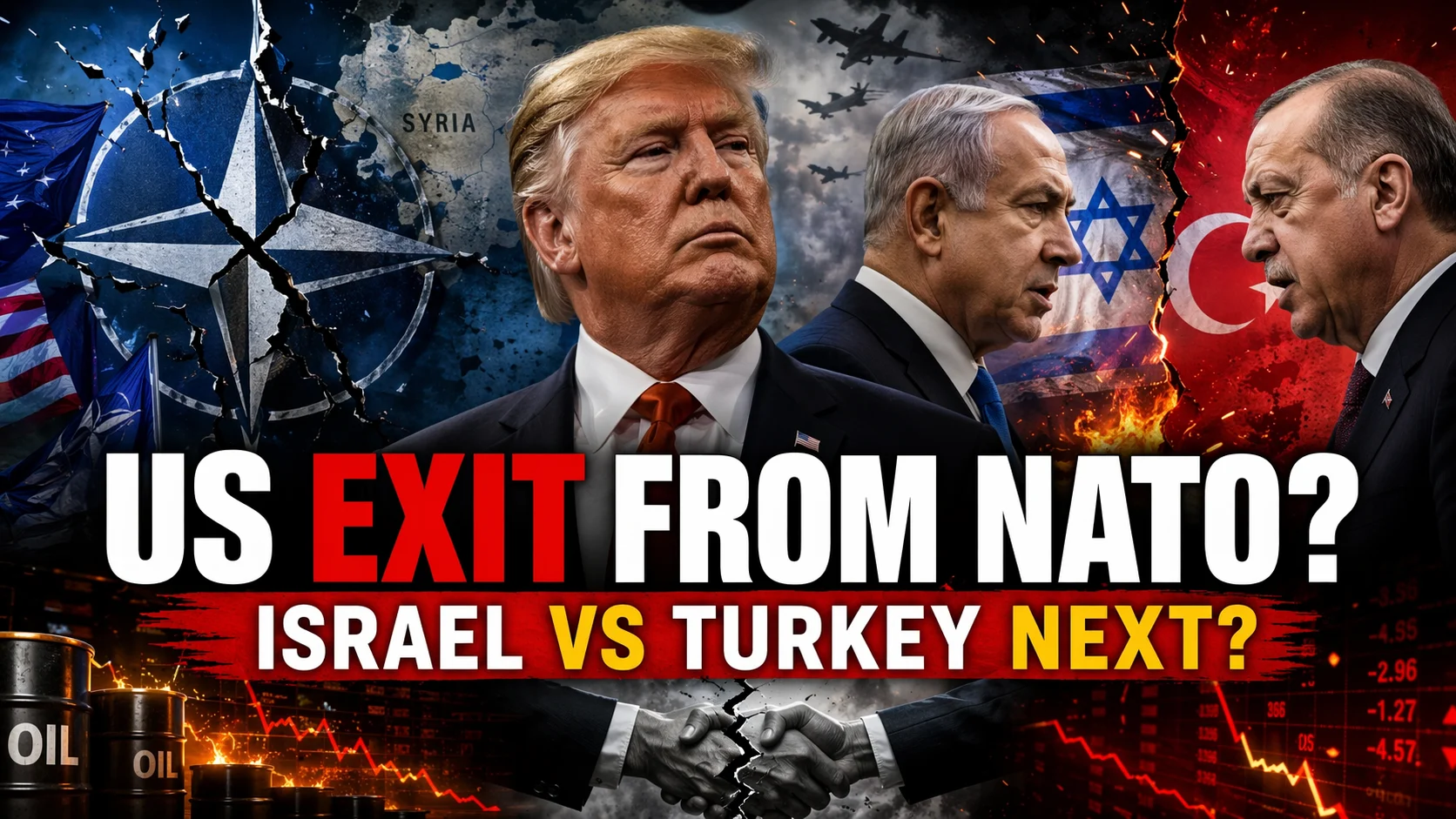
The Trump NATO Exit and Israel Turkey Conflict debate is no longer theoretical.
It is unfolding in real time.
After authorizing a direct attack on Iran—something no previous US president had done in this manner—Donald Trump has triggered a chain of geopolitical consequences.
Now the question is no longer what happened.
It is: what comes next?
Because the signals are not isolated.
They are connected.
And that changes everything.
Joe Kent’s Resignation and Warning Signals
One of the most important indicators comes from inside the system itself.
Joe Kent, who served as Director of the National Counterterrorism Center under the Trump administration, resigned on March 17, 2026, shortly after the Iran strike.
That timing matters.
Because he was not an outsider.
He was part of the core decision-making structure.
His argument was direct:
- The war with Iran was unnecessary
- Iran posed no immediate threat to the United States
- The conflict would lead to large-scale casualties and economic disruption
After much reflection, I have decided to resign from my position as Director of the National Counterterrorism Center, effective today.
— Joe Kent (@joekent16jan19) March 17, 2026
I cannot in good conscience support the ongoing war in Iran. Iran posed no imminent threat to our nation, and it is clear that we started this… pic.twitter.com/prtu86DpEr
And those consequences began appearing almost immediately.
Thousands died.
Global markets reacted sharply. Brent Crude surged to $149.9 per barrel on March 20, while the Indian Rupee weakened to ₹93.88 against the US dollar—highlighting how quickly geopolitical shocks translate into economic stress.
But here’s where things shift.
Kent didn’t stop at criticism.
He made a forward-looking claim.
Why NATO Is at the Center of Trump’s Strategy
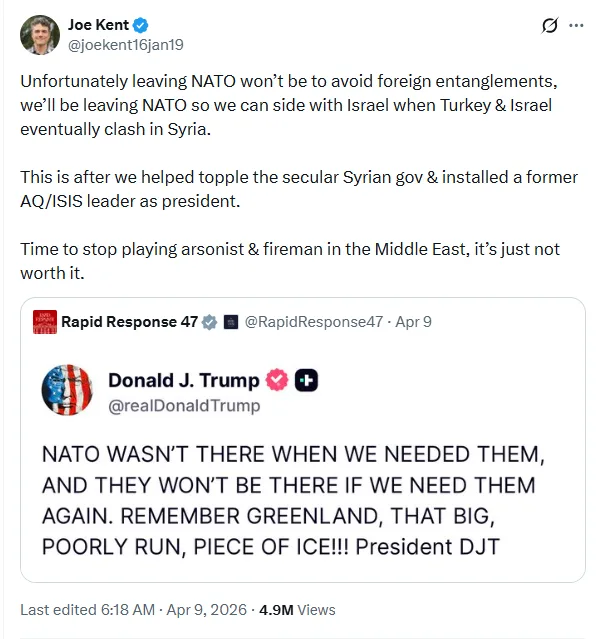
Screenshot of X Post by Joe Kent (@joekent16jan19)
Kent’s most controversial assertion is this:
The United States may attempt to leave NATO.
Not as a retreat.
But as a strategic repositioning.
Why?
Because NATO’s Article 5 creates a binding obligation:
An attack on one member is treated as an attack on all.
And that includes Turkey.
So if the US remains inside NATO, it cannot easily support military action against Turkey.
That is the constraint.
And constraints, in geopolitics, are often removed before action begins.
This was deliberate.
The Hidden Objective: Israel vs Turkey Conflict
Kent’s core claim goes further.
He suggests that the long-term trajectory points toward a conflict between Israel and Turkey—particularly over control and influence in Syria.
And if that conflict happens, the United States will be expected to support Israel.
But here’s the complication.
Turkey is a NATO member.
So how does the US support Israel against a NATO ally?
The answer, according to this framework, is simple:
Exit NATO first.
Then act freely.
That changes the equation.
Completely.
Trump’s Reaction and Internal US Tensions
Interestingly, Donald Trump has not ignored these claims.
He responded aggressively.
Targeting Joe Kent personally.
Criticizing his past, questioning his credibility, and accusing him of disloyalty and leaking classified information.
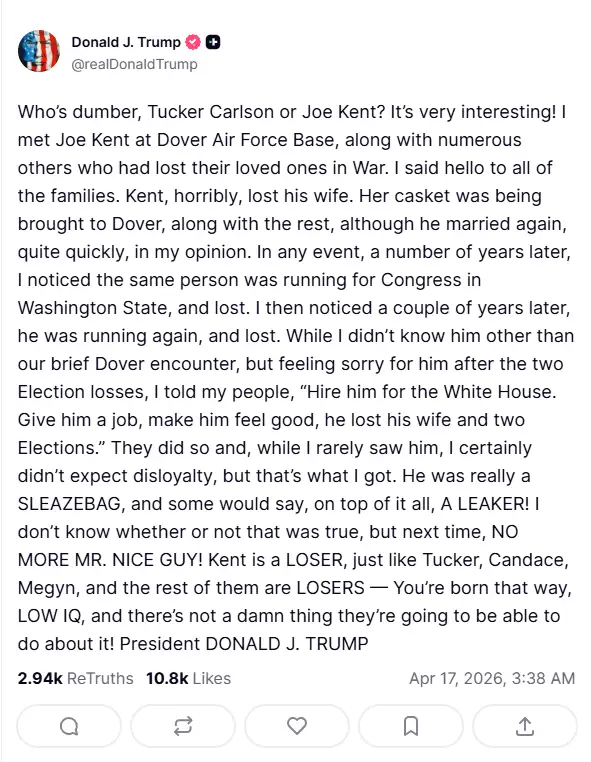
Screenshot of Truth Social Post by Donald Trump (@realDonaldTrump)
This wasn’t a mild disagreement.
It was a direct political attack.
Which raises an important question:
If the claims were irrelevant—why respond so strongly?
That silence—or lack of it—matters.
Europe’s Contingency Plan Without the US
Now consider the European response.
Reports suggest that if the United States exits NATO, European nations are already preparing a fallback structure.
A NATO-like framework.
Without the US.
But here’s the key detail:
Turkey may not be included.
At least not initially.
That creates a fragmented security architecture:
- US outside NATO
- Europe forming a parallel bloc
- Turkey potentially isolated
This is not just alliance restructuring.
This is systemic realignment.
Sources: Firstpost
Why Turkey Is Emerging as the Next Flashpoint
Statements from Turkey’s Foreign Affairs Minister, Hakan Fidan reinforce this trajectory.
On April 13, 2026, he explicitly stated that Israel is attempting to position Turkey as its next major adversary after Iran.
Turkish Foreign Minister Hakan Fidan:
— Clash Report (@clashreport) April 13, 2026
After Iran, Israel cannot live without an enemy. We see that they are in search of developing a new rhetoric and declaring Turkey as the new enemy.
We observe this not only in Netanyahu, but also among some figures in the Israeli… pic.twitter.com/ywo6MOOqid
That’s not subtle.
That’s strategic signaling.
And when you combine that with:
- Israel’s post-Iran positioning
- US strategic flexibility considerations
- NATO constraints
A pattern begins to emerge.
Not immediately.
But gradually.
And in geopolitics, gradual shifts often precede sudden events.
Sources: Times of Israel
India’s Position in a Shifting Geopolitical Order
Now step back.
What does this mean for India?
The situation reveals a layered contrast.
On one side, Pakistan has positioned itself as an “indispensable mediator” between Washington and Tehran—seeking geopolitical relevance through diplomacy.
On the other, India has maintained a far more independent posture.
With approximately $728 billion in foreign exchange reserves, India has effectively operated as a “Free Agent”, absorbing external shocks while preserving strategic autonomy.
That difference matters.
Because while some countries are navigating relevance through alignment, India is navigating stability through flexibility.
India has absorbed recent shocks better than Pakistan.
Despite:
- Oil price volatility
- Currency pressure
- Global instability
But that does not mean insulation.
Because events like:
- US-Iran conflict
- Potential Israel-Turkey escalation
- NATO restructuring
Directly impact:
- LPG prices
- stock markets
- investment flows
Geopolitics is not distant.
It is immediate.
And personal.
Sources: News on AIR
Strategic Implications: What Changes Now
Let’s break it down.
What has actually changed?
First, alliance structures are no longer stable.
Second, conflict zones are expanding—from Iran toward Syria and potentially Turkey.
Third, internal dissent within US policymaking is becoming visible.
Fourth, economic consequences are global—not regional.
And finally:
The timeline is compressing.
Events that were once hypothetical are now being openly discussed.
That shift is structural.
Conclusion
The Trump NATO Exit and Israel Turkey Conflict is not just a prediction.
It is a developing strategic pathway.
Step by step:
- Conflict begins with Iran
- Internal dissent emerges
- NATO becomes a constraint
- Exit becomes a strategic option
- A new conflict axis forms
This is not randomness.
It is sequencing.
And if this trajectory continues, the implications will extend far beyond West Asia—reshaping alliances, economies, and global power balance for years to come.
Final Thought
Geopolitics does not move in isolation.
It moves in chains.
The real question is:
If NATO is no longer the anchor of Western strategy—what replaces it, and who controls the next global alignment?
FAQs
Why did Joe Kent resign over the Iran war?
Joe Kent resigned because he believed the Iran war was unnecessary and strategically unjustified. He argued that Iran did not pose an immediate threat to the United States and warned that the conflict would lead to unnecessary casualties and economic damage.
Why would Trump consider exiting NATO?
The strategic reasoning suggests that NATO membership restricts US military flexibility, especially due to Article 5 obligations. Leaving NATO would remove constraints, allowing the US to act independently in conflicts involving NATO members like Turkey.
Will there be a war between Israel and Turkey?
The analysis suggests a rising probability rather than certainty. Statements from Turkish leadership and evolving regional tensions indicate that Israel may view Turkey as a future strategic rival, especially in Syria.
How does this affect India?
India is impacted through energy prices, stock market volatility, and broader economic conditions. Even distant conflicts influence domestic inflation, LPG costs, and investor sentiment.
What is NATO’s Article 5?
Article 5 is NATO’s collective defense clause. It states that an attack on one member country is considered an attack on all, requiring a unified response.
What Comes Next?
Geopolitics is no longer a distant game of alliances.
It is actively reshaping global power.
If the United States exits NATO and a new conflict axis begins to form, the consequences will not stay limited to Europe or West Asia.
They will ripple across economies, energy markets, and strategic partnerships worldwide.
This is where the real shift begins.
Are we witnessing a temporary disruption… or the early stages of a completely new global order?
Explore more about Strategic Depth, World Affairs and Indian Affairs.