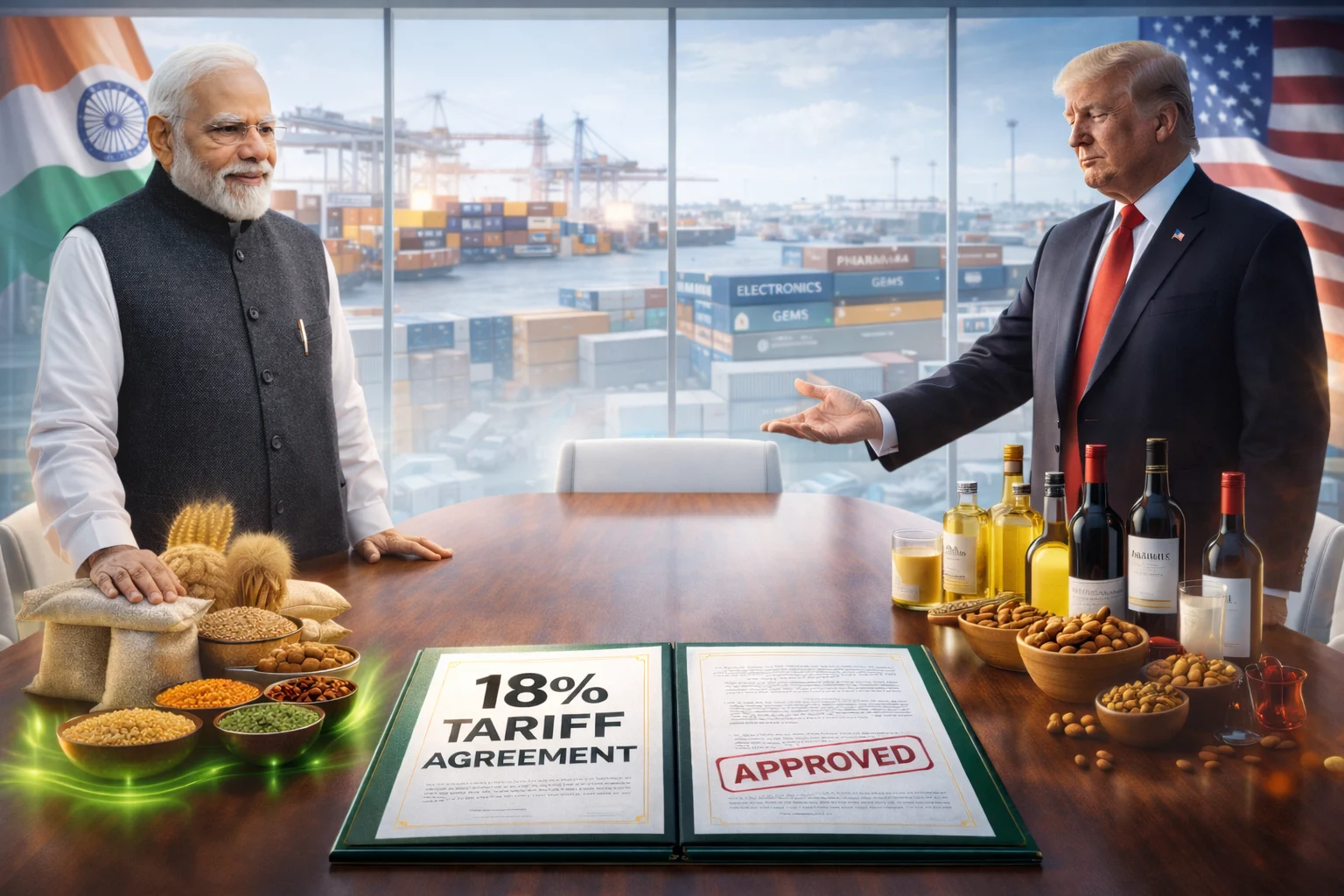
The India US 18 percent tariff agreement quietly reshaped global trade equations—cutting duties, protecting Indian farmers, and unsettling Asia’s export rivals.
Table of Contents
Introduction: “Thank You, President Trump” — But Why?
When headlines across international media read “Thank you, President Trump, for this deal”, many people paused. Trade negotiations between India and the US are rarely emotional, rarely public, and almost never wrapped in gratitude.
Yet Prime Minister Modi did exactly that.
Behind the optics, the India US 18 percent tariff agreement quietly rewired the rules of global trade competition. Tariffs that once crippled Indian exporters were slashed. Market access was recalibrated. And most importantly, India walked away without sacrificing the political red line: its farmers.
But here’s the real question no headline answered immediately — who actually won this deal?
That answer sits buried in tariff math, agriculture fine print, and long-term trade strategy.
The Tariff Cut That Changed Everything
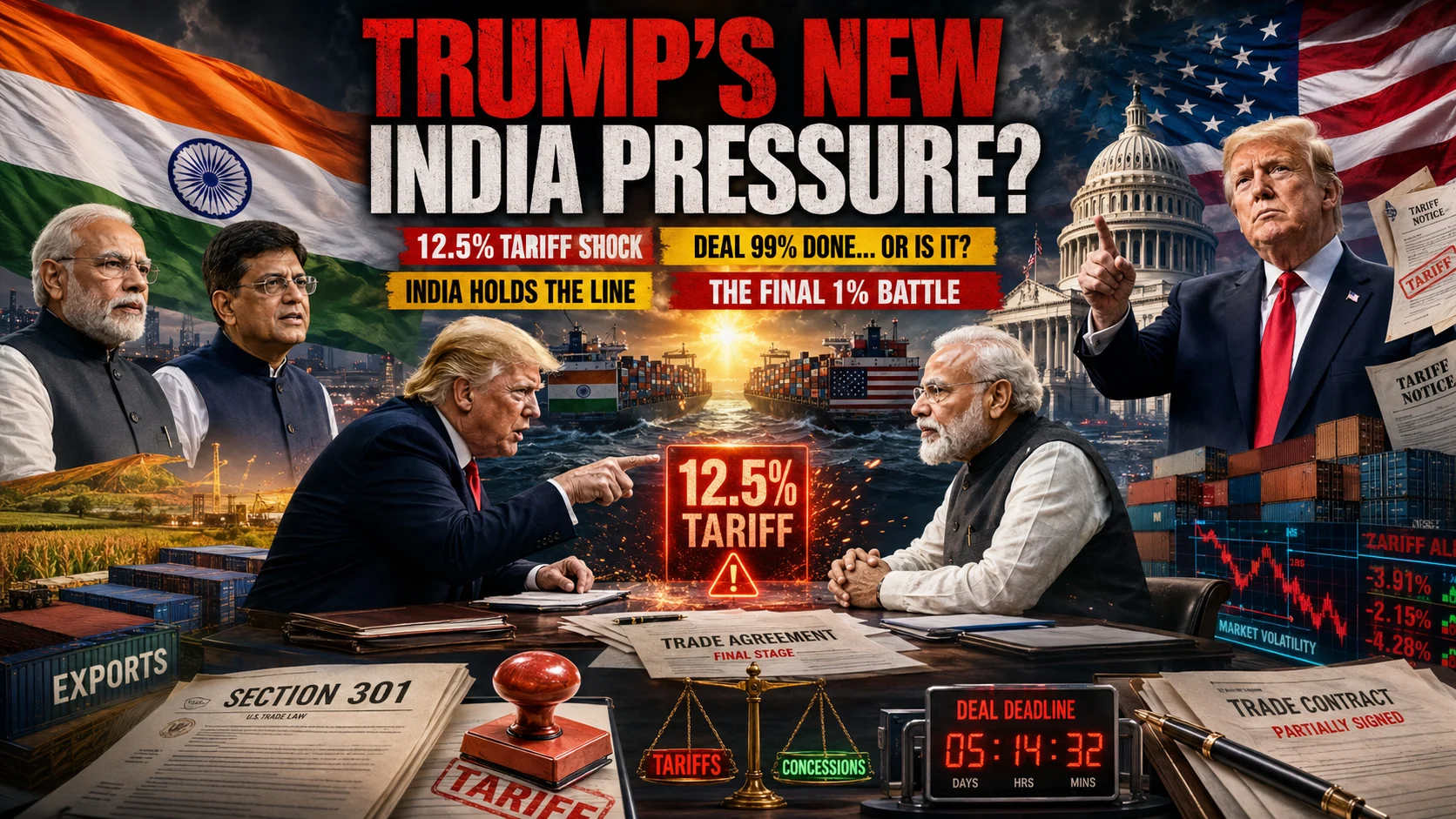
At the center of the agreement lies one number: 18%.
Before this deal, Indian exports to the US faced reciprocal tariffs as high as 50%. That made Indian goods uncompetitive overnight, especially against Southeast Asian exporters.
Under the India US 18 percent tariff agreement, those duties were slashed from 50% to 18%.
That reduction is not symbolic — it is structural.
It immediately changes landed prices of Indian goods in the American market. Exporters don’t need subsidies. They don’t need rebates. They simply become cheaper than their rivals.
This single move repositions India inside the US supply chain.
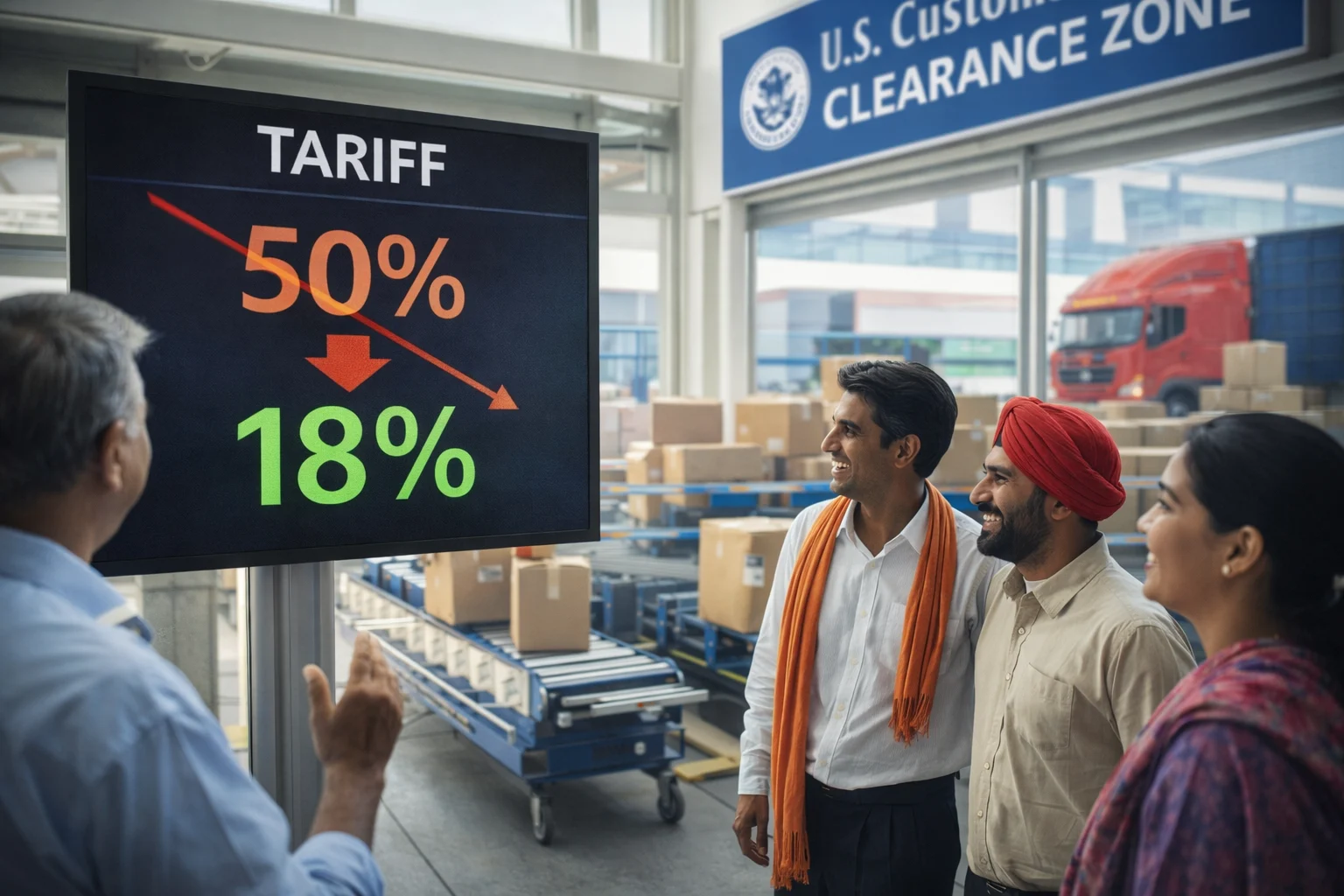
Image credit: AI-generated using ChatGPT by OpenAI
How India Outperformed China, Vietnam, and Bangladesh
Trade deals don’t exist in isolation. They only matter in comparison.
Under current US tariff structures:
- China faces tariffs of around 35%
- Vietnam stands at 20%
- Bangladesh at 20%
- Indonesia at 19%
India, at 18%, suddenly sits at the bottom of the tariff ladder.
That one or two percent gap might look trivial. In global trade, it is lethal.
In sectors like textiles, electronics, and light manufacturing, buyers operate on razor-thin margins. A 2% advantage can shift billion-dollar contracts overnight.
This is precisely why the India US 18 percent tariff agreement triggered nervous reactions in Dhaka and Hanoi — and near silence in Beijing.
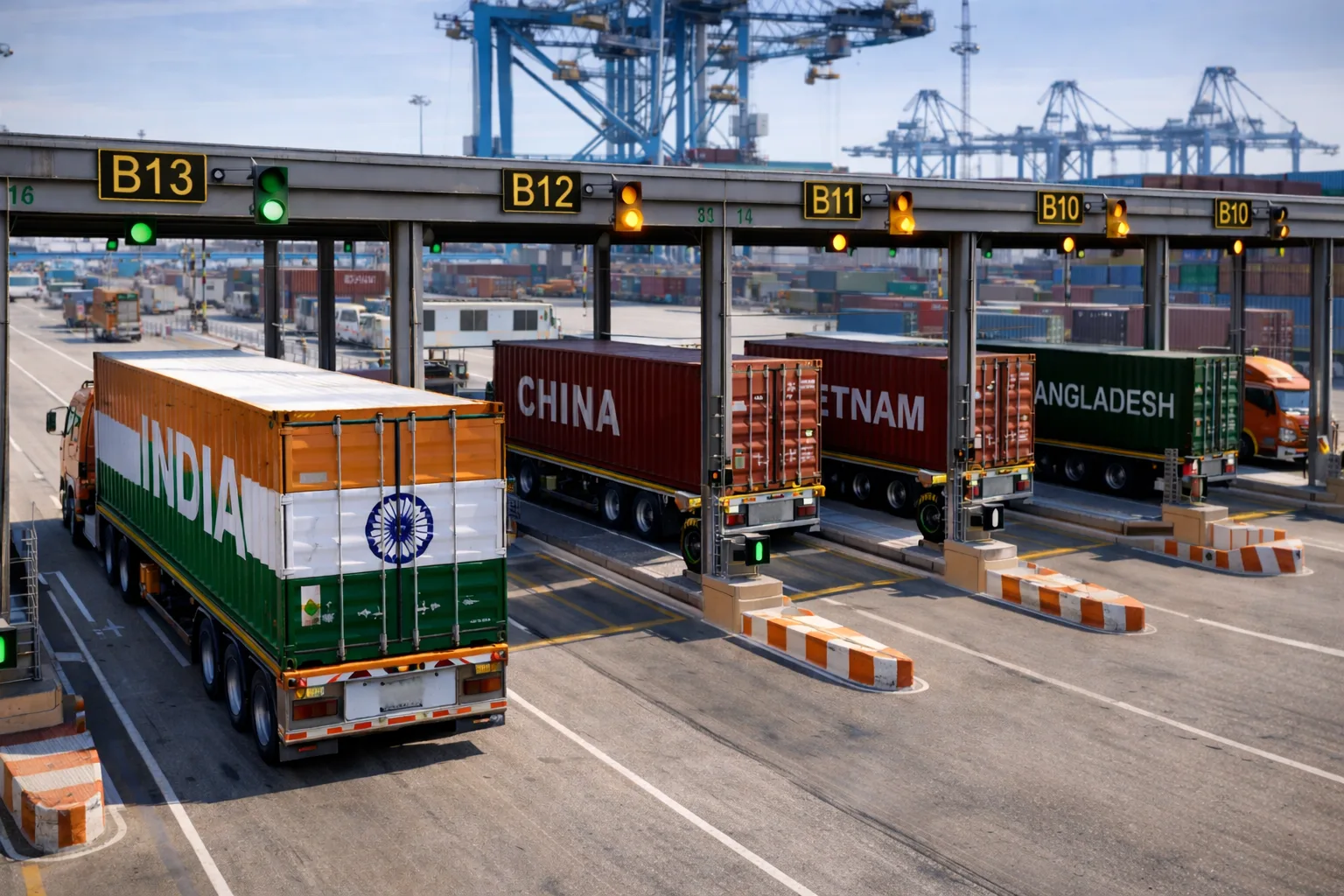
Image credit: AI-generated using ChatGPT by OpenAI
The Agriculture Question: Did Indian Farmers Lose?
This was the most politically sensitive part of the negotiation.
The US wanted access to India’s massive agriculture market. India’s fear was simple: cheap American farm products could destabilize local farmers.
So what really happened?
The White House statement listed items where tariffs would be reduced:
- Distillers Dried Grains (DDGs)
- Red sorghum
- Tree nuts (almonds, walnuts)
- Soybean oil
- Wine and spirits
- Selected fresh and processed fruits
Here’s the critical detail most headlines missed.
The first two — DDGs and red sorghum — are animal feed, not human food. They don’t compete with Indian staple crops.
Tree nuts were already widely available in India. California almonds are not new to Indian shelves.
Core agricultural items remained fully protected:
- Rice
- Wheat
- Pulses
- Onions
- Garlic
- Potatoes
- Spices
- Peas
- Chickpeas
No American entry.
So yes, some competition will emerge in niche fruit segments. But the backbone of Indian agriculture remains untouched.
Politically and economically, that is a decisive Indian win.
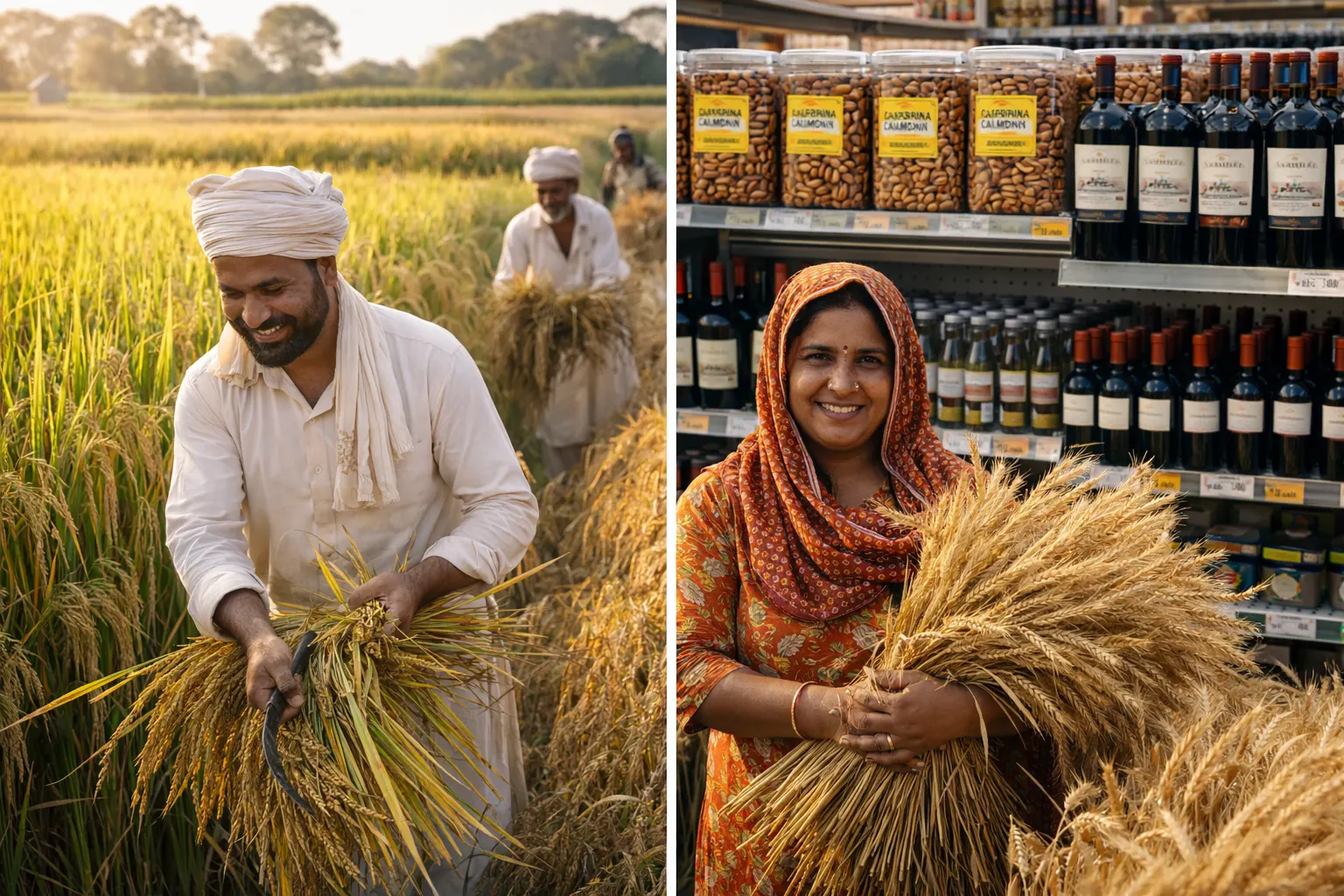
Image credit: AI-generated using ChatGPT by OpenAI
What the US Actually Got Inside India
From Washington’s perspective, the deal still delivered tangible access.
The US gained smoother entry for:
- Animal feed products
- Soybean oil
- Select fruits
- Alcoholic beverages
But it did not get access to:
- Indian grain markets
- Vegetable markets
- Spice markets
- Core food security sectors
This matters because it shows the negotiation balance. The US gained commercial openings without breaching India’s political red lines.
That balance is why the agreement didn’t collapse under domestic pressure in India.
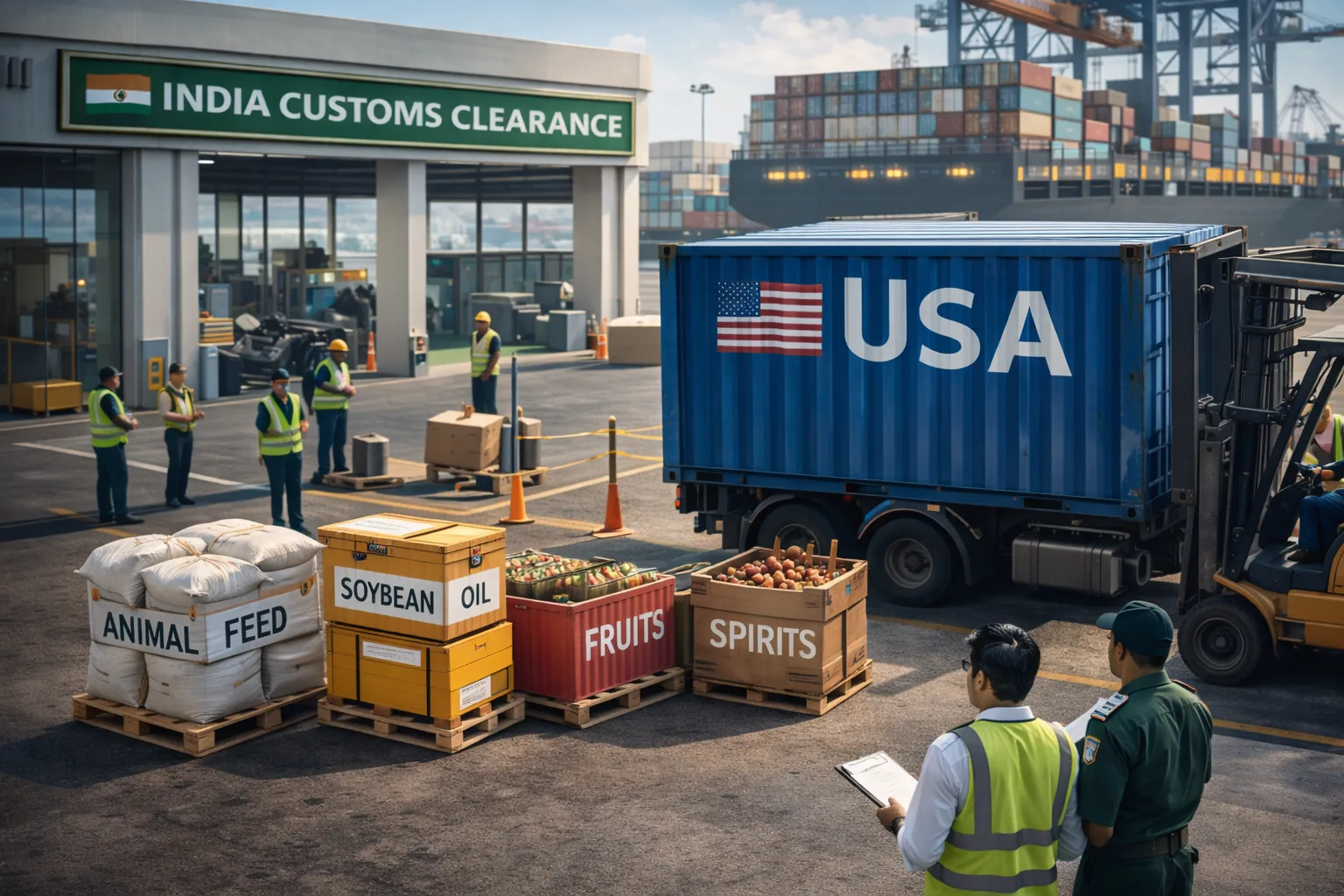
Image credit: AI-generated using ChatGPT by OpenAI
What India Gained in Return — The Silent Wins
The most powerful gains for India barely made headlines.
Under the India US 18 percent tariff agreement, tariffs were eliminated on:
- Generic pharmaceuticals
- Gems and diamonds
- Aircraft parts
- Electronics and smartphones
- Tea, coffee, coconut oil
This is where India quietly dominates.
Generic drugs alone represent billions in exports. Zero tariffs here don’t just help big pharma — they support hundreds of mid-sized manufacturers.
Aircraft parts open doors for India’s growing aerospace suppliers.
Diamonds and gems strengthen India’s polishing industry, already the world’s largest.
These are long-term, structural advantages.
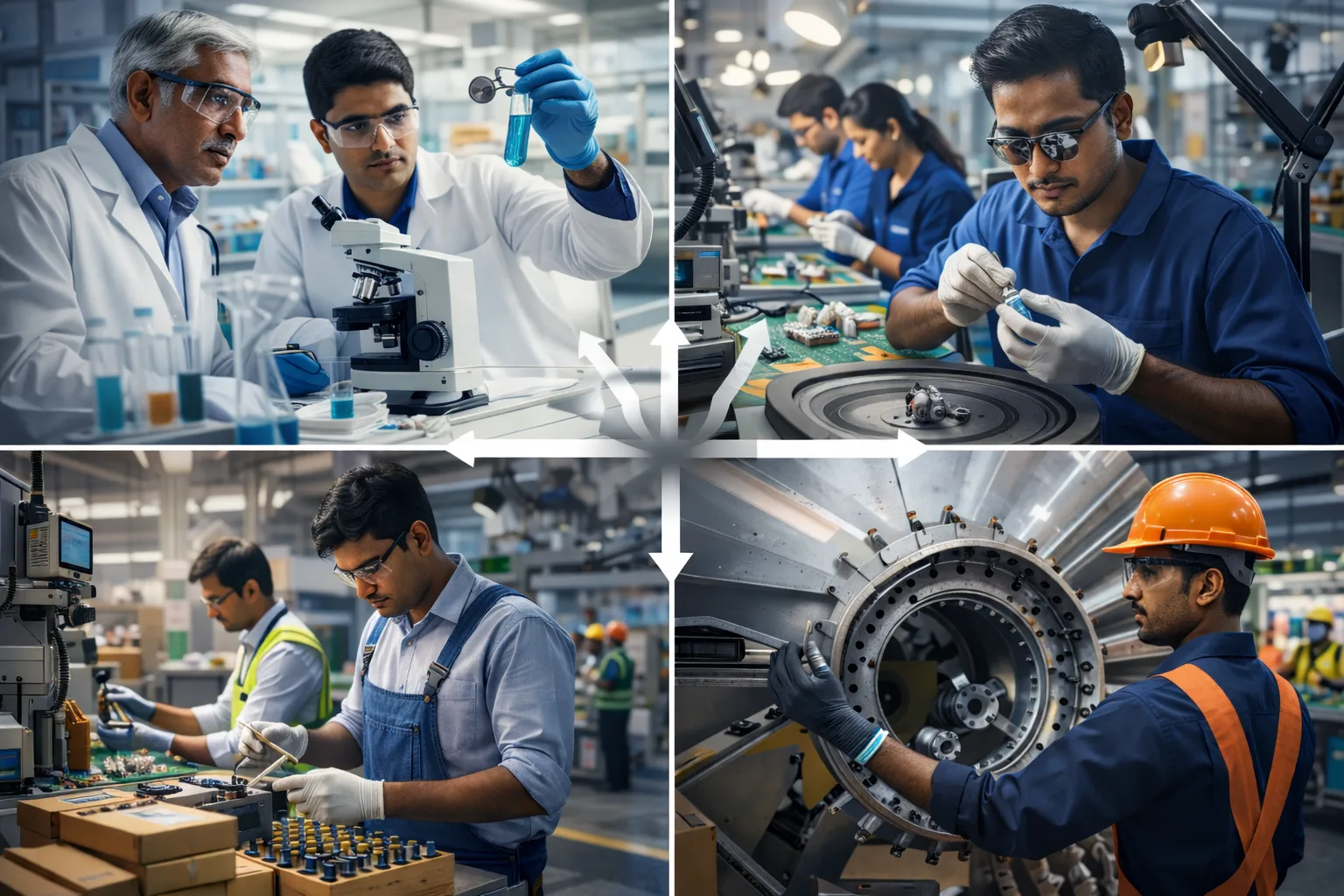
Image credit: AI-generated using ChatGPT by OpenAI
The $500 Billion Question: Purchase or Pressure?
One line triggered debate: India will purchase $500 billion worth of American goods.
Critics jumped fast.
But context matters.
This is a five-year horizon, not a single-year obligation. It aligns with an existing 2030 trade expansion target between India and the US.
What does it include?
- Aircraft (primarily Boeing)
- Energy products
- Technology components
- Cooking coal
India already imports many of these.
So this is not surrender — it’s structured alignment.
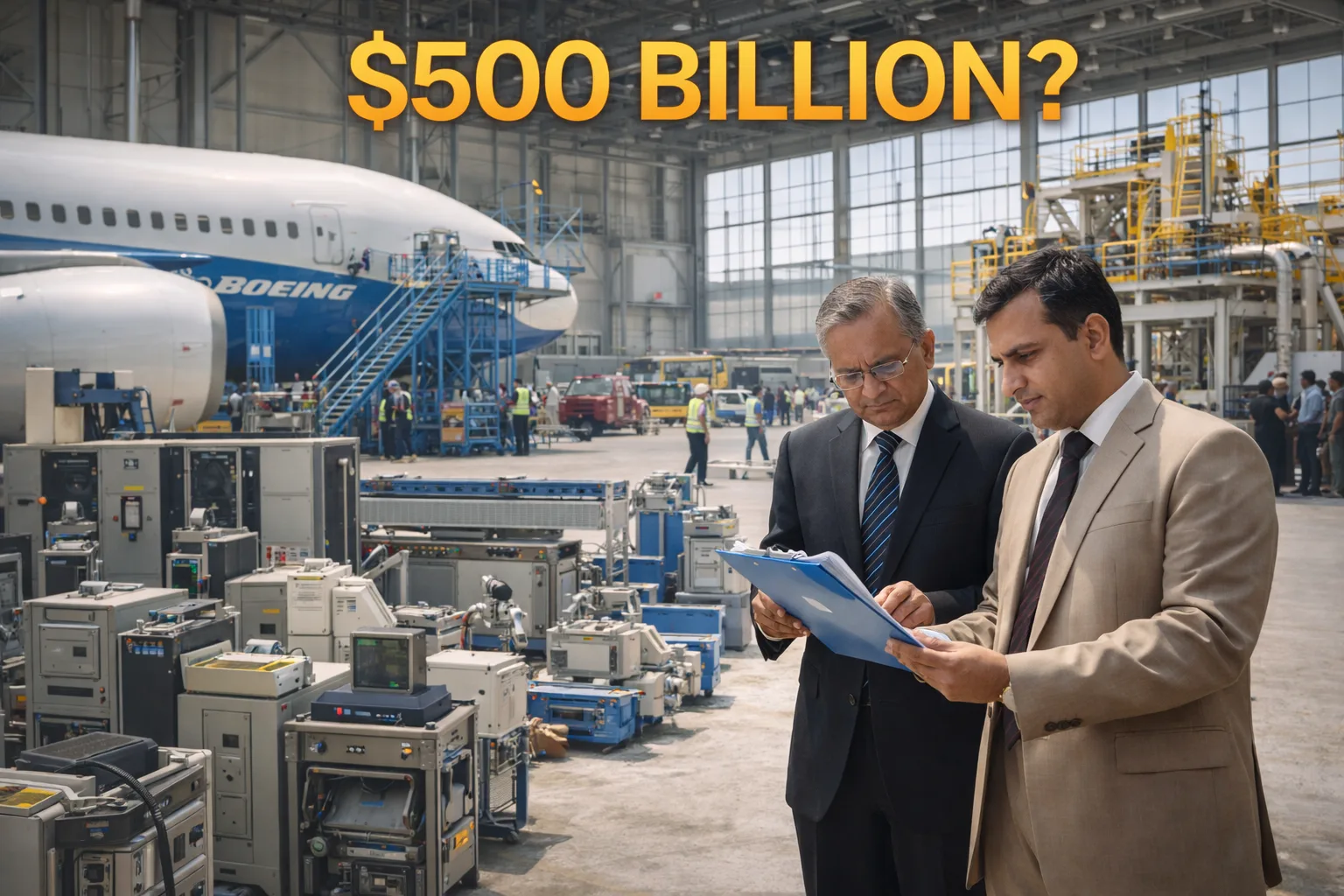
Image credit: AI-generated using ChatGPT by OpenAI
Can India Maintain Its Trade Surplus With the US?
This is the real test.
India currently enjoys a trade surplus with the US. Reduced tariffs could expand exports faster than imports — or imports could surge.
If Indian exporters capitalize on the tariff edge, the surplus holds.
If domestic demand explodes for US goods, the surplus shrinks.
This balance will define whether the India US 18 percent tariff agreement becomes transformational or merely transitional.
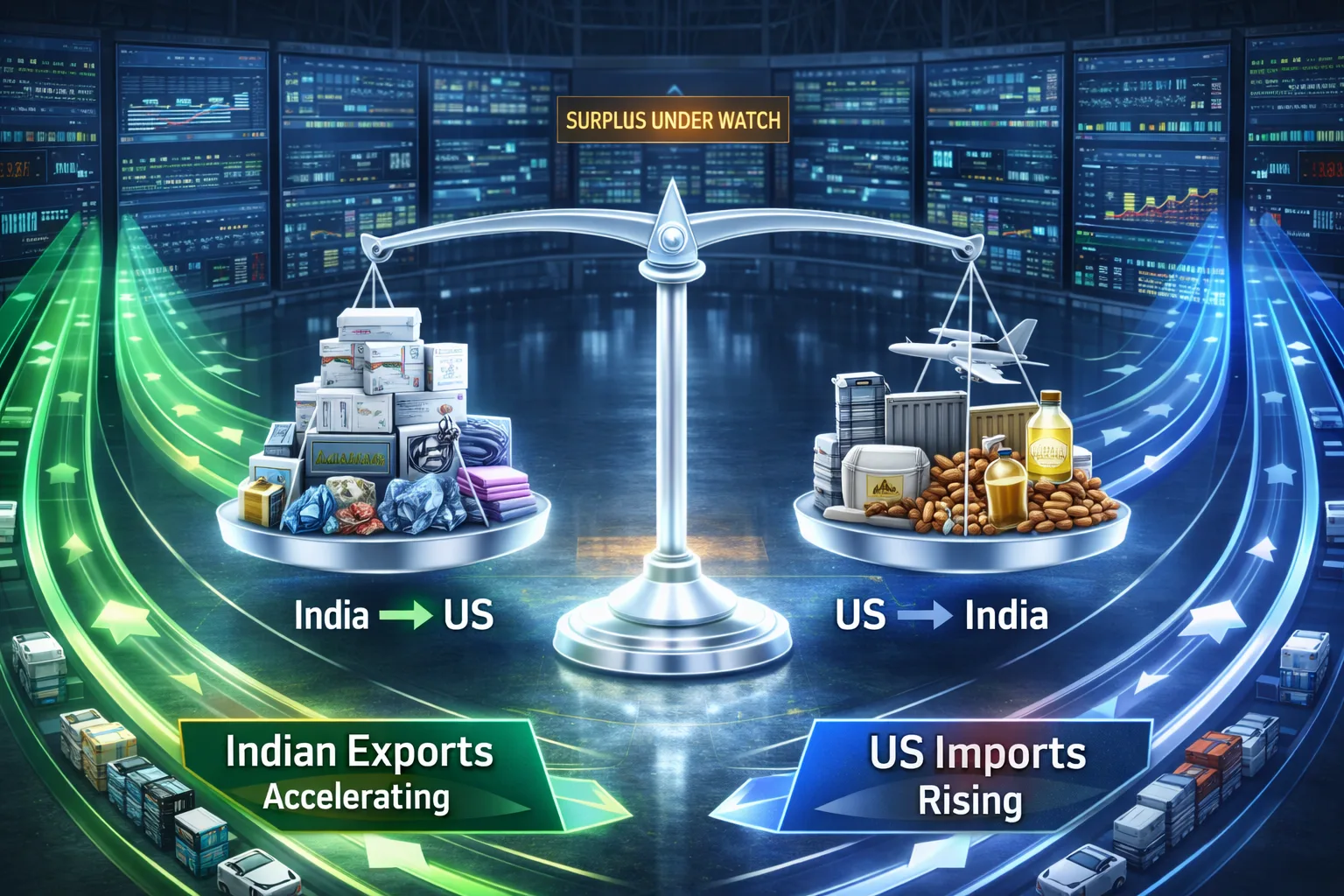
Image credit: AI-generated using ChatGPT by OpenAI
Why This Deal Is Being Called Historic
Not because tariffs were cut.
But because:
- India gained competitiveness without surrendering agriculture
- Export rivals were strategically undercut
- Long-term sectors were prioritized over optics
- Political red lines were respected
Trade deals rarely offer clean wins.
This one came close.
Image credit: AI-generated using ChatGPT by OpenAI
FAQs
What is the India US 18 percent tariff agreement?
The India US 18 percent tariff agreement reduces US import duties on Indian goods from up to 50% to 18%, improving India’s global trade competitiveness.
Did the US get access to Indian agriculture markets?
Only limited access to animal feed, select fruits, and processed items. Core Indian agriculture remains protected.
Why is Bangladesh worried about this deal?
Because India now enjoys lower tariffs than Bangladesh in the US market, threatening Bangladesh’s textile exports.
Will India buy $500 billion worth of US goods immediately?
No. This is a multi-year target aligned with long-term trade expansion plans.
Final Verdict & Share Your View
The India US 18 percent tariff agreement is not loud. It is not dramatic. But it is deeply strategic.
It strengthens India where it matters most — exports, manufacturing, and long-term market access — without destabilizing its political foundations.
Now the real question is execution.
Do Indian exporters seize this moment?
Share your view below.
👉 For more deep-dive analysis on global trade, geopolitics, and India’s strategic future, explore our coverage under Economy & Trade, Indian Affairs and World Affairs. Read more about India-US Trade Deal.
Sources : NDTV World , Business Today , Fact Sheet: The United States and India Announce Historic Trade Deal