Table of Contents
A Strategic Shift No One Expected
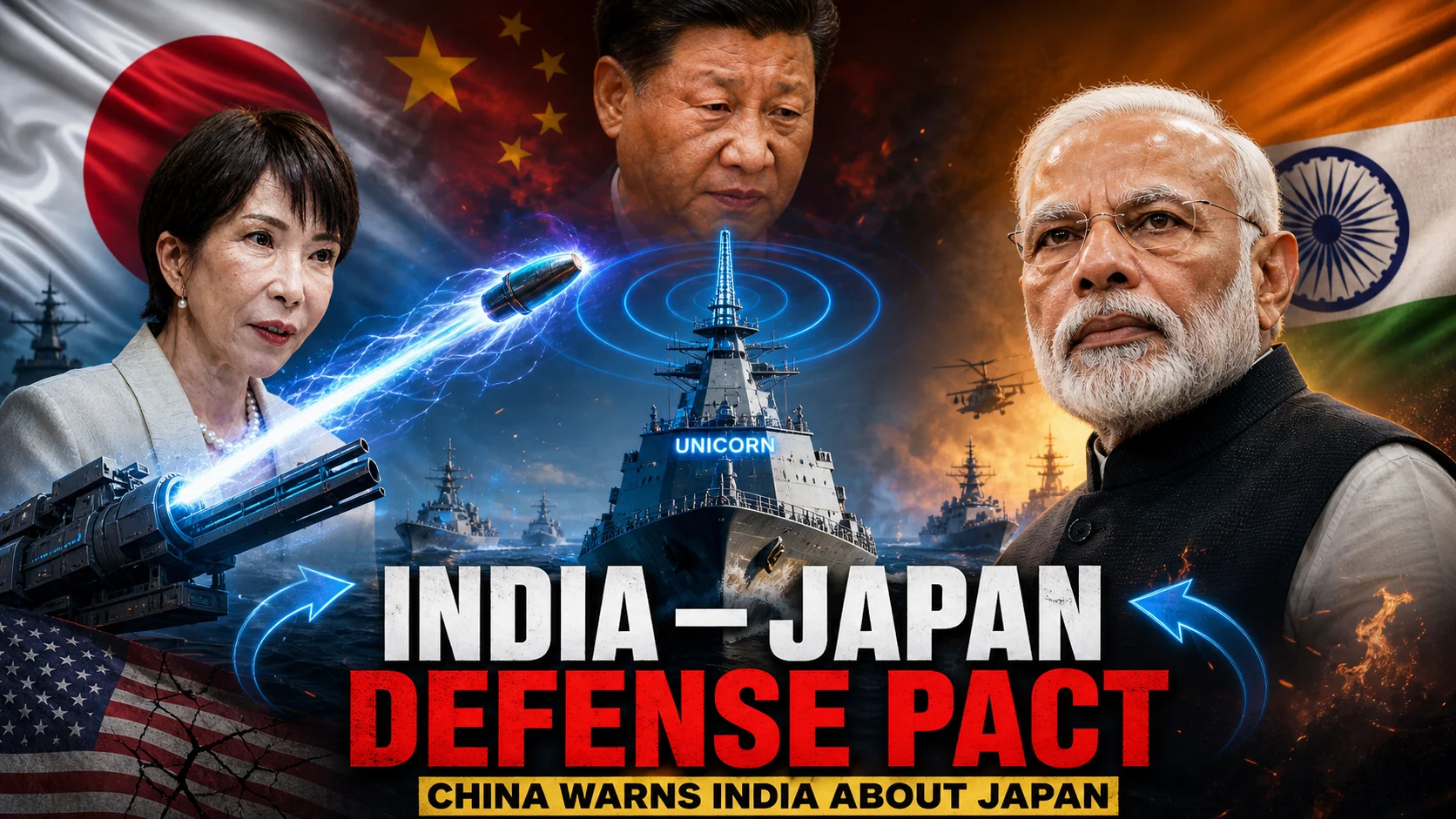
India Japan defense deals 2026 are not just another set of military agreements—they signal a deeper shift in how India is preparing for the future.
For decades, India relied heavily on partners like the US, Russia, France, and Israel. That pattern is now evolving. A new partnership with Japan is emerging as a central pillar, and it is happening in response to both global uncertainty and regional pressure.
This shift is not happening in isolation. It is being shaped by changing perceptions of reliability, access to advanced technology, and the growing need to secure India’s long-term strategic interests.
Japan’s Policy Reversal Changes the Game
For years, Japan operated under a self-imposed restriction rooted in its post-World War II constitution—no export of lethal weapons.
That changed in April 2026.
Japan removed the barrier that prevented it from exporting systems like missiles, fighter jets, and advanced defense platforms. Until now, collaboration between India and Japan was limited to non-lethal systems like communication technologies.
One example is the UNICORN system—an integrated communication mast already being developed jointly for the Indian Navy. It falls under non-lethal technology, meaning it enhances capability but does not directly destroy targets.
Now, that ceiling is gone.
This opens the door for India to access an entirely new category of Japanese defense innovation—high-end, lethal, and future-ready.
And Japan isn’t just entering the market. It’s entering with advanced systems already ahead of competitors.
Sources: News on AIR, Firstpost
Why the US No Longer Looks Reliable
A major reason behind this pivot is India’s changing perception of the United States.
Under Donald Trump’s leadership, the US has shown signs of unpredictability in global commitments. The uncertainty isn’t about one deal—it’s systemic. Big-ticket acquisitions like fighter jets and air defense systems now carry political risk.
India may still buy smaller systems or maintain existing agreements, but when it comes to long-term strategic investments, hesitation is growing.
Japan offers the opposite profile.
Stable leadership. Stable policy directions. No sudden reversals.
In defense partnerships, reliability is as critical as capability. And right now, Japan scores higher on both.
The Technology Factor: UNICORN and the Railgun Edge
Technology is at the heart of this partnership.
Take the UNICORN mast. It integrates multiple communication and radar systems into a single structure, improving stealth and reducing a ship’s radar signature. This is crucial in modern naval warfare, where detection often determines survival.
But that’s just the beginning.
Japan has also developed a naval electromagnetic railgun—an advanced weapon capable of firing projectiles at extremely high speeds using electromagnetic force instead of explosives.
Unlike traditional systems, this railgun can:
- Fire multiple rounds rapidly
- Deliver massive kinetic damage
- Operate with higher efficiency over time
New footage shows Japan testing an experimental railgun in late 2025
— RT (@RT_com) February 27, 2026
A railgun uses electromagnetic force instead of gunpowder to fire an armour-piercing dart at extreme speed, designed to penetrate heavy targets pic.twitter.com/LnmZ8jonCH
Even more striking—the US failed to operationalize a similar system.
Japan succeeded.
This reflects a broader model: Japan’s public-private defense ecosystem, where industry and government collaborate closely to produce cutting-edge systems.
Over the next 5–10 years, this model is expected to generate even more advanced weapons.
China’s Reaction: History as a Weapon
China’s response has been immediate and sharp.
Through its state-linked media, particularly Global Times, China has warned India not to “forget history” pointing to Japan’s actions during World War II where Japan did invade parts of Asia—including India.
The argument suggests that Japan’s past should make India cautious about deepening ties.
But this framing is selective.
Japan’s involvement in India was tied to the anti-British struggle, where figures like Subhas Chandra Bose played a role. The historical context is far more complex than China’s narrative suggests.
This is not historical analysis. This is strategic messaging.
China’s argument also extends beyond history. It claims that stability in the Asia-Pacific since the Cold War depended on Japan refraining from exporting weapons. From this perspective, Japan’s policy shift increases the risk of regional instability.
At the same time, there is recognition that China’s earlier phase of aggressive posturing—whether along India’s borders or in maritime zones—has somewhat cooled. This reflects an understanding that constant escalation did not produce meaningful strategic gains.
At this stage, such warnings appear largely pointless. The shift in regional alignments is already underway, and repeating historical arguments is unlikely to reverse it.
Sources: Global Times
The “Education of Hate” and Regional Tensions
China’s concerns are not just geopolitical—they are deeply societal.
There exists a strong anti-Japan sentiment within China, often described as an “education of hate.” This is not limited to political rhetoric; it is visible in public attitudes, social media discourse and even incidents of violence.
Examples include:
- Children displaying aggression toward Japanese symbols
- Extreme hostility in public discourse
- Violent incidents rooted in anti-Japanese sentiment
This level of hostility shapes how China views Japan’s military resurgence.
🇨🇳中国共産党のプロパガンダ映画を見た子が、地図上の日本列島を攻撃開始。
— Lico零号機🇯🇵 (@lico337) April 30, 2026
怒りのあまり雄叫びをあげ、ペットボトルをロケットランチャーとみなして、爆撃を始めてしまう。
支那人を日本に入国させるのは危険です。
なぜ、世界は中国共産党による日本人差別を許しているの? pic.twitter.com/6RUOiJAcsO
For China, Japan’s return as a defense exporter is not just a strategic issue—it is emotional and historical.
And that makes the reaction more intense.
Sources: The Hindu
The Sharpest Insight: India’s Brazilian Model Problem
India’s biggest challenge in this entire shift is not external.
It is internal.
The Indian economy is increasingly resembling a “Brazilian model,” where large portions of public finances are directed toward welfare schemes and cash transfers rather than long-term investments.
This includes:
- Monthly cash incentives
- Election-driven financial promises
- Expanding fiscal deficits
At the same time, defense research and development remains underfunded.
India’s total defense budget may be large, but a significant portion goes toward salaries and pensions. Very little is left for innovation.
This creates a dangerous imbalance.
India wants advanced weapons. But it is not investing enough to build them.
So it will depend on foreign suppliers.
And that is exactly where Japan enters the picture.
Sources: India Today
What This Means for India
This shift toward Japan is not optional—it is structural.
India is entering a phase where domestic defense production cannot meet future requirements. Air defense systems, fighter jets, and next-generation naval platforms will largely come from abroad.
Japan is emerging as the most suitable partner for three reasons:
1. Reliability Over Time
Japan’s political system is stable. Sudden reversals are unlikely, making long-term deals safer.
2. Technological Superiority in Key Areas
From integrated communication systems to railguns, Japan is producing systems that even advanced Western countries struggled to deploy.
3. Strategic Alignment in Asia
Both India and Japan face challenges from China’s actions—whether maritime pressure or border tensions.
This alignment is not ideological—it is practical.
At the same time, India’s internal economic choices could limit how much it benefits from this partnership. If fiscal priorities continue shifting toward short-term distribution rather than long-term capability, India may remain dependent rather than becoming a co-developer.
That is the real risk.
India is making the right external moves, but its internal economic choices will decide the outcome.
Sources: Business Standard
The Next Decade of India–Japan Defense Alignment
Looking ahead, India–Japan defense cooperation is likely to become the most important chapter of India’s foreign policy over the next ten years
Not just one deal.
Multiple agreements across:
- Naval systems
- Air defense
- Advanced weapons
- Communication infrastructure
China’s opposition will continue. Historical arguments will be repeated. Pressure will increase.
But the direction is already set.
This transition has begun—and it is unlikely to reverse.
Conclusion
India Japan defense deals 2026 are not just about procurement—they signal a deeper geopolitical recalibration.
India is moving away from uncertain partners toward a stable, technologically advanced ally in Japan. The move toward Japan reflects a search for reliability, access to advanced technology, and alignment in the face of regional challenges. At the same time, China’s reaction highlights how significant this shift truly is.
But the ultimate outcome will not be decided only by external partnerships.
It will depend on whether India can align its economic priorities with its strategic ambitions.
FAQs
What is the UNICORN mast system in the Indian Navy?
The UNICORN system is an integrated communication mast that combines multiple antennas into a single structure. This reduces a ship’s radar signature, making it harder to detect. It enhances stealth without being a direct weapon, which is why it was allowed even before Japan lifted its export restrictions.
Is Japan now exporting lethal weapons to India?
Yes, after removing its long-standing restriction in 2026, Japan can now export lethal military equipment. This includes systems like missiles and potentially advanced naval or air platforms, opening a completely new phase in India–Japan defense ties.
Why did China warn India about Japan’s history?
China is using World War II history as a strategic argument to discourage India from partnering with Japan. The warning focuses on Japan’s past aggression, but it selectively ignores the broader geopolitical context, including anti-colonial dynamics involving India.
What is the Brazilian model of economy in India?
It refers to a pattern where government spending prioritizes welfare schemes and cash transfers over long-term investments like infrastructure or defense R&D. This approach increases fiscal pressure and limits strategic capacity-building.
How fast is the Japanese electromagnetic railgun?
While exact speeds vary, the railgun uses electromagnetic force to launch projectiles at extremely high velocities, far beyond traditional artillery. Its key advantage is not just speed but sustained firing capability and reduced wear over time.
Closing Question
If India continues prioritizing short-term welfare spending over defense innovation, will its growing dependence on Japan strengthen its security—or quietly limit its strategic independence in the long run?
Share Your Views in the Comments below.
Explore more about Defense & Security and Indian Affairs.