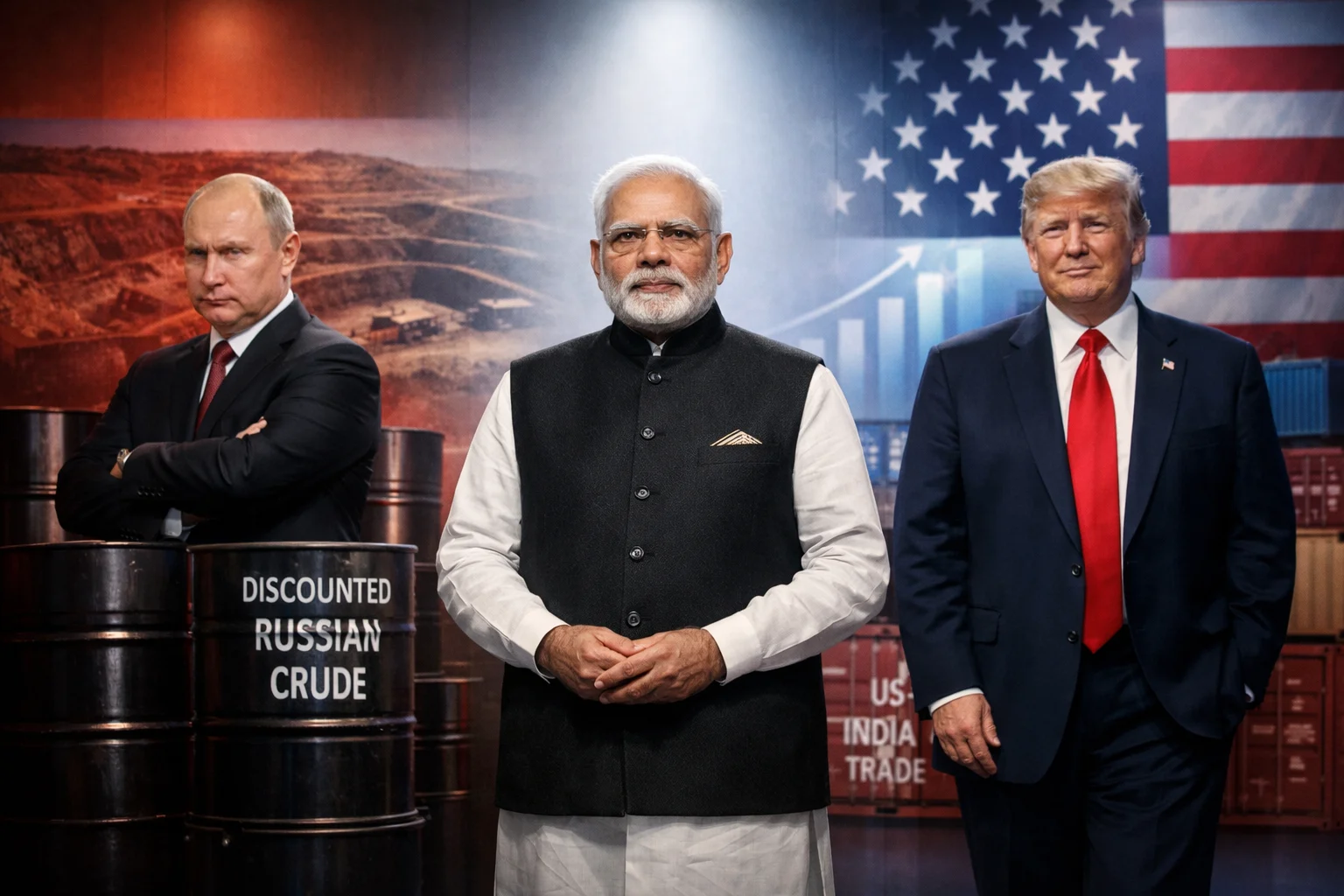
Russia is openly signaling concern about India Russia relations after US deal, and the message is no longer subtle.
In recent days, Russia’s Deputy Foreign Minister Sergei Ryabkov publicly stated that Moscow hopes India’s new agreement with the United States will not damage Delhi–Moscow ties. That statement alone tells you something important: inside Russian geopolitical circles, there is visible anxiety.
The core question being debated in Moscow right now:
Is India gradually moving away from Russia?
Let’s break down what triggered this concern.
Table of Contents
The Mali Lithium Shock: A Strategic Withdrawal
One major development that alarmed Russia was India’s reported exit from a Russia-backed lithium project in Mali, citing security risks.
International headlines read: “India pulls out of Russia-backed Mali lithium project.”
Lithium is not just another mineral — it is strategic. It powers electric vehicles, batteries, and future energy infrastructure. Russia had invested heavily in Mali, hoping to strengthen its footprint in Africa.
India’s withdrawal — even if officially for security reasons — is being interpreted in Moscow as a geopolitical signal.
In Russian strategic circles, the thinking is:
- If India exits a Russia-backed project,
- And simultaneously deepens economic ties with Washington,
- Then this may not be coincidence.
This is the first visible crack feeding the debate over India Russia relations after US deal.
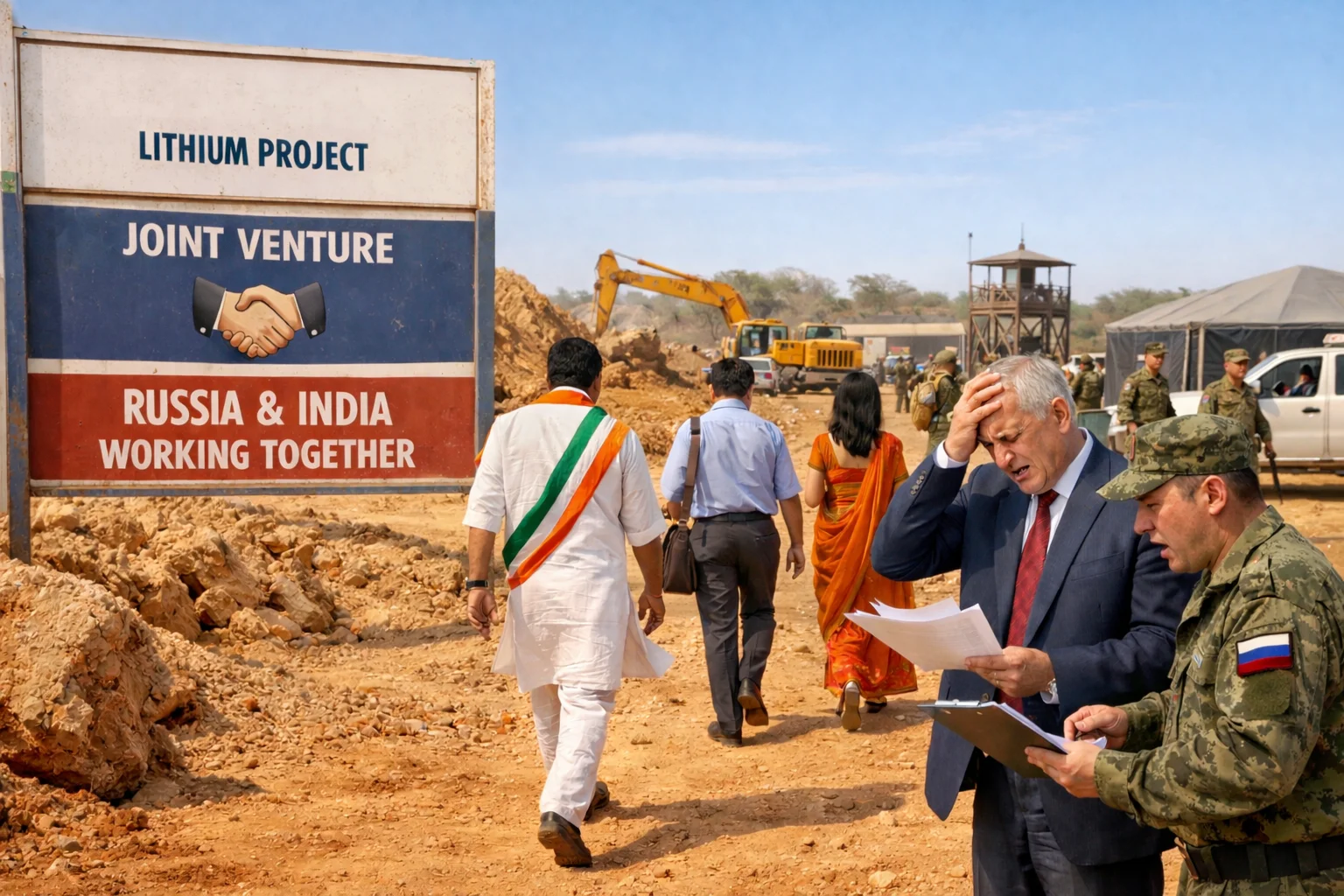
Image credit: AI-generated using ChatGPT by OpenAI
The Oil Question: Will India Reduce Russian Imports?
Energy has been the strongest pillar of India–Russia ties since 2022.
Russia offered discounted crude.
India increased imports significantly.
Both benefited.
But now the situation is changing.
US pressure mechanisms have increased. Reports suggest that:
- The US is closely monitoring whether India purchases Russian oil directly or indirectly.
- Tariff relaxations granted to India may not be unconditional.
- If US media reports show a spike in Russian oil imports, trade benefits could be reconsidered.
Russian Foreign Minister Sergey Lavrov has claimed:
The US is trying to prevent countries, including India, from buying discounted Russian crude.
This is framed inside Russia as economic warfare against its energy exports.
However, data suggests something important:
India is unlikely to stop buying Russian oil entirely.
But volumes may gradually decline.
That subtle reduction alone is enough to trigger strategic anxiety in Moscow regarding India Russia relations after US deal.
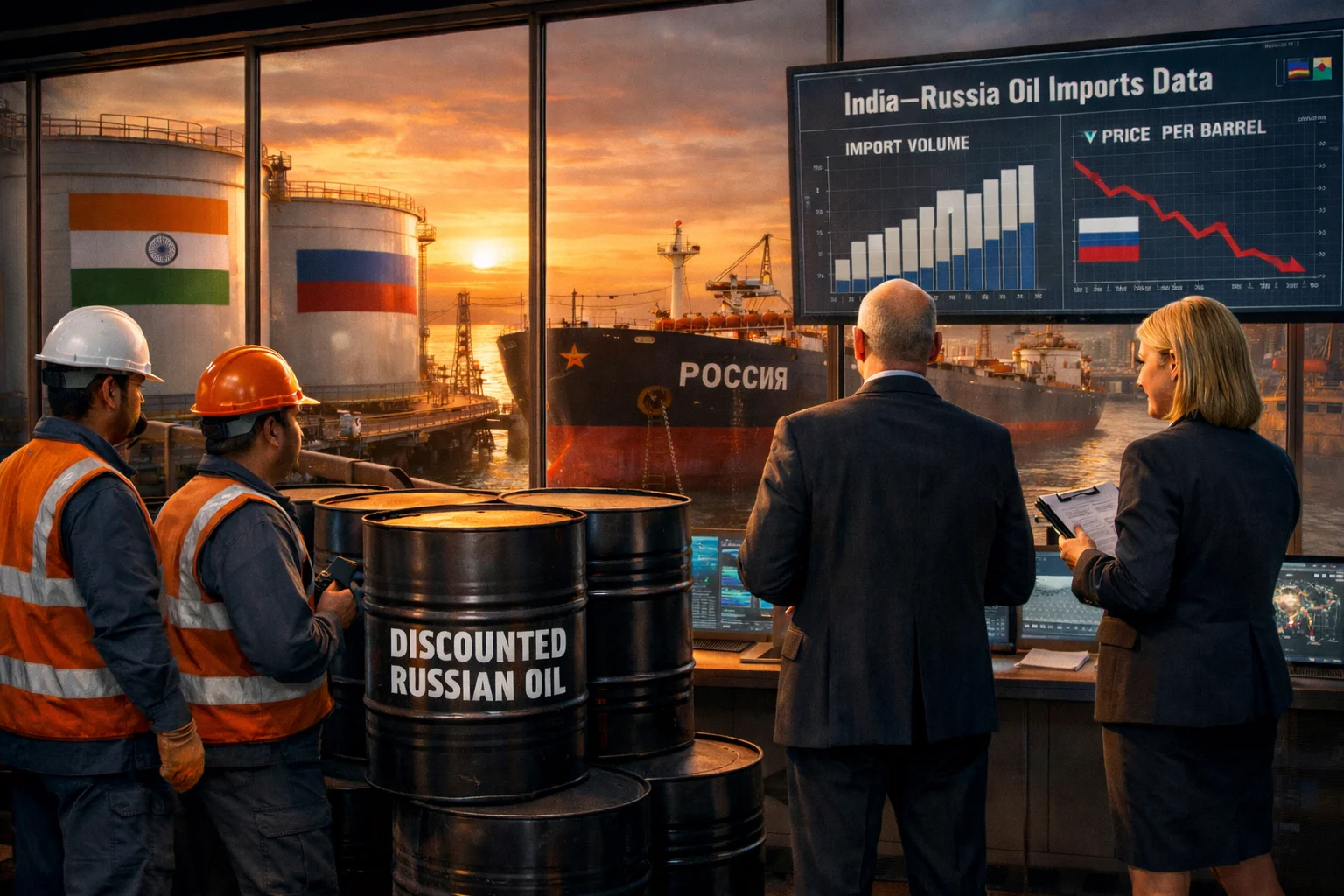
Image credit: AI-generated using ChatGPT by OpenAI
Russia’s Real Constraint: It Has No Leverage
Here’s the uncomfortable reality for Moscow:
Russia has very limited economic leverage over India.
Consider this:
- The US buys large volumes of Indian exports.
- India runs a significant trade surplus with the US.
- Russia, in comparison, imports very little from India — roughly a few billion dollars.
That imbalance matters.
Russian analysts themselves acknowledge:
- India is projected to become the world’s third-largest economy by 2030.
- Russia has already lost access to major US and European markets due to sanctions.
- Losing the Indian market would be strategically disastrous.
Which means:
Russia cannot afford retaliation.
Even if India reduces oil imports, Moscow is unlikely to:
- Punish India economically
- Pivot aggressively toward Pakistan
- Or damage long-term defense ties
Because Russia needs India’s market access more than India needs Russian leverage.
This reality is shaping how India Russia relations after US deal are evolving.
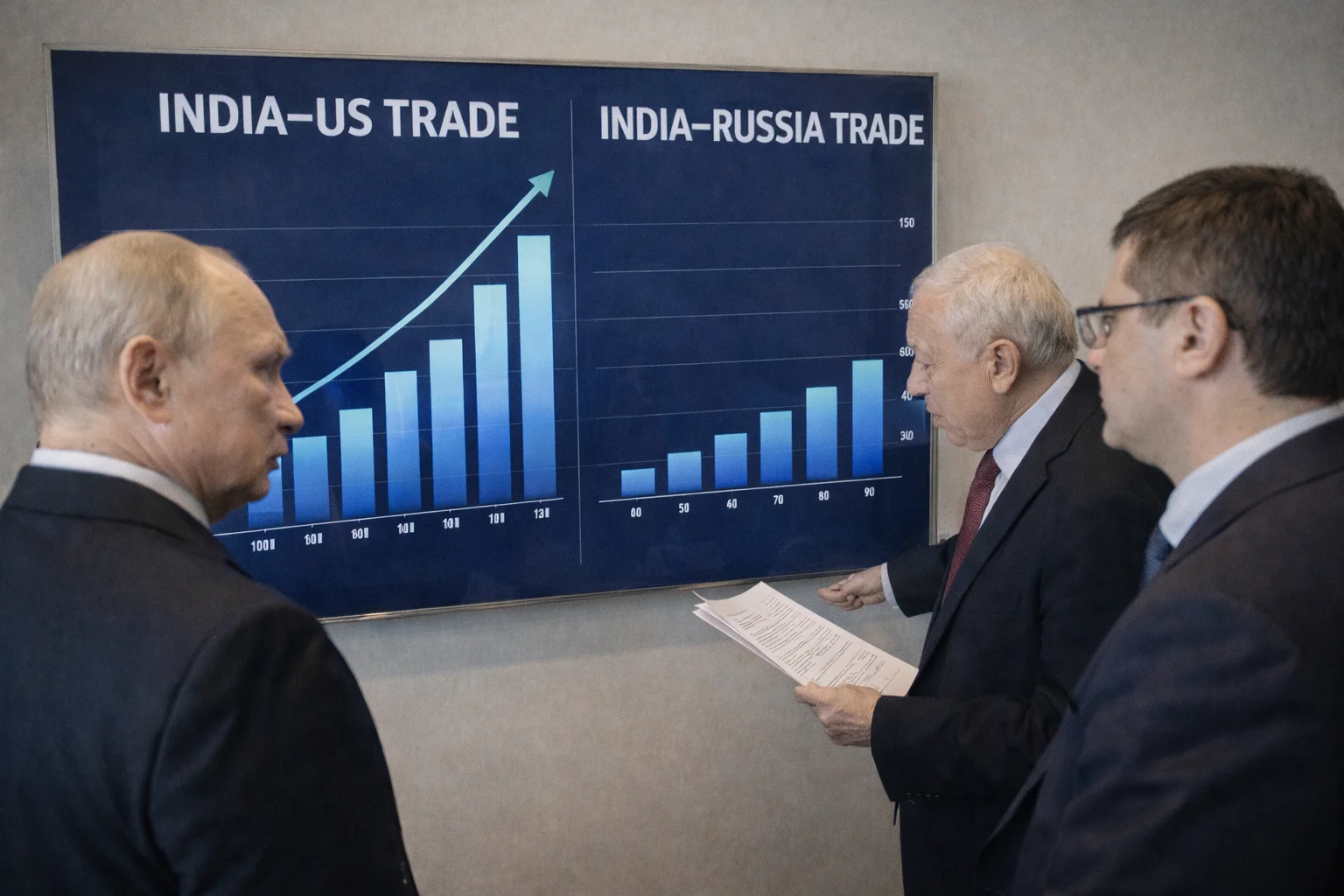
Image credit: AI-generated using ChatGPT by OpenAI
The China Factor: Why India Matters Even More
Another important data point:
Russia–China trade growth is slowing compared to earlier years.
Russia cannot easily flood Chinese markets with exports.
That leaves India as one of the few large, open, high-growth markets still available to Russia.
If Moscow alienates India, its economic isolation deepens further.
This is why Russian geopolitical commentators are writing:
Russia will not punish India for reducing oil imports.
That is not emotional diplomacy — that is economic compulsion.
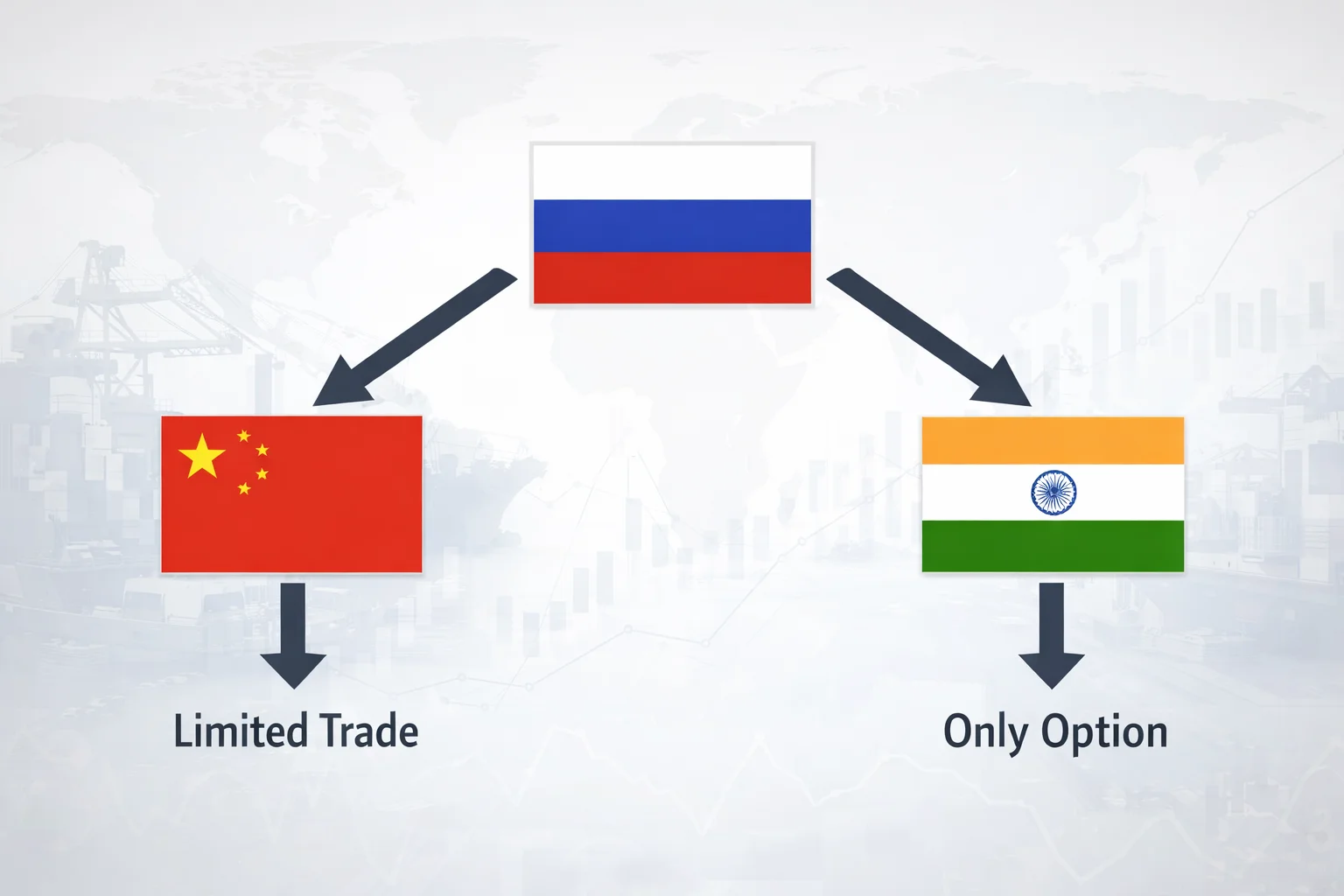
Image credit: AI-generated using ChatGPT by OpenAI
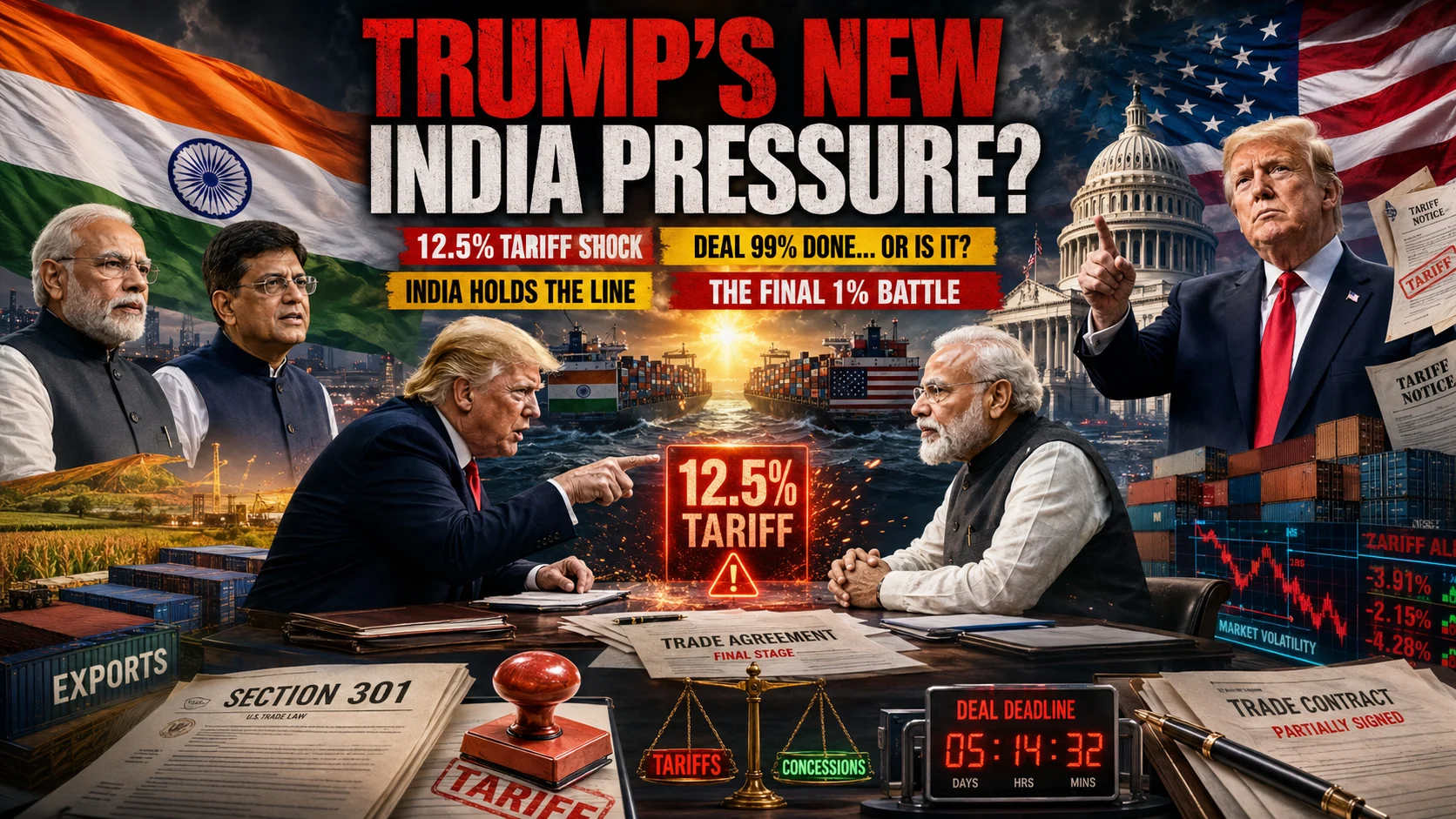
The US Trade Deal: Why It Changes Everything
According to domestic financial assessments (including SBI analysis), India’s trade surplus with the US could rise substantially after the new trade arrangement.
That gives Washington leverage.
When a country benefits economically from a partner, that partner gains influence.
Russia understands this dynamic.
And that is exactly why officials are publicly stating:
The US deal should not affect Delhi–Moscow ties.
This is reassurance messaging — not confidence.
The debate in Moscow today is not whether relations will collapse.
The debate is:
Will India gradually rebalance toward Washington while maintaining minimum strategic ties with Moscow?
That is the heart of the concern surrounding India Russia relations after US deal.
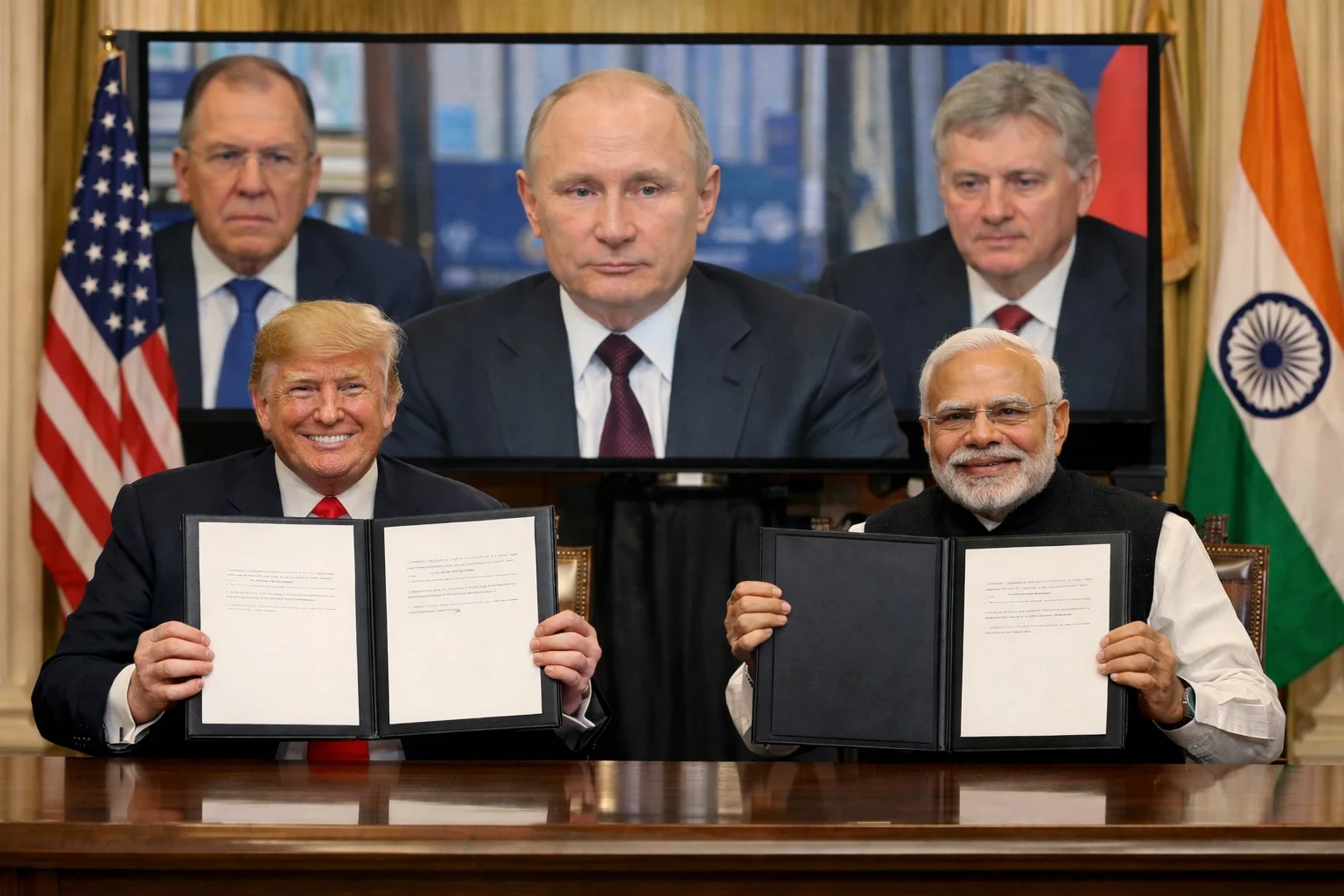
Image credit: AI-generated using ChatGPT by OpenAI
What Could Russia Do Next?
Russia has very limited strategic options, but there are possibilities:
- Offer deeper discounts on oil.
- Propose a Free Trade Agreement.
- Increase purchases of Indian goods to reduce trade imbalance.
- Expand cooperation in non-sanctioned sectors.
The real test will come at the next BRICS summit or high-level India–Russia meeting.
Will President Putin announce:
- Increased Russian imports from India?
- New sectoral access for Indian exporters?
- Concrete trade balancing measures?
If not, gradual structural weakening of ties becomes likely.
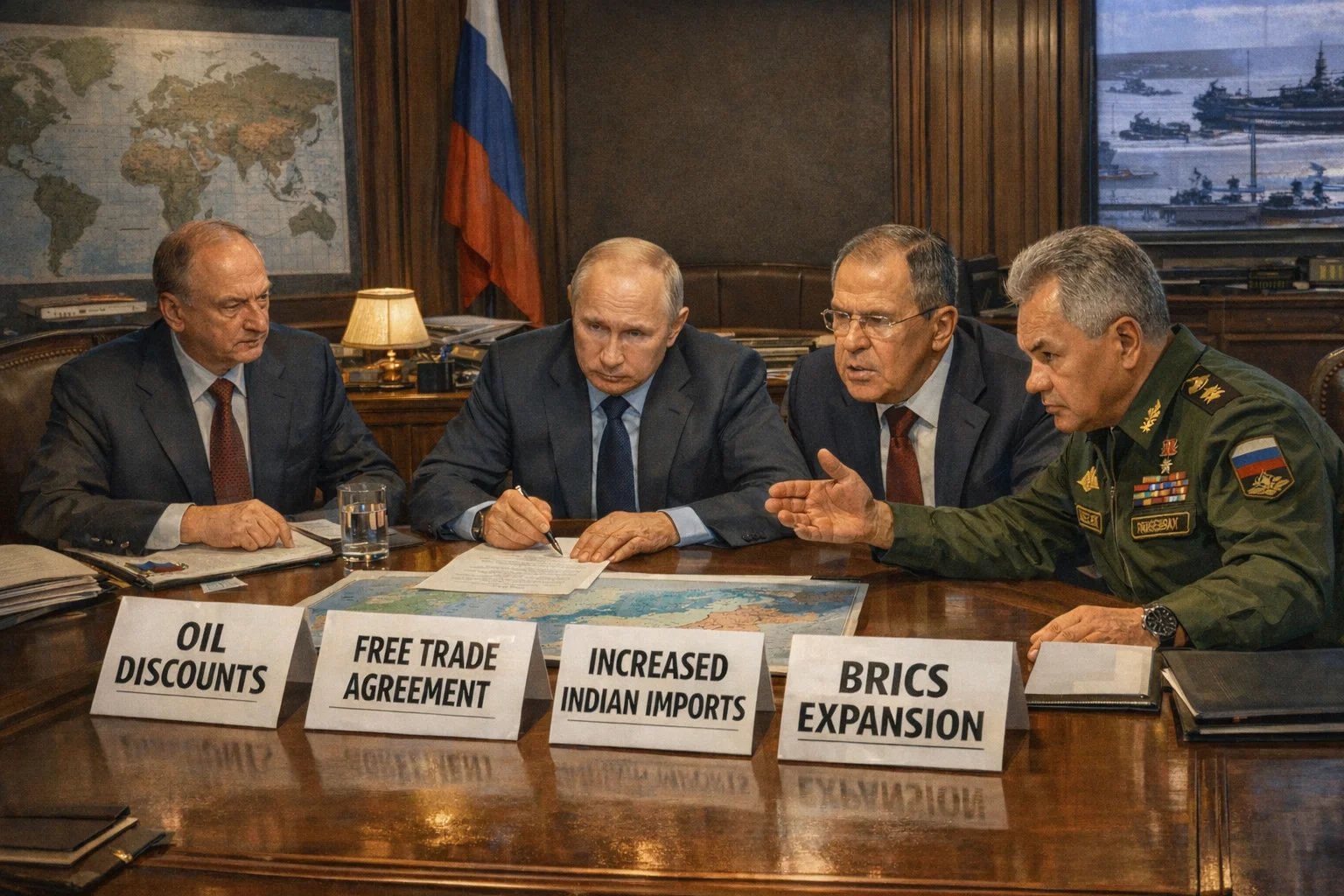
Image credit: AI-generated using ChatGPT by OpenAI
Final Strategic Assessment
India is not abandoning Russia.
But India is clearly diversifying.
The shift is subtle, not dramatic.
Russia cannot retaliate.
The US now has economic leverage.
India has strategic flexibility.
Which means the future of India Russia relations after US deal will depend on one thing:
Whether Moscow adapts economically — or relies only on legacy strategic goodwill.
The old energy-only equation may no longer be enough.
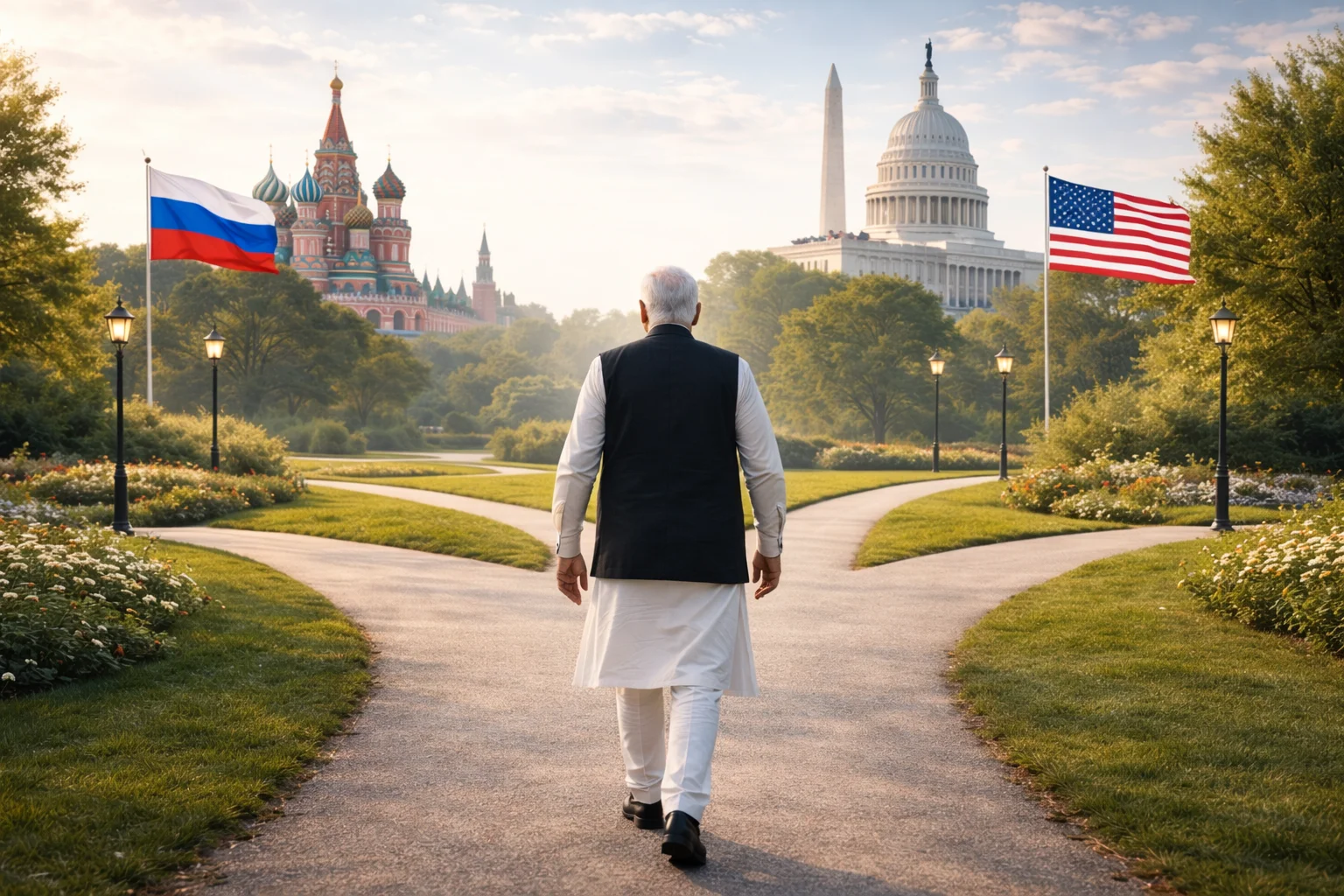
Image credit: AI-generated using ChatGPT by OpenAI
FAQs
Is India completely stopping Russian oil imports?
No. A complete stop is highly unlikely. However, volumes may gradually reduce depending on pricing, sanctions, and US pressure.
Why is Russia worried about India’s US deal?
Because stronger India–US trade ties increase Washington’s economic leverage over India, potentially reducing Russia’s influence.
What was the Mali lithium project controversy?
India reportedly exited a Russia-backed lithium project in Mali citing security concerns, which triggered geopolitical speculation.
Can Russia punish India economically?
Realistically, no. Russia imports relatively little from India and cannot risk losing access to India’s growing market.
Will India–Russia relations collapse?
Unlikely. But the relationship may rebalance and become less energy-dominated over time.
Share Your Views
Geopolitics is shifting rapidly.
Do you believe India should:
- Continue large-scale Russian oil imports?
- Gradually reduce dependence?
- Or fully pivot toward Western trade networks?
Share your view in the comments.
And if you want deeper analysis on India–Russia–US strategic equations, stay connected for upcoming breakdowns in Economy & Trade , World Affairs and Indian-Affairs.
Read about India US 18 Percent Tariff Agreement and India Russia Oil Trade.
Sources : Reuters, Indian Express, India Today, Eestieest – Russian Media, Times of India , Wion and more.