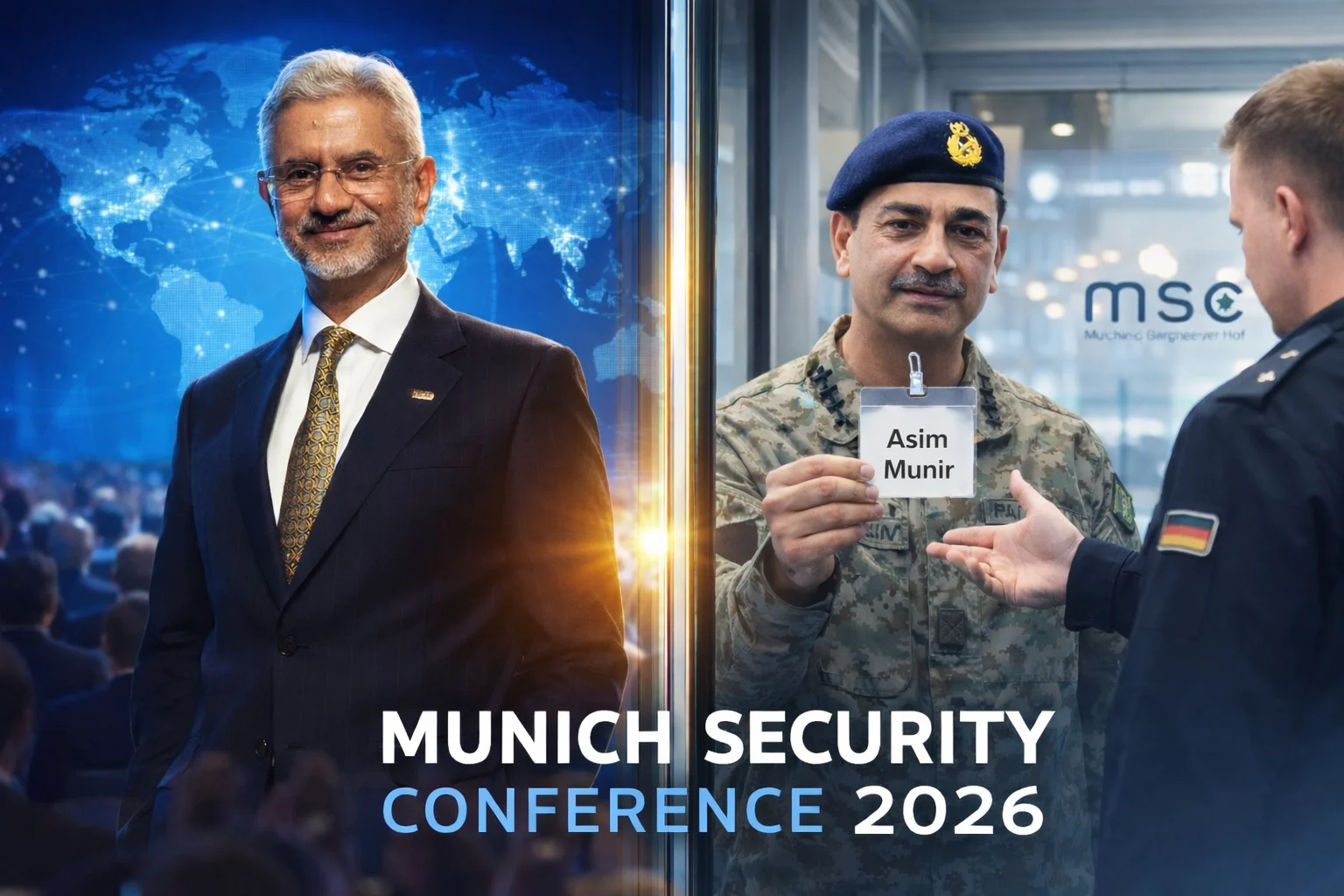
The halls of the Bayerischer Hof often serve as a mirror to the shifting sands of global power. At the Munich Security Conference 2026, this mirror reflected two entirely different realities for South Asia. While one nation projected the calm confidence of a rising global arbiter, the other struggled with the basic mechanics of international recognition. This was not just a meeting of diplomats; it was a visual representation of strategic divergence.
Table of Contents
The Identification Crisis in Munich
One of the most discussed moments of the Munich Security Conference 2026 did not happen on a stage, but at a security checkpoint. Pakistan’s Army Chief, Field Marshal Asim Munir, was stopped by security personnel and required to produce his identification card before entering the venue.
The optics were telling. A viral video showed a security official instructing the Field Marshal to “flip your ID card” so it could be properly read. While standard protocol, the incident highlighted a persistent recognition deficit. Former Pakistani military officer Adil Raja noted that on the global stage, “no one knows him,” contrasting his absolute domestic authority with his anonymity in international forums.
UPDATE!!
— HTN World (@htnworld) February 14, 2026
Field Marshal Army Chief Asim Munir arrives for Munich Security Conference in Germany pic.twitter.com/v4PQpW4z77
Further complicating this presence were vocal protests organized by the Jeay Sindh Muttahida Mahaz (JSMM), who addressed a formal statement to the UN and EU expressing “deep shock and regret” over Munir’s invitation. These protests underscored the domestic unrest that shadows the Pakistani military’s attempts to project a global face.
Sources: News18, Times of India
India’s Strategic Autonomy: A Global Necessity
In contrast, India’s presence at the Munich Security Conference 2026 was defined by high-level engagement and intellectual leadership. Dr. S. Jaishankar utilized the forum to articulate a vision of “strategic autonomy” that is no longer a choice but a global necessity.
Responding to claims regarding pressure on energy imports, the message was clear: India’s decisions are guided by commercial considerations—availability, cost, and risk—much like any other sovereign entity. The External Affairs Minister emphasized that strategic autonomy “runs deep” across the Indian political spectrum, rooted in the nation’s history and evolution.
#FPVideo: At the Munich Security Conference, India’s External Affairs Minister S Jaishankar firmly reiterated New Delhi’s commitment to “strategic autonomy,” stressing that India’s energy decisions are driven by national interest, not external pressure. Responding to questions on… pic.twitter.com/LpV8qpgu5z
— Firstpost (@firstpost) February 15, 2026
The German Recalibration: Admitting the BRICS Mistake
A significant breakthrough occurred during a media interaction involving the German Foreign Minister. Johann Wadephul admitted that Europe had made a “mistake” by alienating countries like India and Brazil by viewing them solely through the BRICS framework.
German Foreign Minister Wadephul:
— Clash Report (@clashreport) February 15, 2026
We were wrong to alienate countries simply because they were part of BRICS.
Why not focus on those shared interests and shared values? pic.twitter.com/7mKucINavg
He noted that while ideological differences persist with other members like Russia and China, Europe shares “a lot in common” with India. This acknowledgment marks a fundamental shift in European thinking—moving away from American-centric binary alignments and toward a more nuanced partnership with New Delhi.
| Country | Status at MSC 2026 | Key Focus |
|---|---|---|
| India | Global Necessity | Strategic Autonomy & G4 Reforms |
| Pakistan | Protocol Crisis | Recognition & Transactional Ties |
| Germany | Recalibrating | Partnership with Democracies |
Cartographic Diplomacy: The USTR Map Controversy
The volatility of regional geopolitics was further evidenced by a controversy involving the Office of the United States Trade Representative (USTR). On February 7, 2026, the USTR posted a map of India that depicted the entire region of Jammu and Kashmir—including Pakistan-occupied Kashmir (PoK) and Aksai Chin—as Indian territory.
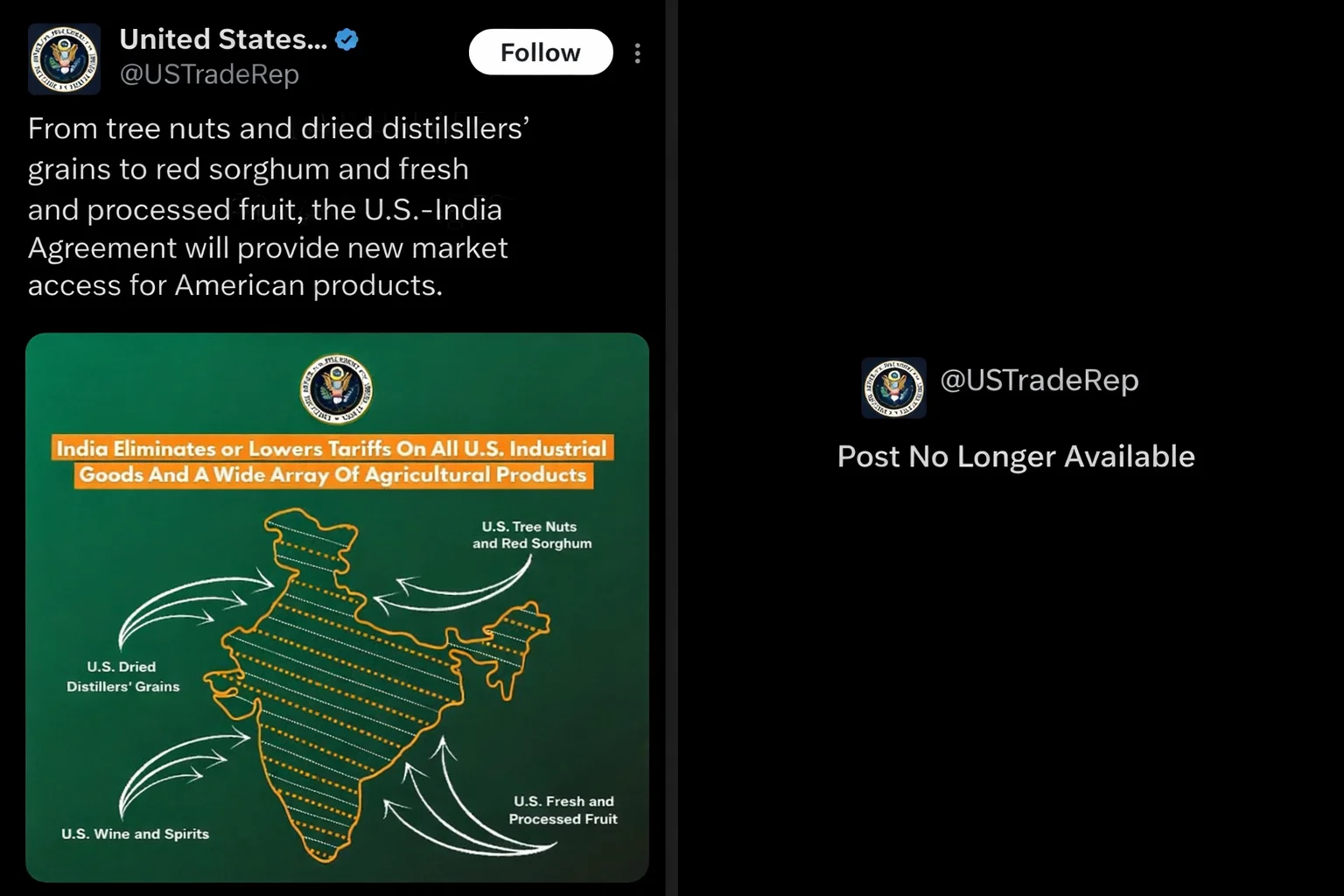
While the post was later deleted following protests from Islamabad, the initial act was viewed by many as a significant, albeit temporary, departure from the long-standing American practice of marking these areas as disputed. This incident reveals the internal tug-of-war within the U.S. administration as it balances its “global necessity” partnership with India against regional stability.
Source: Republic
The Humanitarian Crisis: Imran Khan’s Health and the Cricket World’s Silence
Behind the high-level diplomacy of the Munich Security Conference 2026, a humanitarian crisis continued to unfold in Rawalpindi. Former Prime Minister Imran Khan has reportedly lost 85% of the vision in his right eye due to central retinal vein occlusion (CRVO), a condition caused by a blood clot.
The silence of the Pakistani cricketing elite on this matter has been deafening. Former Indian cricketer Ajay Jadeja pointedly noted this discrepancy, observing that while many Indian cricketers show support, those who played with Khan and whose careers he helped build remain silent. This silence is a grim indicator of the climate of fear and the absolute dominance of the military establishment over civilian life.
I have seen many Indians voicing support for Imran Khan, but the Pakistani cricketers who played with him & current Pakistani cricketers are silent when he needs their support
— Ajay Jadeja (@AjayJadeja171) February 13, 2026
This shows the fear of current ruling party and Pakistani military who runs the country on their own pic.twitter.com/qMCuVSqomY
Sources: Times Now
Bangladesh’s Transition: A New Regional Dynamic
The regional landscape shifted further with the return of the Bangladesh Nationalist Party (BNP) to power. Tarique Rahman took the oath as Prime Minister on February 17, 2026. India’s participation, led by Lok Sabha Speaker Om Birla, signaled a commitment to democratic values and a desire to constructively advance a multifaceted relationship.
The transition in Dhaka is a litmus test for regional cooperation. While the BNP has signaled an “inclusive” foreign policy, the invitation of various regional leaders suggests a move toward a more balanced, multi-aligned stance in South Asian affairs.
Conclusion: The Divergence of Statecraft
The events surrounding the Munich Security Conference 2026 serve as a definitive marker of South Asia’s future. India has effectively decoupled its growth from regional baggage, positioning itself as a reliable, independent-minded pillar of the global order. Pakistan, meanwhile, remains trapped in a cycle of transactional diplomacy and internal repression.
The question remains: Can a nation project power abroad when it is fundamentally at odds with its own people at home?
Frequently Asked Questions
What was the protocol incident involving Asim Munir at the Munich Security Conference 2026?
Pakistan’s Army Chief was briefly stopped by a security official at the conference entrance and asked to properly display his ID card. The incident, caught on video, showed him being asked to “flip” his card so it was visible, highlighting the strict procedural equality of the forum.
Why did the German Foreign Minister mention a “mistake” regarding India and BRICS at Munich Security Conference 2026?
Minister Johann Wadephul admitted that Europe had previously alienated India and Brazil by viewing them only through the lens of the BRICS grouping. He stated that Europe now recognizes shared values with India that distinguish it from other members like Russia and China.
What is the current status of Imran Khan’s health?
As of February 2026, Imran Khan has lost approximately 85% of the vision in his right eye due to a blood clot (CRVO). The Supreme Court of Pakistan has ordered specialized medical treatment after his legal team alleged medical negligence in jail.
What happened with the U.S. map of India in February 2026?
The USTR posted a map showing PoK and Aksai Chin as part of India during a trade deal announcement. The post was deleted a few days later following protests from Pakistan, reverting to the standard U.S. depiction of these areas as disputed.
Who represented India at the swearing-in of Bangladesh’s new Prime Minister?
Lok Sabha Speaker Om Birla led the Indian delegation to Dhaka for Tarique Rahman’s oath-taking ceremony on February 17, 2026. This representation underscored India’s support for the democratic transition in its neighboring country.
Share Your Views
Does the Munich Security Conference 2026 mark the end of the “hyphenated” India-Pakistan narrative in global eyes? As India cements its role as a global necessity, the gap between these two neighbors seems wider than ever.
We invite you to share your thoughts on whether Pakistan can ever regain its lost diplomatic ground or if the military-led model has reached its final limit.
Explore more about World Affairs , Indian Affairs and Strategic Depth.
Respect to author, some superb information .