Table of Contents
Why France Is Pushing a Social Media Ban for Children
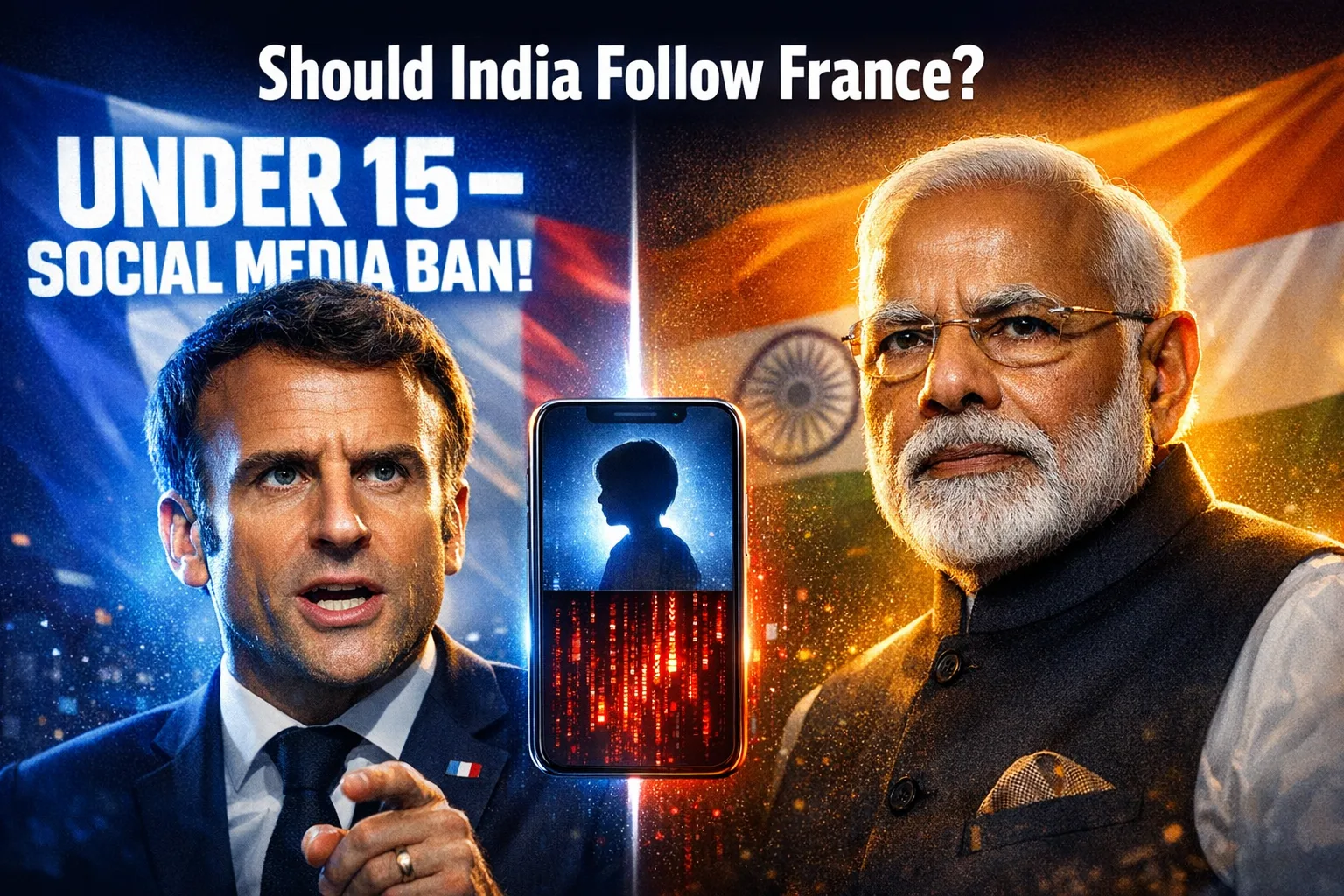
The debate around the France social media ban for children has intensified after President Emmanuel Macron publicly supported strict age-based restrictions on platforms like Instagram, Facebook, YouTube, and WhatsApp.
France has already approved measures restricting social media access for children under 15. The idea is simple: minors should not be able to create accounts without age verification and parental consent.
Macron’s position is direct.
Children’s brains, he argues, are not for sale to algorithms.
This debate gained renewed attention as India hosted the AI Impact Summit in New Delhi, where digital governance and AI regulation became central themes.
Our children's brains are not for sale. pic.twitter.com/TQB9ehSrcC
— Embassy of France in the U.S. (@franceintheus) January 28, 2026
Sources: News 18
Macron’s Clear Message on Algorithms and Influence
Macron has repeatedly targeted the influence of American and Chinese social media algorithms.
His concern is not country-specific hostility—it is about algorithmic control.
Platforms like YouTube or TikTok can amplify certain content overnight. Algorithms decide who becomes visible, which narratives trend, and what information spreads faster.
This concentration of influence, Macron argues, threatens democracy.
Polarization increases.
Anonymous hate accounts multiply.
Societies fragment into ideological camps.
The metaphor he uses is powerful: left wing and right wing are parts of the same airplane. If both wings fight each other, the plane cannot fly.
That polarization, he believes, is being accelerated by algorithm-driven platforms.
Sources: Bloomberg
Age Verification and Platform Accountability
France’s policy direction includes:
- Mandatory age verification mechanisms
- Preventing children under 15 from independently registering
- Increased platform accountability for harmful content
- Stronger moderation timelines
The broader European push also includes Germany and Australia considering similar age-based restrictions.
India has reportedly shortened the response time for removing harmful content to three hours in certain cases—indicating regulatory tightening.
This is not just about children.
It is about digital order.
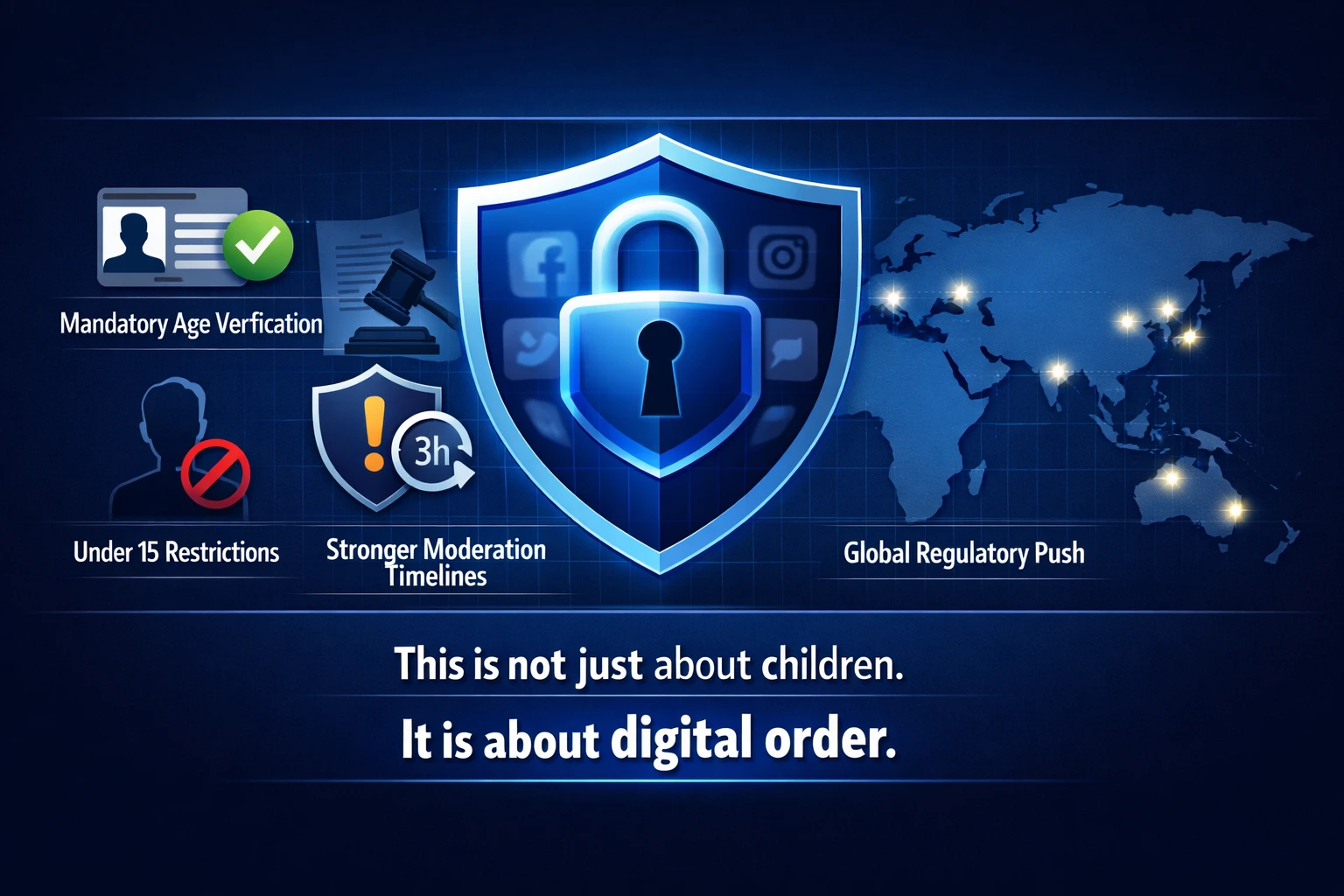
Image credit: AI-generated using ChatGPT by OpenAI
Sources: Reuters, National Assembly- France
Digital Sovereignty: Who Controls the Algorithm?
The debate expands beyond age limits into digital sovereignty.
When a nation relies on foreign-owned platforms for communication, it effectively gives algorithmic power to external entities.
At times of geopolitical tension, could algorithmic manipulation influence narratives inside another country?
That is the concern.
Macron has framed this as reclaiming digital control—not isolating France, but ensuring national autonomy over public discourse.
Digital sovereignty is no longer abstract.
It is strategic.
Source: Anadolu Agency (AA)
Free Speech vs Regulation Debate
Critics argue that restricting social media access or tightening algorithm regulation threatens free speech.
Macron counters that unregulated “free speech” can enable hate speech, racism, and misinformation.
French President Macron:
— Clash Report (@clashreport) February 18, 2026
Free speech is a pure bullshit if nobody knows how you are guided through this so-called free speech—especially when it is to be guided from one hated speech to another hated speech.
I just want to have a transparent road through these different… pic.twitter.com/pFAQ62SsxU
The question becomes:
Is freedom meaningful without accountability?
On platforms like X (formerly Twitter), debates around moderation have intensified globally. Elon Musk’s approach to open speech has sparked both praise and criticism.
— Elon Musk (@elonmusk) February 18, 2026
Macron’s stance suggests that transparency and order must coexist with freedom.
Otherwise, polarization becomes profitable.
What This Means for India
India now faces a strategic policy choice.
Should it follow France and impose age-based restrictions for minors under 16?
Should it strengthen algorithm transparency requirements?
Or should it prioritize open access?
✅ Thanks for joining the movement. https://t.co/CeYyjp290t
— Emmanuel Macron (@EmmanuelMacron) February 18, 2026
Cases involving online influence on minors have raised concerns domestically. At the same time, India’s vast youth population depends heavily on digital platforms for education, communication, and opportunity.
The decision is not simple.
It involves balancing:
- Youth mental health
- Democratic debate
- Platform innovation
- National digital sovereignty
India’s position remains under debate.
Sources: WION
The Larger Policy Shift
This is not just a French domestic issue.
It signals a global shift toward stronger social media governance.
Europe is moving toward tighter platform control.
Australia is debating age bans.
Germany is evaluating stricter regulation.
The central question is no longer whether algorithms influence society.
It is how much influence governments are willing to allow.
As AI integration deepens and algorithmic power expands, the governance conversation will only intensify.
Sources: Economic Times
A Debate India Cannot Ignore
The France social media ban for children reflects a deeper global anxiety about algorithmic influence, youth vulnerability, and digital sovereignty.
The debate is no longer about whether social media affects democracy.
It is about who controls its direction.
Should India adopt age-based restrictions like France — or pursue a different regulatory path suited to its unique digital landscape?
Share your view in the Comments below.
FAQs
Is France banning social media for children?
France has approved measures requiring age verification and restricting independent social media registration for children under 15.
What age restriction is France proposing?
Children under 15 cannot create social media accounts without proper age verification and parental oversight.
Why does Macron want to regulate social media?
Macron argues that algorithm-driven platforms amplify polarization, misinformation, and harmful content, particularly affecting minors.
Should India ban social media for minors?
India has not implemented a blanket ban, but policy discussions around age restrictions and faster content removal are ongoing.
What is digital sovereignty?
Digital sovereignty refers to a country’s ability to control its digital infrastructure, data flows, and algorithmic influence without excessive foreign dependence.
How do algorithms influence democracy?
Algorithms determine what content users see, potentially amplifying specific narratives and shaping political discourse at scale.
Shaping Democracy in the Algorithm Era
Digital platforms shape the next generation’s worldview.
The real policy challenge is ensuring that influence strengthens democracy—rather than fragments it.
Explore more about World Affairs and Indian Affairs.