Table of Contents
A Preemptive Strike on Tehran
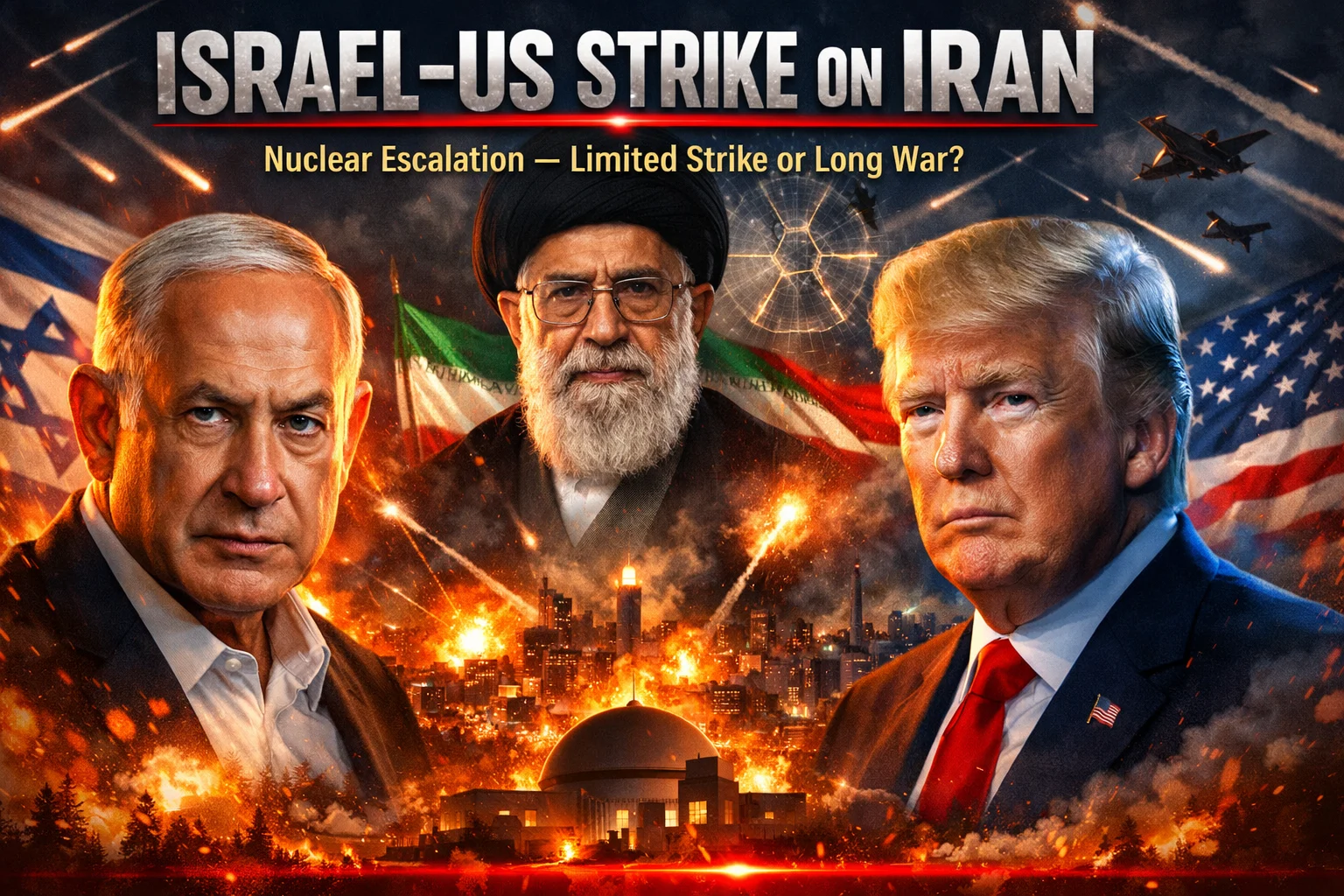
The Israel US attack on Iran marks one of the most serious escalations in Middle East tensions in recent years.
Israeli authorities confirmed precision strikes on multiple locations inside Iran, including areas around Tehran. Missile footage continues to circulate as operations reportedly remain active. Israel has declared a nationwide emergency, warning citizens of possible Iranian retaliation.
🚨 HUGE! ISRAEL HAS LAUNCHED PREVENTATIVE ATTACK AGAINST IRAN.
— Megh Updates 🚨™ (@MeghUpdates) February 28, 2026
EXPLOSIONS reported in Tehran. Air raid sirens sound across Israel 💥
— Iran vs Israel/US….? pic.twitter.com/KdBWiBrLjS
US embassies across the region, including in Qatar, were instructed to adopt security precautions.
This was not retaliation.
This was preemption.
That distinction matters.
Sources: Times of Israel, US Embassy Doha, Times of Israel
Why Israel Says It Acted Now
Benjamin Netanyahu has long argued that Iran’s nuclear trajectory poses an existential threat.
His position is clear:
- Iran is advancing its missile capabilities.
- Iran is enriching uranium at dangerous levels.
- A nuclear-armed Iran would threaten future generations of Israelis.
Israel’s doctrine in this case appears rooted in preventive defense — strike before your adversary reaches irreversible capability.
But here is the debate.
Netanyahu has warned since the 1990s that Iran was only “months away” from a bomb.
Yet Iran has not tested a nuclear weapon.
So what changed now?
The Netanyahu Nuclear Timeline Debate
Over decades, Netanyahu has repeatedly warned that Iran was just:
- A few years away
- A few months away
- Even weeks away
From building a nuclear weapon.
Critics point to these repeated timelines as overstatements.
Here's 30 years of Netanyahu telling you Iran is days away from a nuclear bomb. pic.twitter.com/yUcFI4RoVO
— Parody Jeff (@BackupJeffx) February 26, 2026
Supporters argue Israel’s covert actions — cyber operations, sabotage, and alleged targeting of nuclear scientists — repeatedly delayed Iran’s progress.
Both interpretations coexist.
The real question today is not what was said in 2012 or 2015.
The real question is whether Iran is genuinely closer now than ever before.
What the IAEA Report Reveals
International Atomic Energy Agency (IAEA) reports have added urgency.
According to confidential findings, Iran has enriched uranium up to 60% purity — close to weapons-grade levels — and has stored portions in underground tunnel complexes.
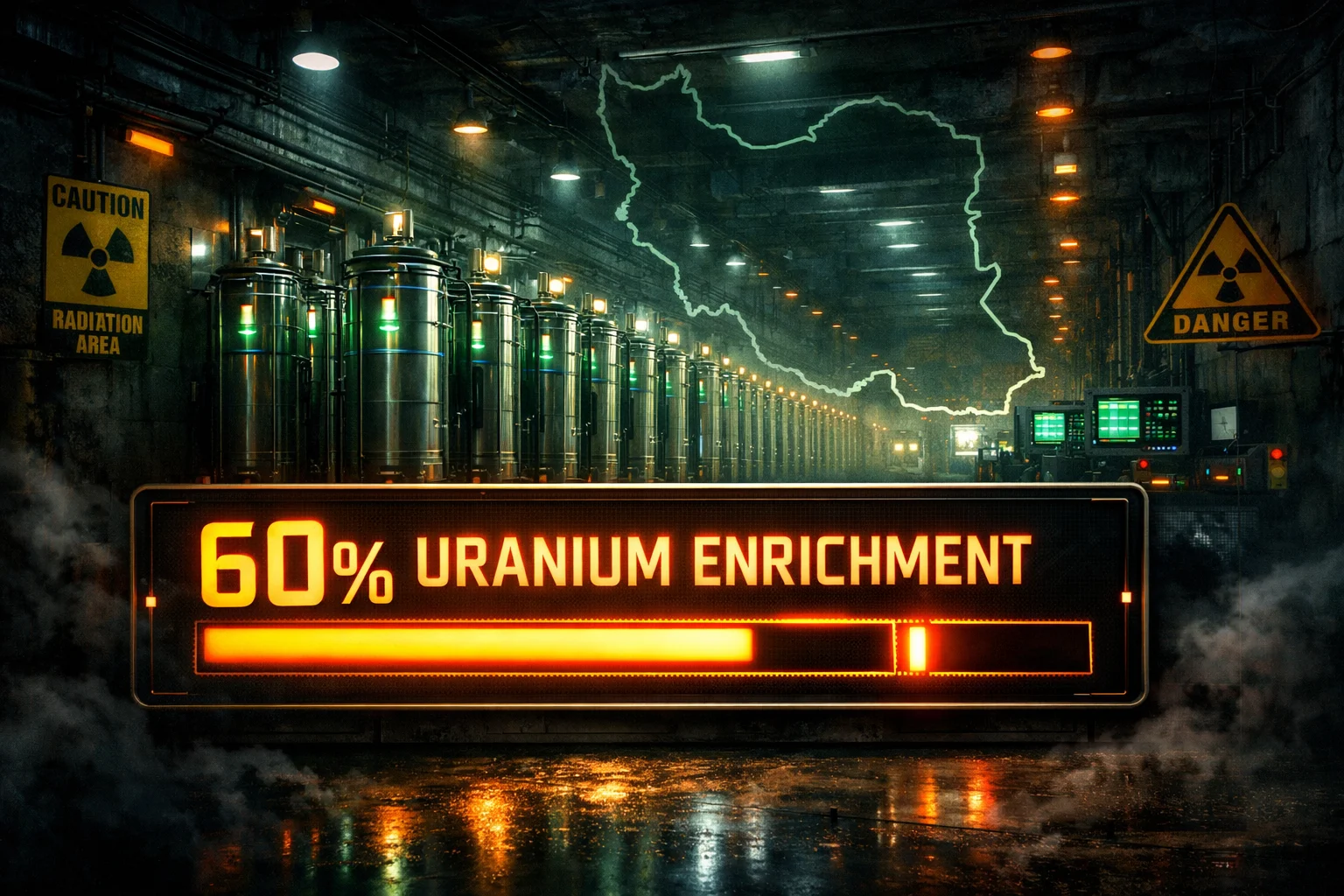
Image credit: AI-generated using ChatGPT by OpenAI
Weapons-grade uranium typically requires enrichment to around 90%.
Technically, 60% enrichment significantly reduces the breakout time to 90%.
Intent, however, remains uncertain.
Capability and intention are not identical.
But in strategic planning, capability often drives action.
Sources: IAEA, Times of India
Trump’s “Big Decision” Moment
Donald Trump has publicly described Iran’s leadership as “very dangerous” and signaled that the US faces a major decision.
He stated he prefers a peaceful resolution but acknowledged the difficulty of negotiations.
PRESIDENT TRUMP on IRAN: We have a big decision to make that’s not easy. I’d rather do it the peaceful way, but I want to tell you that these are very dangerous and difficult people. pic.twitter.com/QeeNeq6EFQ
— Department of State (@StateDept) February 27, 2026
Trump has historically positioned himself as one of the most pro-Israel presidents in US history. He has echoed Israeli warnings that Iran’s missile and nuclear development threatens both Israel and the United States.
He has also referenced Iran’s internal unrest and allegations of civilian repression.
The question now is strategic:
Will the US limit involvement to support operations — or escalate further?
Limited Strike — or Long War?
The United States has already deployed aircraft carriers and additional assets in the region.
History offers caution.
The US entered Afghanistan expecting rapid results.
The US entered Iraq anticipating swift stabilization.
Both evolved into prolonged conflicts.
Vice President JD Vance has stated there is no intention of a long occupation-style conflict.
But war rarely follows initial plans.
Once escalation begins, control narrows.
That uncertainty defines this moment.
Sources: The Washington Post
Could the US Get Stuck Again?
If Israel’s objective is limited — degrade nuclear facilities, target military assets, deter escalation — the conflict may remain contained.
If the objective expands toward regime change, long-term instability becomes likely.
Iran is not Iraq.
Iran has:
- Regional proxies
- Ballistic missile capacity
- Asymmetric retaliation options
A sustained campaign would trigger broader regional reactions.
What Happens If Iran Retaliates?
Iran is expected to respond.
Potential responses include:
- Missile strikes on Israeli cities
- Targeting US bases in the region
- Activation of allied non-state actors
- Cyber operations
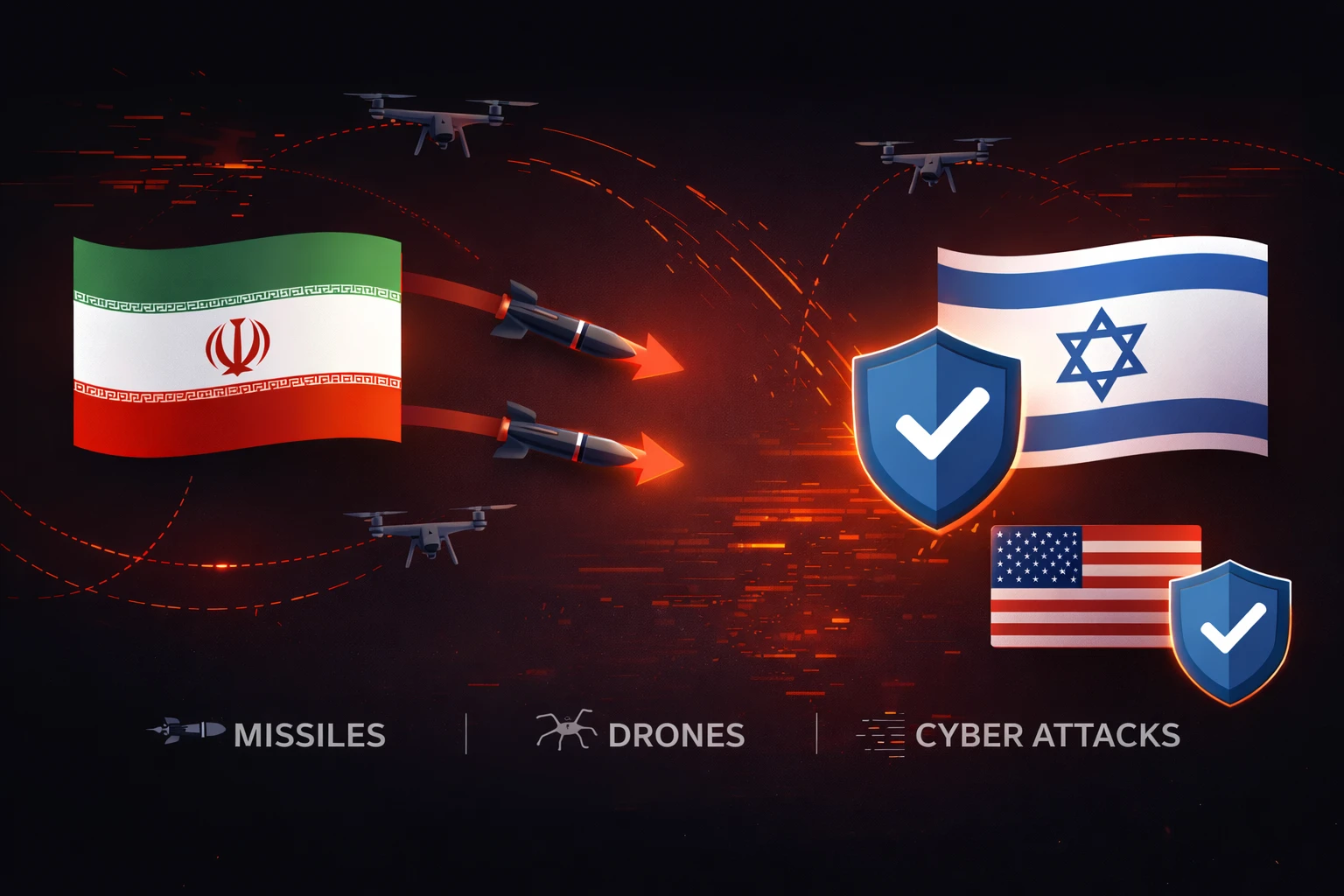
Image credit: AI-generated using ChatGPT by OpenAI
Israel has activated emergency protocols anticipating retaliation.
This is a high-risk exchange.
Escalation ladders in the Middle East are steep.
And difficult to descend.
Conclusion: A Decisive But Dangerous Moment
The Israel US attack on Iran is not just another regional flare-up.
It is tied to:
- Decades of nuclear suspicion
- Intelligence assessments
- Preventive military doctrine
- US strategic alignment
- Regional deterrence credibility
Israel believes delay increases risk.
The United States faces a choice between containment and escalation.
If operations remain limited, regional equilibrium may hold.
If they expand, the Middle East could enter a prolonged instability cycle.
The coming days will determine whether this was a calibrated strike — or the beginning of something much larger.
FAQs
Why did Israel attack Iran?
Israel argues the strikes were preventive, aimed at stopping Iran from reaching nuclear weapons capability.
Is Iran building a nuclear weapon?
Iran has enriched uranium to 60%, according to the IAEA. Whether it intends to build a weapon remains debated.
Will the US go to war with Iran?
US leadership has not announced full-scale war. Current involvement appears supportive, but escalation risk remains.
How might Iran respond?
Iran could launch missile strikes, target US bases, or use proxy groups across the region.
Could this become a long war?
If objectives expand beyond limited strikes, prolonged conflict becomes more likely.
Strategic Outlook
Three indicators will shape what comes next:
- Scale of Iranian retaliation
- Depth of US operational involvement
- Duration of Israeli strike campaign
Because in modern geopolitics, the first strike rarely defines the conflict.
The second move does.
Share Your Perspective in the Comments below.
Explore more about Defense & Security and World Affairs.