Table of Contents
US F-15 Shot Down Near Kuwait: The Incident
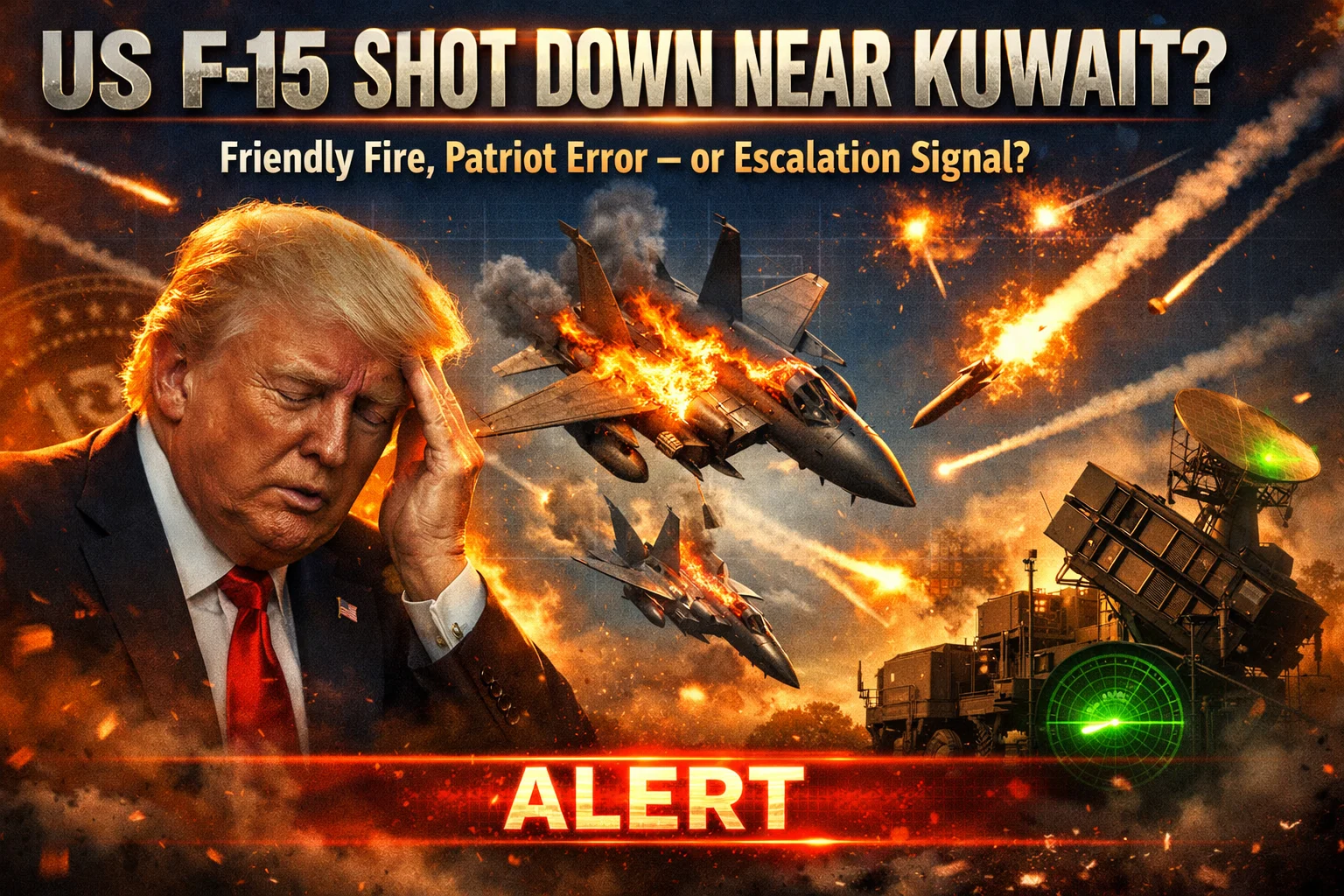
The US F-15 shot down near Kuwait incident has added a new layer of confusion to the ongoing US–Iran escalation.
Three advanced American F-15 fighter jets reportedly went down near Kuwait during active operations against Iran. The aircraft were operating close to US facilities in Kuwait when the incident occurred.
USA के खुद के फाइटर जेट F-15 कुवैत के आसमान में फट पड़े!
— Priyanka Bharti (@priyanka2bharti) March 2, 2026
जो फिल्मों में और गेम में दिखने को मिलता था वो सब अब आसमान में दिख रहे है! परिंदों के जगह जेट ने ले लिए, एक दूसरे को उड़ा रहे है!#IranWar #PeaceNotWarpic.twitter.com/i1SHywpZ0M
Iran immediately claimed credit, stating it had successfully shot down the jets.
The United States denied hostile involvement.
Instead, US officials suggested the possibility of “friendly fire.”
That distinction changes everything.
Sources: US Central Command, The Guardian
Iran Claims vs US Denial
Iran has publicly stated that it shot down three US fighter jets during ongoing military exchanges.
However, US officials have rejected that claim categorically.
General Dan Raizin Caine, Chairman of the Joint Chiefs of Staff, acknowledged the loss of three aircraft but stated clearly that hostile fire was not responsible. The matter, he said, remains under investigation.
#WATCH | On the Israel-Iran conflict, General Dan Raizin Caine, Chairman of the Joint Chiefs of Staff, says, "I am aware of the loss of three US Air Force F-15Es overnight in the region. I am grateful for the safety of the crews, and we know that this was not from hostile enemy… pic.twitter.com/Umkv8sUkNm
— ANI (@ANI) March 2, 2026
The absence of visual evidence supporting an Iranian missile strike has raised questions about Tehran’s claim.
In modern warfare, successful shootdowns are usually accompanied by footage, radar tracks, or wreckage confirmation.
None has surfaced.
That silence matters.
Friendly Fire: The Patriot Missile Question
According to the US narrative, the aircraft may have been mistakenly engaged by Kuwait’s air defense system.
Kuwait operates the MIM-104 Patriot missile system, originally designed during the Cold War era. Though upgraded over time, its core design dates back decades.
The Patriot system has a range of roughly 160 km and is optimized for missile interception. However, misidentification scenarios are not unheard of in high-pressure combat environments.
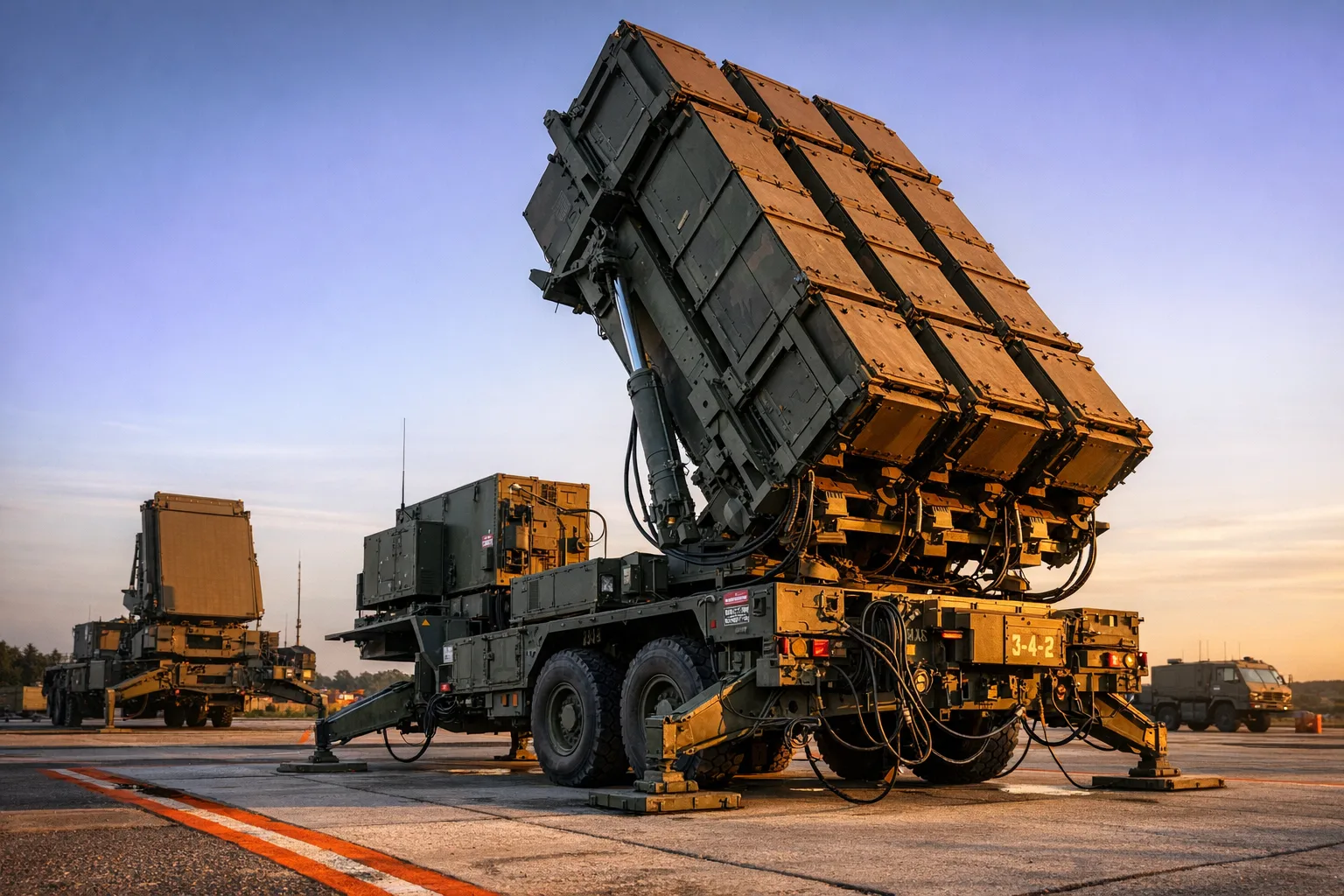
Image credit: AI-generated using ChatGPT by OpenAI
Image used for Illustrative purpose only.
This would qualify as a classic “friendly fire” incident — where allied forces accidentally engage their own aircraft.
But here’s the complication.
F-15 aircraft are large, highly recognizable platforms equipped with Identification Friend or Foe (IFF) systems.
How does a modern allied air defense battery misidentify three advanced US aircraft in the same operational window?
That question remains unanswered.
Why This Explanation Raises Doubts
There are several reasons analysts are skeptical of the friendly fire narrative:
- Iran does not currently field significant modern fighter jets capable of engaging US F-15s directly.
- No confirmed Iranian missile tracking data has emerged.
- Three aircraft losses in one window suggest either systemic malfunction or coordinated engagement.
Another possibility occasionally raised in defense discussions is technical malfunction.
Military equipment failures do occur. And historically, not all malfunctions are publicly disclosed in detail due to market and strategic sensitivities.
However, no official confirmation of technical failure has been issued.
The investigation continues.
Fake News and the Abraham Lincoln Rumor
Parallel to the F-15 incident, Iran also claimed it had struck the USS Abraham Lincoln aircraft carrier.
The United States dismissed that claim outright.
🚫The Iranian regime claims to have killed 50 U.S. service members. LIE.
— U.S. Central Command (@CENTCOM) February 28, 2026
✅There have been no reported U.S. casualties.
🚫The IRGC claims that a U.S. Navy ship was struck by missiles. LIE.
✅No U.S. Navy ship has been struck. The Armada is fully operational.
🚫The Iranian… pic.twitter.com/qGsZ45EmzD
No credible imagery or satellite evidence has surfaced showing damage to the carrier.
In modern naval warfare, a ballistic missile strike on an aircraft carrier would generate unmistakable visual evidence — smoke plumes, debris, radar signatures.
None has appeared.
Information warfare is now an active front.
And in high-intensity conflict, narrative control becomes strategic ammunition.
“War Is Hell”: Washington’s Escalation Signals
US Secretary of Defense/War Pete Hegseth addressed mounting casualties and equipment losses by stating bluntly: “War is hell.”
PETE HEGSETH: "War is hell and always will be."
— Gunther Eagleman™ (@GuntherEagleman) March 2, 2026
"A grateful nation honors the four Americans we have lost thus far and those injured, the absolute best of America."
pic.twitter.com/R0mTNdxVht
He confirmed casualties had occurred and acknowledged operational risks.
When asked whether US boots could eventually be deployed on the ground, he declined to rule it out.
Pete Hegseth says there aren't American troops on the ground in Iran – yet.
— The American Conservative (@amconmag) March 2, 2026
"We'll go as far as we need to go to advance American interests. But we're not dumb about it… Why would we tell you, the enemy, anybody what we will or will not do in pursuit of an objective." pic.twitter.com/ke0nZ5wq4G
That is significant.
Instead of reassuring that escalation would remain limited, Washington left options open.
Strategic ambiguity can deter.
But it can also escalate.
What This Means for the Wider Conflict
This episode highlights three structural risks:
- Airspace congestion and miscalculation in Gulf skies
- Psychological operations and exaggerated claims
- Escalation creep, where limited strikes gradually widen
If the friendly fire explanation proves accurate, it exposes serious coordination challenges among US-aligned forces.
If hostile fire is later confirmed, escalation enters a more dangerous phase.
Either way, trust inside coalition systems has been shaken.
And in active conflict, even small miscalculations can snowball quickly.
Conclusion: Fog of War or Escalation Signal?
The US F-15 shot down near Kuwait incident sits at the intersection of confusion and consequence.
Iran claims victory.
The US denies hostile involvement.
The truth lies somewhere within ongoing investigations.
What is clear is this:
Airspace over the Gulf is becoming crowded, tense, and unpredictable.
And in modern warfare, fog and friction are as dangerous as missiles.
The next confirmed strike — whether real or misinterpreted — could redefine the trajectory of this conflict.
FAQs
Did Iran shoot down US fighter jets?
Iran claims it did. The US denies hostile fire and suggests possible friendly fire. No independent evidence has confirmed Iran’s claim.
What is the F-15 Strike Eagle?
The F-15 is a large, advanced US fighter aircraft built by Boeing, designed for air superiority and strike missions.
What is friendly fire?
Friendly fire occurs when military forces accidentally engage their own or allied units during combat operations.
Can the Patriot missile system misidentify aircraft?
While modern systems include identification protocols, high-stress environments and technical factors can lead to misidentification incidents.
Has the USS Abraham Lincoln been hit?
The US denies any strike on the aircraft carrier, and no credible evidence has confirmed such damage.=
Strategic Watchpoint
Three indicators will determine the real story:
- Final US investigation findings
- Radar and satellite confirmation data
- Whether further airspace incidents occur
Because in high-intensity conflict, one unexplained crash can become a turning point.
Or a warning.
Share Your Views in the Comments below.
Explore more about Defense & Security and World Affairs.