Table of Contents
US Submarine Sinks Iranian Warship Near India
The moment a US submarine sinks Iranian warship near India’s maritime neighborhood, the geopolitical map shifts.
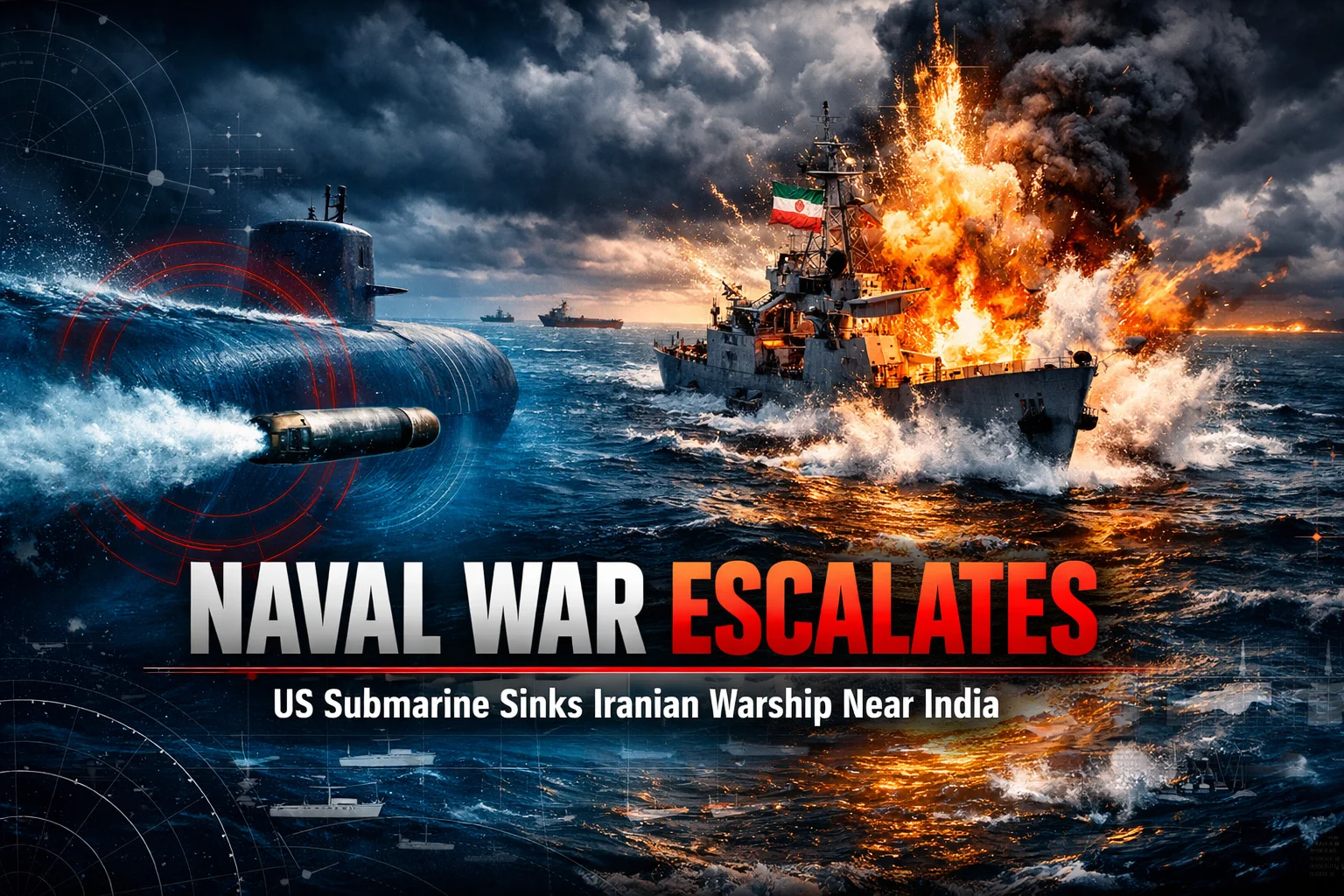
Recent reports claim that a United States submarine torpedoed and destroyed the Iranian naval frigate IRIS Dena in the Indian Ocean while the ship was returning to Iran.
https://t.co/PiqQpVIrMu pic.twitter.com/Wc1e0B0um7
— Department of War 🇺🇸 (@DeptofWar) March 4, 2026
The attack reportedly occurred near the waters off Sri Lanka, bringing the US–Iran confrontation dangerously close to India’s maritime environment.
That detail matters.
Because conflicts at sea rarely stay contained once major trade routes and regional powers become involved.
Sources: Reuters
When the US–Iran War Reached the Indian Ocean
The incident marks a significant escalation in the wider conflict between the United States and Iran.
According to reports, the Iranian warship had recently participated in an international naval event in Visakhapatnam, where fleets from multiple countries gathered for maritime cooperation exercises.
Welcome! | خوش آمدید!
— Eastern Naval Command 🇮🇳 (@IN_HQENC) February 17, 2026
🇮🇳🤝🇮🇷 Indian Navy welcomes IRIS Dena, of the Iranian Navy, on her arrival at #Visakhapatnam to participate in #IFR2026_India and #MILAN2026, reflecting long-standing cultural links between the two nations.@India_in_Iran #BridgesOfFriendship… pic.twitter.com/O77v2qNJHJ
After completing the visit, the vessel began its return journey toward Iranian waters.
But before reaching home ports, the ship was intercepted and destroyed by a US submarine torpedo strike.
This was not a minor tactical move.
It signaled that the war between Washington and Tehran had expanded into the broader Indian Ocean security space.
Sources: NDTV
The Sinking of IRIS Dena Near Sri Lanka
The destroyed vessel, IRIS Dena, was considered one of Iran’s more advanced naval platforms.
Launched in 2015, the frigate reportedly featured:
- Modern radar systems
- Electronic warfare capabilities
- Long-range operational capacity
The ship carried roughly 200 sailors at the time of the attack, with reports 87 casualties after the torpedo strike.
The destruction of a naval vessel returning from an international event raised immediate strategic questions.
Why strike a ship so close to South Asia?
And why escalate naval combat in this region?
This is where the story becomes more complex.
Why This Naval Attack Is Strategically Significant
Naval warfare in the Indian Ocean changes the conflict dynamic.
A US submarine sinks Iranian warship IRIS Dena with a torpedo in waters near Sri Lanka, marking the first time since World War II that a U.S. submarine has sunk an enemy warship with a torpedo.
Here’s what US Secretary of Defense/War Pete Hegseth said about the operation:
'Quiet death by torpedo': American submarine sunk an Iranian warship in Indian Ocean, says US Secretary of War Pete Hegseth pic.twitter.com/PuLCbl2a6w
— News Arena India (@NewsArenaIndia) March 4, 2026
Most of the earlier confrontation between Iran and the United States had been concentrated around the Persian Gulf and the Strait of Hormuz.
But the sinking of IRIS Dena demonstrates that naval operations are now extending far beyond those traditional hotspots.
The message from Washington appears clear.
No Iranian naval asset is considered safe—even in distant international waters.
This is a strategic escalation.
Iran’s Military Losses and US War Strategy
Statements from US defense officials suggest that Washington believes it has already inflicted significant damage on Iran’s military capabilities.
According to some claims:
- Iran’s air force has suffered severe operational setbacks
- Multiple Iranian naval vessels have been destroyed
- US naval dominance is expanding across regional waters
Here’s what US Secretary of Defense/War Pete Hegseth said about the battlefield situation, claiming that Iran’s air force and navy are effectively “no more” and that the United States is winning the conflict:
We have only just begun to fight. pic.twitter.com/HI2mifVy4W
— Secretary of War Pete Hegseth (@SecWar) March 4, 2026
Officials linked the strike to a broader military campaign designed to neutralize Iranian maritime capabilities.
But there is an important caveat.
Destroying ships and aircraft does not automatically translate into victory in a war.
Why Iran’s Geography Still Matters in This War
Even if Iran’s naval and air assets are weakened, capturing or controlling Iran itself is far more complicated.
The country’s geography creates enormous defensive advantages.
Iran is protected by major mountain ranges such as:
- Alborz Mountains
- Zagros Mountains
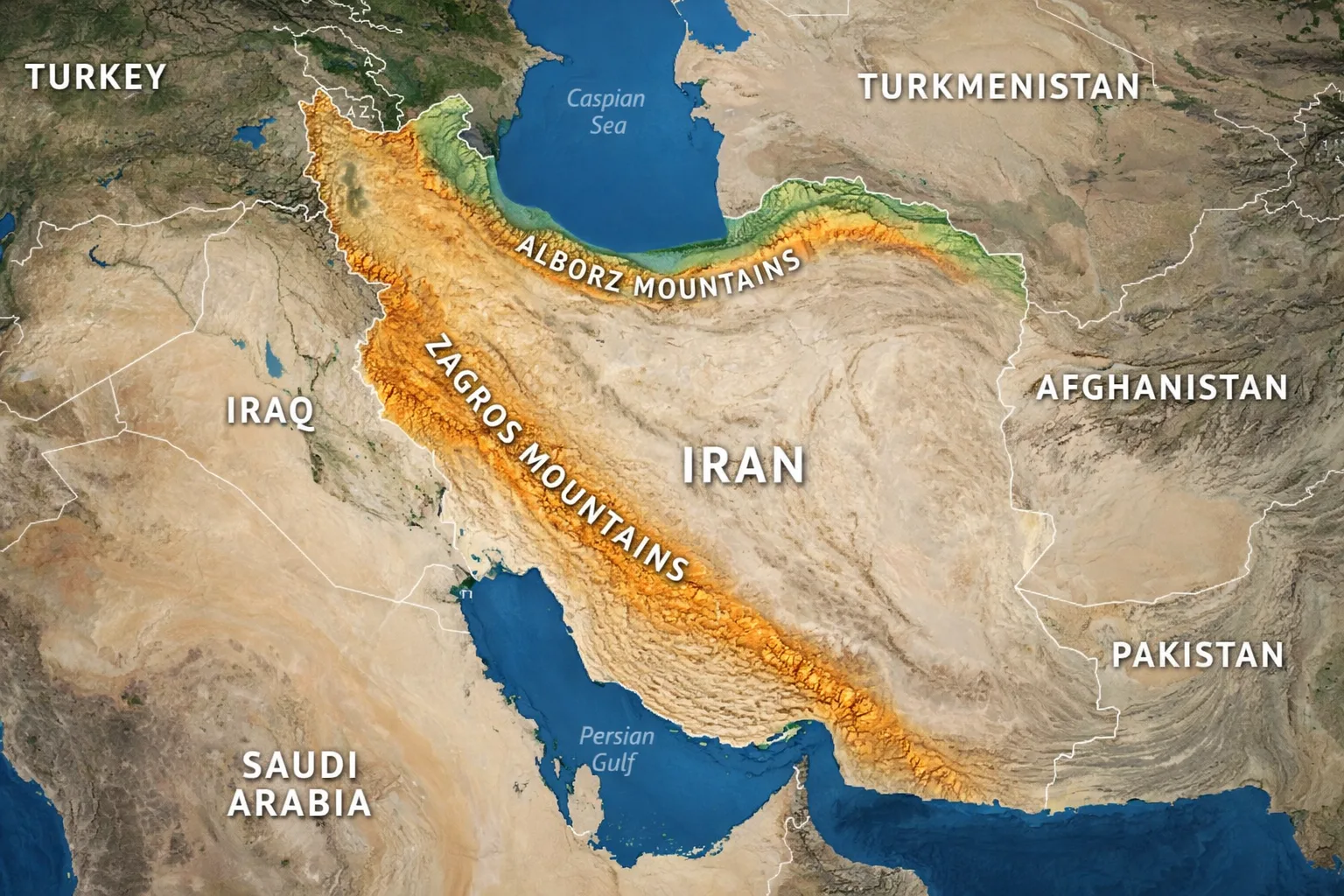
Image credit: AI-generated using ChatGPT by OpenAI
Image used for Illustrative purpose only.
These natural barriers have historically made large-scale invasions extremely difficult.
Even historical conquerors like Alexander the Great faced significant challenges crossing these terrains.
Modern military forces would face the same obstacles—combined with deserts, fortified cities, and modern missile defenses.
Which means naval victories alone cannot end the war.
The India Angle: Fact Checks and Strategic Concerns
As news of the attack spread, another controversy emerged.
Some media reports suggested that the United States was using Indian naval ports to support military operations against Iran.
However, India’s Ministry of External Affairs (India) publicly rejected those claims.
Fake News Alert!
— MEA FactCheck (@MEAFactCheck) March 4, 2026
Claims being made on OAN, a US based channel that Indian ports are being used by the US Navy are fake and false. We caution you against such baseless and fabricated comments. pic.twitter.com/xiFWnkoXBk
Officials clarified that:
- Indian ports are not being used for attacks on Iran
- India has not joined the conflict
- Reports suggesting otherwise are inaccurate
This clarification was important.
Because misinformation can quickly escalate diplomatic tensions during wartime.
Trade Routes, Hormuz, and Maritime Security
Even without direct involvement, India faces strategic risks from the expanding conflict.
The reason is simple.
Global trade.
Much of the world’s oil and shipping traffic passes through the Strait of Hormuz, a narrow maritime corridor connecting the Persian Gulf to the Indian Ocean.
If conflict spreads across the region:
- Cargo ships could face security threats
- Energy supplies could be disrupted
- Insurance costs for shipping could rise dramatically
In other words, naval warfare in these waters affects far more than just the countries involved in the fighting.
It affects the global economy.
Conclusion
The moment a US submarine sinks Iranian warship near Sri Lanka, the US–Iran conflict stops being a distant regional war.
It becomes a maritime crisis touching the edges of South Asia.
The destruction of IRIS Dena demonstrates how rapidly modern conflicts can expand across oceans and trade routes.
Yet despite these escalations, the core strategic question remains unresolved.
Naval dominance can weaken an opponent—but it rarely decides a war alone.
And with Iran’s geography, regional alliances, and strategic depth still intact, the conflict may be far from its final phase.
FAQs
Why did the US Submarine sinks Iranian warship IRIS Dena?
Reports suggest the attack was part of a broader US campaign targeting Iranian naval capabilities during the ongoing conflict.
Where did the Iranian warship sink near Sri Lanka?
The warship was reportedly torpedoed in international waters in the Indian Ocean near Sri Lanka while returning to Iran.
Is the US-Iran war spreading to the Indian Ocean?
Yes. The naval attack indicates that the conflict has expanded beyond the Persian Gulf into wider Indian Ocean maritime zones.
How close was the attack to India?
The attack reportedly occurred near Sri Lankan waters, which places the incident relatively close to India’s southern maritime region.
What is the strategic importance of the Strait of Hormuz?
The Strait of Hormuz is one of the world’s most critical oil shipping routes, connecting Gulf energy supplies to global markets.
What Does This Naval Escalation Mean for India?
The incident where a US submarine sinks Iranian warship near Sri Lanka raises new strategic questions for the region.
With naval combat now occurring close to South Asia, several issues become critical:
- Could the conflict spread deeper into the Indian Ocean?
- How vulnerable are global shipping routes if naval warfare intensifies?
- And what strategic steps should regional powers take to protect maritime security?
Share Your Analysis in the Comments below.
Because when major conflicts reach global trade routes, their consequences rarely remain regional.
Explore more about Defense & Security, Indian Affairs and World Affairs.