Table of Contents
Russia Oil Supply to India Becomes Critical Amid War
The moment Russia oil supply to India becomes a strategic discussion, it signals how deeply the US–Iran conflict is shaking global energy markets.
As the war between the United States and Iran intensifies, attacks on shipping and oil tankers near the Strait of Hormuz are creating a new wave of uncertainty in global energy supply.
Reports indicate that more than 900 people have already died in the ongoing strikes and bombardments across Iranian territory. If the conflict continues for several weeks—as some political leaders have suggested—the casualty numbers could rise dramatically.
But the consequences are not limited to the battlefield.
They extend directly into the global energy system.
And for countries heavily dependent on oil imports, the risk is immediate.
Sources: The New York Times
The Strait of Hormuz Crisis and Global Oil Risk
The Strait of Hormuz is one of the most important energy corridors on Earth.
A massive portion of the world’s crude oil shipments passes through this narrow waterway connecting the Persian Gulf to the global ocean system.
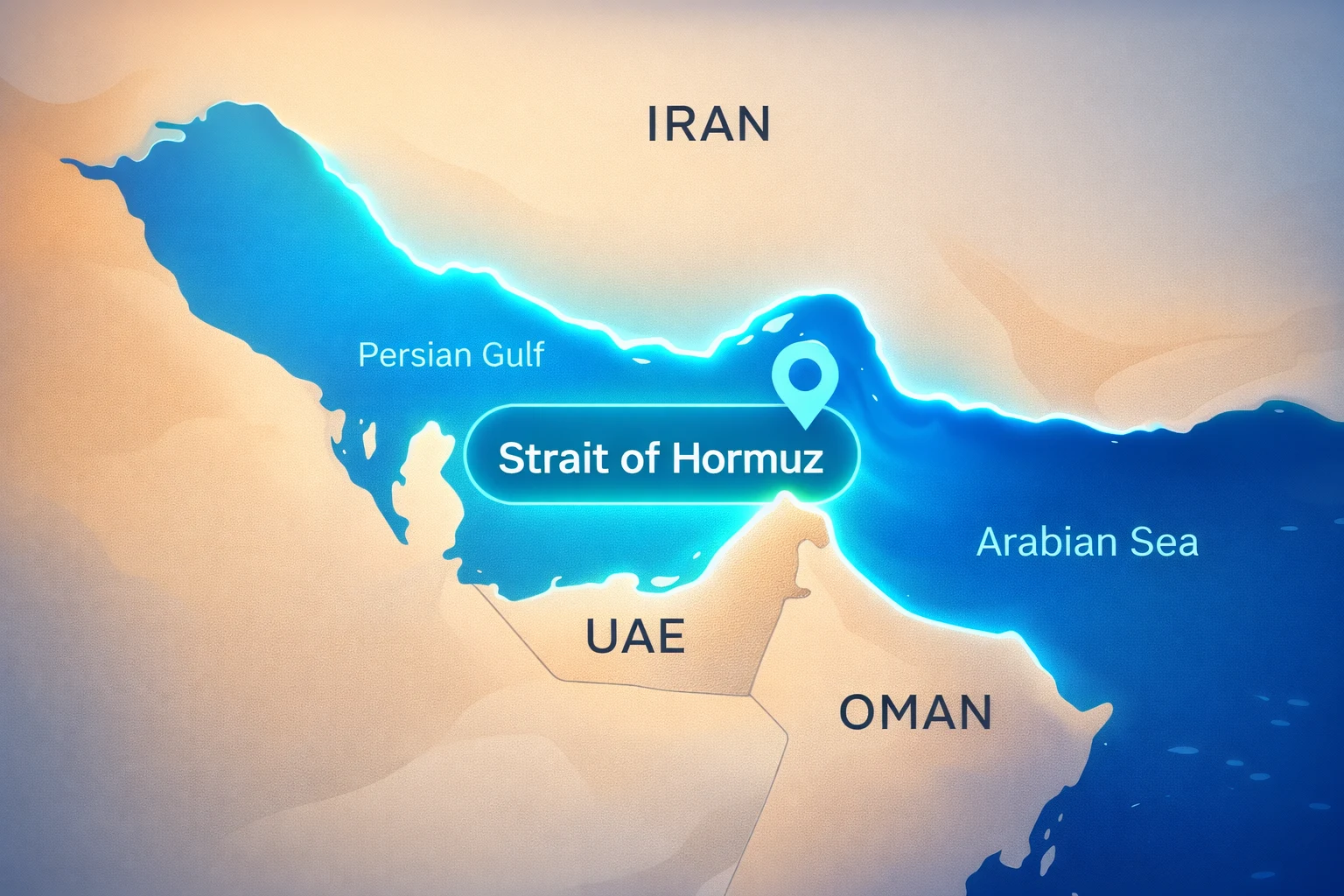
Image credit: AI-generated using ChatGPT by OpenAI
When war spreads near this route, tanker traffic becomes vulnerable.
Recent reports indicate that:
- Oil tankers are being targeted in nearby waters
- Naval tensions are rising across the region
- Shipping companies are reassessing risk levels
This creates an energy shock that can push global oil prices sharply upward.
For countries dependent on imported energy—such as India, China, and Japan—these disruptions can quickly translate into economic pressure.
Source: Times of India
India’s Oil Reserves: How Long Can They Last?
Energy security always depends on reserves.
According to reports discussed during the crisis, India currently maintains:
- Around 25 days of crude oil reserves
- Around 25 additional days of refined fuel stock
Combined, this creates roughly 50 days of buffer supply if imports were completely disrupted.
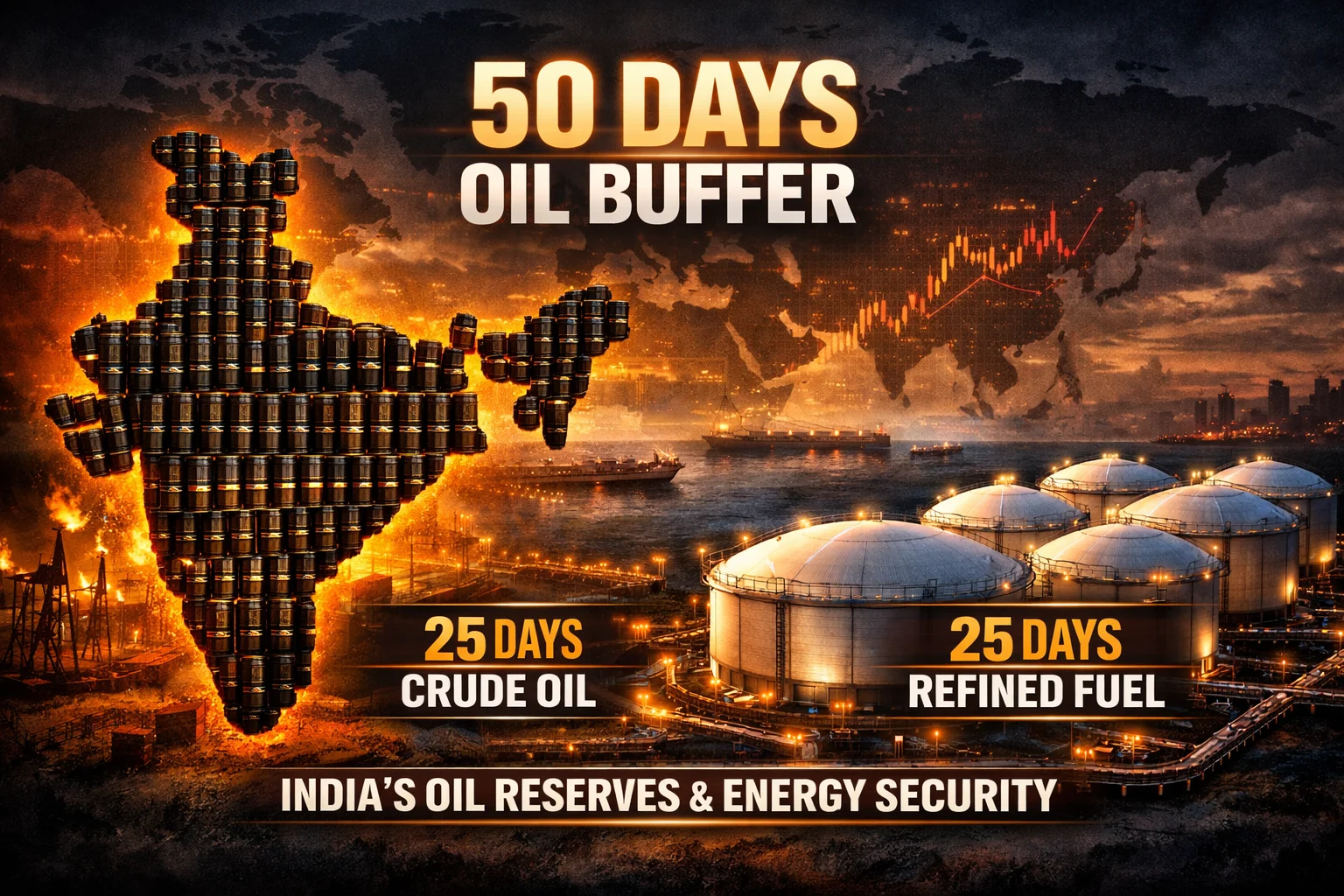
Image credit: AI-generated using ChatGPT by OpenAI
At first glance, that may sound reassuring.
But energy markets rarely wait that long.
Panic can begin much earlier—especially if shipping routes remain uncertain and prices surge.
And when crude oil prices climb rapidly, the impact spreads through the entire economy.
Sources: The Hindu, Times of India
Russia Steps Forward With Emergency Supply
This is where the geopolitical dimension becomes interesting.
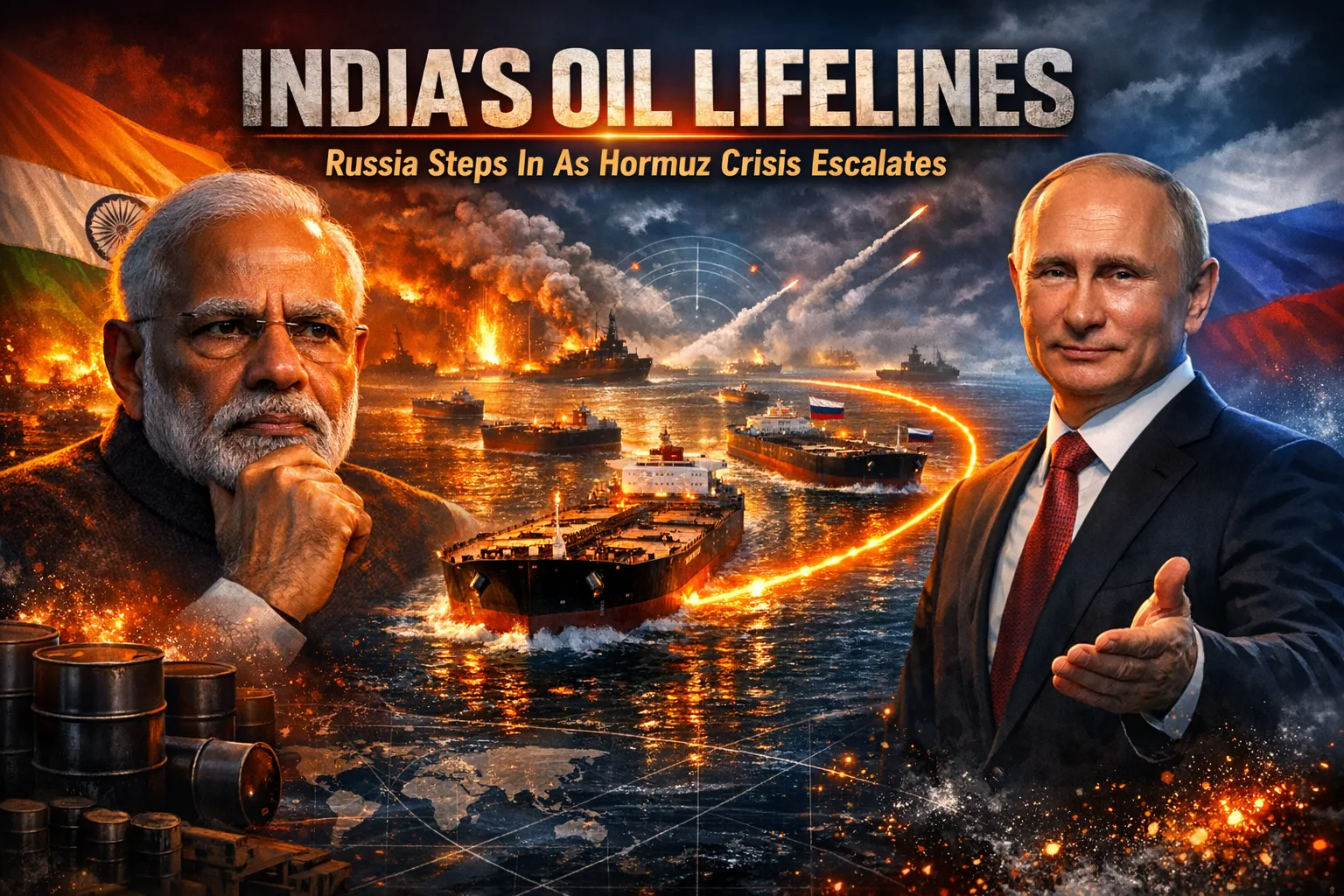
During the crisis, Russia’s Envoy has publicly stated that it is ready to supply crude oil to India if shortages begin to emerge.
Officials indicated that shipments amounting to roughly 9.5 million barrels of crude oil could be redirected toward India.
Several oil tankers reportedly began adjusting their routes toward Indian ports as the Middle East supply shock intensified.
Some of these shipments were initially headed toward East Asian destinations.
But the routes changed.
That shift reveals something important.
Energy trade during geopolitical crises often moves very quickly.
Sources: Press Trust of India, India Today, The Moscow Times
The US Factor and Sanctions Pressure
The situation is complicated by another geopolitical factor: sanctions pressure.
The United States has repeatedly warned countries against purchasing Russian energy following the war in Ukraine.
In some cases, Washington has threatened tariffs or economic penalties for nations that increase Russian oil imports.
At the same time, the US has encouraged countries to purchase energy from American suppliers.
Some US companies have also expanded operations in oil-producing regions such as Venezuela, further complicating the global energy landscape.
This creates a delicate balancing act for countries like India.
Energy security must be protected.
But diplomatic relationships must also be managed carefully.
Sources: Reuters
LNG Alternatives From Australia and Canada
Crude oil is not the only energy resource affected by the crisis.
Liquefied natural gas (LNG) plays an increasingly important role in modern energy systems.
As tensions around the Strait of Hormuz continue, alternative suppliers have already begun signaling readiness to assist.
Countries such as:
- Australia
- Canada
have reportedly indicated that they could increase LNG shipments if supply disruptions occur in the Gulf region.
This diversification reduces risk.
Because relying on multiple suppliers allows energy-importing nations to maintain stability during geopolitical crises.
Sources: Economic Times, Times of India
Why India Is Maintaining Strategic Balance
India’s diplomatic position in the conflict has remained cautious and balanced.
New Delhi has not taken sides in the confrontation between Iran, the United States, and Israel.
Instead, India has emphasized stability and continued economic growth.
At the same time, diplomatic gestures—such as offering condolences following the death of Iranian leadership figures—have helped maintain communication channels with Tehran.
Foreign Secretary Vikram Misri, on behalf of Government of India, signed the Condolence Book at the Embassy of Iran in New Delhi today, and offered condolences to the slain Supreme Leader of Iran Ayatollah Ali Khamenei.
— ANI (@ANI) March 5, 2026
(Pics Source: XPD Division, MEA) pic.twitter.com/IvDEjWgp3u
Why does that matter?
Because Iran controls access to the Strait of Hormuz.
And during wartime, access to maritime routes can quickly become a strategic issue.
Maintaining diplomatic balance helps ensure that India’s shipping and energy interests remain protected.
Sources: NDTV
Conclusion
The debate over Russia oil supply to India highlights a deeper reality of modern geopolitics.
Energy security and global conflict are tightly connected.
As the US–Iran confrontation disrupts tanker routes near the Strait of Hormuz, countries dependent on imported oil must adapt quickly to protect their economies.
Russia’s offer to supply crude oil provides one possible buffer.
Alternative LNG supplies from Australia and Canada provide another.
But ultimately, the larger challenge is maintaining stability in global energy markets.
Because when wars disrupt shipping routes, the effects travel far beyond the battlefield.
They reach the engines of the global economy.
FAQs
How much oil reserve does India have?
India reportedly maintains around 25 days of crude oil reserves and approximately 25 additional days of refined fuel stock, giving a combined buffer of roughly 50 days.
Why is the Strait of Hormuz important?
The Strait of Hormuz is one of the world’s most important oil shipping routes, connecting Persian Gulf energy exports to global markets.
Does India buy oil from Russia?
Yes. India has significantly increased imports of discounted Russian crude oil in recent years due to competitive pricing and supply availability.
What happens if the Strait of Hormuz closes?
Closure of the Strait of Hormuz would disrupt a large portion of global oil shipments, potentially causing major price spikes and energy shortages.
How does war affect oil prices?
Wars near major energy regions often disrupt shipping routes, increase risk for tanker traffic, and create uncertainty in supply—leading to higher global oil prices.
What Does This Oil Crisis Mean for India?
The debate around Russia oil supply to India raises deeper strategic questions for the future.
If tanker attacks continue and oil prices surge, countries dependent on imports will face serious economic pressure.
So the key questions are becoming clearer:
- Should India rely more on discounted Russian crude during global crises?
- Can energy diversification protect economies from geopolitical shocks?
- And how should countries respond when wars begin affecting global energy supply?
Share Your Perspective in the Comments below.
Because when energy routes become battlegrounds, economic security becomes national security.
Explore more about Economy & Trade, Indian Affairs and World Affairs.