Table of Contents
US Won’t Let India Become a Rival: A Remark That Sparked Debate
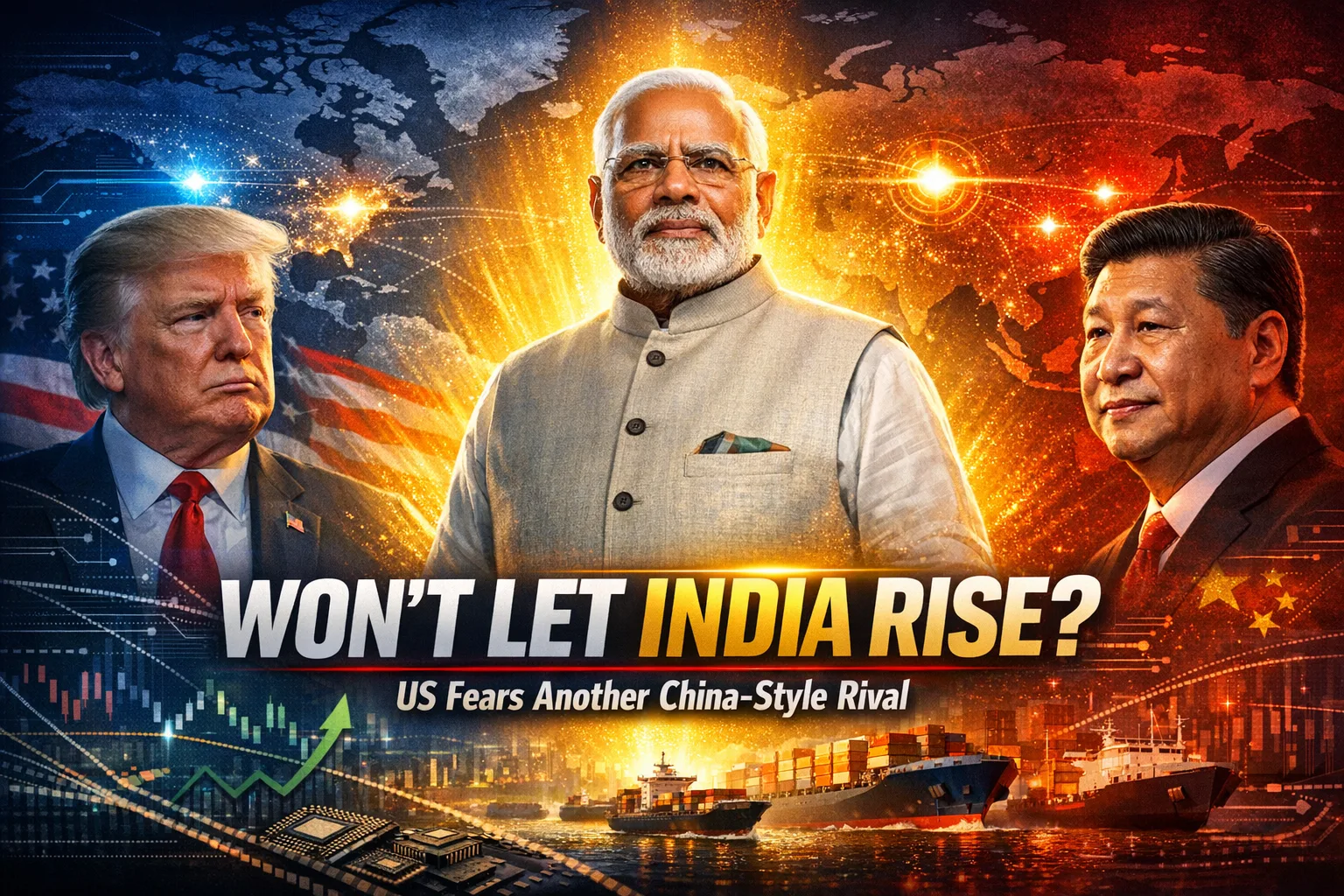
The phrase “US won’t let India become a rival” quickly drew global attention after US Deputy Secretary of State, Christopher Landau suggested that Washington will not repeat the “China mistake” with India.
The comment came from a deputy-level official within the government of the United States, who argued that the US would avoid policies that helped enable the economic rise of China two decades ago.
US Won't Repeat 'China Mistake' With India, Says US Official Christopher Landau in Delhi..
— Wisdom Walk (@wisdom_walkss) March 6, 2026
The United States will not repeat the same economic policies with India that once helped China rise as a global competitor, US Deputy Secretary of State Christopher Landau said while… pic.twitter.com/xeldpOdgMv
The implication was clear.
Washington does not want another major power emerging in the same way China did.
That statement triggered strong reactions—particularly in India.
Some observers viewed it as an honest admission of strategic thinking.
Others saw it as evidence of geopolitical rivalry already taking shape.
Either way, the message reveals an important reality about global power politics.
Why the US Compares India to China
The comparison between India and China is rooted in the transformation of the global economy since the early 2000s.
Around that time, China joined the World Trade Organization.
This step dramatically expanded China’s access to international markets.
Exports surged.
Manufacturing expanded rapidly.
China’s economy began growing at near double-digit rates for several years.
The results are visible today.
China is now the world’s second-largest economy and, by some metrics such as purchasing power parity, already surpasses the United States.
That experience shaped American strategic thinking.
The argument in Washington is that opening global markets to China helped create a major competitor.
And policymakers now want to avoid repeating that process elsewhere.
The “China Mistake” Washington Refers To
When US officials speak about the “China mistake,” they usually refer to two developments:
- China’s entry into global trade systems
- Large-scale industrial expansion fueled by export markets
These factors allowed China to build massive manufacturing capacity across sectors such as:
- Electronics
- Semiconductors
- Consumer goods
- Digital technology
In several industries, Chinese companies now compete directly with American firms.
In some cases, they are even setting global trends in technology and software platforms.
This shift explains why Washington increasingly frames its global strategy around strategic competition with China.
And that competitive mindset influences how US policymakers view India’s future trajectory.
China Responds With a Famous Kissinger Quote
The remarks from Washington also triggered reactions from Chinese officials.
A spokesperson from the Embassy of China in India, Yu Jing, shared a pointed message referencing a well-known observation attributed to former US Secretary of State Henry Kissinger.
⚠️ Enemy of the 🇺🇸? Risky.
— Yu Jing (@ChinaSpox_India) March 6, 2026
Friend of the 🇺🇸? Fatal. 💀https://t.co/FCsts7QdIA
The quote reads:
“It may be dangerous to be America’s enemy, but to be America’s friend is fatal.”
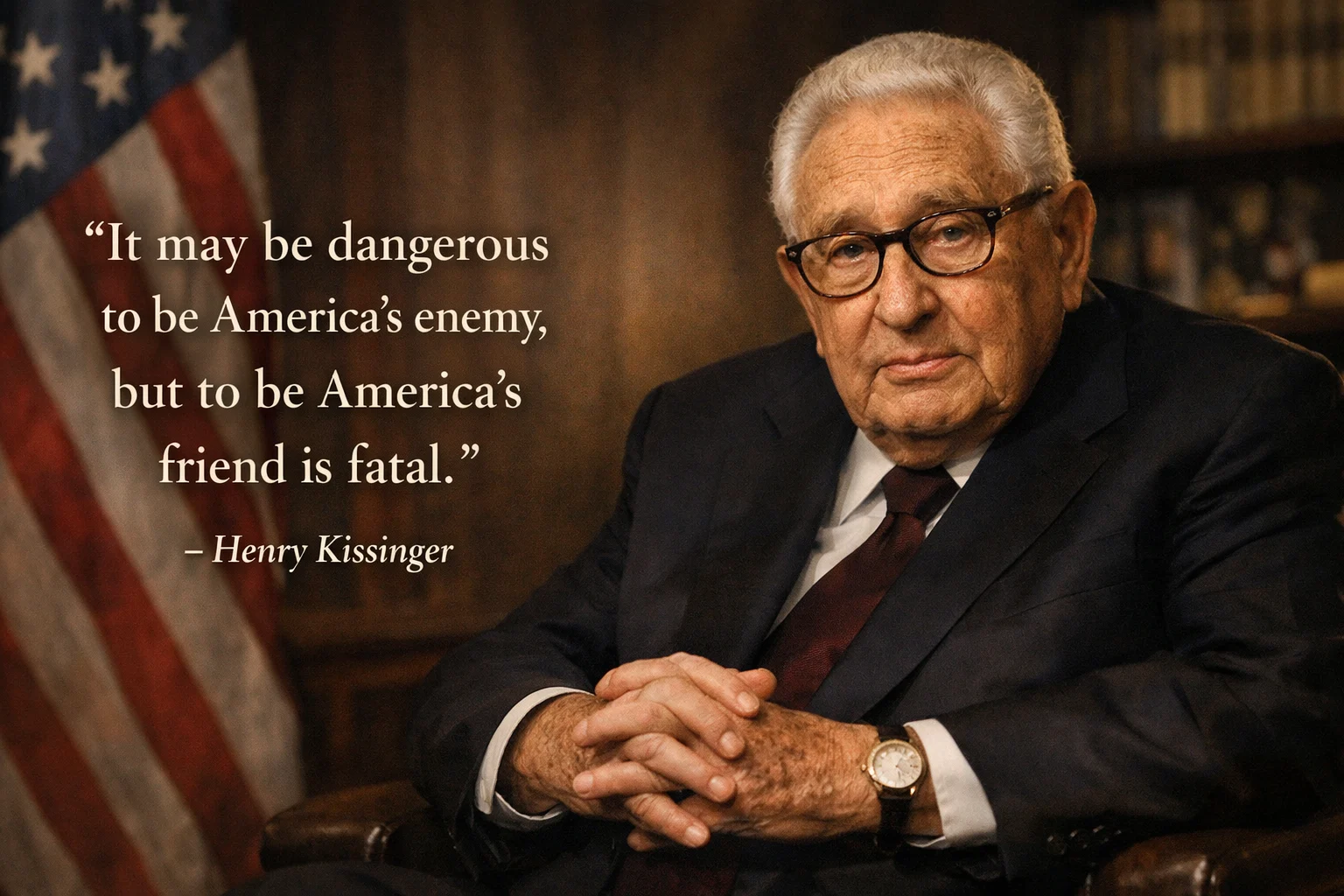
Image credit: AI-generated using ChatGPT by OpenAI
The statement has circulated in diplomatic debates for decades and is often cited in discussions about US alliances and strategic relationships.
By referencing the quote, the Chinese diplomat was signaling a broader geopolitical narrative: that countries must carefully evaluate the risks and benefits of aligning too closely with major powers.
The remark quickly spread across social media and international commentary, adding another layer to the debate surrounding Washington’s comments on India’s rise.
The Tripolar World Order Question
But here is the deeper geopolitical question.
Is the world moving toward a tripolar order?
Traditionally, global power structures tend to cluster around dominant players.
Today the conversation often revolves around two major powers:
- the United States
- China
Some analysts describe this as a potential G2 world.
However, if India’s economy continues to expand rapidly, the global balance could eventually shift toward a three-power structure.
That possibility changes strategic calculations.
Because power-sharing becomes more complex when multiple large economies operate at the top of the global system.
And historically, dominant powers rarely welcome additional rivals.
India’s Economic Potential and Global Role
Despite the debate, India’s economic trajectory remains significant.
The country is currently one of the fastest-growing major economies in the world.
Several structural advantages support this growth:
- A very large population
- A rapidly expanding digital economy
- Strong service-sector capabilities
- Growing technology talent
In purchasing power parity terms, India’s economy is now the third-largest in the world, after the United States and China.
But reaching the scale of the United States or China will take time.
The journey toward becoming a five-trillion-dollar economy is often seen as the next milestone.
Beyond that point, the strategic implications become even more significant.
Because economic size translates into geopolitical influence.
Sources: India Today
Why This Statement Matters for Global Strategy
The statement that the US won’t let India become a rival reveals something important about global politics.
Major powers think long-term.
Strategic planning often stretches decades into the future.
From Washington’s perspective, preventing the rise of additional global competitors may appear logical.
From India’s perspective, however, economic development and global influence are natural ambitions.
These two perspectives do not automatically conflict.
But they do create tension.
And that tension will likely shape future trade negotiations, technology partnerships, and strategic alliances across the Indo-Pacific.
Conclusion
The controversy surrounding the phrase “US won’t let India become a rival” highlights a deeper debate about the future of global power.
China’s rapid rise transformed the geopolitical landscape over the past two decades.
Now policymakers in Washington appear determined to avoid enabling another competitor in the same way.
Yet history rarely follows strategic plans perfectly.
India’s economic growth, demographic strength, and technological capabilities continue to expand its global influence.
Whether the future world order remains bipolar—or evolves into a multipolar system including India—will depend on decisions made across governments, markets, and societies.
And those decisions are unfolding right now.
FAQs
Did the Christopher Landau say US Won’t Let India Become a Rival?
US Deputy Secretary of State Christopher Landau have suggested that Washington does not want to repeat policies that helped China become a strategic competitor. This has been interpreted as a warning about India’s potential rise.
Why does the US compare India to China?
China’s rapid economic growth after joining the World Trade Organization changed the global balance of power. US policymakers often reference that experience when discussing other emerging economies.
Can India become a third global superpower?
India has strong long-term potential due to its large population, economic growth, and technology sector. However, reaching superpower status would require sustained development over several decades.
What is the tripolar world order?
A tripolar world order refers to a global system dominated by three major powers rather than two. In current debates, the possible trio discussed is the United States, China, and India.
Is the US trying to contain India’s rise?
Some analysts believe US policies aim to manage the pace of emerging competitors. Others argue the US and India remain strategic partners despite occasional tensions.
What Does This Statement Mean for India’s Future?
The remark that the US won’t let India become a rival raises important strategic questions.
If major powers seek to shape the global balance, how should emerging economies respond?
Consider the possibilities:
- Can India maintain strategic autonomy while deepening partnerships?
- Will the global system remain bipolar—or evolve toward a multipolar order?
- And how will economic growth translate into geopolitical influence?
Share your perspective in the comments.
Because the future balance of global power may depend on decisions being made today.
Explore more about Economy & Trade, Indian Affairs and World Affairs.