Table of Contents
The Moment the “Reopening” Narrative Collapsed
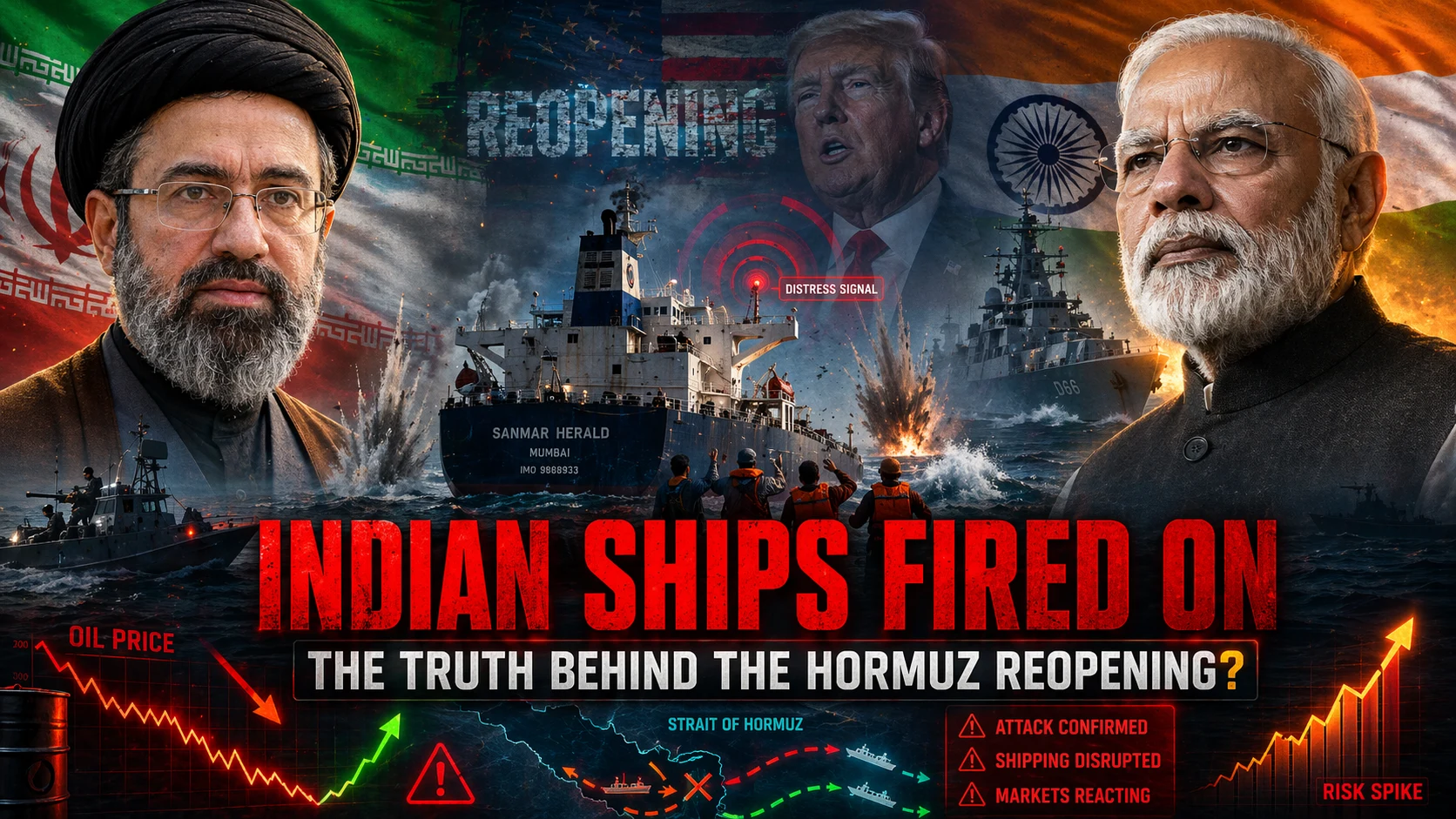
The Iranian Attack on Indian Ships did not just disrupt maritime traffic.
It shattered a narrative.
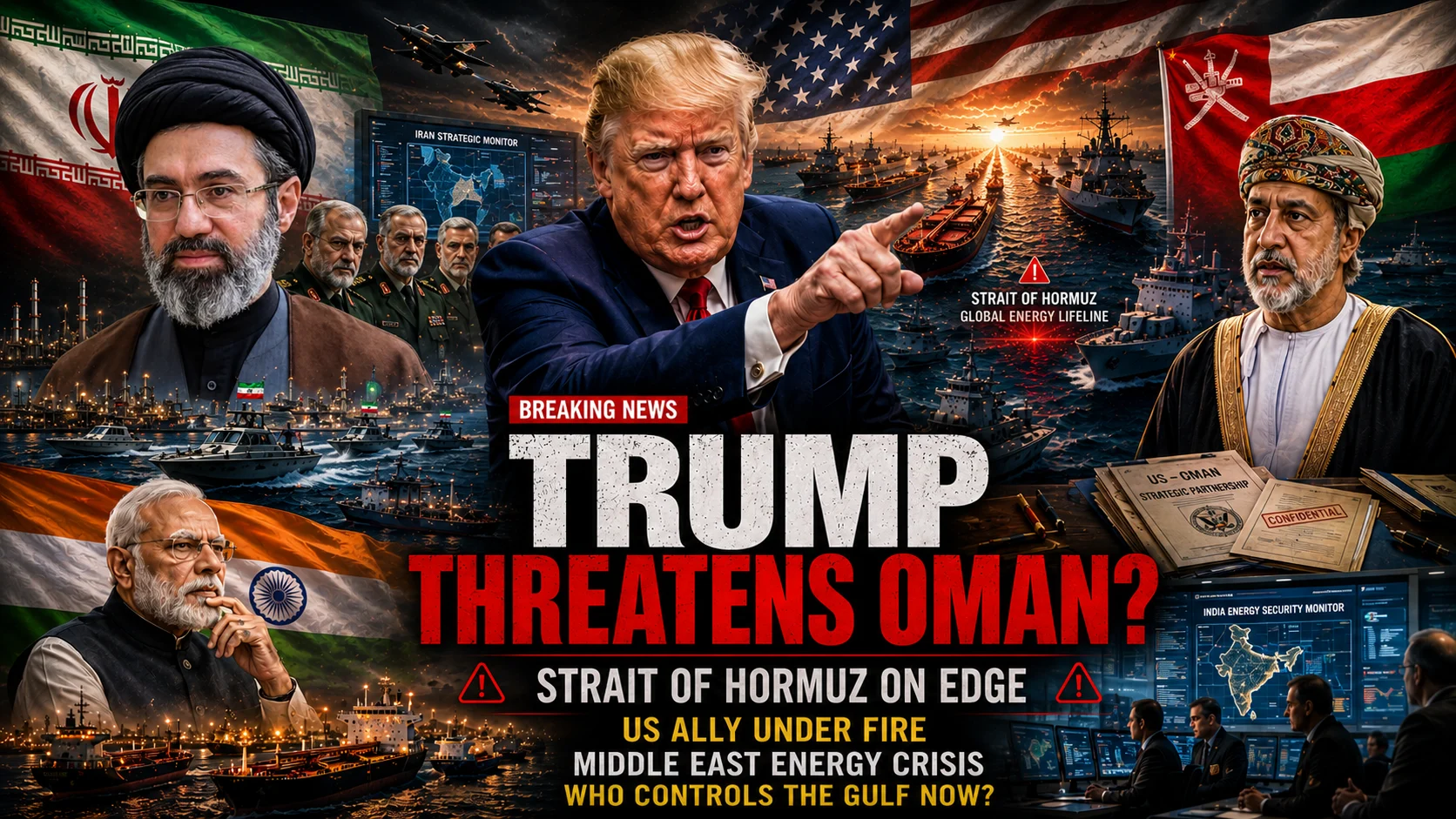
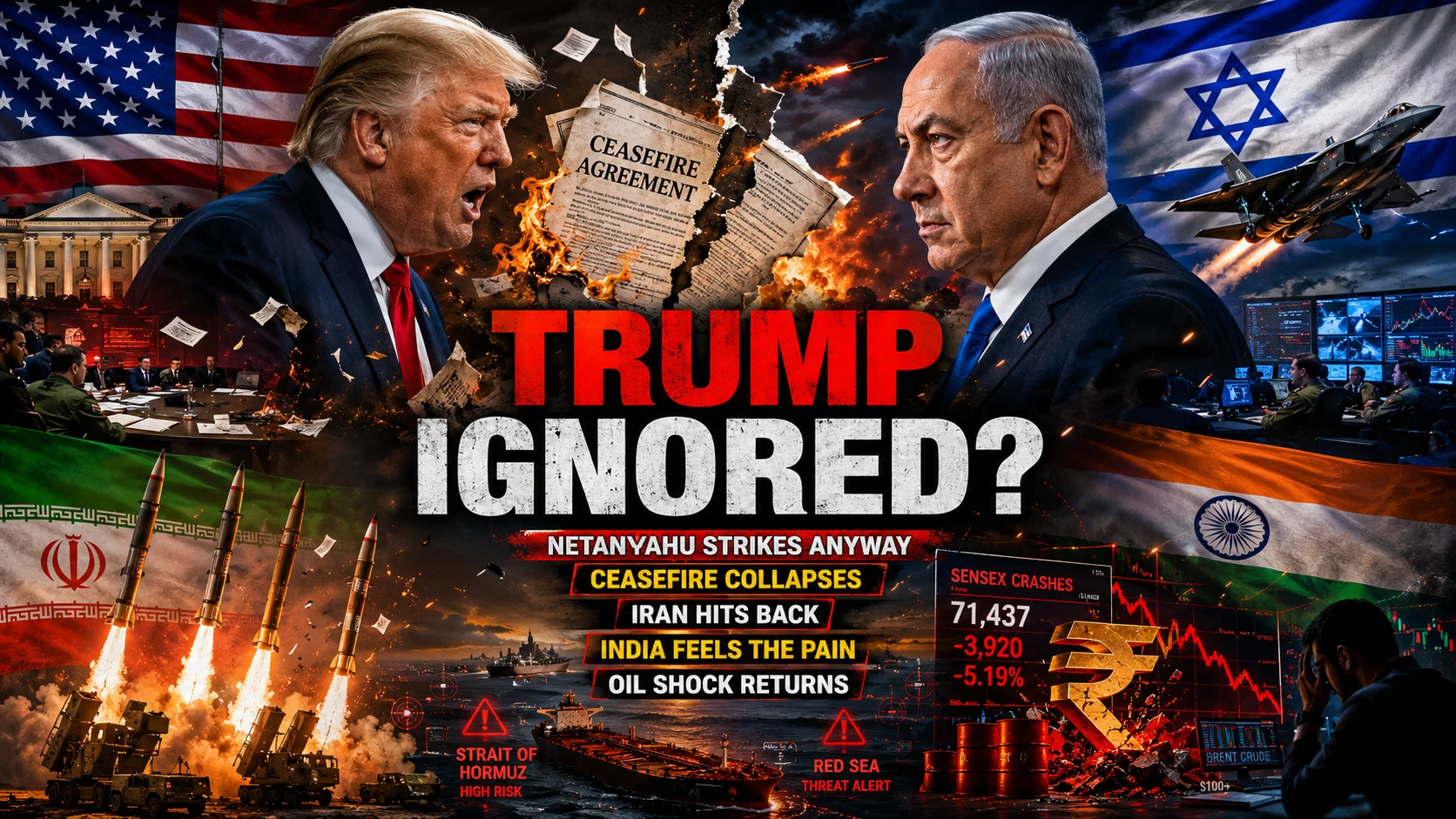
Just hours earlier, Donald Trump had signaled that the Strait of Hormuz was effectively open.
Markets reacted instantly.
Oil prices dropped.
Optimism surged.
But then came the reversal.
Indian vessels were fired upon.
This was not a contradiction.
This was exposure.
Sources: India Today, Times of India
What Happened to the Indian Ships in Hormuz?
Two Indian cargo vessels attempted to pass through the Strait of Hormuz after receiving clearance.
Then the situation changed abruptly.
- Iranian forces opened fire
- Ships were forced to reverse course
- Panic communications were transmitted
A Greek oil tanker reportedly faced similar disruption.
Here’s what that means.
The “open passage” was not universally valid.
Control remained with Iran.
The Sanmar Herald Audio: Ground Reality
At the center of this incident is the vessel:
Sanmar Herald
Audio of the Indian oil tanker Sanmar Herald pleading with Iranian forces to stop shooting at it in the Strait of Hormuz this morning. pic.twitter.com/7Y5n7Jb7o0
— OSINTtechnical (@Osinttechnical) April 18, 2026
The captain’s message reveals the situation:
- Clearance had been granted
- The ship was listed for passage
- Firing began unexpectedly
The crew pleaded for permission to turn back.
That detail matters.
Because cargo ships have no defensive capability.
They are vulnerable.
A single miscalculation could have triggered:
- Explosions
- Oil spills
- Casualties
This was not a warning.
It was a live-fire situation.
Trump’s Claims vs Iran’s Rejection
Donald Trump had made multiple assertions:
- The Strait would remain open
- A deal was close
- Iran would cooperate
Iran rejected all of it.
Through official statements, Iran made its position clear:
- The Strait remains under Iranian control
- Passage depends on authorization
- US claims are not recognized
This is where things shift.
Diplomatic messaging and ground reality diverged completely.
Sources: The Times of India
The “7 False Claims” and Information Warfare
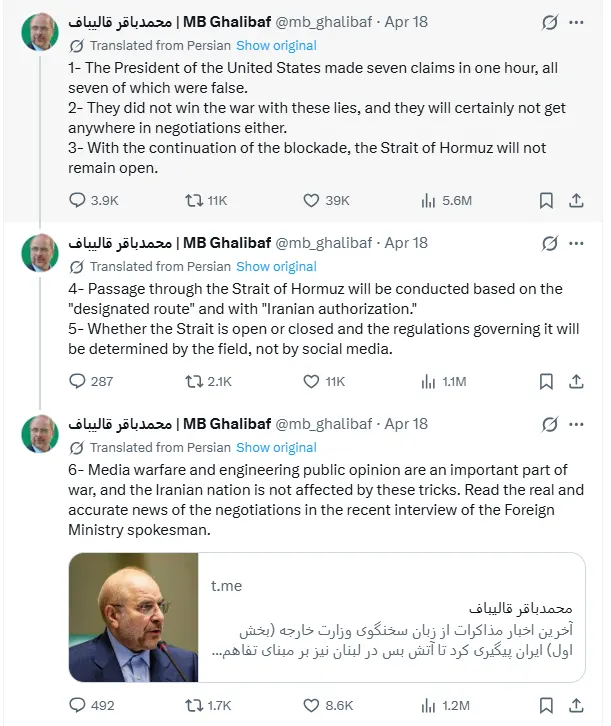
Screenshot of X posts by Mohammad Bagher Ghalibaf (@mb_ghalibaf)
Speaker of Islamic Republic of Iran’s Parliament, Mohammad Bagher Ghalibaf publicly stated:
All 7 claims made by Trump were false.
These included:
- Victory claims in the conflict
- Permanent reopening of Hormuz
- Transfer of nuclear material
This was not just rebuttal.
It was narrative warfare.
Iran also emphasized:
- Control will be determined on the ground
- Media narratives are part of war strategy
That sentence alone explains the entire situation.
This is not just a military conflict.
It is an information battlefield.
Sources: India Today, The Indian Express
Market Manipulation or Strategic Messaging?
One of the most controversial aspects of this episode is timing.
Before Trump’s announcements:
- Large oil bets—estimated around $760 million—were placed
After his statements:
- Oil prices dropped sharply
Then reality reversed sentiment again.
So the question arises:
Was this coincidence?
Or controlled signaling?
There is no confirmed answer.
But the pattern is clear.
Narratives are moving markets.
Sources: News18
India’s Response: Patience or Restraint?
India responded with a formal protest by summoning the Iranian envoy, Dr. Mohammad Fathali.
Our statement regarding Iran ⬇️
— Randhir Jaiswal (@MEAIndia) April 18, 2026
🔗 https://t.co/05hycXPgJ6 pic.twitter.com/HwhqdNL9M8
Dehli: Ambassador of Iran to India, Dr. Mohammad Fathali leaves from the Ministry of External Affairs (MEA).
— Clash Observer (@clashobserver) April 18, 2026
India lodged a protest over the incident of firing on an Indian vessel at Strait of Hormuz. pic.twitter.com/no3houqs49
The approach has been:
- Diplomatic
- Controlled
- Measured
But there is visible frustration.
Why?
Because India had:
- Provided medical aid to Iran
- Assisted Iranian ships previously
- Maintained cooperative engagement
Yet Indian vessels were targeted.
This creates a trust gap.
A significant one.
Sources: WION, The Economic Times, India Sends Aid to Iran – Impact on India
Why This Incident Changes Everything
The Iranian Attack on Indian Ships is not an isolated event.
It reveals three deeper realities:
1. The Strait is not truly open
Control is selective.
Access is conditional.
2. Narratives are diverging
What leaders say ≠ what happens on ground.
3. Neutral actors are at risk
India was not a combatant.
Yet it was affected.
This changes risk calculations globally.
Conclusion
The Iranian Attack on Indian Ships exposes a critical truth:
The Strait of Hormuz is no longer just a trade route.
It is a controlled battlefield.
Where:
- Access is permission-based
- Narratives are weaponized
- Neutral players face real danger
The gap between announcement and action is widening.
And that gap is where risk lives.
This is not just a maritime issue.
It is a systemic shift in how power is exercised.
FAQs
Was an Indian ship attacked in the Strait of Hormuz?
Yes. Two Indian vessels, including the Sanmar Herald, were fired upon by Iranian forces and forced to reverse course.
What did the Sanmar Herald crew say in the audio?
The crew stated they had received clearance to pass but were suddenly fired upon, requesting permission to turn back safely.
Why is Iran rejecting Trump’s reopening claims?
Iran maintains that the Strait is under its control and denies that any unconditional reopening has occurred.
What are the “7 false claims” mentioned by Iran?
Speaker of Islamic Republic of Iran’s Parliament, Mohammad Bagher Ghalibaf stated that all seven claims made by Trump regarding victory, negotiations, and reopening were false.
Is the Strait of Hormuz safe for commercial ships now?
No. The situation remains volatile, and access depends on Iranian authorization.
Will India take stronger action?
So far, India has issued a formal protest, but future steps depend on how the situation evolves.
What Comes Next?
If global trade routes depend on “permission” instead of rules—
Can any country truly rely on stability in the Strait of Hormuz anymore?
Share Your Views in the Comments below.
Explore more about World Affairs and Indian Affairs.