Table of Contents
A Pattern the World Can’t Ignore
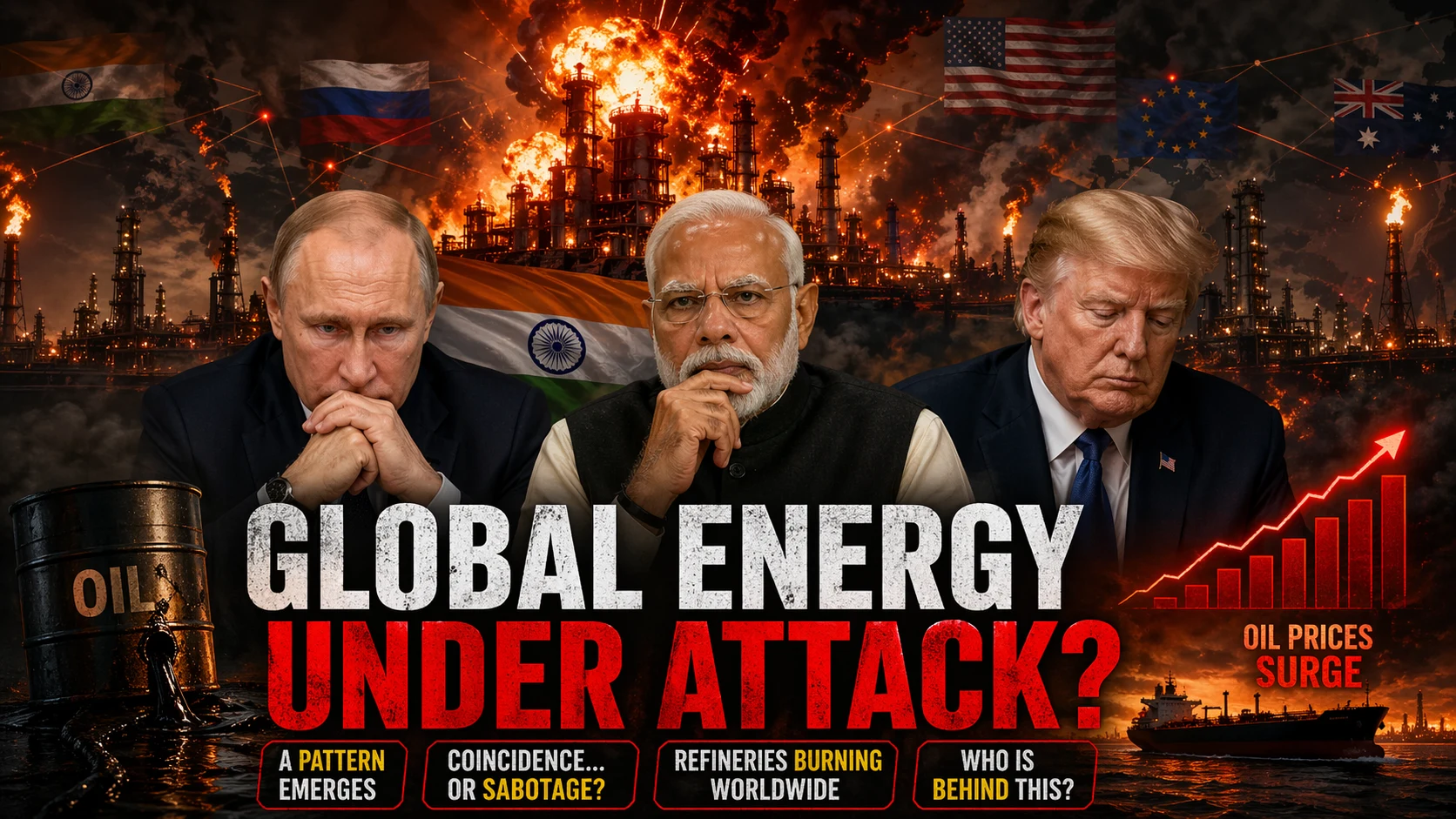
The phrase Global Energy Infrastructure Sabotage is no longer theoretical—it is becoming observable.
Over the past few weeks in April 2026, a disturbing pattern has emerged:
oil refineries, power plants, and energy facilities across multiple continents are catching fire, exploding, or shutting down under unexplained circumstances.
This is not isolated.
This is not localized.
This is a pattern.
And the timing raises deeper questions.
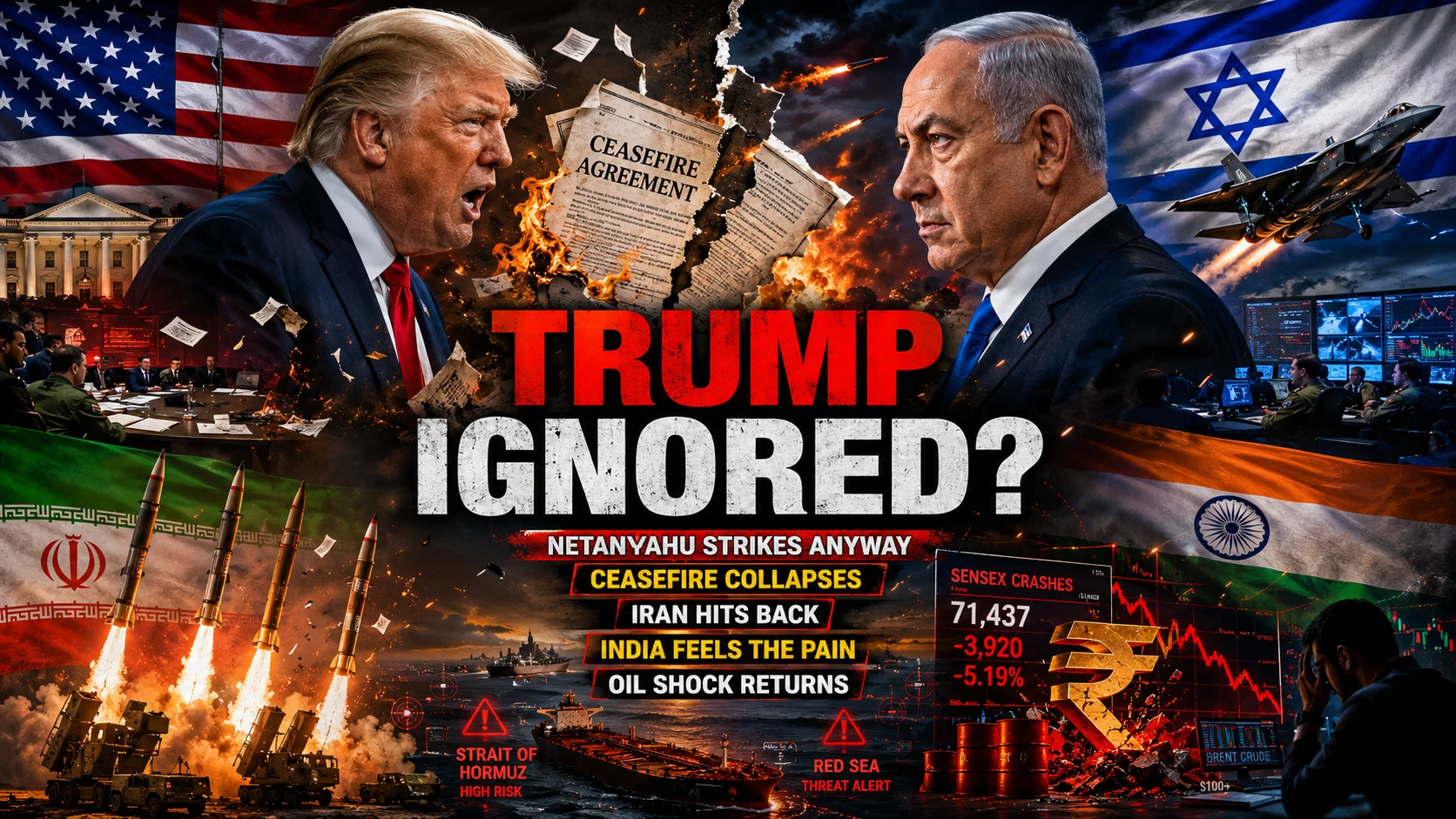
Because all of this is happening during an active geopolitical crisis involving Iran and United States—a conflict already disrupting global oil supply chains.
So here’s the key question:
Is the world witnessing random accidents… or a coordinated disruption of global energy systems?
That distinction matters.
Sources: India Today
The Timeline: Fires Across Continents
Russia, India, Australia, Europe — One Chain Reaction
The sequence of events tells the real story.
- April 3 – Russia
A major oil export terminal explosion disrupts supply chains. - April 4 – Russia again
A crude distillation unit is destroyed. - April 9 – Mexico – Olmeca refinery
A fire in the coke storage warehouse marks another safety incident, intensifying concerns over repeated operational failures. - April 14 – India – Chhattisgarh
A deadly explosion at a Vedanta power plant kills 24 workers, raising serious safety and sabotage questions linked to Vedanta Limited. - April 15 – Australia – Geelong Refinery
A sudden fire triggers a fuel shortage crisis. No clear cause identified. - April 20 – India – HPCL Rajasthan Refinery
A newly built refinery suffers a major fire just before inauguration, delaying a critical national project. - April 20 – Romania – Bucharest Power Plant
A transformer explosion spreads fire across energy infrastructure. - April 21 – Texas, USA
A massive oil rig blast shakes nearby communities, initially mistaken for an earthquake.
This is not a single-region problem.
This is global.
And the pattern is accelerating.
Sources: NDTV, ABC News, Mexico Business News, Times of India, WION News, AP News
Why Energy Infrastructure Is the Real Target
Here’s what that means.
Energy infrastructure is not just industrial capacity—it is national survival architecture.
An oil refinery is not optional.
It is foundational.
Without refining capacity:
- Crude oil becomes unusable
- Transportation systems collapse
- Military logistics weaken
- Economic activity slows
This was deliberate.
Because targeting refineries creates a multiplier effect:
- Supply disruption
- Price spikes
- Public panic
- Strategic vulnerability
And when combined with maritime disruptions—especially around chokepoints like the Strait of Hormuz—the pressure intensifies.
Coincidence or Coordinated Sabotage?
This is where the analysis becomes complex.
There are three possible explanations:
1. Pure Coincidence
Industrial accidents do happen.
But historically, such large-scale incidents occur years apart, not within days.
2. Systemic Failure
Could multiple countries suddenly face safety breakdowns?
Possible—but unlikely at this scale.
3. Coordinated Hybrid Sabotage
This is where strategic analysts are focusing.
The pattern suggests:
- No single geography is targeted
- No single political bloc is spared
- Timing aligns with global energy stress
Which raises another question:
What if the goal is not destruction—but disruption?
That changes everything.
India’s Strategic Vulnerability and Strength
India stands at a unique intersection in this crisis.
On one hand, it is vulnerable.
On the other, it is critical to global energy stability.
The Vulnerability
Recent incidents highlight exposure:
- The Chhattisgarh blast
- The Rajasthan refinery fire
Both occurred under unclear circumstances.
And that uncertainty is the real risk.
Because without clarity, prevention becomes harder.
The Strength
India is not just another consumer.
It is a refining powerhouse.
Consider Reliance Industries Jamnagar Refinery—one of the largest and most complex refineries in the world.
This gives India:
- Massive processing capacity
- Strategic export leverage
- Influence in global fuel markets
Which also makes it a potential target.
That balance—strength and vulnerability—defines India’s position today.
The Global Energy Crisis Context
This pattern is not happening in isolation.
It is layered on top of an already fragile system.
- Oil prices are rising
- LNG supply chains are strained
- Shipping routes are contested
And conflicts involving Iran are directly affecting global flow.
Now add infrastructure disruptions to this equation.
The result?
A potential energy shock cycle:
- Supply disruption
- Refining disruption
- Price escalation
- Political instability
This is structural pressure.
What Changes Now for Global Security
This is where the shift becomes clear.
Energy infrastructure is no longer just an economic asset.
It is now a strategic battlefield.
That shift is structural.
Countries must now think beyond traditional defense.
The Required Response
- Hybrid Security Models
Combining state forces with private security layers - Cyber-Physical Protection
Securing SCADA (Supervisory Control and Data Acquisition) systems and industrial controls - Continuous Audits
Detecting internal sabotage risks - Rapid Response Infrastructure
Minimizing downtime after incidents
Because in this new environment—
Protection is not optional.
It is strategic necessity.
Sources: Cyberintelsys
Final Thought: A Pattern That Cannot Be Ignored
This is no longer about isolated fires.
It is about a system under pressure.
Across continents.
Across political blocs.
Across supply chains.
The pattern is visible.
The intent may still be unclear.
But the implication is unmistakable:
Energy is no longer just a resource. It is a battlefield.
FAQs
Was there really a global pattern of refinery fires in 2026?
Yes, multiple incidents across Russia, India, Australia, Romania, and the United States occurred within a short time frame. This clustering is unusual compared to historical accident patterns, raising concerns about coordinated disruption rather than isolated failures.
What caused the Rajasthan refinery fire?
The exact cause remains unclear. The fire occurred just before inauguration, making it highly suspicious. Investigations are ongoing, but no definitive explanation—technical failure or sabotage—has been confirmed yet.
Why are oil refineries so important in geopolitics?
Refineries convert crude oil into usable fuels like petrol and diesel. Without them, energy supply chains collapse even if crude oil is available. This makes them critical infrastructure and high-value strategic targets.
Is this linked to the Iran-US conflict?
The timing strongly overlaps with tensions involving Iran and the United States. While no direct link is proven, the broader energy disruption context amplifies the impact of these incidents.
Who could be behind these attacks?
There is no confirmed actor. Possibilities include state intelligence agencies, non-state actors, or coordinated hybrid warfare groups. Analysts emphasize that attribution remains uncertain.
What Should India Do Next?
The pattern is clear—but the response must be clearer.
India cannot treat these incidents as isolated accidents anymore.
Each fire, each explosion, each disruption must be analyzed as part of a larger strategic picture.
The next steps are critical:
- Strengthen refinery and power plant security beyond conventional measures
- Implement continuous technical audits to detect internal failures or sabotage
- Upgrade cyber protection for industrial control systems
- Build rapid-response mechanisms to contain damage instantly
Because in this emerging reality—
Energy security is national security.
And the countries that act early
will not just survive disruptions—
they will define the balance of power in the years ahead.
Explore more about Defense & Security and World Affairs.