Table of Contents
The “Hellhole” Remark That Changed the Tone
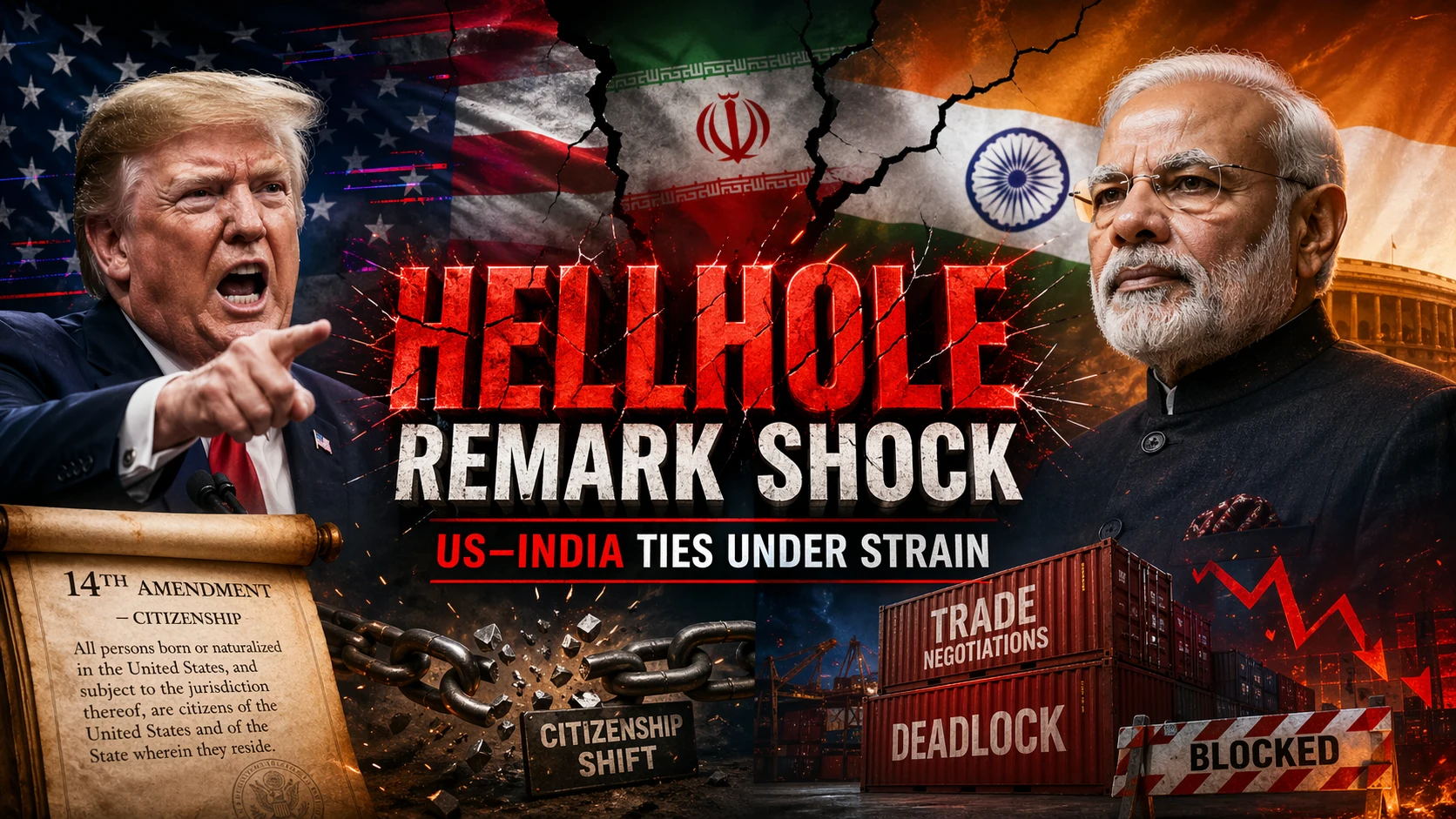
The controversy surrounding the Trump Hellhole Remark on India marks a sharp shift in diplomatic language.
When Donald Trump reshared content on Truth Social describing India and China as “hellholes,” it triggered immediate geopolitical attention.
This wasn’t just rhetoric.
It directly touched on:
- National identity
- Civilizational pride
- The global perception of India
And here’s what makes it significant.
India is not just any partner—it is a key strategic partner in Asia.
So why use such language now?
That question matters.
Sources: India Today
Why the MEA Chose Strategic Silence
"We have seen some reports; that's where I leave it."
— News Arena India (@NewsArenaIndia) April 23, 2026
– MEA's Randhir Jaiswal on Trump calling India and China as 'hell-hole' pic.twitter.com/5QOMFYmXIJ
India’s official response came from Ministry of External Affairs spokesperson Randhir Jaiswal:
“We have seen some reports.”
That was it.
No escalation. No rebuttal.
This is where things shift.
India appears to be following a strategic restraint doctrine—prioritizing long-term interests over short-term reactions.
But that restraint is being interpreted differently abroad.
Former US ambassador Rahm Emanuel openly criticized the situation, stating that Trump has effectively:
- Undermined alliances with Japan and South Korea
- “Spit” on India’s decades-long partnership
JUST IN:🇮🇳🇺🇸 Former US Ambassador Rahm Emanuel on Trump and India
— Saturn World News (@SaturnWorldNews) April 23, 2026
"America has literally spit in India's face under the Trump administration. Bringing India closer to the US has been a 30 year project for every US president. I would not do what Trump has done." pic.twitter.com/6IxalvIEaH
That phrase has now entered global discourse.
And it reflects a deeper perception problem.
Birthright Citizenship: A Policy Shift with Global Impact
The remark is not isolated.
It is tied to a broader policy push.
At the center is the debate around the 14th Amendment in the Supreme Court of the United States.
The case:
Trump v. Barbara
The goal?
To challenge birthright citizenship.
Here’s what that means:
- Children born in the US may no longer automatically become citizens
- This directly affects Indian and Chinese immigrant families
Why does this matter?
Because millions of Indian professionals—especially H-1B holders—depend on this framework.
And this is not just immigration policy.
This is political signaling.
Sources: The Indian Express
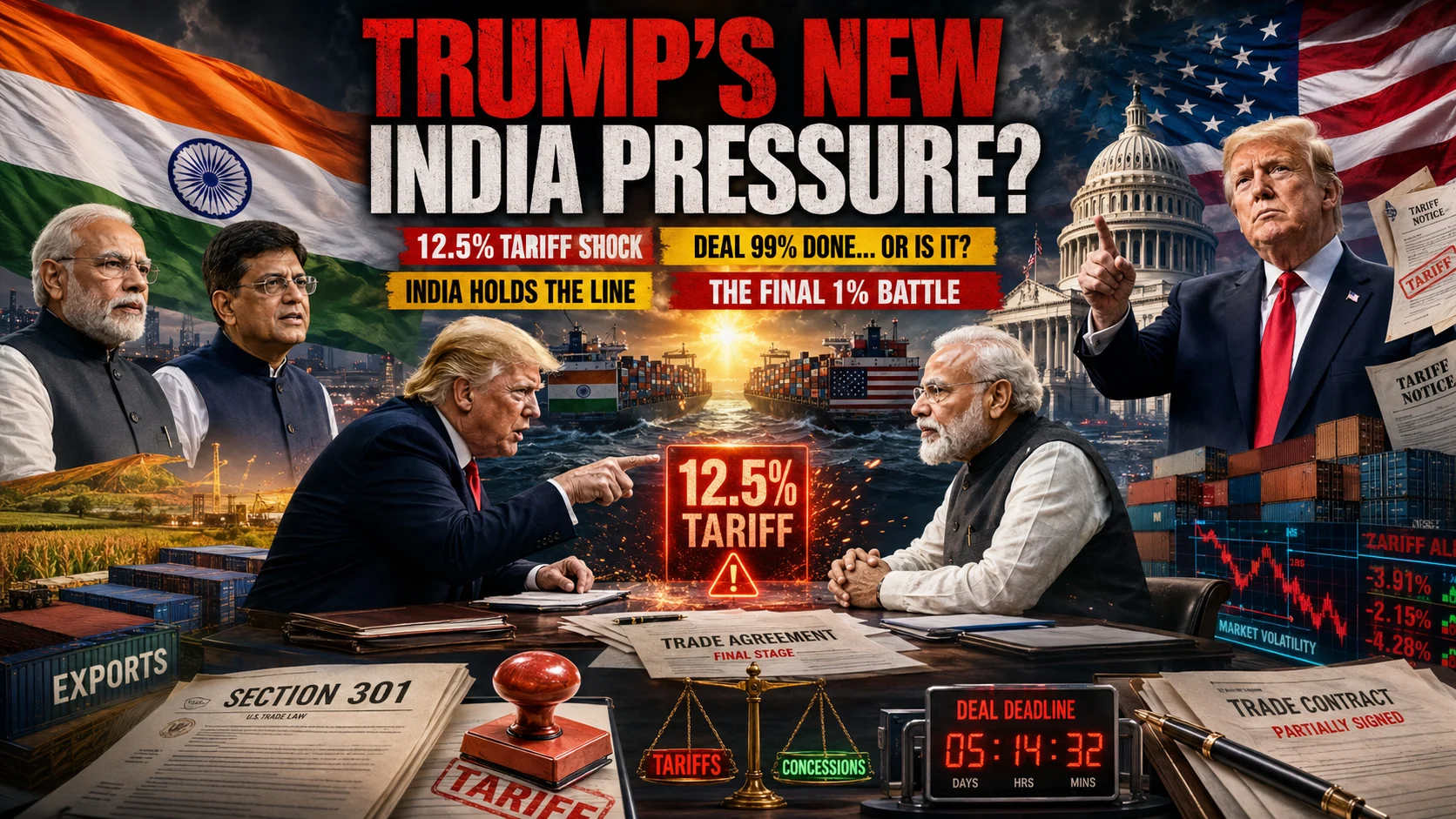
Trade Talks Stuck: “Tough Nut to Crack” Reality
Parallel to the controversy, trade negotiations are also facing friction.
The US Trade Representative Jamieson Greer described India as:
“A tough nut to crack”
The issue?
Agriculture.
The US wants:
- Greater access to India’s agricultural markets
India’s position:
- Protect domestic farmers
- Maintain long-standing safeguards
Leading the Indian delegation is Darpan Jain, Additional Secretary in the Department of Commerce, but progress remains limited.
This is not just negotiation friction.
It reflects a structural disagreement.
And that matters.
Sources: The Times of India
External Reactions: Iran Steps In
Interestingly, India’s strongest defense did not come from within.
It came from Iran.
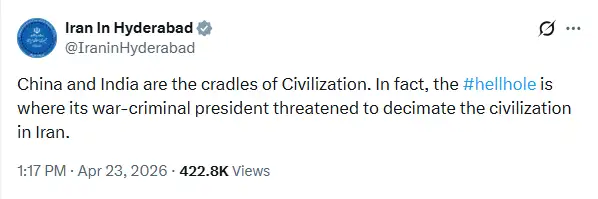
Screenshot of X post by Consulate General of the Islamic Republic of Iran- Hyderabad
The Iranian consulate in Hyderabad issued a statement calling:
- India and China “cradles of civilization”
- The “hellhole” remark unacceptable
This response created an unusual moment.
Indian public sentiment—at least online—acknowledged that:
India’s defense came externally.
That silence matters.
Sources: Hindustan Times
What This Means for India-US Relations
So what has changed?
Three major shifts emerge:
1. From Strategic Partnership to Transactional Engagement
The relationship is becoming less about shared values and more about negotiations.
2. Trust Deficit Is Growing
Public rhetoric is now affecting diplomatic perception.
3. Policy Pressure Is Coordinated
Immigration + trade + rhetoric
These are not isolated moves.
They form a pattern.
And that pattern signals recalibration.
Conclusion
The Trump Hellhole Remark on India is more than a controversial statement.
It is a signal.
A signal that:
- Language in diplomacy is becoming sharper
- Policy pressure is increasing
- Strategic patience is being tested
India’s response—measured and restrained—reflects long-term thinking.
But the risks are clear.
If rhetoric continues to escalate while negotiations stall, the relationship may shift permanently from partnership to bargaining.
And that shift will define the next phase of global geopolitics.
FAQs
What did Trump say about India being a “hellhole”?
Donald Trump reshared a post on Truth Social describing India and China as “hellholes.” This sparked controversy due to its tone and implications for diplomatic relations.
Is birthright citizenship ending for Indians in the US?
The issue is under legal review in Trump v. Barbara. While no final decision has been made, the challenge to the 14th Amendment could impact children of Indian immigrants.
Why did the US call India a “tough nut to crack”?
Jamieson Greer used the phrase to describe India’s resistance to opening its agricultural markets during trade negotiations.
What is India’s official response to Trump’s remark?
The Ministry of External Affairs issued a minimal response, choosing not to escalate tensions while trade discussions continue.
Where Does India Go From Here?
If rhetoric continues to escalate while negotiations remain stuck, the real test will not be about words—but about strategy.
Will India continue its path of strategic restraint?
Or will it eventually shift toward a more assertive diplomatic response?
Because at some point, every partnership reaches a line where silence is no longer neutral—it becomes a signal.
So the question is:
Should India maintain its current calm approach to protect long-term interests,
or is it time to redefine how it responds to public pressure and global perception?
Share Your Views in the Comments below.
Explore more about World Affairs and Indian Affairs.