Table of Contents
Why the Idaho Crash Became a Global Military Story
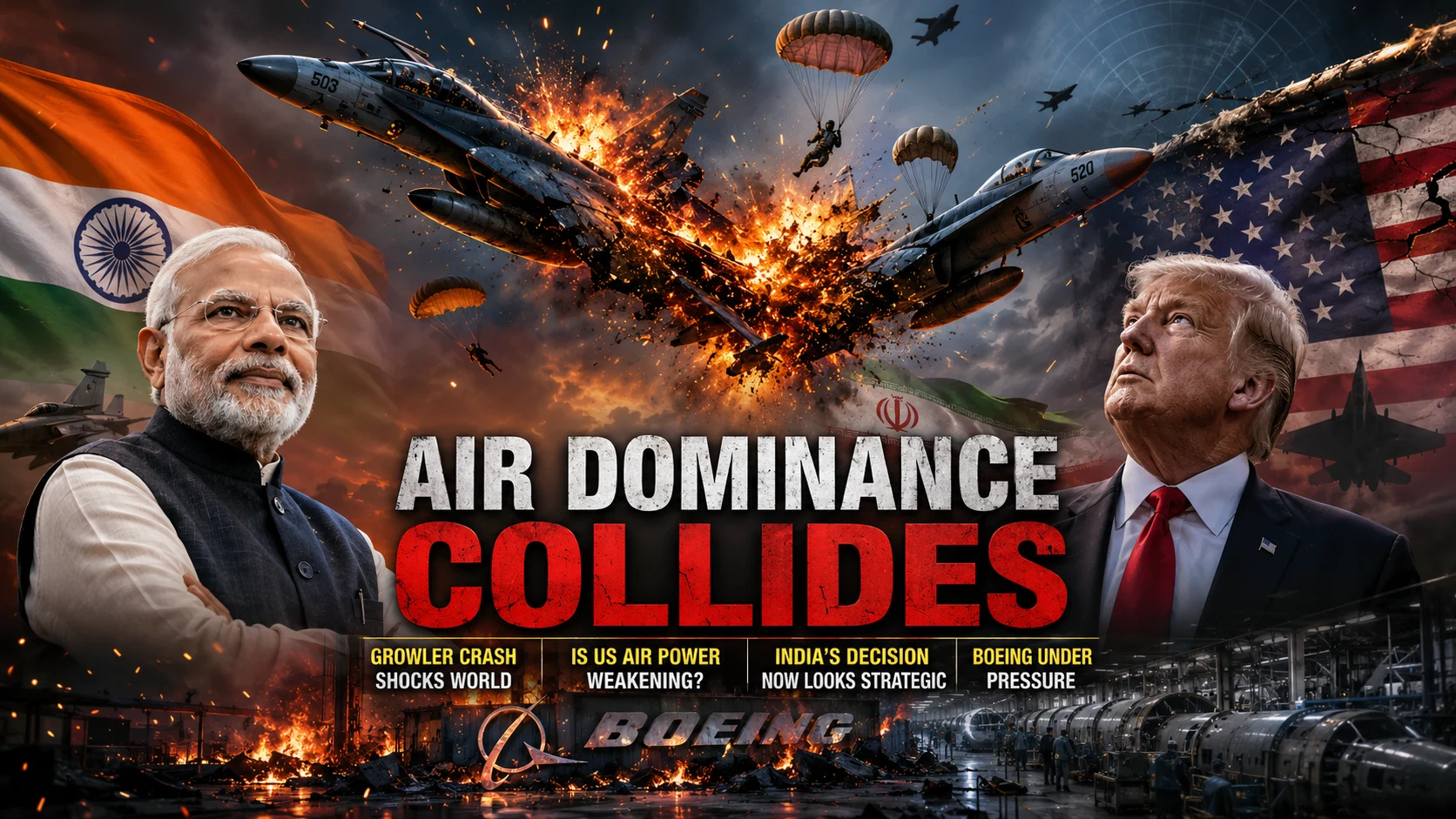
The EA-18G Growler mid air collision in Idaho became far bigger than a normal air show accident because it arrived at a time when the image of American air dominance was already under pressure worldwide. Two U.S. Navy EA-18G Growlers collided mid-air during the Gunfighter Skies Air Show near Mountain Home Air Force Base, forcing all four crew members to eject moments before impact. The footage spread globally within hours.
Terrifying video shows two U.S. Navy EA-18G Growler jets collide midair during the second day of the Gunfighter Skies Air Show at Mountain Home Air Force Base in Idaho on Sunday.
— Fox News (@FoxNews) May 17, 2026
All four crew members successfully ejected and are being evaluated by medical personnel, the U.S.… pic.twitter.com/O8KlB1Regj
Donald Trump had already been repeatedly talking about military aircraft losses during the India–Pakistan conflict, claiming that “six beautiful planes” were shot down. Those remarks helped frame a broader global perception that the aura surrounding American air power was beginning to weaken publicly as well as militarily.
What shocked many viewers was the way both Growlers remained locked together during the fall, allowing the pilots enough time to eject safely before the final explosion. Even long-time defense observers described the visuals as something they had never seen before. But the bigger question was not just how the pilots survived. It was why stories involving advanced American fighter jets were suddenly becoming so frequent.
Sources: India Today
What the EA-18G Growler Mid Air Collision Exposed About America’s Air Power
The Idaho collision became strategically explosive because it happened alongside a growing list of U.S. aircraft losses connected to Operation Epic Fury against Iran. In many circles, the operation was already being mocked as “Operation Epic Fury, or Epic Fail,” with repeated aircraft losses badly damaging the image of American air superiority.
Around 39 American fighter jets and drones had reportedly already been destroyed or heavily damaged before the Idaho incident even happened. Reports involving an F-35 crash alongside damage to multiple advanced aircraft platforms only intensified those concerns. Beyond the operational shock, millions of dollars worth of advanced U.S. Navy aviation assets were destroyed within seconds during the Growler collision.
The political reaction surrounding the crash also raised uncomfortable questions. If such a mid-air collision had happened in China or India, Western media would likely have aggressively questioned pilot competence, aircraft reliability, and systemic failures. Pakistani writers and commentators would almost certainly have turned the incident into a propaganda narrative within hours. Instead, most international coverage focused mainly on the dramatic survival of the four crew members.
But the most uncomfortable question came from India’s perspective.
Why India’s Old Fighter Jet Decision Suddenly Looks Strategic Again
India’s rejection of Boeing and Lockheed Martin during the MMRCA (Medium Multi-Role Combat Aircraft) competition now looks politically significant because the Idaho collision revived old doubts about American fighter integration. In 2011, India eliminated Boeing’s F/A-18 Super Hornet and Lockheed Martin’s F-16 from the competition before eventually moving toward the Rafale platform.
The important detail is that the crashed EA-18G Growlers belong to the same broader aircraft family as the F/A-18 Super Hornet once offered to India. Many Indian defense observers immediately argued that the Indian Navy may have rejected this fighter jet family for a reason.
That argument became sharper once recent U.S. pressure was added. JD Vance publicly pushed the F-35 during his 2025 visit to Jaipur and New Delhi, while Boeing aggressively marketed the F-15EX for India’s fighter requirements. But India’s position went far beyond simple procurement caution. New Delhi consistently avoided allowing the United States to deeply enter its fighter jet ecosystem despite years of pressure involving the F-18, F-15, and F-35.
The concern was never just about buying aircraft. It was about maintaining long-term strategic control over India’s own defense structure. And that is where Boeing’s larger problem begins to emerge.
Sources: The Hindu, Arms Control Association, The Week
Boeing’s Bigger Problem Is No Longer Just the Crash
The Idaho collision became even more damaging because it happened while Boeing’s Super Hornet ecosystem was already approaching the end of its production cycle. Boeing expects new-build F/A-18 Super Hornet production to end by 2027, while EA-18G Growler production has already effectively concluded after final structural sections were completed in 2025.
That changes the meaning of every future aircraft loss.
The Growler collision was seen as a huge tragedy not just because of the visuals, but because these aircraft are no longer easily replaceable platforms. Every destroyed jet now carries financial, operational, and reputational consequences at the same time.
At the same moment, Boeing shifted greater attention toward the F-15 family. Yet even the F-15’s image suffered after incidents linked to Operation Epic Fury. Iran managed to inflict losses despite already having weakened defenses. Chinese-made air defense systems and existing S-300 infrastructure had already suffered major destruction, making any successful response against advanced American aircraft appear even more surprising.
That is why the conversation is no longer just about a crash in Idaho. It is about whether the perception of American military invincibility is beginning to crack.
Sources: The EurAsian Times
Why Iran Has Become the Real Test of U.S. Air Dominance
Iran has now become the battlefield where America’s global air-power reputation will either recover or deteriorate further. Donald Trump’s warning on Truth Social that “the clock is ticking” signaled that another major military operation against Iran could happen within weeks.
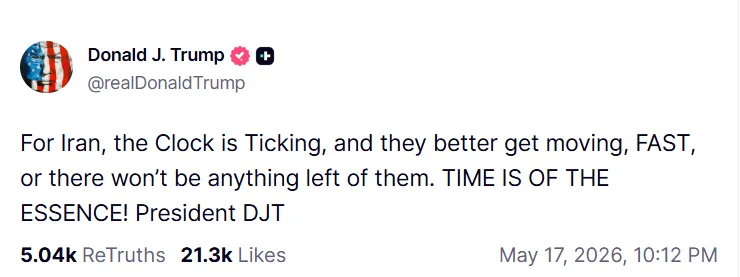
Screenshot of Truth Social Post by Donald Trump(@realDonaldTrump)
Any future American campaign would likely rely heavily on the U.S. Navy and Air Force conducting large-scale bombing operations first. There are already predictions of possible carpet-bombing campaigns before any deeper military escalation or potential ground invasion inside Iran.
This was deliberate.
Iran was never expected to create these kinds of operational and reputational problems for Washington. Its defenses had already been weakened, its S-300 systems damaged, and many of its Chinese-made air defense assets reportedly destroyed. Yet stories involving American aircraft losses, damaged platforms, and operational failures continued emerging during the conflict.
That is why the Idaho collision quickly became symbolic far beyond the air show itself. It reinforced an already growing perception that highly promoted American fighter systems are no longer untouchable in the way they once appeared to be. And now the next military confrontation could decide whether this perception becomes permanent.
Can the U.S. Air Force Recover Its Reputation After This?
The real concern is not whether the United States still possesses advanced military technology. The concern is whether the psychological dominance associated with American air power is beginning to fade globally.
One after another, stories involving damaged F-35s, destroyed drones, F-15 incidents, Operation Epic Fury losses, and now the EA-18G Growler mid air collision have combined into a much larger reputational problem. These incidents are no longer being viewed as isolated accidents. Instead, they are becoming part of a broader narrative about declining dominance.
At the same time, India’s earlier refusal to fully open its fighter ecosystem to the United States now appears strategically important rather than merely transactional. That decision increasingly looks like an effort to preserve long-term autonomy instead of depending too heavily on external military ecosystems and aggressive platform marketing.
The central question is no longer whether the U.S. still has advanced fighter aircraft. The real question is whether the world still fears and respects those aircraft in the same way it once did.
Sources:
FAQs
What caused the EA-18G Growler crash in Idaho?
Two U.S. Navy EA-18G Growlers collided mid-air during the Gunfighter Skies Air Show near Mountain Home Air Force Base in Idaho on May 17, 2026. All four crew members successfully ejected before impact. The unusual angle of the collision allowed both aircraft to remain structurally locked together long enough for the pilots to escape.
Is Boeing still producing the F/A-18 Super Hornet?
Boeing plans to end new-build F/A-18 Super Hornet production by 2027, while EA-18G Growler production has already effectively concluded. This has increased concerns about aircraft scarcity and replacement pressure after operational losses.
Why did India reject Boeing’s F/A-18 fighter jet?
India eliminated Boeing’s F/A-18 Super Hornet and Lockheed Martin’s F-16 from the MMRCA competition in 2011 before eventually moving toward Rafale procurement. The decision reflected India’s long-term hesitation about allowing deep American entry into its fighter aircraft ecosystem.
Did JD Vance offer F-35 fighter jets to India?
Yes. During his 2025 India visit, JD Vance publicly advocated for the Indian Air Force to consider the F-35 platform. The move was widely seen as part of a broader American push to enter India’s fighter market after earlier procurement setbacks.
What was Operation Epic Fury?
Operation Epic Fury was a U.S.-Israel military campaign against Iran launched in February 2026. Aircraft losses, damaged systems, and operational setbacks during the campaign triggered wider debates about whether American air dominance remains as overwhelming as it once appeared.
Closing Question
If another major U.S. military operation against Iran begins in the coming weeks, will India view America’s fighter ecosystem as a dependable strategic partner — or as a system whose image of dominance is beginning to weaken under real-world military pressure?
Share Your Views in the Comments below.
Explore more about Defense & Security and Indian Affairs.