Table of Contents
Why India Suddenly Wants More S-400 Systems
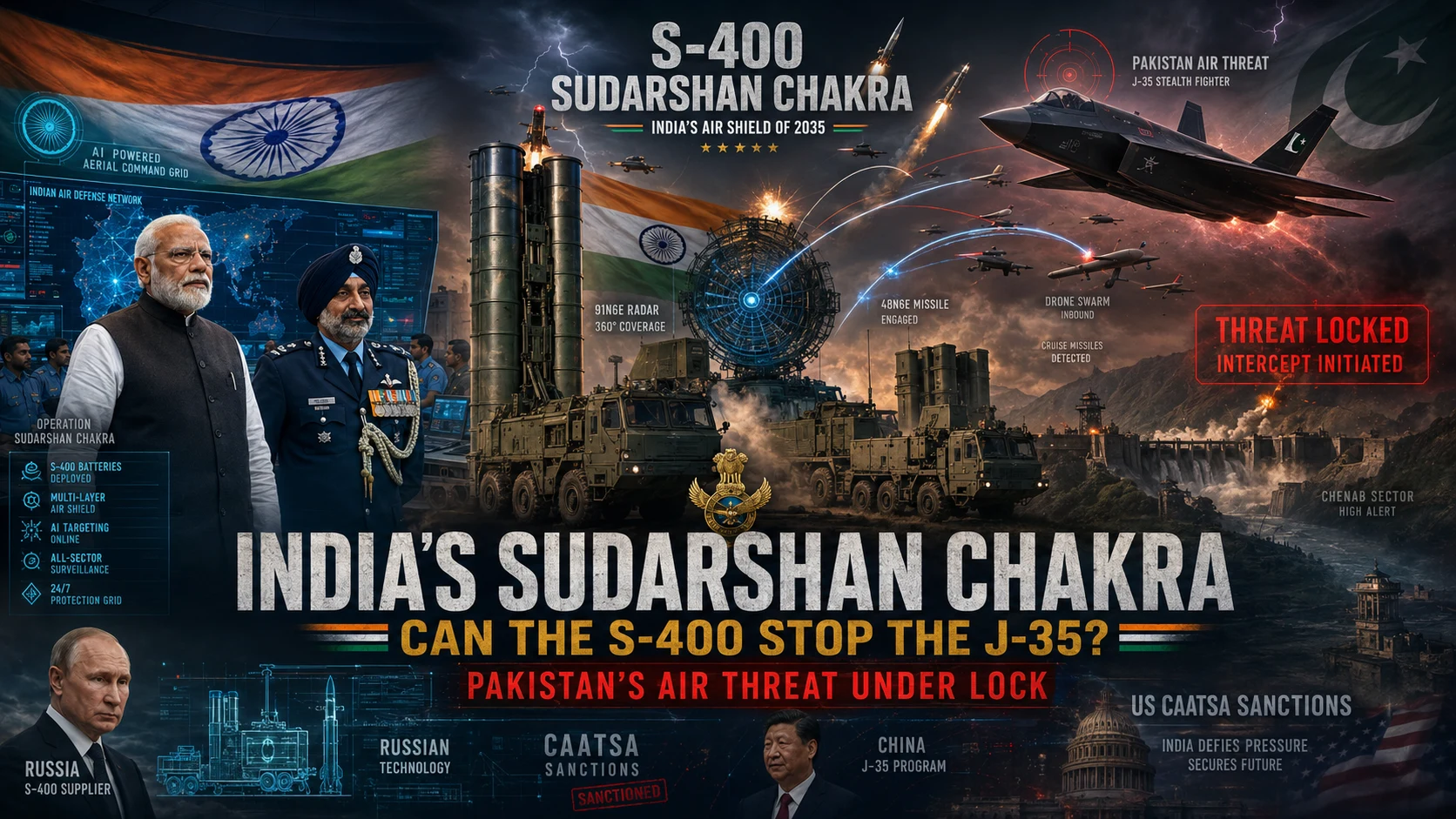
India’s decision to pursue additional S-400 Sudarshan Chakra air defense systems signals that New Delhi is preparing for what increasingly looks like a major geopolitical event on the Indian subcontinent within the next five years. The trigger for this discussion was confirmation from Russia’s Federal Service for Military-Technical Cooperation that India has officially shown interest in buying more S-400 batteries after the original five-unit deal signed in 2018.
That earlier purchase created serious tension with Washington because the United States sanctioned both Turkey and China for buying the same Russian platform. India escaped sanctions only after receiving a special waiver during Donald Trump’s first term. Now the calculation appears different. The United States is no longer the sole superpower it once was, and sanctions no longer automatically force countries into strategic retreat.
The bigger issue is not simply buying more missile systems. The real question is why India suddenly believes five S-400 units may no longer be enough.
Sources: The Moscow Times, The Hindu, U.S. Department of State, BBC
The Moment Operation Sindoor Changed Everything
Operation Sindoor appears to have fundamentally changed India’s military thinking because it was the first foreign conflict where the S-400 system was publicly seen as a decisive success. Russian media and officials in Moscow openly pointed to India’s battlefield use of the system as proof of its effectiveness after years of criticism surrounding Russian air defense systems in countries like Iran and Venezuela.
Viral geopolitical memes mocking the S-300 and S-400 systems spread widely after failures linked to Iran and Venezuela. One meme referenced Late Ali Khamenei, Former Supreme leader of Iran and mocked the systems as expensive but ineffective. Another referenced Nicolás Maduro, Former President of Venezuela and suggested the systems looked powerful in theory but failed in reality.
How Supreme Leader Khamenei and President Maduro would review S300 Defense System performance on Amazon: https://t.co/uehwAa2dbE pic.twitter.com/oekpODT6Qn
— Ahmed Quraishi (@_AhmedQuraishi) January 5, 2026
Russian air defense systems had developed a bad reputation internationally, and Operation Sindoor became the first major foreign example where the S-400 was presented as a clear battlefield success.
The sharpest insight came during the opening phase of the operation. During the first night of combat, the S-400 Sudarshan Chakra system reportedly tracked a Pakistani JF-17 Thunder using the 91N6E panoramic radar at nearly 200 kilometers and later neutralized a high-value airborne early warning aircraft at around 300 kilometers under contested conditions. That transformed the S-400 from a prestige purchase into a combat-validated strategic shield.
This was deliberate.
India currently has only three operational S-400 units. Two are deployed near the Pakistan border while one has been positioned near the Siliguri Corridor. Two more units are still expected to arrive. One will most likely be deployed in the northeast while another will strengthen the Pakistan front, making India’s deployment pattern extremely clear: three S-400 units focused toward Pakistan and the remaining systems oriented toward China.
The strategic logic behind this deployment is straightforward. India wants the ability to place what may be the world’s best air defense system across the entire Pakistan border. In any future conflict, that would give India a major advantage in controlling Pakistani aircraft, drones, and incoming missile threats before they can enter Indian airspace.
But the bigger question is why India suddenly feels this level of air defense coverage is becoming urgent.
Sources: The Print, The Times of India
Why Pakistan’s Water Crisis Makes This Personal for India
India’s S-400 expansion is not only about aircraft or missiles. Water security is increasingly becoming a military issue, and that may be the most important shift in India’s strategic thinking.
After the Pahalgam attack and Operation Sindoor, India regulated the flow of the Chenab River and maintained pressure through infrastructure connected to the Baglihar and Salal dams. Reports claimed Pakistan’s water shortages worsened as temperatures increased across the subcontinent. India’s position also hardened sharply against the Indus Waters Treaty. The treaty is now increasingly viewed as fundamentally flawed and unlikely to be restored.
This changes the nature of future conflict. Pakistan, under severe pressure from declining water access, could eventually target Indian dam infrastructure through fighter aircraft, drones, or missile strikes. In that environment, the S-400 becomes less about symbolic deterrence and more about protecting critical national infrastructure.
The logic is direct: rivers flow from India into Pakistan, giving India long-term leverage during any sustained regional crisis. That is why the S-400 is described not simply as an air defense system, but as a critical part of India’s Sudarshan Chakra strategy. And once water enters the military equation, the China factor becomes impossible to separate from Pakistan.
Sources: DD News, The Economic Times, India Sentinels
The J-35 Threat India Cannot Ignore
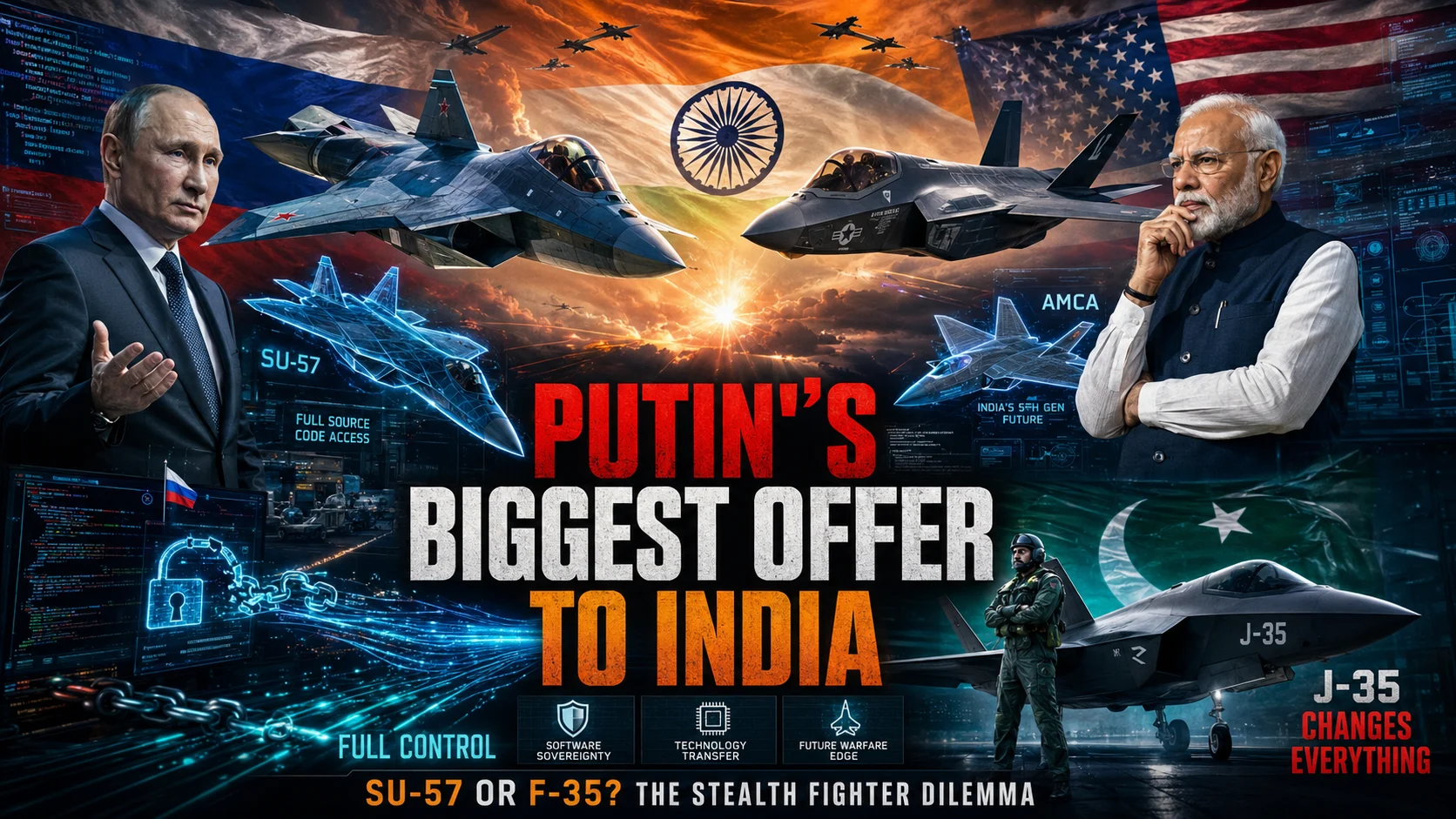
China’s decision to push the export version of the 5th Gen, J-35 stealth fighter toward Pakistan has created a problem India currently cannot match symmetrically. One uncomfortable reality now hangs over the region: Pakistan may soon possess a fifth-generation fighter aircraft before India fields one of its own.
The export-oriented J-35AE program moved from speculation into reality once China publicly revealed the platform for foreign buyers. Pakistan is widely seen as the likely destination. The situation becomes even more uncomfortable for India because Pakistan may soon receive a fifth-generation fighter jet from China while India still has no plan for a fifth-generation fighter jet of its own.
That explains why additional S-400 procurement is being treated as the fastest available solution. Instead of waiting years for a domestic fifth-generation aircraft program to mature, India appears focused on building enough air defense coverage to neutralize incoming threats before they reach strategic targets.
The objective is direct. If a Pakistani Air Force J-35 attempts to enter Indian territory during a future conflict, India wants enough S-400 batteries in place to shoot it down before it can strike strategic targets. That operational scenario is one of the main reasons India suddenly wants more systems.
Think about what that means. India may soon face a Pakistan Air Force operating Chinese fifth-generation aircraft while India relies heavily on long-range Russian air defense systems to counter them.
And that strategy inevitably reshapes India’s relationship with Washington.
Sources: India Today, South China Morning Post
Why the US Waiver Question Matters Less Now
The earlier S-400 deal forced India into delicate diplomacy with the United States because of CAATSA sanctions pressure. Turkey faced sanctions after purchasing the S-400. China also faced punitive action. India escaped that outcome only because Washington granted a special waiver during Donald Trump’s first term.
But the geopolitical atmosphere has changed significantly. The United States is no longer the sole superpower it once was, and sanctions no longer carry the same level of fear or coercive power. Neither Turkey nor China suffered the kind of crippling strategic collapse many once expected from American sanctions.
That creates a very different atmosphere around India’s next purchase. Instead of asking whether Washington will approve the deal, the real question now is whether India even feels the need to seek another waiver at all.
At the same time, Russia’s own situation matters. The Russia-Ukraine war may not continue much longer because Vladimir Putin no longer appears interested in allowing the conflict to drag on indefinitely. If that happens, India could receive future S-400 deliveries much faster than before because wartime production pressure on Moscow would decline.
But the most important shift is what India appears to be preparing for beyond the immediate transaction itself.
Sources: Reuters
India’s Long-Term Bet on the Sudarshan Chakra
India is no longer treating the S-400 as just another imported weapons platform. It is increasingly becoming the backbone of a much wider national security approach built around air dominance, infrastructure protection, and long-term deterrence against both Pakistan and China.
Mission Sudarshan Chakra increasingly appears tied to the idea of creating a broader national air defense shield, with the S-400 playing the central role because it already demonstrated battlefield credibility during Operation Sindoor. India’s thinking is also not purely defensive. In any future confrontation, India wants the ability not only to defend its own airspace and dams, but also to shoot down Pakistani drones, missiles, and fighter aircraft operating from Pakistani territory.
The logic behind India’s urgency is cumulative. Pakistan’s drone and missile threat continues growing. China’s J-35 export strategy raises the stealth challenge. Water disputes linked to the Indus system increase pressure on critical Indian infrastructure. And India’s leadership increasingly appears convinced that future conflicts in the region may begin with sudden aerial escalation rather than slow-moving border mobilization.
That is why India’s interest in additional S-400 systems matters far beyond another defense purchase.
It suggests New Delhi believes the next phase of conflict in South Asia could unfold very differently from the wars of the past.
FAQs
What is the S-400 Sudarshan Chakra air defense system?
The S-400 Sudarshan Chakra is India’s designation for the Russian-made S-400 long-range air defense system integrated into India’s wider air command structure. It is designed to intercept fighter aircraft, drones, cruise missiles, and other aerial threats at extended ranges. It is increasingly being treated as a central pillar of India’s future security planning against both Pakistan and China.
How did the S-400 perform during Operation Sindoor?
Operation Sindoor was the first foreign conflict where the S-400 demonstrated major operational success. It reportedly tracked Pakistani aerial assets at long range and destroyed multiple targets, including high-value aircraft. Russian officials later highlighted India’s battlefield use of the system as proof of its effectiveness after criticism of Russian air defense failures elsewhere.
Why does India want additional S-400 systems?
The expansion is directly linked to future threats from Pakistan and China. Pakistan may soon receive Chinese J-35 stealth fighters, while India also fears attacks on dams and strategic infrastructure linked to water disputes. More S-400 batteries would allow India to strengthen coverage across both the Pakistan and China fronts.
Why is the Indus Waters Treaty connected to air defense?
Water pressure could become a future trigger for military escalation. India’s regulation of Chenab River flow after Operation Sindoor increased strategic pressure on Pakistan. The concern is that Indian dams and water infrastructure could eventually become military targets, making long-range air defense systems strategically important.
Could the US sanction India again for buying S-400 systems?
The possibility remains, but India may now feel less constrained by American pressure. During the earlier purchase, India received a waiver despite sanctions laws targeting S-400 buyers. Changing global power dynamics have also reduced the deterrent effect of such sanctions.
Closing Question
If Pakistan eventually receives Chinese J-35 stealth fighters while water pressure from the Indus system keeps rising, can India’s expanding S-400 Sudarshan Chakra air defense network prevent the next crisis from escalating into a direct confrontation over strategic infrastructure?
Share Your Views in the Comments below.
Explore more about Defense & Security and Indian Affairs.