Table of Contents
The Ceasefire That Failed on Day 100 of the War
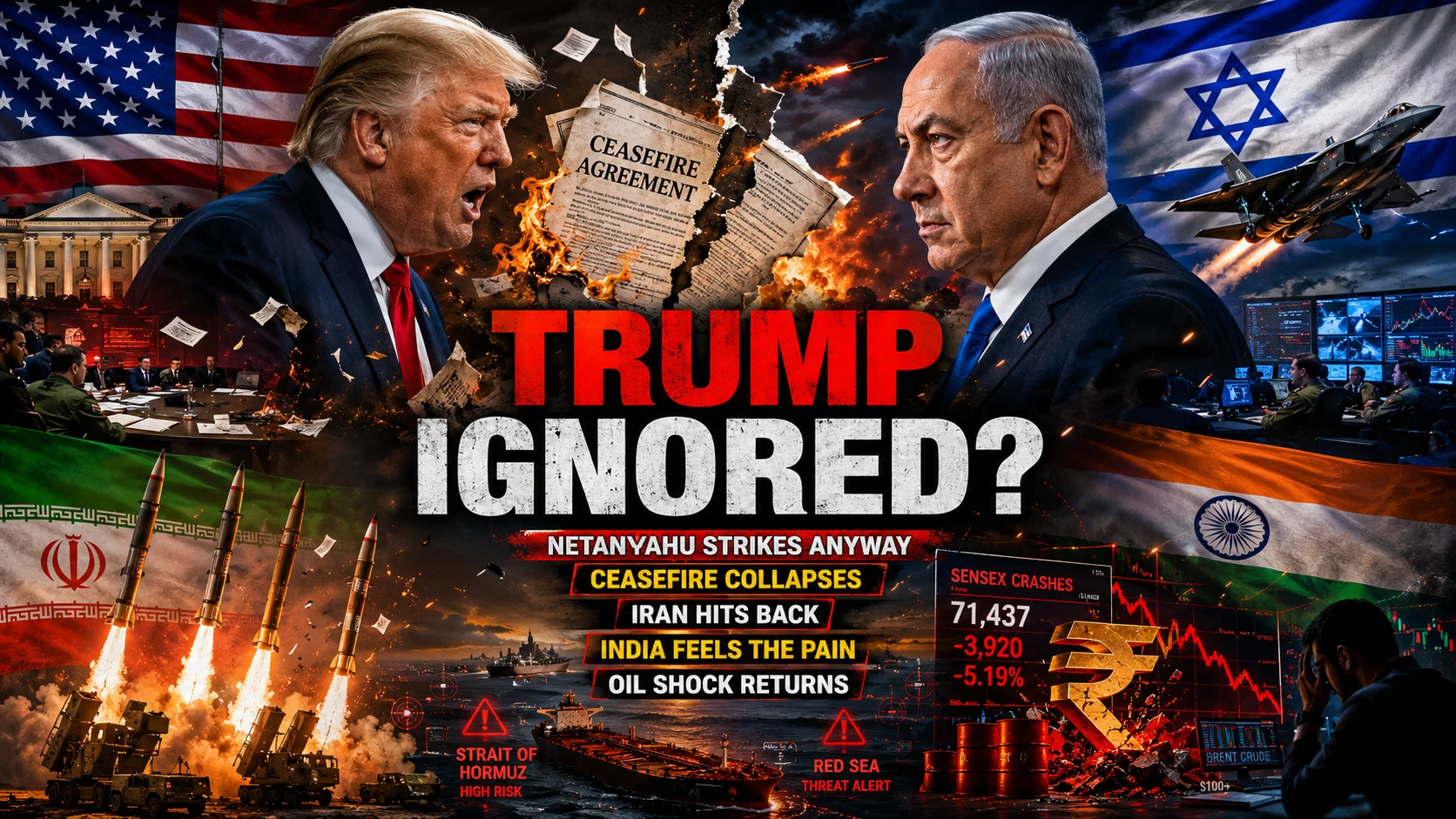
The Israel Iran ceasefire collapse was not simply another exchange of strikes—it marked the failure of a diplomatic framework that had been holding together a wider regional conflict since April 8, 2026.
The Pakistan-brokered ceasefire entered force on April 8. By June 8, exactly 100 days into the broader war, the arrangement had disintegrated. The immediate trigger emerged on June 7 when Israeli forces struck Hezbollah-linked positions in Beirut’s southern suburbs. Iran responded not through proxies but with a direct ballistic missile barrage toward northern Israel. Within hours, Israel expanded the confrontation, conducting strikes across Iranian territory and hitting the Karun Petrochemical Company inside the Mahshahr Special Economic Zone.
This sequence matters because it transformed a managed confrontation into a direct state-versus-state escalation. The question was no longer whether the ceasefire survived—it was who actually controlled the next phase of the conflict.
So what did this reveal about the relationship between Washington and Jerusalem?
Sources: News on AIR, CNBC
The Moment Trump Lost the Initiative
The most important fact of this crisis is not military. It is political.
Donald Trump publicly declared that Benjamin Netanyahu would have “no choice” but accept any US-negotiated agreement with Iran because he “calls all the shots.” Yet within hours, Israeli aircraft were striking targets in Tehran, Tabriz, and Isfahan despite Trump’s request during a phone call that Israel allow more time for diplomacy.
The sharpest insight from the entire episode is this: Netanyahu’s decision exposed a growing gap between Washington’s diplomatic narrative and the military reality on the ground.
That gap becomes even more striking when compared with missile intelligence. Trump publicly claimed Iran retained only about 22% of its missile arsenal. Classified US intelligence assessments reportedly concluded Iran still possessed roughly 70% of its pre-war ballistic and cruise missile stockpile and had restored operational access to 30 of 33 missile sites along the Strait of Hormuz.
If Washington is negotiating based on a public narrative of Iranian exhaustion while Israel is acting against intelligence suggesting substantial Iranian resilience, then diplomacy and military strategy are operating from different assumptions about the same battlefield. That mismatch may explain why ceasefire talks repeatedly survive on paper but fail in practice. The next question is who ultimately pays for that disconnect.
Sources: Hindustan Times, The Hindu, New York Times
Why India’s Neutrality Suddenly Looks More Expensive
India may be thousands of kilometres away from the battlefield, but June 8 demonstrated how quickly West Asian instability becomes an Indian economic problem.
The Ministry of External Affairs expressed deep concern and urged immediate de-escalation. Simultaneously, the Indian Embassy in Tehran advised Indian citizens to leave Iran and avoid travel. Those diplomatic statements reflected a practical reality: India remains heavily exposed to energy and maritime disruptions originating in West Asia.
The economic impact appeared immediately. The Sensex closed at 73,524.26 after losing 719 points. The Nifty fell to 23,123. The Rupee weakened to a historic 95.74 against the US Dollar. Brent crude surged beyond $97 per barrel and moved toward the psychologically important $100 threshold.
What makes this more significant is the chain reaction. Higher oil prices increase India’s import bill. A larger import bill weakens the Rupee. A weaker Rupee raises imported inflation. The government then faces fiscal pressure, illustrated by the decision to reduce subsidized LPG refills under the PM Ujjwala Scheme to four per household annually because of an under-recovery of ₹700 per cylinder.
The popular assumption is that India’s neutrality keeps it insulated. The evidence suggests the opposite. India is economically exposed regardless of political positioning because energy corridors, shipping routes, and import costs remain vulnerable to events outside its control.
But why did markets react so aggressively after only a few days of renewed fighting?
Sources: India Today, Oil Price, Anadolu Ajnasi, NDTV Profit
The Missile Story Everyone Got Wrong
Many observers assumed months of strikes had permanently crippled Iran’s military capacity.
The evidence points in a different direction.
Satellite imagery documented extensive destruction across Iranian military and energy infrastructure. Damage was observed at Bandar Abbas, Fath Air Base, Siri Island oil facilities, and multiple regional military installations. Yet despite those losses, Iran launched Operation Nasr, struck energy-linked targets around Haifa, and maintained a direct retaliatory posture.
One reason is institutional resilience. Following the death of Ayatollah Ali Khamenei, Mojtaba Khamenei became Supreme Leader, but reports indicate the IRGC emerged as the dominant governing force inside Iran. That matters because the organization controlling missile forces survived even when infrastructure suffered damage.
This was deliberate.
The Mahshahr strike and subsequent Haifa retaliation demonstrated that the conflict had evolved beyond symbolic military exchanges. Both sides targeted assets connected to energy security and industrial capacity.
Which leads directly to the broader strategic danger.
Sources: Al Jazeera
From Mahshahr to Haifa: The Real Battle Was Energy
The strike on the Karun Petrochemical Company was more than a tactical attack.
It signaled that energy infrastructure had become a central battlefield objective.
After Israel struck Mahshahr, the IRGC announced retaliatory missile attacks targeting energy infrastructure in Israel’s Haifa region. Iranian media amplified the response, including footage showing a missile marked with the warning, “You will regret this.”
Iran releases footage of missiles launched at Israel in retaliation for the attack on an Iranian petrochemical facility. pic.twitter.com/wiVOldDjxB
— Clash Report (@clashreport) June 8, 2026
The significance lies in what these targets represent. Petrochemical complexes, storage facilities, and export infrastructure are economic weapons. Damage to them affects supply chains, export revenues, insurance costs, and investor confidence.
At the same time, transport disruptions were already spreading. UNICEF logistics officials reported delivery delays of four to six weeks into Lebanon and Gaza. That indicates the effects of the conflict were moving beyond military objectives and into commercial networks.
The battlefield was no longer limited to soldiers and missiles. It was becoming a contest over economic endurance.
And then came the maritime threat.
Sources: NDTV Profit, Reuters
The Blockade Threat Markets Fear Most
The most dangerous development may not be any individual missile strike.
It is the simultaneous pressure on two of the world’s most important maritime corridors.
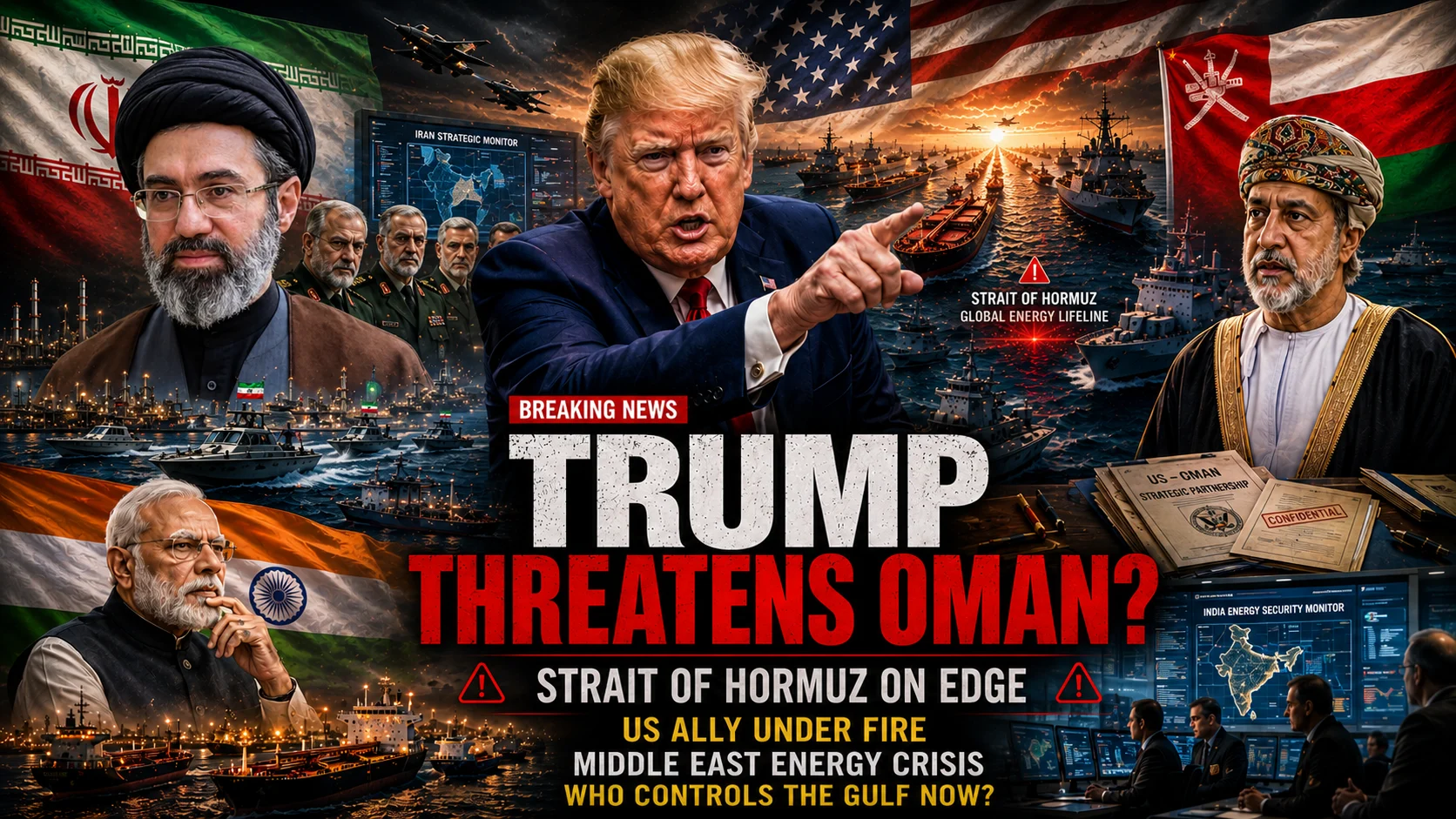
Iran’s closure of the Strait of Hormuz coincided with Yemen’s Houthi movement declaring a complete ban on Israeli shipping in the Red Sea while also launching missile attacks. Together, these actions created a dual chokepoint crisis affecting global trade and energy transit.
India possesses an important buffer. Petroleum Minister Hardeep Singh Puri stated that India holds oil and gas reserves sufficient for roughly 76 to 80 days of consumption. That provides breathing room, not immunity.
Historical experience suggests markets eventually adapt through diversification, reserve releases, and alternative supply arrangements. However, adaptation takes time. The immediate effect remains inflationary pressure, currency weakness, and higher costs for import-dependent economies.
For India, the strategic lesson is straightforward: reserves can buy time, but they cannot replace secure trade routes.
Sources: News18, The Economic Times
Conclusion
The conventional reading of the Israel Iran ceasefire collapse is that diplomacy failed because the fighting resumed.
The deeper story is more complicated.
The crisis exposed a widening gap between American diplomatic messaging and Israeli military decision-making. It demonstrated that Iran’s missile network remains far more resilient than public political rhetoric suggested. It transformed energy infrastructure into a primary battlefield and revealed how quickly maritime chokepoints can transmit geopolitical risk into Indian households through fuel prices, inflation, and currency weakness.
India’s challenge is therefore not choosing between Israel and Iran. It is reducing vulnerability to disruptions created by both. Strategic petroleum reserves provide a temporary shield, but the June 2026 escalation showed that economic exposure remains deeply tied to West Asia’s security environment.
FAQs
Did the Israel-Iran ceasefire collapse?
Yes. The Pakistan-brokered ceasefire that began on April 8, 2026 effectively collapsed after direct military exchanges on June 7-8. The escalation included Israeli strikes in Beirut and Iran, followed by Iranian ballistic missile attacks and retaliatory operations against energy-related targets.
Why is the Indian stock market falling today?
The Sensex fell 719 points and the Nifty declined more than 1% as investors reacted to rising crude oil prices, geopolitical uncertainty, foreign investor selling, and fears of prolonged disruption in West Asian energy routes.
What is Trump’s stance on the Israel-Iran war?
Trump publicly argued that Netanyahu would ultimately accept a US-negotiated agreement with Iran and reportedly urged Israel not to retaliate immediately. However, Israeli strikes followed shortly after, highlighting tensions between US diplomatic efforts and Israeli military priorities.
How many missiles does Iran have left in 2026?
Public estimates differ sharply. Trump stated Iran retained roughly 22% of its missile arsenal, while classified US intelligence assessments reportedly concluded Iran still possessed approximately 70% of its pre-war ballistic and cruise missile stockpile.
What are India’s strategic petroleum reserves?
According to Petroleum Minister Hardeep Singh Puri, India possesses total oil and gas reserves sufficient for approximately 76 to 80 days of national consumption, providing a temporary buffer against supply disruptions.
Closing Question
If another ceasefire emerges while Iran still retains substantial missile capacity and maritime chokepoints remain vulnerable, should India continue relying primarily on neutrality—or begin building a more active diplomatic strategy with both Jerusalem and Tehran to protect its energy security?
Share Your Views in the Comments below.
Explore more about Defense & Security.