Table of Contents
A Statement That Sparked Global Attention
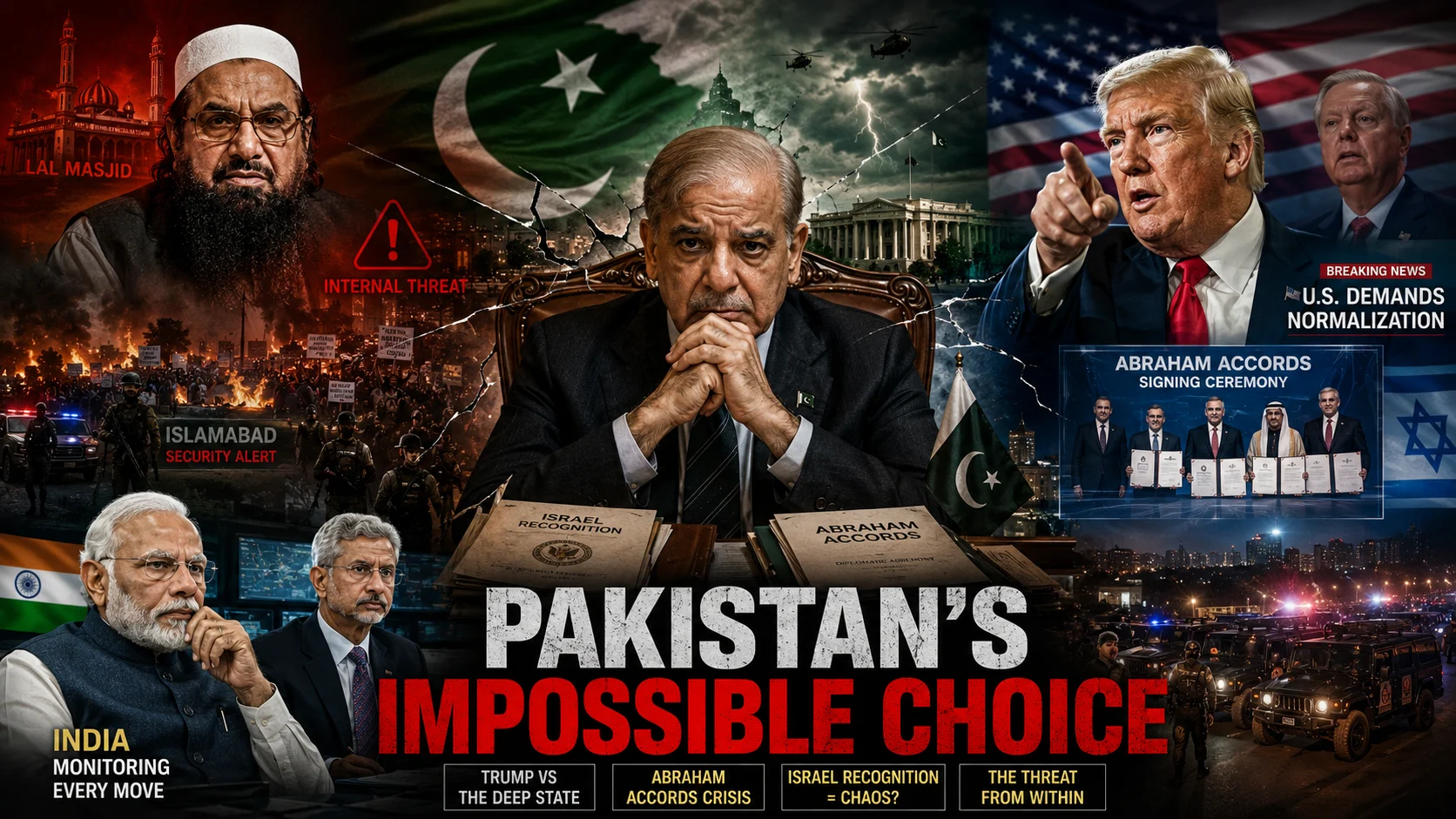
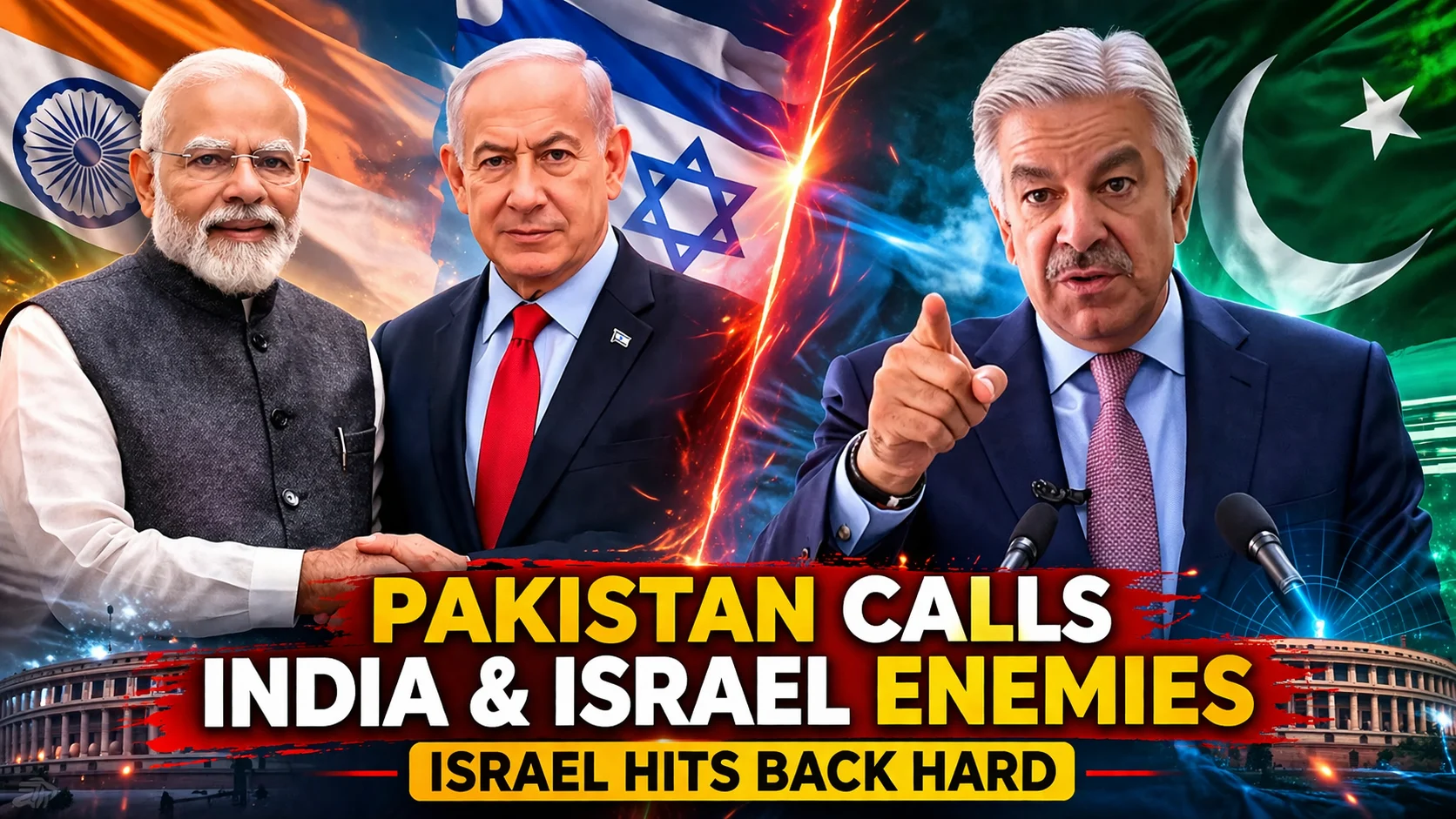
The phrase Pakistan calls India & Israel enemies is no longer just a headline—it reflects a deeper geopolitical shift unfolding in real time.
When Pakistan Defense Minister, Khawaja Asif stood in Pakistan’s parliament and openly declared India and Israel as enemies of the Islamic world, it wasn’t a routine political remark.
This was deliberate.
And the reaction it triggered—especially from Israel—revealed something bigger: a growing battle not just of weapons, but of narratives.
Sources: The Express Tribune
What Pakistan’s Defense Minister Actually Said
Pakistan defence minster khwaja asif says in national assembly of pakistan muslim world has two enemies Hindustan and Israel. pic.twitter.com/d3HcGbhBII
— SILENT BRIEF (@SilentBriefHQ) April 8, 2026
Inside Pakistan’s parliament, Khawaja Asif called on the Muslim world to recognize its “true enemies.”
According to his statement:
- India represents the threat in South Asia
- Israel represents the threat in the Gulf
- The Islamic world must remain vigilant and united
He went further—linking global influence networks to Zionist presence across regions including Europe and even parts of the Arab world.
This wasn’t just criticism.
It was positioning.
Pakistan, through this statement, attempted to present itself as a potential leader of the Islamic geopolitical bloc.
But here’s the problem.
That positioning collided directly with reality.
Sources: NewsX
Israel’s Sharp Response Changes the Narrative
Israel didn’t ignore the statement.
Instead, it responded by rejecting Pakistan’s credibility entirely.
Reports from Israeli media highlighted that Pakistan:
- Is not seen as a serious mediator
- Cannot be trusted in ceasefire discussions
- Has demonstrated openly hostile rhetoric
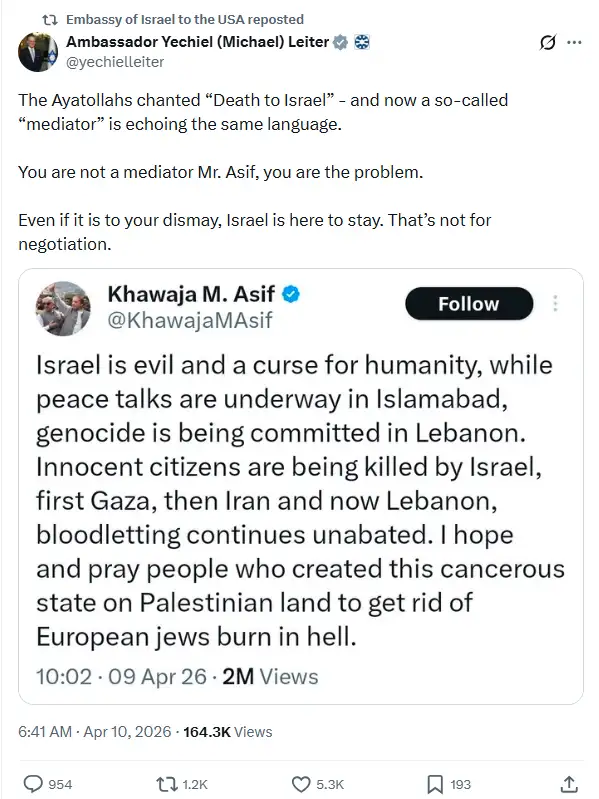
Screenshot of X Post by Ambassador Yechiel (Michael) Leiter, Israel’s Ambassador to the United States
The government led by Benjamin Netanyahu took a firm stance—labeling such statements as unacceptable and extreme.
That response matters.
Because it shifts the conversation from “what Pakistan said” to “whether Pakistan should even be part of global diplomacy.”
Sources: Times of Israel
Pakistan’s Role in US–Iran Talks Under Question
At the same time, Pakistan was preparing to host critical discussions between the United States and Iran in Islamabad.
On paper, this should have elevated Pakistan’s global standing.
But the timing created contradictions.
On one side:
- Pakistan positions itself as a peace facilitator
On the other:
- Its defense minister publicly attacks key global players
Meanwhile, representatives expected in these discussions include:
- JD Vance, Vice-President of US
- Steve Witkoff, Special Envoy to Mideast
- Jared Kushner, Special Envoy for Peace (Son-in-law of Donald Trump)
- Iranian leadership figures including Mohammed Bagher Ghalibaf, Parliament Speaker and Abbas Araghchi, Foreign Minister
BREAKING: The US and Iran will hold direct face to face peace talks this Saturday in Islamabad, Pakistan.
— Crypto Rover (@cryptorover) April 9, 2026
US envoy: JD Vance, Jared Kushner, and Steve Witkoff.
Iran delegation: Parliament Speaker Ghalibaf and Foreign Minister Araghchi. pic.twitter.com/Xa2Ox1Sthv
But one key absence stands out.
Israel is not part of these talks.
That detail matters.
Because without Israel—the central actor in the conflict—the credibility of any negotiation becomes fragile.
Sources: Moneycontrol
Narrative Warfare: The Invisible Battlefield
This is where the story shifts from politics to strategy.
Narrative warfare.
It’s not about missiles.
It’s about perception.
Take the example of Benjamin Netanyahu:
- He consistently highlighted Iranian parliamentary slogans like “Death to America”
- He framed Iran as a global threat—not just a regional one
- He influenced public opinion in the United States
The result?
Iran’s image in Western perception was significantly damaged.
Now compare that to India’s situation.
When Pakistan’s defense minister openly labels India an enemy in parliament—why does that not dominate global headlines?
That silence matters.
India’s Missed Opportunity in Global Messaging
India faces a different kind of challenge.
Not military.
Narrative.
Despite strong diplomatic positioning, India has not consistently amplified such statements globally.
This creates a gap.
Because in modern geopolitics:
Perception shapes policy.
If global audiences are not exposed to statements like these, then:
- Pakistan’s positioning goes unchallenged
- International opinion remains incomplete
- Strategic advantage shifts elsewhere
This is where India’s approach differs significantly from Israel’s.
Israel actively exports its narrative.
India often responds domestically.
That difference is structural.
What This Means for Future Geopolitics
The consequences of this moment could extend far beyond a single statement.
Several trends are emerging:
1. Pakistan–Israel tensions may intensify
Israel has already begun highlighting Pakistan’s rhetoric in international discourse.
2. US faces a balancing dilemma
Donald Trump has previously maintained close engagement with both Pakistan and Israel.
But how long can that balance hold?
3. Narrative warfare will dominate future conflicts
Military strength alone is no longer enough.
Countries must control global perception.
4. A long-term rivalry may be forming
There is a growing possibility that Pakistan and Israel could emerge as direct geopolitical rivals in the coming decade.
That shift would reshape regional alignments.
Final Analysis
The controversy around Pakistan calls India & Israel enemies is not just about one speech.
It reveals a deeper transformation.
Geopolitics is no longer driven only by power.
It is driven by storytelling.
Pakistan attempted to position itself as a leader of the Islamic world.
Israel countered by questioning its credibility.
India, meanwhile, faces a critical decision—whether to remain reactive or become proactive in shaping global narratives.
Because in today’s world:
Winning the narrative often comes before winning the conflict.
And sometimes—
It decides the outcome.
FAQs
Why did Pakistan call India and Israel enemies?
Pakistan’s defense minister framed both countries as threats to the Islamic world, linking India to South Asia and Israel to the Middle East. The statement reflects ideological positioning as well as geopolitical signaling.
How did Israel respond to Pakistan’s statement?
Israel rejected Pakistan’s credibility as a mediator and criticized the aggressive rhetoric. The response focused on delegitimizing Pakistan’s role in diplomatic processes.
Is Pakistan a credible mediator in Middle East conflicts?
This remains contested. While Pakistan is attempting to position itself as a mediator, statements like these reduce trust among key stakeholders, especially Israel.
What is narrative warfare in geopolitics?
Narrative warfare involves shaping global perception through messaging, media, and political framing. It influences how countries are viewed internationally and can impact policy decisions.
How does this affect India?
India faces a narrative challenge. Without amplifying such developments globally, it risks losing influence in shaping international opinion despite strong diplomatic capabilities.
What Do You Think About This Geopolitical Shift?
Do you believe Pakistan’s statement will escalate tensions further between global powers?
Or is this just another moment in the larger narrative warfare shaping today’s world?
Share Your Perspective in the Comments below—because in modern geopolitics, public opinion is no longer passive. It’s part of the battlefield.
Explore more about World Affairs and Indian Affairs.