Table of Contents
After Hormuz, Is Malacca Next?
The Strait of Malacca geopolitical importance is suddenly back in focus.
After tensions in the Strait of Hormuz created uncertainty across global markets, a new question is emerging:
Could the next strategic pressure point be the Strait of Malacca?
This is where things begin to shift.
Because unlike Hormuz, Malacca is not just about energy.
It is about the entire flow of Asian trade.
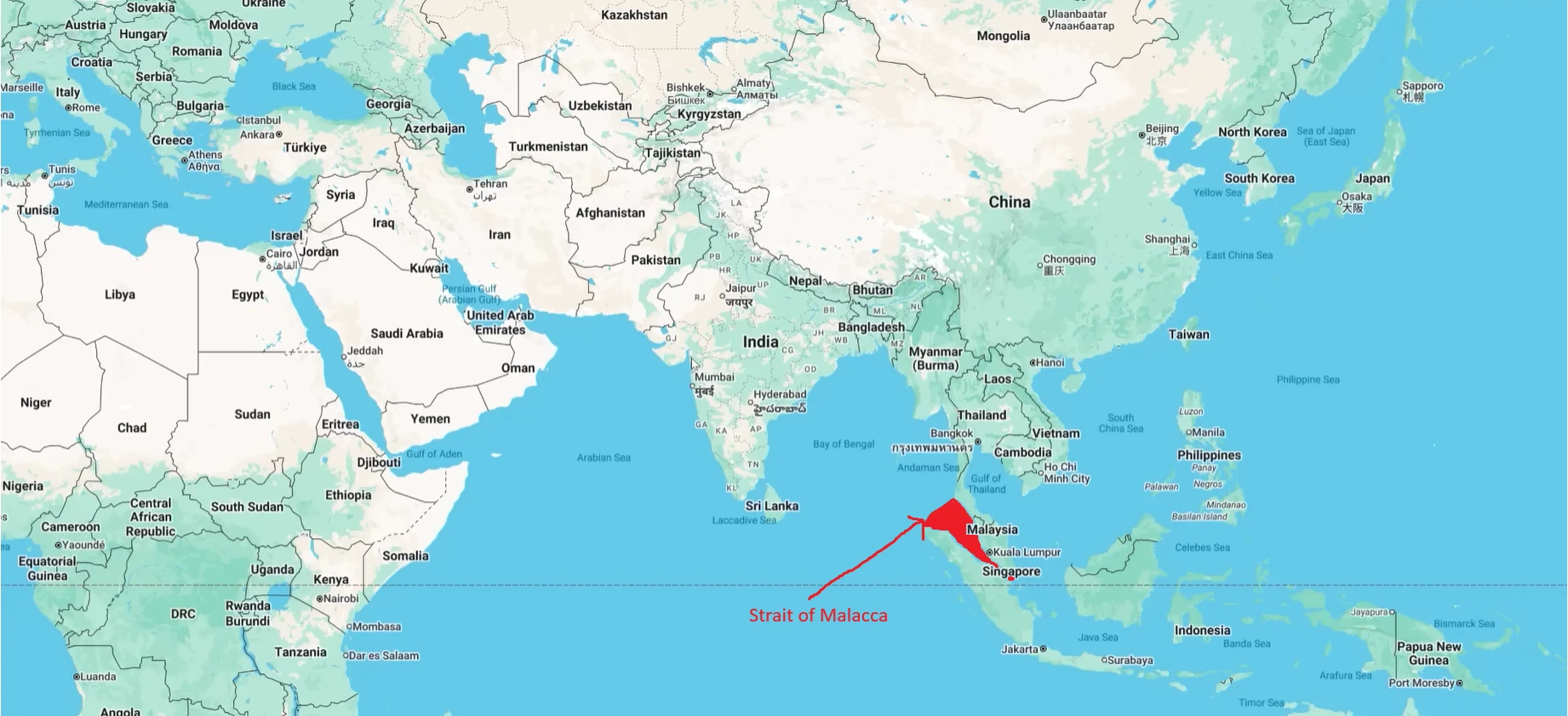
What Is the Strait of Malacca
The Strait of Malacca is a narrow sea passage located between:
- Malaysia
- Indonesia
- Near Singapore
It connects the Indian Ocean to the South China Sea.
In simple terms, it is one of the busiest maritime corridors on Earth.
A chokepoint.
And chokepoints decide power.
Why This Chokepoint Matters for India
For India, the importance of Malacca is immense.
Roughly:
- Around 50% of India’s sea trade passes through this route
- Critical goods, supply chains, and commercial flows depend on it
At the same time:
- Energy imports largely come via Hormuz
- Trade flows depend heavily on Malacca
That dual dependency creates vulnerability.
If both chokepoints face disruption—
The impact compounds.
This is where concern begins.
China’s “Malacca Dilemma” Explained
For China, the stakes are even higher.
- 70–80% of its trade flows through Malacca
- Around 70–75% of its energy imports depend on this route
This is often called the Malacca Dilemma.
A simple problem:
If Malacca is blocked, China’s economy faces immediate stress.
That vulnerability shapes China’s global strategy.
And it explains why this narrow waterway matters far beyond Southeast Asia.
Sources: Modern Diplomacy
US Indo-Pacific Strategy and Indonesia Deal
Now comes the critical development.
The United States has recently elevated its defense engagement with Indonesia.
It was an honor to host Indonesian Defense Minister @sjafriesjams at the Pentagon today.
— Secretary of War Pete Hegseth (@SecWar) April 13, 2026
I was proud to announce that we are elevating our relationship to a Major Defense Cooperation Partnership, in recognition of the strength and potential of our bilateral defense ties. pic.twitter.com/eyo3Jh1cWF
A major defense cooperation partnership has been announced.
But the real discussion is deeper.
Reports indicate that the US proposed:
- Potential overflight access for military aircraft
- Expanded operational coordination
Indonesia has clarified that:
- Full overflight access is not yet approved
- The proposal remains under review
That distinction matters.
Because if approved, it could allow the US to significantly increase its operational reach over the Malacca region.
And that changes the balance.
Sources: U.S. Department of War, CNA
Hormuz vs Malacca: A Strategic Comparison
The comparison is important:
- Strait of Hormuz → Energy chokepoint
- Strait of Malacca → Trade chokepoint
One controls oil.
The other controls commerce.
Together, they define Asia’s economic stability.
So what happens if both come under pressure?
That is the real question.
What Happens If Malacca Is Disrupted
The consequences would be immediate:
- Supply chains across Asia would slow or break
- Shipping costs would rise sharply
- Inflationary pressures would increase globally
For countries like India and China:
- Trade disruptions would impact growth
- Industrial supply chains would face delays
- Strategic recalculations would become necessary
This is not a regional issue.
It is systemic.
India’s Strategic Calculations
There is another layer.
Recent developments suggest growing coordination between India and the United States.
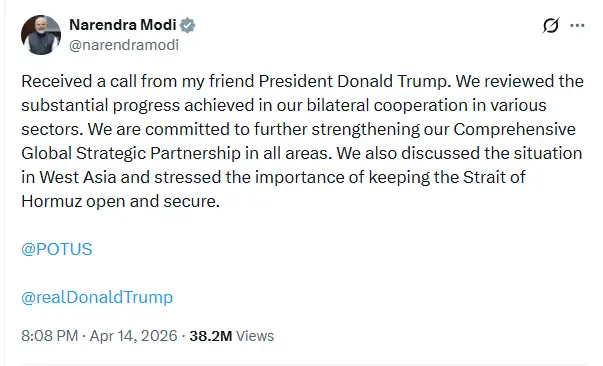
Screenshot of X Post by PM Narender Modi(@narendramodi)
Following communication between Narendra Modi and Donald Trump, both sides highlighted:
- Expanding strategic cooperation
- Strengthening Indo-Pacific engagement
Additionally, statements from US Ambassador Sergio Gor highlighted toward an upcoming major announcement.
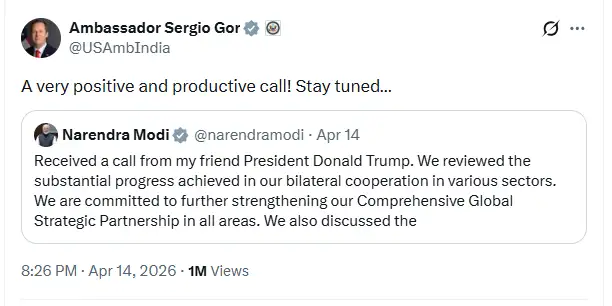
Screenshot of X Post by Sergio Gor, U.S. Ambassador to India(@USAmbIndia)
That signals something larger is being shaped.
Perhaps a broader Indo-Pacific framework.
India, therefore, faces a balancing act:
- Benefit from partnerships
- Avoid over-dependence
- Secure its trade routes
This is where strategy becomes critical.
Final Analysis
The Strait of Malacca geopolitical importance is not theoretical.
It is immediate.
After Hormuz, attention naturally shifts to the next critical chokepoint.
And Malacca fits that role.
The pattern is visible:
- Strategic positioning
- Defense partnerships
- Maritime influence expansion
But here’s the key question:
Is this preparation… or pressure?
Because if chokepoints become tools of leverage,
then global trade becomes a strategic weapon.
And in that world, stability is no longer guaranteed.
That shift is structural.
And it is only beginning.
FAQs
Why is the Strait of Malacca so important?
It is one of the busiest shipping routes in the world, connecting major economies. A large portion of global trade and energy flows through this narrow passage.
Can the US block the Strait of Malacca?
Direct blockade is complex due to international laws and multiple bordering countries. However, increased military presence can influence control and access.
How does this impact India?
India relies heavily on Malacca for trade routes. Any disruption can affect economic growth, supply chains, and strategic stability.
What is the Malacca Dilemma?
It refers to China’s heavy dependence on the Strait of Malacca for trade and energy, making it vulnerable to disruption.
Conclusion
Control the chokepoints… and you influence the world.
Malacca is not just a route.
It is leverage.
What do you think – If tensions escalate further, could this chokepoint become the next global flashpoint after Hormuz? Share your Views in the Comments below.
Explore more about Economy & Trade, Indian Affairs and World Affairs.