Table of Contents
Introduction: A Viral Statement That Shocked the World
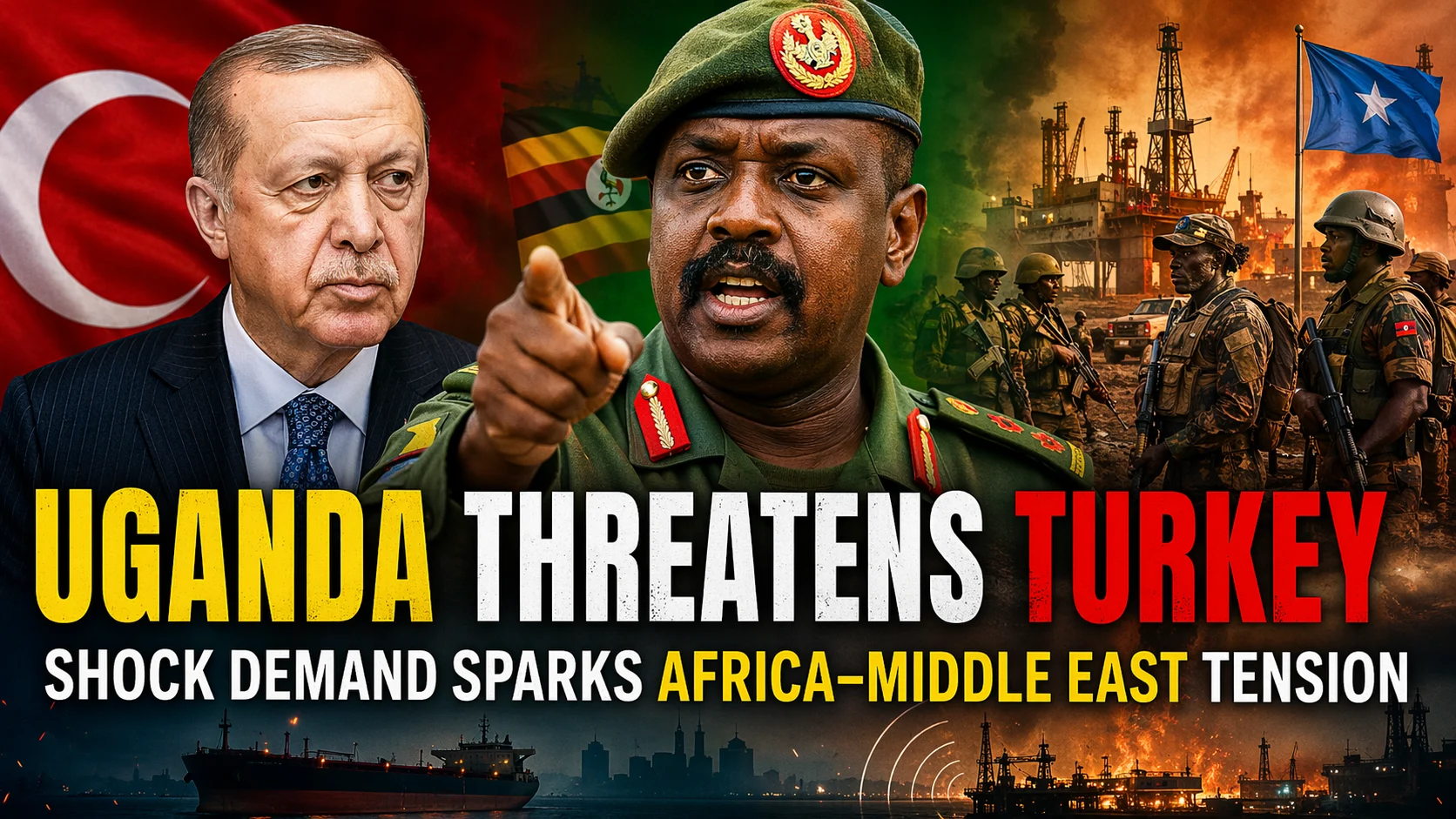
The Uganda Turkey conflict has suddenly grabbed global attention—but not for the reasons you might expect.
A senior military leader from Uganda issued an unusual demand:
$1 billion from Turkey—and even more bizarrely, demanded “the most beautiful woman” from the country for marriage.
At first glance, it sounds absurd.
But look deeper, and a serious geopolitical tension begins to emerge—one that connects Africa, the Middle East, and even India’s strategic interests.
This is not just noise.
There is a pattern behind it.
Sources: NDTV
What Did Uganda’s Army Chief Actually Say
The controversy revolves around Muhoozi Kainerugaba, the army chief of Uganda and son of long-time leader Yoweri Museveni.
His statements included:
- A demand for $1 billion from Turkey
- A claim that Turkey “cannot survive” against Uganda
- A bizarre demand for a bride from Turkey
- A warning suggesting military confrontation if demands are not met
This guy, Muhoozi Kainerubaga is the chief of the Ugandan 🇺🇬 Army, son of the dictator Museveni an possible future leader of the country
— Clément Molin (@clement_molin) April 11, 2026
Here, he is threatening Turkiye 🇹🇷, asking for 1 billion $ and the most beautiful turkish woman as a wife or he stops diplomatic relations. pic.twitter.com/xPORjQTVHm
This wasn’t an isolated incident.
Previously, he had:
- Proposed marriage to Giorgia Meloni
- Offered “100 cows” as a symbolic bride price
I would give her 100 Nkore cows immediately! For being fearless and true!! pic.twitter.com/i2DuR8RioC
— Muhoozi Kainerugaba (@mkainerugaba) October 2, 2022
- Even hinted at capturing Rome if rejected
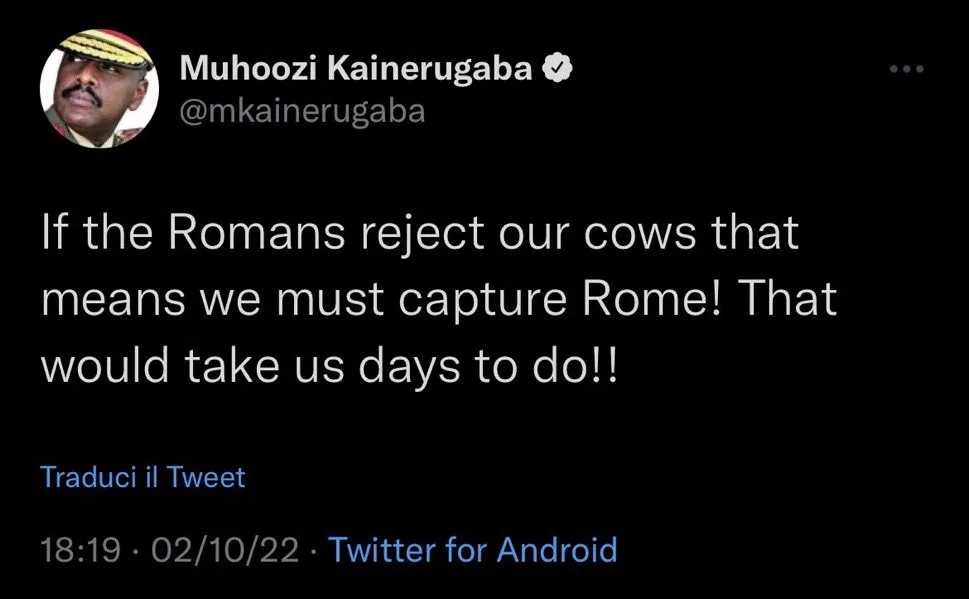
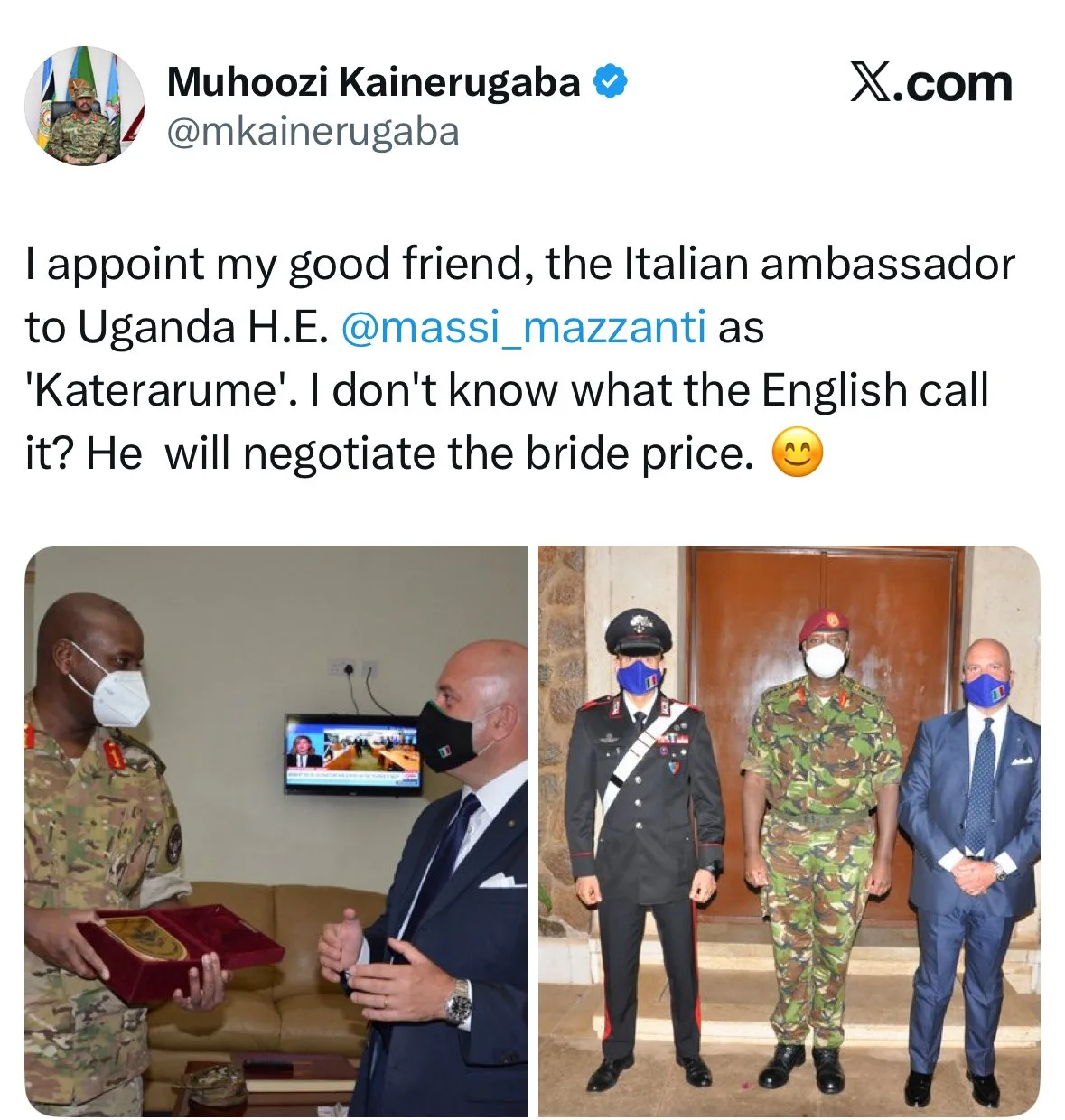
Screenshot of X posts by Muhoozi Kainerugaba(X account: @mkainerugaba)
This pattern matters.
Because it shows that these statements are not random—they reflect a recurring style of political signaling.
Uganda’s Political System and Leadership Style
To understand the Uganda Turkey conflict, you need to understand Uganda itself.
Uganda has experienced:
- Multiple republic transitions
- Military rule phases
- Long-term centralized leadership
Figures like Idi Amin shaped its political past with extreme governance.
Today, Yoweri Museveni has been in power for decades.
His son now leads the military.
This creates a system where:
- Power is highly centralized
- Messaging can be unpredictable
- Diplomatic statements may blur with personal rhetoric
This was deliberate.
Why Uganda Targeted Turkey
At the surface, it looks random.
It isn’t.
The real issue lies in Somalia.
Uganda has been deeply involved in Somalia’s security:
- Fighting terrorist groups like Al-Shabaab
- Deploying troops for stabilization
- Supporting Somalia’s government
But here’s the turning point:
Turkey entered Somalia with economic and strategic ambitions.
Uganda provides security.
Turkey gains economic benefits.
That imbalance is the trigger.
Somalia: The Hidden Battlefield Behind the Conflict
Somalia is not just another country.
It sits in the Horn of Africa, near critical global trade routes.
Uganda’s role:
- Security provider
- Anti-terror operations
Turkey’s role:
- Infrastructure investment
- Oil exploration
- Strategic expansion
Here’s the tension:
Uganda risks soldiers.
Turkey gains influence.
That imbalance matters.
Turkey’s Expanding Strategy in Africa
Turkey’s involvement in Somalia includes:
- Offshore oil exploration
- Military cooperation agreements
- Plans for long-term presence
This is about access.
Access to:
- The Indian Ocean
- Energy resources
- Strategic positioning
Why does Turkey care?
Because influence in Somalia means influence in global trade corridors.
This is where things escalate.
Sources: Daily Sabah
Why This Matters for India
For India, this is not a distant issue.
It directly connects to:
- Indian Ocean security
- Trade routes
- Regional balance of power
If Turkey strengthens its presence in Somalia:
- It gains proximity to India’s maritime zone
- It increases geopolitical competition
So what happens next?
India may need to:
- Strengthen partnerships elsewhere
- Increase strategic presence
- Monitor evolving alliances
This is where things shift.
Final Analysis
At first glance, the Uganda Turkey conflict looks bizarre.
But underneath:
- It reflects economic frustration
- It signals strategic competition in Somalia
- It exposes power imbalances in Africa
The statements may sound unusual.
But the message is clear:
Uganda is signaling dissatisfaction with how power and profit are distributed.
Turkey is expanding.
Somalia is the stage.
And global players—including India—are watching closely.
This is not just a controversy.
It is a preview of future geopolitical competition.
FAQs
Why did Uganda threaten Turkey?
Uganda’s frustration stems from Somalia. While Uganda provides military security against groups like Al-Shabaab, Turkey is gaining economic and strategic benefits through investments and oil projects. This imbalance is driving tensions.
Who is Uganda’s army chief and why is he controversial?
Muhoozi Kainerugaba, son of President Yoweri Museveni, is known for making unconventional and provocative statements on social media, often involving global leaders and geopolitical issues.
What role does Somalia play in this conflict?
Somalia is central because it hosts both Uganda’s military presence and Turkey’s economic expansion. It has become a key zone of overlapping interests and competition.
Is this a real conflict or just rhetoric?
At present, it is more rhetorical than military. However, it reflects real strategic tensions that could influence future diplomatic relations.
Why is this important for India?
India has strong interests in the Indian Ocean. Any expansion of foreign military or economic influence in Somalia could affect regional balance and maritime security.
What Do You Think About This Conflict?
Do you believe this is just political rhetoric—or the beginning of a deeper geopolitical clash?
- Is Uganda signaling a real challenge to Turkey?
- Or is this simply unconventional diplomacy?
Share your perspective thoughtfully—because in modern geopolitics, even unusual statements can signal serious strategic shifts.
Explore more about World Affairs and Indian Affairs.