Table of Contents
The $12 Billion Headline—And the Reality Behind It
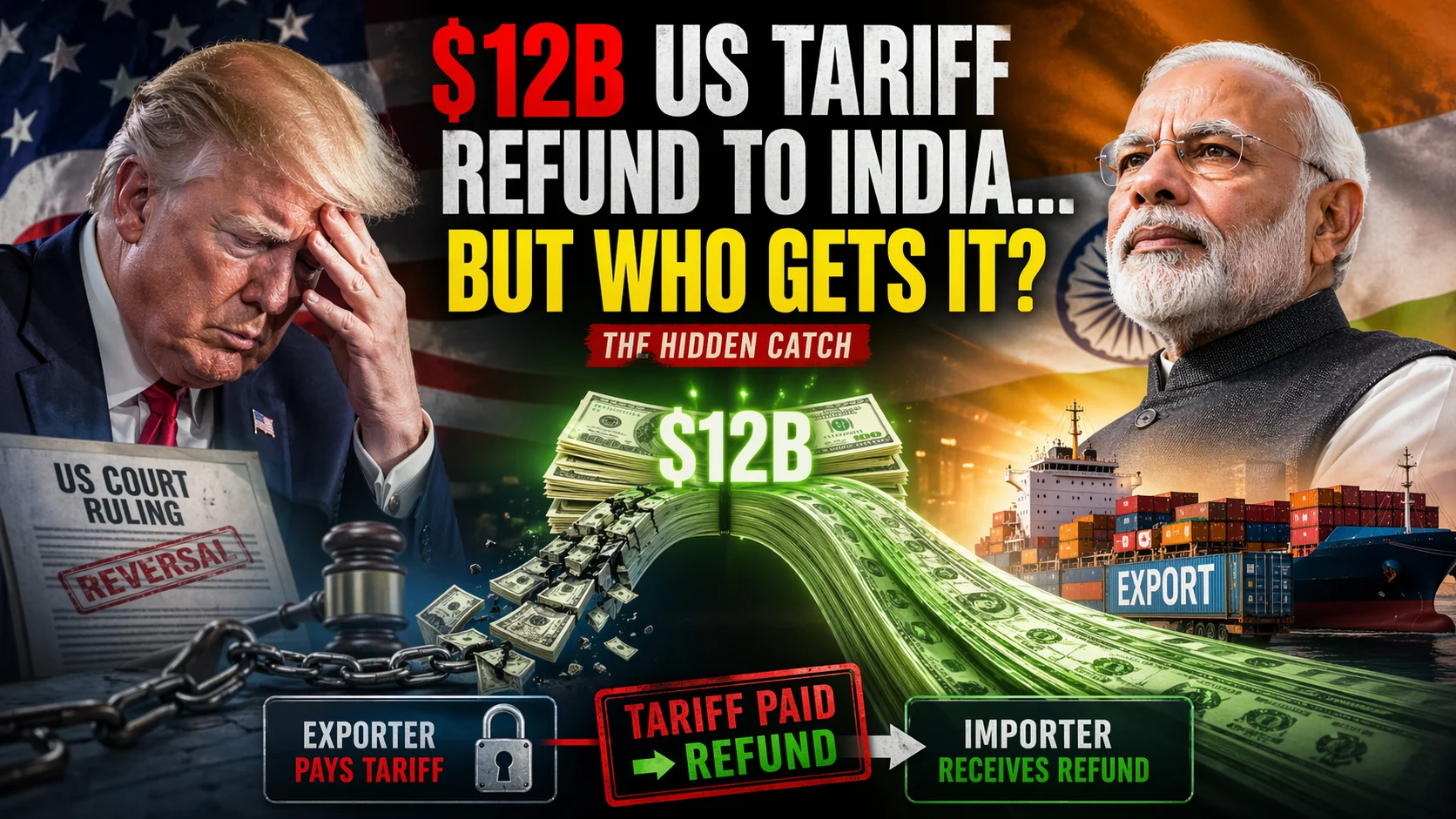
The phrase “US Tariff Refund to India” is everywhere right now.
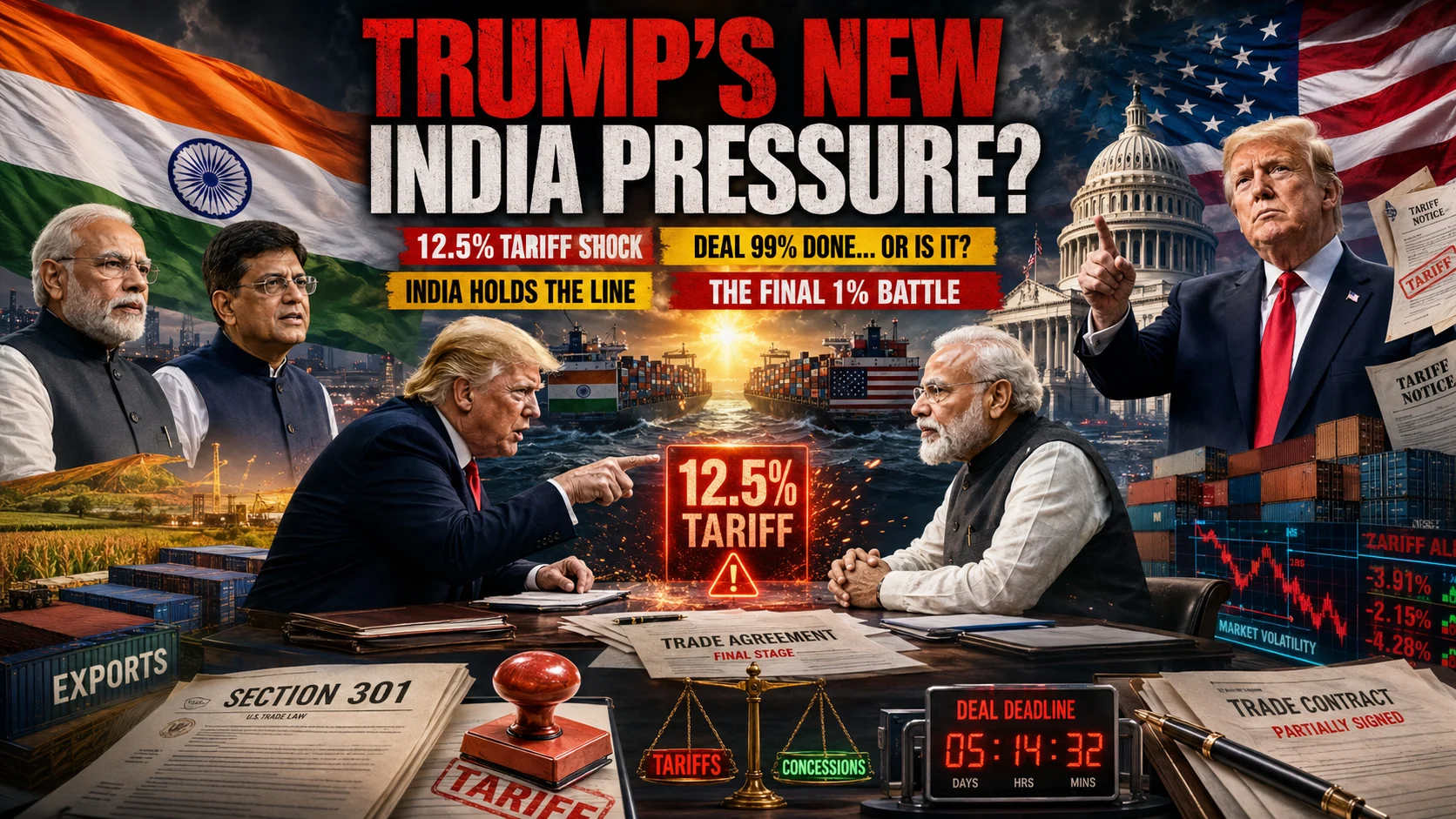
Headlines suggest that India could receive $10–12 billion as the United States begins refunding tariffs imposed by Donald Trump.
But here’s what that actually means.
That money is not going to the Indian government.
It is not a sovereign payout.
It is tied to private exporters—companies that sold goods like textiles and pharmaceuticals into United States.
And even then—
There’s a catch.
A major one.
Sources: NDTV, Times of India
Who Actually Gets the Money? The Importer of Record Rule
The refund process is governed by a strict legal principle:
Only the “Importer of Record” gets paid.
In most cases, that importer is a US-based company, not the Indian exporter.
This means:
- Refunds are issued to American importers
- Indian exporters have no direct legal claim
- Any sharing of funds depends on commercial agreements
This is not widely understood.
But it defines the entire outcome.
Sources: SME Futures
Why Indian Exporters May Not See the Full Refund
The assumption is simple:
If tariffs were paid on Indian goods, India should benefit.
But that’s not how the system works.
The Global Trade Research Initiative estimates around $12 billion is linked to Indian exports.
Yet:
- Payments go to US importers
- Exporters cannot directly file claims
- Refund sharing is optional, not mandatory
So the real question becomes:
Will US importers pass on the benefit?
There is no guarantee.
That uncertainty changes everything.
The T-Shirt Example That Explains Everything
Let’s simplify this.
- A T-shirt is made in India for $100
- Earlier tariff: ~10% → Final price = $110
- Under Trump tariffs: price jumps to $150
Now:
- The consumer pays $150
- The importer pays the tariff upfront
- The exporter receives the original price
When refunds happen:
- The consumer gets nothing
- The importer gets reimbursed
And the exporter?
Only gets paid if the importer decides to share.
That’s the gap between headlines and reality.
Sources: BBC
The GTRI Breakdown: Where the $12 Billion Comes From
According to estimates:
- Around 53% of Indian exports affected were textiles and apparel
- A large share of the refund pool is tied to these sectors
- Roughly $4 billion comes from textiles alone
But again—
This is not guaranteed inflow.
It is a negotiation opportunity.
Not an entitlement.
Sources: Times of India
The Hidden System: CAPE Portal and Legal Mechanics
The refund process runs through systems managed by US Customs and Border Protection.
Specifically:
- Claims are processed via the CAPE (Consolidated Administration and Processing of Entries) portal
- Only legally recognized importers can file
- Refunds apply to “liquidated entries” under tariff rules
This is a compliance-driven system, not a policy gesture.
Which means—
If you are not the importer, you are not the claimant.
The Bigger Picture: US Debt and Policy Reversal
This refund is not just about trade.
It reflects a deeper economic strain.
The United States national debt has crossed $39 trillion.
Initially, tariffs were meant to:
- Generate massive revenue
- Reduce national debt
- Strengthen domestic industry
Instead:
- Courts struck down many tariffs as illegal
- The government now owes $166 billion in refunds
- Defense spending continues to rise
This is a reversal.
A costly one.
Sources: Fortune
What This Means for India’s Export Strategy
For India, the takeaway is not just about refunds.
It’s about strategy.
Exporters must now:
- Renegotiate contracts with US buyers
- Include rebate-sharing clauses
- Strengthen long-term partnerships
Because the system favors:
Whoever holds the legal position—not the production value.
That’s the real lesson.
Conclusion
The US Tariff Refund to India story is not about billions flowing into India.
It is about who controls the flow of money.
- The refunds exist
- The numbers are real
- But the access is limited
Indian exporters are not guaranteed beneficiaries.
They are negotiators in a system they don’t control.
And at a time when global trade is becoming more complex—
That distinction matters more than ever.
FAQs
Can Indian exporters claim the US Tariff Refund to India directly?
No. Only the Importer of Record—usually a US-based company—can file and receive the refund.
What is the “catch” in the $12 billion refund?
The $12 billion is linked to Indian goods, but exporters do not have legal rights to claim it directly.
What is the CAPE portal?
It is a system used by US Customs and Border Protection to process tariff refund claims.
Why were Trump’s tariffs reversed?
Courts ruled that many tariffs imposed under emergency powers were legally invalid, forcing refunds.
Will Indian exporters receive any money at all?
Possibly—but only if US importers choose to share the refunded amount through commercial agreements.
Final Thought: What Should Exporters Do Next?
The US Tariff Refund India situation is not a windfall—it’s a negotiation battlefield.
Indian exporters cannot rely on policy alone. The system is clear:
- Legal ownership of refunds lies with US importers
- Financial recovery depends on commercial leverage
- Future gains depend on smarter contracts, not headlines
So the next move is strategic, not reactive.
Strengthen agreements.
Demand clarity in rebate-sharing.
Build long-term trust with buyers.
Because in global trade today—
Value is created in India. But control often lies elsewhere.
Explore more about Economy & Trade and Indian Affairs.