Table of Contents
A Warning That Changed the Narrative
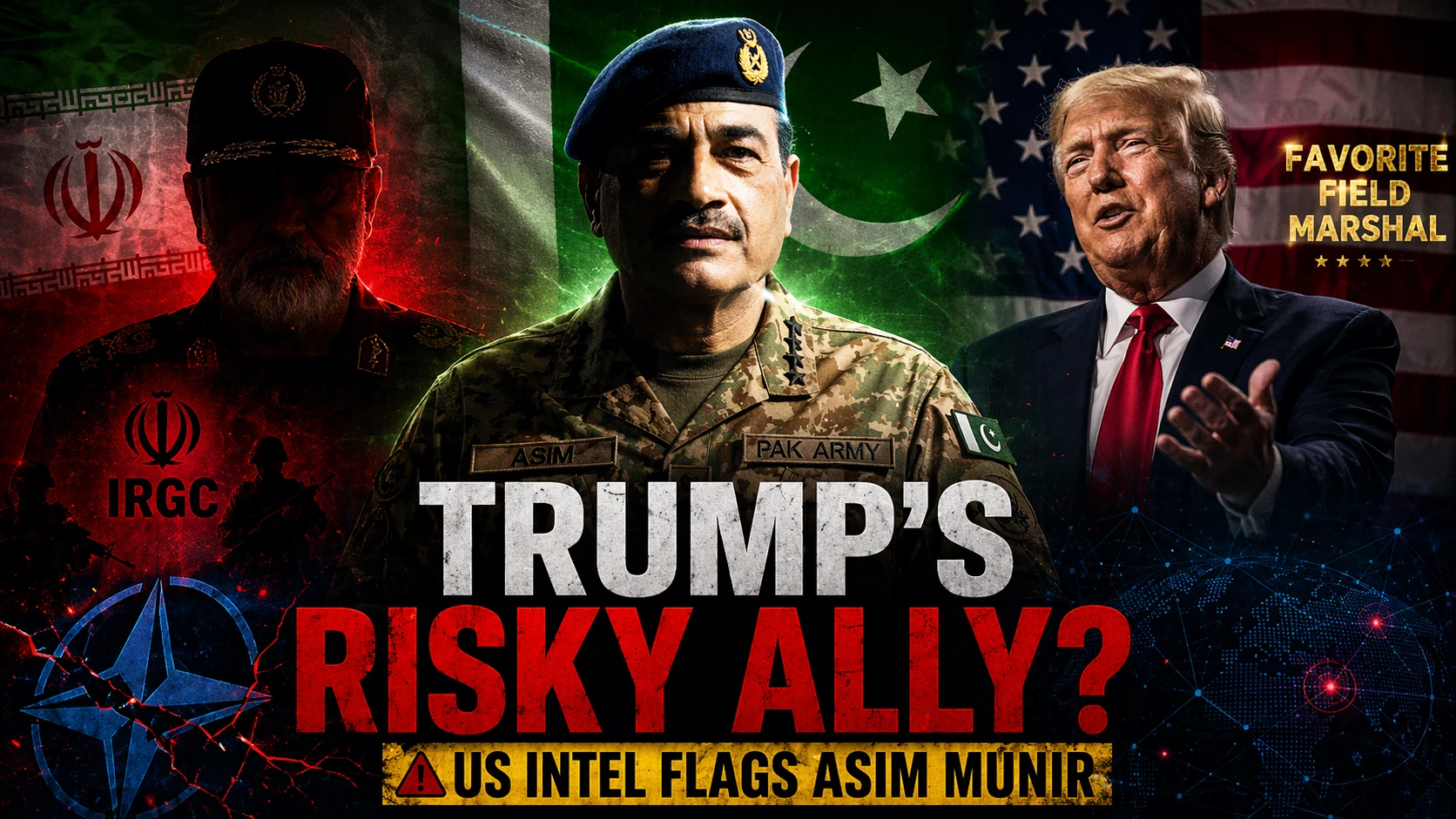
The phrase Asim Munir Trump Liability is no longer confined to think tank papers.
It has entered mainstream geopolitical debate.
U.S. intelligence circles are openly signaling that Asim Munir may pose a strategic risk to Donald Trump’s South Asia policy.
This shift is striking.
Because at the same time, Trump continues to publicly praise him.
That contradiction is the story.
Sources: The Times of India
Why Asim Munir Is Seen as a Liability
Analysts, including Bill Roggio from the Foundation for Defense of Democracies, frame the concern in one phrase:
“Double game.”
Pakistan has historically:
- Partnered with the U.S. when needed
- Maintained parallel relationships with rivals
- Balanced both sides for leverage
And Asim Munir is viewed as continuing that pattern.
This is not new behavior.
But the stakes now are higher.
Sources: NDTV
The IRGC Connection: The Core Concern
At the center of the warning lies one critical factor:
Islamic Revolutionary Guard Corps
Munir is reported to have developed deep ties with the IRGC during his intelligence career.
That changes everything.
Because while Pakistan engages the U.S.:
- Iran remains its permanent neighbor
- Security coordination cannot be ignored
- Strategic alignment becomes layered, not linear
This is where the risk emerges.
If push comes to shove—
Which side takes priority?
America’s Public vs Policy Divide
Here’s where the contradiction becomes sharper.
Survey data shows:
- 56% of Americans see India as a friend
- Only 28% view Pakistan as friendly
- Around 40% consider Pakistan an adversary
So why is policy moving closer to Pakistan?
That question is now being asked inside the U.S. itself.
This gap matters.
Because legitimacy at home shapes sustainability abroad.
Sources: Gallup Pakistan
The “Favorite Field Marshal” Signal
Donald Trump repeatedly calling
Asim Munir
his “favorite field marshal” is not just rhetoric.
It is a signal.
A diplomatic endorsement.
And historically, no U.S. president has elevated a Pakistani military leader in this way.
This was deliberate.
And it raised eyebrows across Washington.
Sources: Hindustan Times, Independent
Transactional Diplomacy: Ego, Crypto, and Optics
Why would such a shift happen?
This points to a combination of factors:
1. Personal Recognition
Pakistan has supported narratives that align with Trump’s global image, including Nobel Peace Prize positioning.
NEW: The prime minister of Pakistan says he nominated President Trump for the Nobel Peace Prize previously, and is nominating him again for securing the historic peace deal in the Middle East. pic.twitter.com/NMgGY7Gp9T
— Fox News (@FoxNews) October 13, 2025
2. Diplomatic Theater
Leaders like Shehbaz Sharif and Asim Munir have:
- Publicly praised Trump
- Reinforced his diplomatic persona
- Participated in symbolic gestures
3. Financial Linkages
Entities like World Liberty Financial have introduced a transactional layer into diplomacy.
This is where geopolitics meets business.
And that intersection is rarely simple.
The Quad Freeze and Strategic Drift
One of the most significant consequences is unfolding quietly.
The Quadrilateral Security Dialogue (Quad), which India is set to host this year (2026), is losing momentum.
Consider:
- No full leader summit in 2025
- Uncertainty around 2026 participation
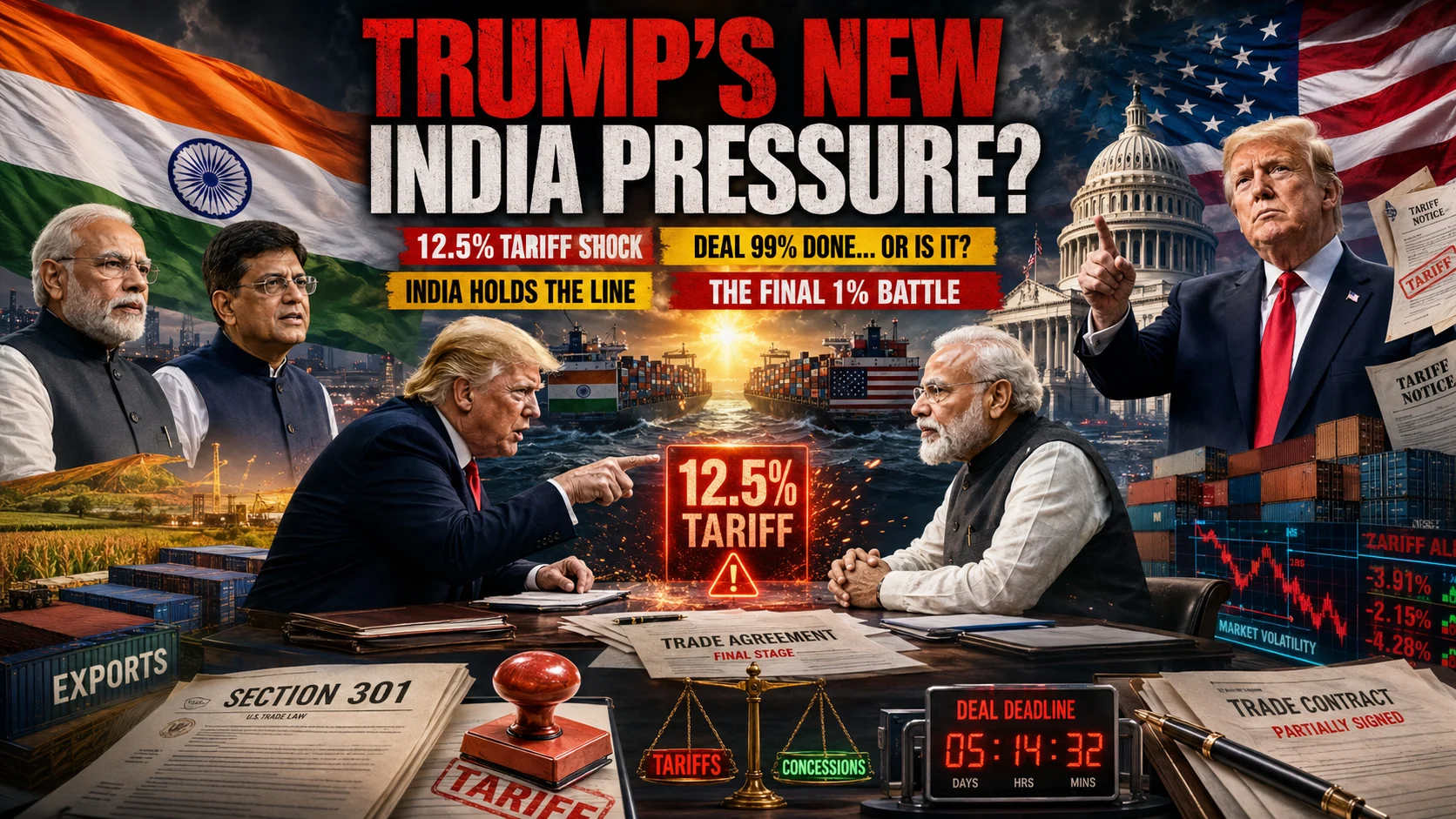
- No confirmed visit by Trump to India
At the same time:
- Trump signals willingness to visit Pakistan
- Indicates possible engagement with Xi Jinping in China
This contrast is not accidental.
It reflects a shift.
Sources: NDTV, South China Morning Post
India’s Strategic Disappointment
For India, the implications are clear.
Despite:
- Long-term strategic alignment
- Indo-Pacific cooperation
- Defense and economic engagement
India is facing:
- Reduced diplomatic prioritization
- Strategic uncertainty
- Limited engagement signals
And yet, the response has been measured.
Almost restrained.
That restraint is strategic—but also revealing.
What If the Warning Proves True?
This is where the analysis turns critical.
If intelligence assessments are accurate:
- Pakistan may continue balancing between Iran and the U.S.
- Mediation efforts could weaken under conflicting loyalties
- U.S. credibility in the region could erode
And eventually—
Washington may face a familiar realization.
That short-term alignment does not guarantee long-term trust.
History has shown this before.
Conclusion
The idea of Asim Munir Trump Liability is not just a debate.
It is a strategic warning.
At its core, this situation highlights:
- The tension between personal diplomacy and institutional strategy
- The risks of transactional alliances
- The consequences of ignoring historical patterns
The United States appears to be recalibrating its South Asia approach.
But the direction is contested.
And the risks are already visible.
The real question is simple—
Will this warning be taken seriously before it turns into a strategic setback?
FAQs
Why is Asim Munir considered a “red flag” for Donald Trump?
U.S. intelligence and analysts highlight Asim Munir’s deep institutional ties and Pakistan’s history of dual alignment as key risks.
What are Asim Munir’s connections to the Iranian military?
He is reported to have strong links with the Islamic Revolutionary Guard Corps, developed during his intelligence tenure.
Did Pakistan nominate Donald Trump for a Nobel Peace Prize?
Yes, reports indicate Pakistan has supported narratives positioning Trump for Nobel recognition.
What is the World Liberty Financial deal in Pakistan?
World Liberty Financial has explored partnerships in Pakistan, introducing financial dimensions to diplomatic relations.
Is Pakistan playing a double game with the US and Iran?
Analysts argue that Pakistan maintains parallel ties with both, which creates strategic ambiguity.
What Comes Next?
If foreign policy begins to depend more on personal relationships than long-term strategy—
Can any alliance truly remain stable in a crisis?
Share Your Views in the Comments below.
Explore more about World Affairs and Indian Affairs.