Table of Contents
India Mediation Iran US War: Why This Moment Matters
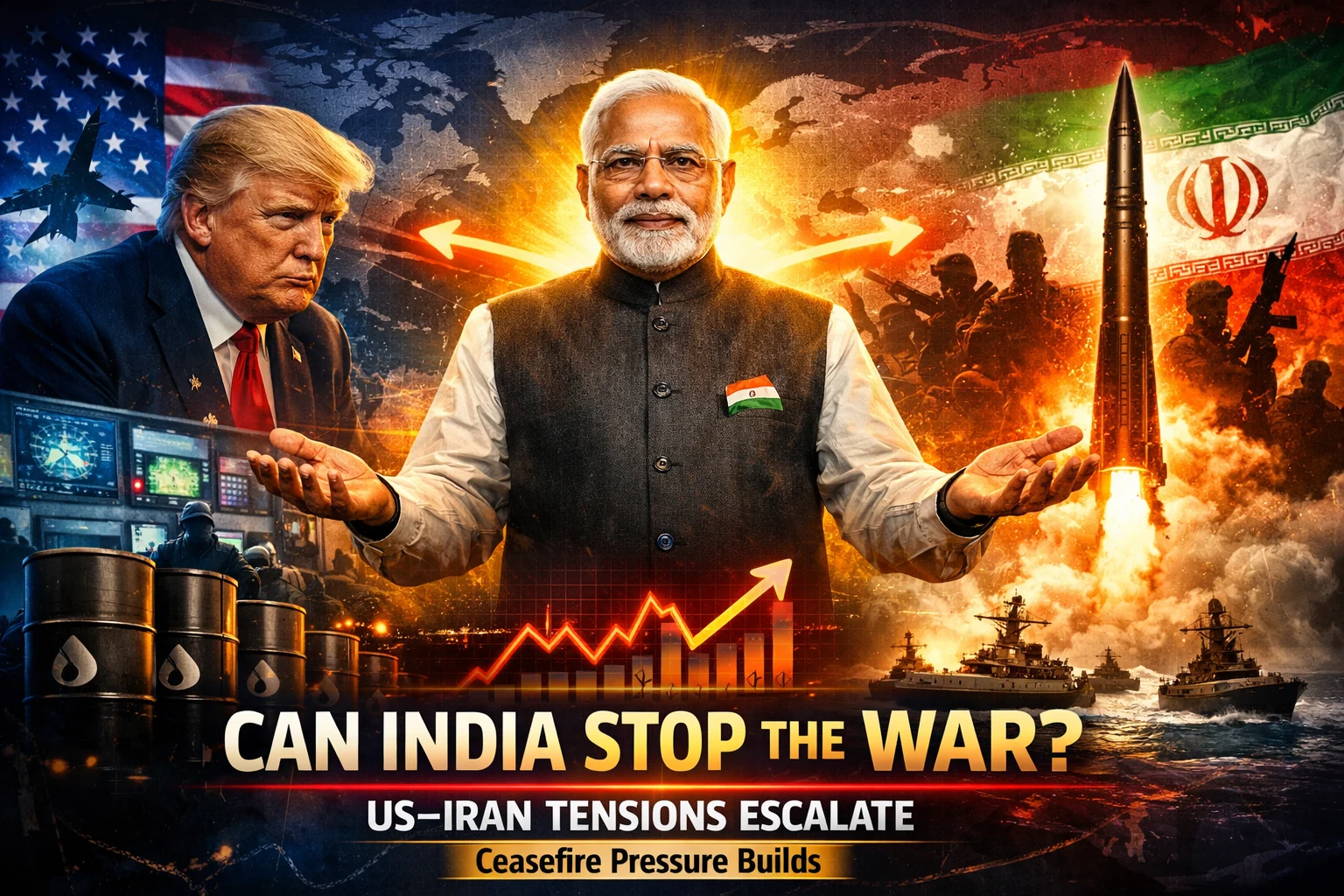
The idea of India mediation Iran US war is no longer theoretical—it is now being openly discussed in global diplomatic circles.
As the conflict between United States, Iran, and Israel intensifies, international voices are increasingly asking whether India can step in to broker peace.
That shift is significant.
Because it reflects both the scale of the crisis—and the limits of traditional power structures.
Sources: The Economic Times
A War Escalating Faster Than Expected
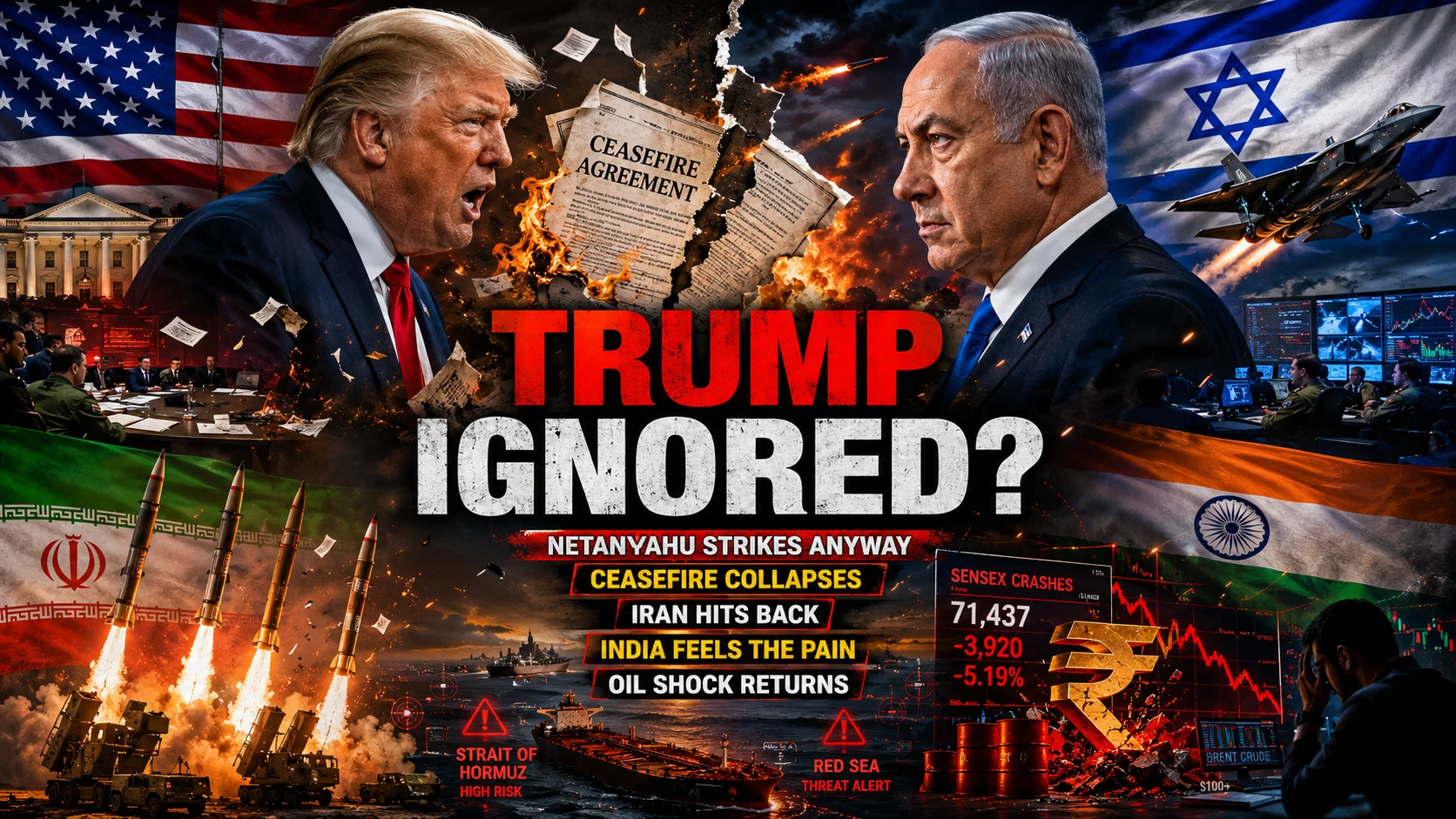
The conflict has already crossed a dangerous threshold.
- Over 2,000 deaths reported
- Majority of casualties are civilians
- Oil prices rising beyond $100 per barrel
These are not isolated developments.
They signal a widening conflict with global consequences.
The economic impact is already building.
Energy markets are reacting.
Inflation pressures are rising.
And if the war continues, the effects will not remain limited to the Middle East.
Sources: WION, The Wall Street Journal
Trump’s Admission and What It Reveals
A major turning point came when Donald Trump publicly acknowledged that Iran’s response had shocked the United States.
🚨Donald Trump:
— Mohit Chauhan (@mohitlaws) March 16, 2026
Iran is a nation of great power.
Iran has TREMENDOUS power.
No one expected Iran to attack the Gulf states. We were SHOCKED. They fought BACK. pic.twitter.com/g1EwFzGreM
He admitted that Washington did not expect Iran to:
- Strike multiple regional targets
- Launch sustained missile operations
- Expand the conflict beyond initial expectations
This matters.
Because it suggests a strategic miscalculation.
For decades, US military operations—from Iraq to Afghanistan—have followed a familiar pattern of overwhelming force with limited resistance.
But this time is different.
Iran is resisting.
And that changes everything.
From Iran to Cuba: What Trump’s Statement Signals
Following his admission about Iran, Donald Trump made another striking remark that raised concerns among geopolitical observers.
He suggested that it would be an “honor” for him to take over Cuba.
TRUMP: I’ll have the honor of taking Cuba. That would be good. That’s a big honor
— RT (@RT_com) March 16, 2026
I can free it or take it, I think I can do anything I want with it pic.twitter.com/eNv6cdbwtV
This was not framed as a conventional policy statement.
It sounded closer to an expansionist assertion.
That matters.
Because it reflects a broader strategic mindset—not limited to Iran.
Historically, major powers have used terms like “liberation” to justify intervention.
But openly suggesting control over another country introduces a different tone.
A more direct one.
And that raises a critical question:
Is this conflict about security—or about projecting power beyond immediate threats?
For many analysts, statements like these reinforce concerns that the Iran conflict may not remain isolated.
Why the World Is Looking at India
As the conflict intensifies, attention has shifted toward India’s potential role.
Leaders and analysts in Europe, including Finland President Alexander Stubb, have suggested that India could act as a mediator.
🗣️ Finland President Alexander Stubb calls for a ceasefire in the US-Iran conflict, suggesting India could PLAY a role in DE-ESCALATION.
— डॉ. आर के सिंह (@rio10314) March 17, 2026
“We need a ceasefire… I’m wondering if India can get involved,” he said. pic.twitter.com/vTbQ9eRr4h
Why India?
Because of its unique position:
- Strong ties with the United States
- Stable relations with Iran
- A reputation for strategic neutrality
India has already called for de-escalation.
Statements from S. Jaishankar emphasize the need for ceasefire and dialogue.
This positions India differently from most global powers.
Not as a participant.
But as a potential bridge.
Sources: News18
Can India Actually Mediate the Iran-US War?
The concept of India mediation Iran US war is compelling—but complex.
Mediation requires trust from both sides.
And that is where challenges begin.
From Iran’s perspective, any ceasefire would likely require:
- Assurances against future attacks
- Compensation for damages
- Clear commitments from the US
From the US perspective, such concessions could be politically difficult.
Especially for leadership already facing pressure.
This is where things become complicated.
Because successful mediation depends not just on diplomacy—but on political willingness.
Sources: The Jerusalem Post
The Strategic Risks Behind Mediation
Even if India steps in, the risks are significant.
A failed mediation effort could:
- Damage India’s diplomatic credibility
- Strain relations with one or both sides
- Pull India deeper into the conflict
And there is another factor.
Timing.
The war has already escalated to a point where compromise becomes harder.
That matters.
Because early-stage conflicts are easier to resolve.
Late-stage conflicts are not.
What Happens If the War Continues
If mediation does not happen—or fails—the consequences could be severe.
- Oil prices could surge further
- Global inflation could rise sharply
- Supply chains could face disruptions
There is also the risk of broader escalation.
Countries like:
- Russia
- China
could increase their involvement.
That would transform the conflict.
From a regional war into a global crisis.
Conclusion
The discussion around India mediation Iran US war reflects a deeper shift in global geopolitics.
Traditional power structures are being tested.
Military dominance is facing resistance.
And new diplomatic actors are emerging.
India’s role, if it chooses to act, could be significant.
But it will not be simple.
Because mediation at this level requires more than neutrality.
It requires timing, leverage, and acceptance from all sides.
The coming weeks will determine whether India becomes a mediator—or remains a strategic observer.
FAQs
Can India mediate the Iran-US war?
India has strong diplomatic ties with both the US and Iran, making it a potential mediator. However, success would depend on both sides agreeing to negotiations.
Why is India being considered as a mediator?
India maintains strategic neutrality and has credibility with multiple global powers, which makes it suitable for mediation roles.
What did Trump admit about the war?
Donald Trump acknowledged that the US did not expect Iran to respond with such intensity and scale.
How does this war affect global oil prices?
The conflict has already pushed oil prices above $100 per barrel, increasing the risk of inflation and economic instability worldwide.
Could this conflict turn into a larger war?
If more countries become involved, especially major powers, the conflict could expand beyond the Middle East.
Can India Really Change the Course of This War?
The debate around India mediation Iran US war leads to one critical question:
Can diplomacy still succeed where military strategy has struggled?
- Will India step forward as a mediator?
- Can both the US and Iran accept external negotiation?
- Or has the conflict already crossed the point where compromise is possible?
Share Your Perspective in the Comments below.
Because in global conflicts, the difference between escalation and resolution often comes down to who is willing to talk—and when.
Explore more about Indian Affairs and World Affairs.