
Table of Contents
Why Trump’s Praise Came With a Hidden Demand
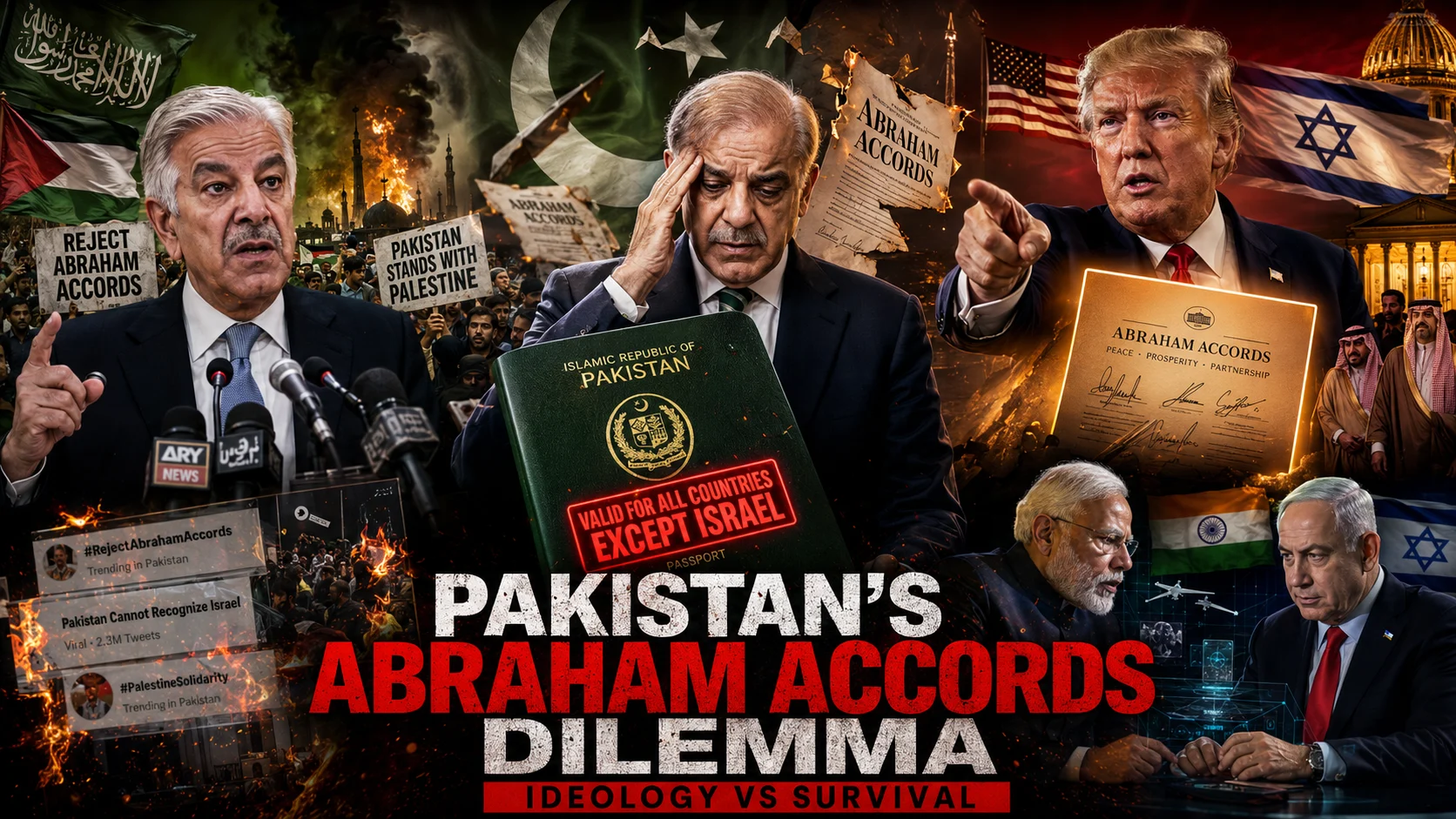
Why Pakistan rejected Abraham Accords has suddenly become one of the biggest geopolitical questions in South Asia and the Middle East. The real reason behind the sudden warmth between Donald Trump and Pakistan was never really about friendship. It was about pressure to formally recognize Israel under the Abraham Accords.
From repeated praise for Asim Munir and Shehbaz Sharif to statements like “I love Pakistan, My Favorite Field Marshal” the entire diplomatic tone changed once Washington began pushing Muslim-majority countries to formally recognize Israel. That included Saudi Arabia, Pakistan, and other states Trump wanted inside the Abraham Accords framework.
The problem is that Pakistan’s entire political identity was built around rejecting Israel. Pakistan’s constitution, foreign policy, education system, and even passport language were designed around religious positioning from the beginning. Unlike Saudi Arabia or Turkey, Pakistan institutionalized that hostility at every level.
That is why Khawaja Asif, Defense Minister of Pakistan immediately rejected the proposal publicly, saying Pakistan would not support anything that clashes with its “fundamental principles.” The moment Pakistan pushed back, the transactional nature of Trump’s diplomacy became visible. The praise suddenly looked temporary rather than strategic.
Watch | Pakistan’s defense minister rejects normalization with Israel amid pressure over Abraham Accords
— Quds News Network (@QudsNen) May 25, 2026
Pakistan’s Defense Minister Khawaja Muhammad Asif rejected the idea of joining any normalization agreement with Israel, saying Pakistan would not accept accords that clash… pic.twitter.com/h8vWq0uzps
But the deeper crisis was not diplomatic. It was domestic.
Sources: NDTV, Firstpost, The Times of India
The Passport Clause That Trapped Pakistan
Why Pakistan rejected Abraham Accords becomes easier to understand once you look at a single line printed on Pakistani passports: “Valid for all countries except Israel.” That sentence is not symbolic anymore — it has become a geopolitical trap.
Pakistan went much further than most Muslim-majority countries in institutionalizing hostility toward Israel. Saudi Arabia did not print anti-Israel clauses in passports. Turkey did not define national identity around refusing recognition. Pakistan did. Removing that line now would mean rewriting decades of state ideology in one political decision.
This is why any Pakistani government accepting Israel could face massive street protests. The argument is not just about foreign policy. It is about survival. Pakistan is a deeply religious society where sympathy for Palestine and anger toward Israel remain extremely strong.
The situation is so emotionally charged that Benjamin Netanyahu himself has complained that many Pakistanis create fake online accounts pretending to be Americans or citizens of other countries just to spread anti-Israel propaganda online. Many do this voluntarily without payment, purely because of how deeply anti-Israel sentiment has become embedded among sections of the population. That intensity is exactly why the government fears public backlash if it suddenly recognizes Israel.
And that contradiction becomes even more dangerous when India enters the equation.
Sources: News18
Why This Crisis Directly Matters to India
Pakistan’s rejection of the Abraham Accords is not only about Israel. It is increasingly becoming tied to how Pakistan frames India itself. That became visible through Khawaja Asif’s rhetoric and the broader ideological positioning inside Pakistan.
The most important insight here is that Pakistan tried to present itself internationally as a neutral mediator between the United States and Iran while simultaneously maintaining an openly hostile ideological position toward Israel. That contradiction became sharper after Khawaja Asif publicly pushed rhetoric portraying India and Israel together as long-term enemies of the Muslim world. Once Pakistan fused India and Israel into the same ideological narrative, its neutrality became difficult to sell internationally.
For India, this changes the regional security picture in two ways.
First, Pakistan’s anti-Israel positioning indirectly strengthens India’s strategic value for Israel and Gulf countries looking for stable regional partnerships. Countries increasingly make decisions based on interests rather than permanent alliances. If Pakistan refuses integration into the emerging regional framework around Israel, India becomes more important by default.
Second, Pakistan’s growing convergence with countries taking harder anti-Israel positions could push Israel closer to India on defense and intelligence cooperation. That matters because geopolitical isolation does not stay isolated. It creates counter-alliances.
And this is where Pakistan’s mediation role with Iran started collapsing under its own contradictions.
The Contradiction That Destroyed Pakistan’s Neutrality
Pakistan wanted to act as a mediator between Washington and Tehran while simultaneously maintaining one of the strongest anti-Israel public positions in the Muslim world. That balancing act was never sustainable.
The agreement is called the Abraham Accords because Christianity, Islam, and Judaism are collectively described as Abrahamic religions, with all three tracing spiritual ancestry back to Abraham. Christianity represents around 32% of the global population, Islam around 25%, and Hinduism around 13–14%. Trump’s argument was that the Abraham Accords could become a framework for broader Middle Eastern peace by bringing Israel formally into the regional diplomatic structure.
Pakistan is also not alone in refusing to recognize Israel. There are 29 Countries like Afghanistan, Algeria, Bangladesh, Indonesia, Iraq, Kuwait, Lebanon, Maldives, Qatar, Saudi Arabia, Somalia, Venezuela and even North Korea still do not formally recognize Israel. But Pakistan’s case is different because hostility toward Israel was institutionalized much more aggressively through passports, public rhetoric, and religious politics.
Venezuela offers an interesting contrast. It may eventually restore ties with Israel despite having no Islamic ideological connection to the issue. Pakistan, however, cannot explain normalization easily because the issue has been tied directly to religious identity inside the country for decades.
At one point, Pakistan hosted discussions linked to US-Iran de-escalation efforts. Trump appeared willing to engage Pakistan because there was still a possibility Islamabad could help reduce tensions with Iran. But nothing substantial emerged from those efforts. Soon after, the US resumed strikes on Iran, signaling that mediation had failed.
The moment usefulness declined, pressure increased.
Sources: The Times of India, Wikipedia – Major Religious Groups, Wikipedia – International recognition of Israel, BBC
Why Trump’s Patience With Pakistan Is Running Out
Trump’s diplomacy toward Pakistan has appeared highly transactional from the beginning. The pro-Pakistan tone existed only while short-term interests aligned.
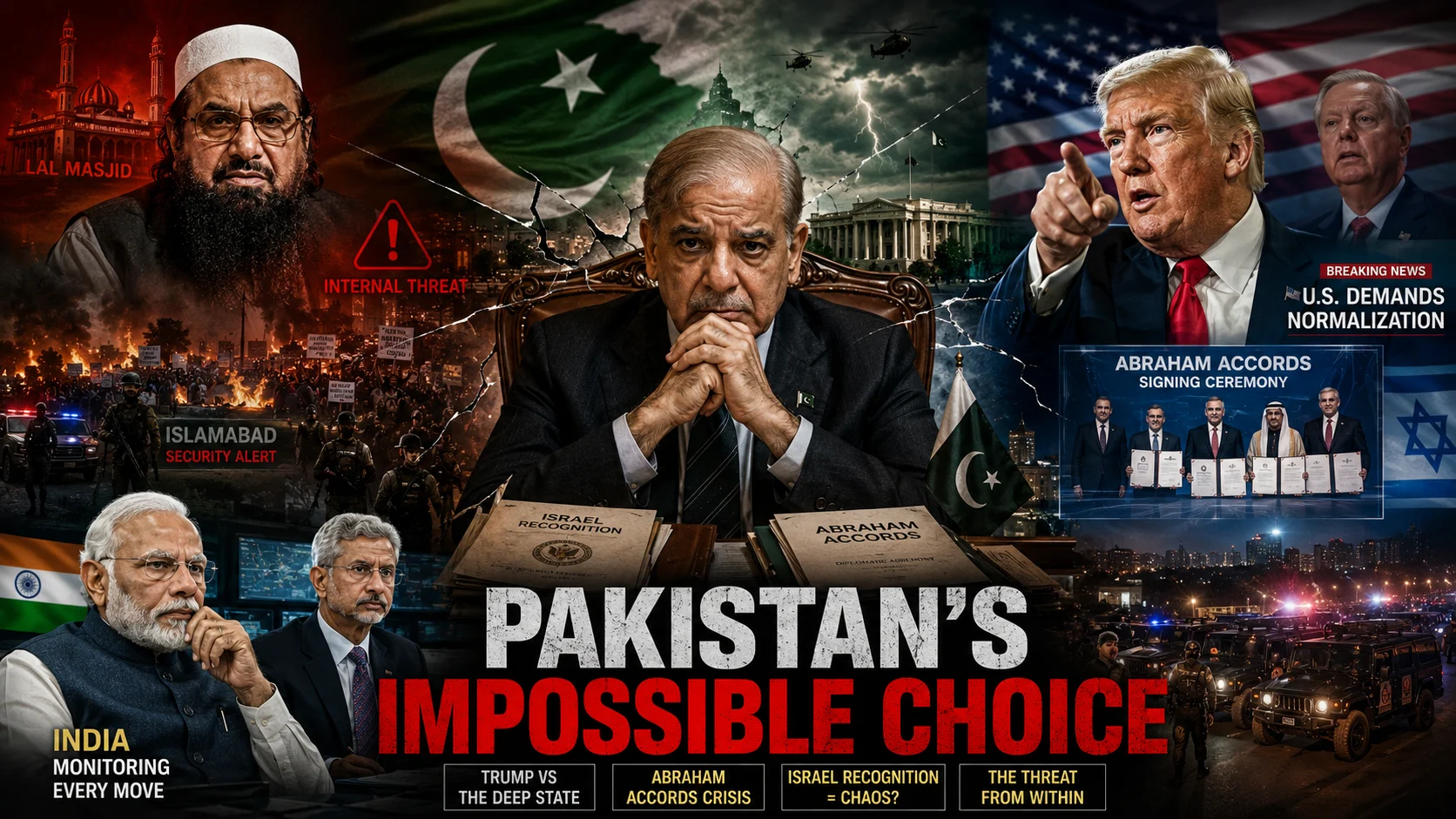
Once Pakistan could no longer deliver progress on Iran, Trump’s next demand became more direct: recognize Israel under the Abraham Accords. But Pakistan now faced an impossible choice.
This created a dangerous situation for Shehbaz Sharif and Asim Munir because Pakistan effectively had only two choices: fool its own people or fool Donald Trump. If the government accepts Israel, it risks nationwide anger, protests, and accusations of betraying the country’s ideological foundations. But if it refuses Trump completely after months of diplomatic warmth, Washington could rapidly abandon its current pro-Pakistan posture. This is no longer just a policy disagreement. It is a political survival dilemma for Pakistan’s leadership itself.
Saudi Arabia at least has a strategic explanation it can present to its people: defense cooperation against Iran. If Iran attacks again, Saudi leaders can argue that relations with Israel help strengthen regional security. Pakistan does not have that same justification available domestically, which makes normalization politically far harder to defend.
One principle now defines the entire crisis: there are no permanent friends and no permanent enemies, only permanent interests. Trump’s relationship with Pakistan operates entirely through that lens. The friendliness existed only while Pakistan appeared useful.
And that is why the coming shift could become far more dramatic than Islamabad expects.
What Happens If Pakistan Finally Accepts Israel?
If Pakistan eventually recognizes Israel, the consequences inside the country could be explosive. The state would not simply be changing diplomatic policy. It would be asking citizens to abandon a position embedded into passports, political rhetoric, religious identity, and public emotion for generations.
Protests, political instability, and widespread anger could erupt if normalization happens openly. Yet the alternative may not be stable either. Rejecting the Abraham Accords completely could trigger a rapid collapse in the current US-Pakistan understanding.
The situation could even turn into what has been described as a “geopolitical comedic scene.” The phrase captures how suddenly Trump’s position could reverse if Pakistan refuses both Iran-related utility and Israel normalization after months of public praise and diplomatic warmth.
What makes this moment unusually important is that Pakistan no longer controls the pace of the pressure. Trump’s push for expanding the Abraham Accords is now tied to broader regional restructuring involving Iran, Israel, Gulf states, and emerging security partnerships. Pakistan cannot easily isolate itself from those shifts anymore.
And once geopolitical identity collides with strategic necessity, countries are often forced into decisions they spent decades claiming they would never make.
FAQs
Why does Pakistan not recognize Israel?
Pakistan’s refusal to recognize Israel is tied to its ideological and religious identity since independence. Pakistan institutionalized this position more deeply than many Muslim-majority countries by embedding anti-Israel language into passports and public policy. The issue is now politically sensitive because reversing it could trigger domestic unrest.
What are the Abraham Accords?
The Abraham Accords are agreements aimed at establishing formal diplomatic relations between Israel and Muslim-majority countries. Trump views them as a mechanism to expand Israel’s acceptance across the Middle East and reduce Israel’s regional isolation.
Can Pakistani citizens travel to Israel?
Pakistani passports still carry the clause stating they are valid for all countries except Israel. That restriction symbolizes Pakistan’s long-standing non-recognition policy and has become central to the current controversy.
Why is India connected to Pakistan’s Israel policy?
Pakistan increasingly links India and Israel together in its ideological rhetoric. This indirectly strengthens India’s strategic importance for countries seeking security and intelligence cooperation against emerging regional alignments.
Why is Trump pressuring Pakistan now?
Trump initially saw Pakistan as useful in relation to Iran mediation efforts. After those efforts failed to produce results, the pressure shifted toward Israel normalization through the Abraham Accords.
Closing Question
If Pakistan eventually accepts Israel under American pressure, will that create a stronger US-Israel-India security alignment — or trigger the kind of domestic instability inside Pakistan that permanently reshapes South Asian geopolitics?
Share Your Views in the Comments below.
Explore more about World Affairs.




Marco Rubio India Visit ‘Stupid People’ Comment Decoded