Table of Contents
A Sudden Global Relief Moment
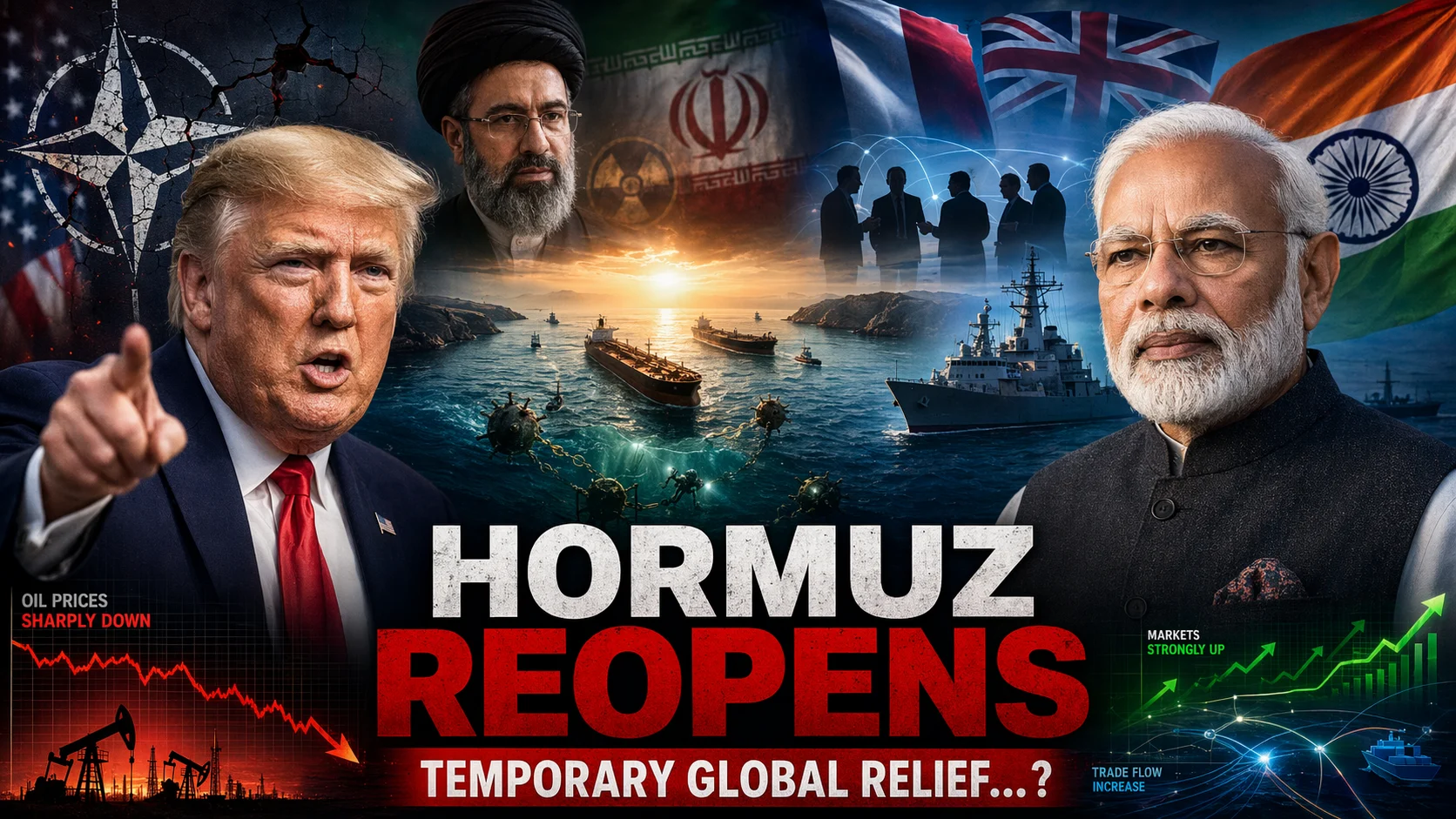
The Strait of Hormuz Reopening & India Strategic Role became the center of global attention within hours.
Oil prices dropped nearly 10%.
Global stock markets surged 1.5–2%.
This was not a minor fluctuation.
It was a signal.
A signal that one of the world’s most critical energy chokepoints had reopened—at least temporarily.
But here’s what matters:
This relief is fragile.
Sources: The Guardian
What Exactly Happened in the Strait of Hormuz?
Donald Trump announced that the Strait of Hormuz is now “completely open and ready for business.”
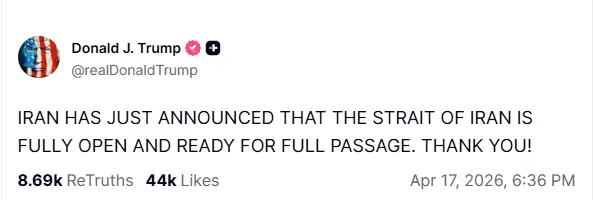
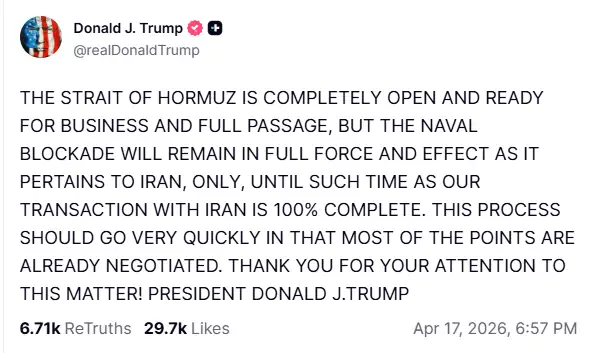
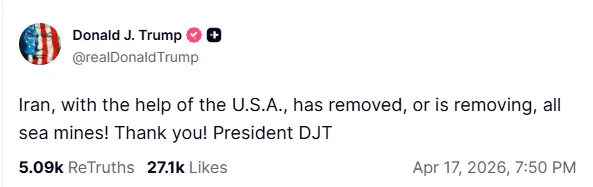
Screenshot of Truth Social Posts by Donald Trump (@realDonaldTrump)
This followed Iran’s declaration allowing full commercial passage during the ceasefire period.
At the same time, several key developments unfolded:
- Underwater sea mines are being removed with US support
- A naval blockade remains partially active until a full deal is completed
- The reopening is explicitly tied to ongoing negotiations
Here’s what that means.
The reopening is conditional.
Not permanent.
And that distinction changes everything.
Trump vs NATO: A Strategic Break
Immediately after announcing the reopening, Donald Trump shifted focus toward NATO.
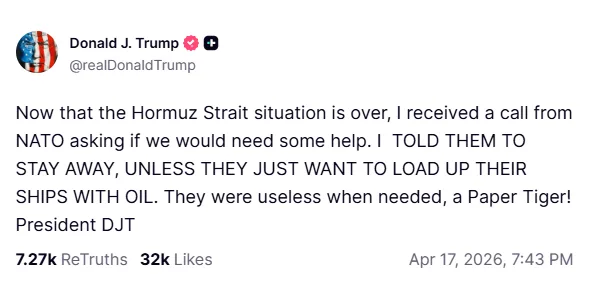
Screenshot of Truth Social Post by Donald Trump (@realDonaldTrump)
His message was direct:
- NATO was “useless when needed”
- NATO is a “paper tiger”
- US does not require NATO assistance
This was deliberate.
The narrative is being built consistently.
Why repeat this framing again and again?
Because it prepares the ground for a larger decision.
A structural shift away from NATO.
The “Nuclear Dust” Claim Explained
One of the most unusual elements in this episode was Trump’s reference to “nuclear dust.”
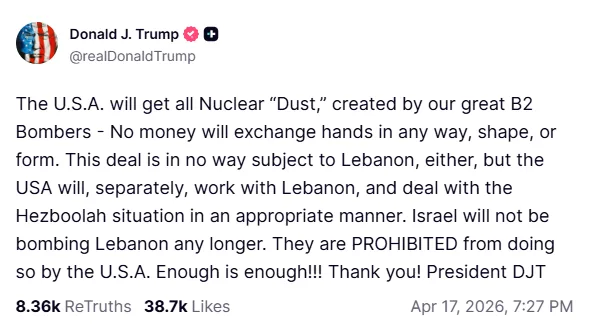
Screenshot of Truth Social Post by Donald Trump (@realDonaldTrump)
Let’s be clear.
There is no established scientific or geopolitical term called nuclear dust.
The actual issue revolves around:
- Iran’s enriched uranium
- US demands for control or removal of that material
The phrase appears to simplify—or reframe—a complex nuclear negotiation.
This detail matters.
Because it reflects how messaging is being shaped during negotiations.
The Paris Summit and a New Maritime Coalition
While the US distanced itself from NATO, another development quietly took shape.
A 40+ nation summit in Paris, led by:
- Keir Starmer, Prime Minister of the United Kingdom
- Emmanuel Macron, President of France
The goal:
Ensure permanent and uninterrupted navigation through the Strait of Hormuz.
🚨 BREAKING: Keir Starmer says the UK will lead a defensive military mission with France to protect shipping in the Strait of Hormuz pic.twitter.com/QUPKaywjou
— Politics UK (@PolitlcsUK) April 17, 2026
This initiative is:
- Defensive in nature
- Independent of US leadership
- Focused on long-term stability
And here’s the key detail.
The United States is not part of this initiative.
That silence matters.
Sources: The Hindu Business Line
Why India Has Become Central
India’s role in the Strait of Hormuz Reopening is not optional.
It is essential.
Consider the numbers:
- 30% of India’s crude oil passes through Hormuz
- 50% of natural gas depends on this route
- 60% of LPG supplies originate here
This is not just trade.
This is energy survival.
That is why India has been invited to join the Paris-led initiative.
And that is why India’s naval presence matters.
This is strategic positioning.
Economic Signals: Oil, Markets, and Pakistan Contrast
The reopening triggered immediate economic reactions:
- Oil prices dropped sharply
- Markets rallied globally
This shows how tightly global stability is tied to Hormuz.
But there’s another layer.
While Donald Trump praised Pakistan’s leadership:
- Asim Munir
- Shehbaz Sharif
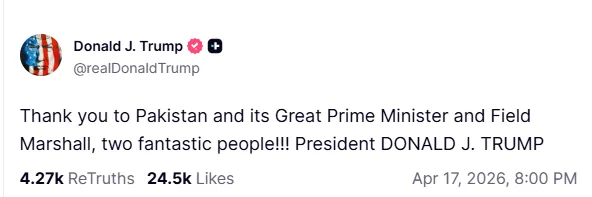
Screenshot of Truth Social Post by Donald Trump (@realDonaldTrump)
The International Monetary Fund downgraded Pakistan’s growth forecast to 3.5%.
It also warned of rising inflation.
This contrast is striking.
Diplomatic praise vs economic reality.
Sources: Arab News
The Fragile Nature of This Peace
Everything depends on one condition:
The ceasefire holds.
If it breaks:
- The Strait could close again
- Oil prices could spike instantly
- Global markets could reverse
And there are unresolved issues:
- Israel’s position on Lebanon
- Iran’s nuclear capabilities
- Long-term enforcement mechanisms
So the question becomes:
Is this peace sustainable?
Right now, the answer is uncertain.
Conclusion
The Strait of Hormuz Reopening & India Strategic Role is not just a temporary relief story.
It is a preview.
A preview of a world where:
- NATO’s role is questioned
- Europe builds independent coalitions
- India emerges as a stabilizing force
- Energy security drives geopolitical alignment
This moment is not the end of a crisis.
It is the beginning of a new structure.
And that structure is still forming.
FAQs
Is the Strait of Hormuz fully open for business now?
Yes, but only under a temporary ceasefire. The reopening is conditional and depends on ongoing negotiations between the US and Iran.
Why did Donald Trump call NATO a “paper tiger”?
Donald Trump criticized NATO for not being effective during critical moments, using the term to justify a potential strategic shift away from the alliance.
What does the reopening mean for Indian oil prices?
Lower oil prices globally can reduce fuel costs in India, but the impact depends on how long the Strait remains open.
Will India join the UK-France maritime initiative?
India has been invited, and its participation is likely given its heavy dependence on Hormuz for energy imports.
What is “nuclear dust” in the Iran deal context?
It is not a recognized technical term. It likely refers to enriched uranium that the US wants Iran to surrender as part of negotiations.
Why did the IMF lower Pakistan’s growth forecast?
The International Monetary Fund cited rising inflation and economic instability, projecting growth at around 3.5%.
What Comes Next?
The Strait is open—for now.
Markets are calm—for now.
But if stability depends on temporary ceasefires and shifting alliances—
Who will actually guarantee global energy security in the long run?
Share Your Views in the Comments below.
Explore more about Economy & Trade and World Affairs.